



Downsizing is on the radar for more Aussies than ever, with over two-thirds of Australians citing lifestyle improvements or financial benefits as their main motivation. Most people expect the challenge to be all about ditching extra furniture or finding the right moving company. Turns out, the real hurdle is making sense of years of accumulated memories and figuring out what actually belongs in your next chapter.
| Key Point | Explanation |
|---|---|
| 1. Conduct a thorough personal inventory | Evaluate your belongings emotionally and practically to understand their significance in your downsizing process. |
| 2. Set clear, measurable downsizing goals | Establish specific objectives to guide your move and reduce overwhelm during your transition. |
| 3. Categorise belongings into defined groups | Use a systematic approach to sort items into categories like keep, donate, sell, and discard for better decision-making. |
| 4. Implement a thoughtful decluttering strategy | Follow a structured method to reduce possessions while being mindful of emotional attachments to retained items. |
| 5. Arrange for reliable moving services | Research and compare moving companies to ensure professional support, providing a smooth downsizing experience. |
Downsizing represents a significant life transition that requires careful planning and honest self-reflection. Before diving into packing boxes or sorting through decades of accumulated possessions, you need a comprehensive understanding of your current living situation and motivations for moving.
Start by conducting a thorough personal inventory of your living space. Walk through each room and critically evaluate your belongings, considering not just their physical presence but their emotional and practical significance. Ask yourself key questions: How often do you use each item? Does it serve a current purpose in your life? Would this object genuinely enhance your lifestyle in a smaller space?
According to Moneysmart, downsizing involves carefully weighing both financial and personal considerations. Beyond material possessions, assess your spatial requirements. Are you maintaining rooms that remain consistently unused? Do you require multiple bedrooms or large communal areas? Understanding your actual living needs versus your current living arrangement helps create a strategic downsizing plan.
Your assessment should encompass multiple dimensions beyond physical space. Consider your lifestyle, future plans, and potential mobility changes. For individuals approaching retirement or experiencing shifting family dynamics, downsizing isn’t just about reducing square metres it’s about creating a living environment that aligns with your evolving personal circumstances.
Document your findings systematically. Create a detailed inventory that categorises items into clear groups:
By approaching downsizing as a deliberate, thoughtful process rather than a rushed activity, you set the foundation for a smoother, more emotionally manageable transition. Your comprehensive assessment ensures that each item you move represents a conscious choice, reducing stress and creating an intentional living space that truly reflects your current lifestyle and future aspirations.
Setting clear downsizing goals transforms your move from a vague concept into a strategic, purposeful journey. This critical step bridges your initial assessment with actionable planning, providing a roadmap that guides every subsequent decision in your downsizing process.
Begin by establishing concrete, measurable objectives that reflect your unique circumstances. These goals should extend beyond simple square metre reduction and encompass broader lifestyle considerations. Are you seeking financial freedom? Simplifying your living environment? Reducing maintenance responsibilities? Each goal serves as a compass directing your downsizing strategy.
According to AHURI research, Australians typically downsize for two primary reasons: lifestyle improvements and financial optimization. Your goals might include reducing living expenses, generating additional retirement funds, or creating a more manageable living space that supports your current life stage.
Consider creating a structured goal framework that addresses multiple dimensions of your downsizing journey. Financial goals might involve calculating potential savings from reduced utility costs, lower maintenance expenses, or proceeds from selling excess belongings. Lifestyle goals could focus on creating a more streamlined living environment that supports your current interests and future aspirations.
Document your goals with precision, making them specific and time-bound. Instead of a generic statement like “I want to downsize,” craft objectives such as:
Remember that downsizing goals are deeply personal and should reflect your individual circumstances. They will serve as a critical reference point throughout your moving process, helping you make confident decisions about what to keep, sell, donate, or discard. By establishing clear, meaningful goals, you transform downsizing from a potentially overwhelming task into an exciting opportunity for personal reinvention and strategic lifestyle design.
Categorising your belongings transforms the overwhelming task of downsizing into a systematic and manageable process. This crucial step demands both emotional intelligence and strategic thinking, requiring you to evaluate each item not just for its physical value, but for its personal significance and practical utility in your new living space.
Begin by creating a comprehensive sorting system that goes beyond traditional keep or discard approaches. Develop a nuanced categorization method that considers multiple factors such as emotional attachment, practical use, replacement cost, and spatial limitations in your new home. Think of this process as curating your personal belongings rather than simply sorting through them.
According to AHURI research, downsizing among Australians often involves complex personal considerations beyond mere physical relocation. Your categorization should reflect this complexity by creating multiple classification levels that capture the true essence of each item.
Establish clear category definitions that provide genuine guidance. Essential categories might include:
Implement a pragmatic approach by setting specific criteria for each category. For instance, clothing might require a rule like “not worn in the past year” or electronics could be evaluated based on functionality and current technological relevance. Use colour-coded stickers or digital tracking methods to maintain clarity during the sorting process.
Remember that categorising belongings is more than a logistical task it’s an opportunity for personal reflection. Each item you process represents a decision about your future lifestyle and the memories you choose to carry forward. By approaching this step with intentionality and emotional awareness, you transform downsizing from a potentially stressful experience into a meaningful personal journey of simplification and renewal.
Decluttering represents the transformative heart of your downsizing journey, where strategic decision-making meets emotional release. This step is about creating intentional space in your life by methodically reducing unnecessary possessions while preserving items that truly matter.
Approach decluttering as a thoughtful process rather than a rushed clearance. Emotional intelligence is as crucial as practical sorting. Begin by establishing a realistic timeline that allows you to process both physical items and the associated memories. Some objects carry significant sentimental weight, and rushing this process can lead to unnecessary stress or regrettable decisions.
According to LiveUp’s decluttering recommendations, implementing a structured method can significantly reduce overwhelm. Consider adopting the Four Box Method, which provides a clear framework for managing your belongings:
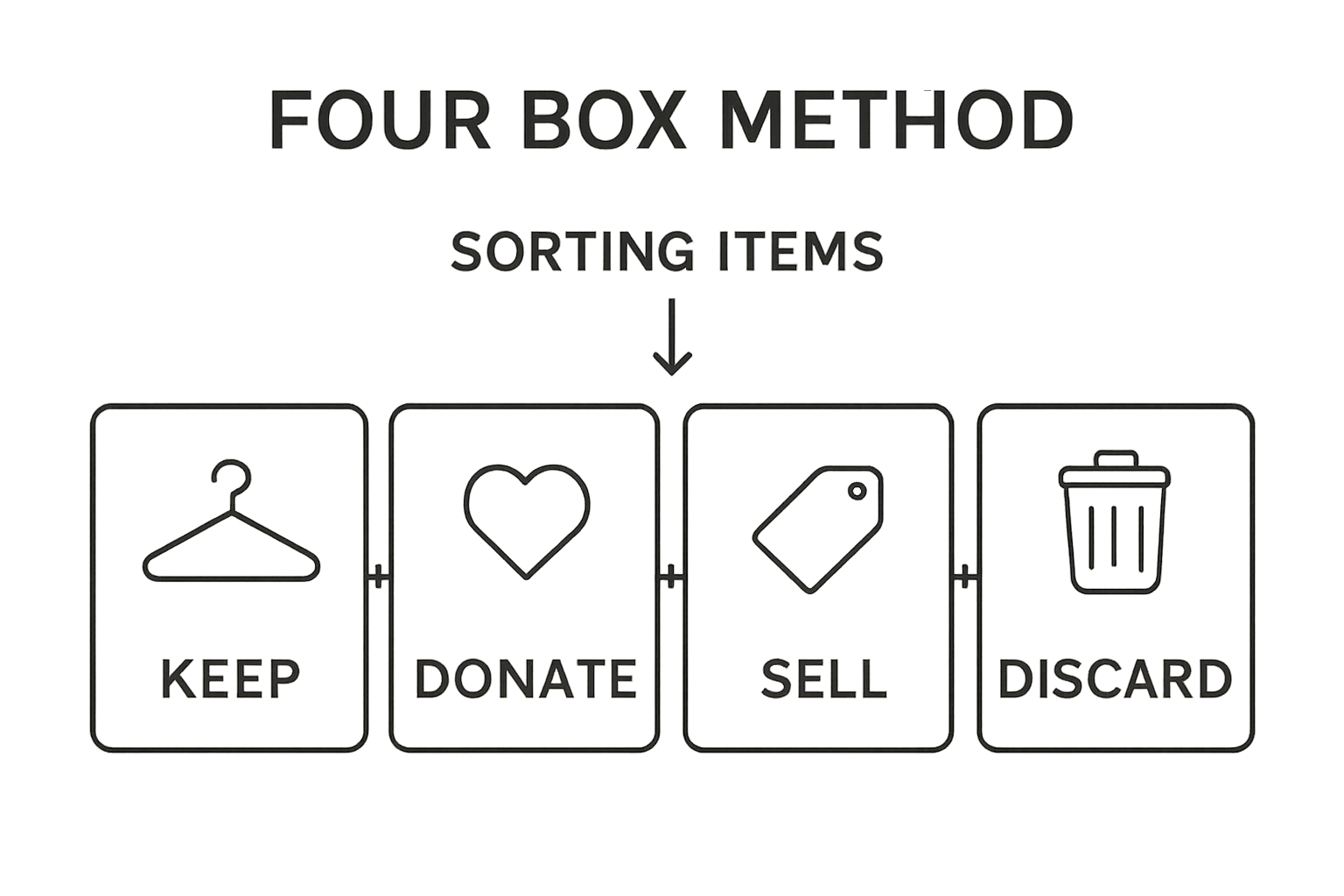
Create a supportive environment for your decluttering process. This might involve inviting a trusted friend who can offer objective perspective or setting specific daily goals to prevent emotional exhaustion. Some people find it helpful to photograph sentimental items before letting them go, creating a digital memory that doesn’t consume physical space.
Establish clear criteria for each category to maintain consistency. For instance, clothing might follow the “not worn in one year” rule, while kitchen items could be evaluated based on frequency of use and condition. Digital tools like spreadsheet trackers or dedicated decluttering apps can help you monitor progress and maintain motivation.
Remember that decluttering is more than a logistical task it’s an opportunity for personal growth. Each item you choose to release represents a conscious decision about the lifestyle you want to create. By approaching this step with patience, compassion, and strategic thinking, you transform downsizing from a potentially stressful experience into a liberating journey of intentional living.
Arranging transportation and moving services marks a critical transition point in your downsizing journey, transforming your carefully planned strategy into tangible action. This step requires meticulous research, strategic decision-making, and proactive communication to ensure a smooth and stress-free relocation experience.
Start by conducting comprehensive research on potential moving services. Don’t simply select the first company you encounter. Request multiple detailed quotes, comparing not just pricing but also reputation, insurance coverage, and additional services like packing, unpacking, and specialized item handling. Professional movers can significantly reduce the physical and emotional strain of relocating, particularly during a downsizing process.
According to NSW Government consumer guidance, obtaining written quotes and understanding contractual details are fundamental when selecting a removalist. Create a comparison spreadsheet that evaluates each potential service across multiple dimensions:
Consider the unique requirements of your specific move. If you’re transitioning to a smaller space, you might need movers experienced in navigating compact environments or handling delicate items during complex relocations. Some specialized moving services offer comprehensive packages that include pre-move consultations, custom packing strategies, and post-move support.
Prepare a detailed inventory of items to be moved, categorizing them by fragility, size, and special handling requirements. This documentation serves multiple purposes: it helps movers provide accurate quotes, supports insurance claims if needed, and gives you a clear record of your belongings during the transition. Communicate any specific challenges or unique items that require extra care, such as valuable antiques, musical instruments, or sensitive electronic equipment.
Remember that choosing a moving service is more than a transactional decision it’s about selecting a partner who understands the emotional complexity of downsizing. The right moving service will approach your relocation with sensitivity, professionalism, and a commitment to making your transition as smooth and stress-free as possible.

Finalising your move represents the culmination of an intricate downsizing journey, transforming months of planning into a tangible new living reality. This critical step bridges your previous preparation with your future lifestyle, requiring methodical attention to both practical and emotional details.
Systematically verify every aspect of your relocation by creating a comprehensive completion checklist. This isn’t merely about physical movement but ensuring a seamless transition into your new living environment. Begin by conducting a thorough walkthrough of both your old and new spaces, documenting any potential issues, damages, or discrepancies that might require follow-up action.
According to Australian Taxation Office guidelines, it’s crucial to move into your new property as promptly as possible after acquisition. This involves more than physical relocation it encompasses establishing your new living routine and addressing any immediate administrative requirements.
Ensure you complete these critical transition tasks:
Perform a meticulous inventory check, comparing your moved items against the original packing list. Confirm that all belongings have arrived safely and are positioned appropriately in your new space. This validation process helps identify any potential moving-related issues immediately, allowing for prompt resolution.
Below is a checklist table to help you systematically verify all your end-of-move tasks and ensure nothing is overlooked as you settle into your new space.
| Task | Description | Completion Status |
|---|---|---|
| Conduct old space walkthrough | Check for forgotten items or issues needing follow-up | |
| Inspect new property | Document any damages or discrepancies for quick resolution | |
| Update address on documents | Notify all relevant institutions of your new address | |
| Transfer utility services | Arrange electricity, water, gas, and internet at new address | |
| Notify financial institutions | Update banks, super funds, and insurers with new details | |
| Change insurance policies | Adjust home, contents, and car insurance to new address | |
| Redirect postal mail | Set up mail forwarding through Australia Post | |
| Check moved items inventory | Compare items to original packing list and note any issues |
Remember that finalising your move extends beyond physical logistics. Take time to emotionally settle into your new environment. Unpack strategically, creating functional and comfortable spaces that reflect your downsizing goals. Allow yourself grace during this transition, understanding that adaptation takes time. Your new space represents not just a different physical location, but a deliberate choice towards a more intentional, streamlined lifestyle.
If you have been overwhelmed by the emotional and practical decisions of downsizing, you are not alone. This article highlighted the unique challenges of sorting, categorising, and letting go of cherished belongings while making the leap into a new living space. Many Australians feel anxious about moving their most valued items, managing the logistics, and finding a reliable team who truly understands the personal side of a major transition. Onyx Removals specialises in transforming complicated downsizing moves into seamless, positive experiences. Our team knows how much care each step demands, from structured decluttering to careful transportation and setup in your new home.
Ready to turn your downsizing journey into a stress-free success? Visit Onyx Removals for a truly personalised moving plan and discover how our expert team can support every step, whether you need packing help, secure storage, or responsible waste disposal. Secure your free quote today at Onyx Removals, give yourself peace of mind, and enjoy a smooth transition to your new chapter.
Start by assessing your current living situation and motivations for moving. Conduct a personal inventory of your belongings and evaluate their emotional and practical significance before setting clear downsizing goals.
Create a comprehensive sorting system that includes categories such as ‘Immediate Keep,’ ‘Conditional Keep,’ ‘Donate,’ ‘Sell,’ and ‘Discard.’ This helps identify the true value and importance of each item.
Implement a structured decluttering strategy like the Four Box Method, which involves categorizing items into ‘Keep,’ ‘Donate,’ ‘Sell,’ and ‘Discard.’ Establish clear criteria for each category to maintain consistency during the process.
Research potential moving services by comparing quotes, insurance coverage, and customer reviews. Ensure you select a company experienced in managing downsizing moves, and prepare a detailed inventory of items to facilitate accurate quotes.

No Related Post


