



Melbourne’s rental market can leave even locals scratching their heads. Rental prices in some central suburbs have surged by over 10 percent in the past year. You might think sticking to a favourite neighbourhood is the key to landing a great place. The real edge comes when you tailor your checklist to your budget and embrace unexpected pockets of value all around the city.
| Key Point | Explanation |
|---|---|
| 1. Set a Rental Budget | Allocate no more than 30% of your income to rent to avoid financial strain. Use tools like the rent calculator for guidance. |
| 2. Research Neighborhoods Thoroughly | Understand neighborhood characteristics and amenities to match your lifestyle. Compare locations for proximity to work, schools, and transport options. |
| 3. Prepare for Property Inspections | Compile a checklist before inspections to evaluate properties systematically. Bring necessary documentation for immediate application if a property suits your needs. |
| 4. Organize Your Rental Application | Gather all essential documents, including proof of income and identification. A well-prepared application showcases your reliability as a tenant. |
| 5. Review Lease Terms Carefully | Examine each lease clause to understand your rights and responsibilities. Ensure the agreement accurately reflects the property’s advertised condition to avoid future disputes. |
Renting in Melbourne begins with a critical foundation: understanding your financial capacity and specific housing needs. This initial step will help you navigate the rental market strategically and avoid potential financial strain or mismatched accommodation.
Start by conducting a comprehensive assessment of your monthly income and expenses. Most financial experts recommend allocating no more than 30% of your total monthly income towards rent. For instance, if you earn $4,000 monthly, aim to keep your rental costs around $1,200 or less. According to the Consumer Affairs Victoria rent calculator, you can quickly determine sustainable rental budgets based on your earnings.
Beyond financial considerations, outline your specific requirements carefully. Consider factors like proximity to work or study locations, public transportation access, desired number of bedrooms, parking availability, and preferred neighborhood characteristics. Melbourne offers diverse rental markets, from bustling inner-city apartments to quieter suburban dwellings, so understanding your lifestyle needs is paramount.
Create a prioritized list of must-have features versus nice-to-have amenities. For example, if you work in the CBD, proximity to train stations might be non-negotiable. Similarly, if you work remotely, a dedicated home office space could be crucial. Consider potential additional costs like utility bills, internet connection, and potential moving expenses when finalizing your budget.
Remember that rental prices can vary significantly across Melbourne’s suburbs. Areas like Carlton, Fitzroy, and South Yarra tend to be more expensive, while suburbs further from the city center offer more affordable options. Research median rental prices in different neighborhoods to align your budget with realistic expectations.
Use this table to compare the key features, location benefits, and lifestyle suitability across some of Melbourne’s most popular suburbs as mentioned in the article.
| Suburb | Typical Features | Lifestyle Suitability | Rent Affordability |
|---|---|---|---|
| Carlton | Cultural scene, cafes, art | Young professionals, students | High |
| Fitzroy | Vibrant, artistic, nightlife | Creatives, singles | High |
| South Yarra | Central, shopping, dining | Professionals, couples | High |
| Hawthorn | Family parks, schools | Families, students | Moderate |
| Moonee Ponds | Quiet, local amenities | Families, commuters | Moderate |
| Outer suburbs | More space, affordable | Budget-conscious, families | Lower |
By thoroughly understanding your financial constraints and specific housing requirements upfront, you’ll streamline your rental search and increase your chances of finding an ideal Melbourne home that meets both your practical needs and budgetary limitations.
Researching neighborhoods and properties forms the cornerstone of a successful rental experience in Melbourne. This critical step transforms your housing search from a random exploration into a strategic mission, ensuring you find a location that truly matches your lifestyle and requirements.
Begin your research by mapping out Melbourne’s diverse suburban landscape. Each neighborhood carries its own unique character and living experience. Inner-city areas like Fitzroy and Carlton offer vibrant cultural scenes with numerous cafes and art spaces, while suburbs such as Hawthorn and Moonee Ponds provide more family-friendly environments with excellent schools and parks. According to Consumer Affairs Victoria, understanding local amenities and community features is crucial in making an informed decision.
Utilize multiple digital platforms to gather comprehensive property insights. Websites like Domain, RealEstate.com.au, and Flatmates.com.au provide extensive rental listings with detailed neighborhood information. Create spreadsheets to track potential properties, comparing factors such as rental prices, proximity to public transport, nearby facilities, and local crime statistics. Google Street View can be an excellent tool for getting a virtual sense of different neighborhoods without physically visiting each location.
Pay special attention to transportation accessibility. Melbourne’s public transport network is extensive, so evaluate properties based on their proximity to train stations, tram lines, and bus routes. Consider your daily commute and how different locations might impact your travel time and convenience. Some suburbs might offer more affordable rent but require longer commutes, so weigh these trade-offs carefully.
Reach out to local real estate agents who specialize in specific Melbourne suburbs. They possess invaluable local knowledge and can provide insights beyond online listings. Many agents maintain databases of upcoming rental properties and can alert you to opportunities that haven’t yet been publicly listed. Schedule informal discussions to understand neighborhood dynamics, upcoming development plans, and potential hidden gems in the rental market.
Finalize your research by creating a shortlist of 5-7 preferred neighborhoods and properties that align with your budget and lifestyle requirements. This systematic approach transforms a potentially overwhelming search into a focused, strategic process of finding your ideal Melbourne home.
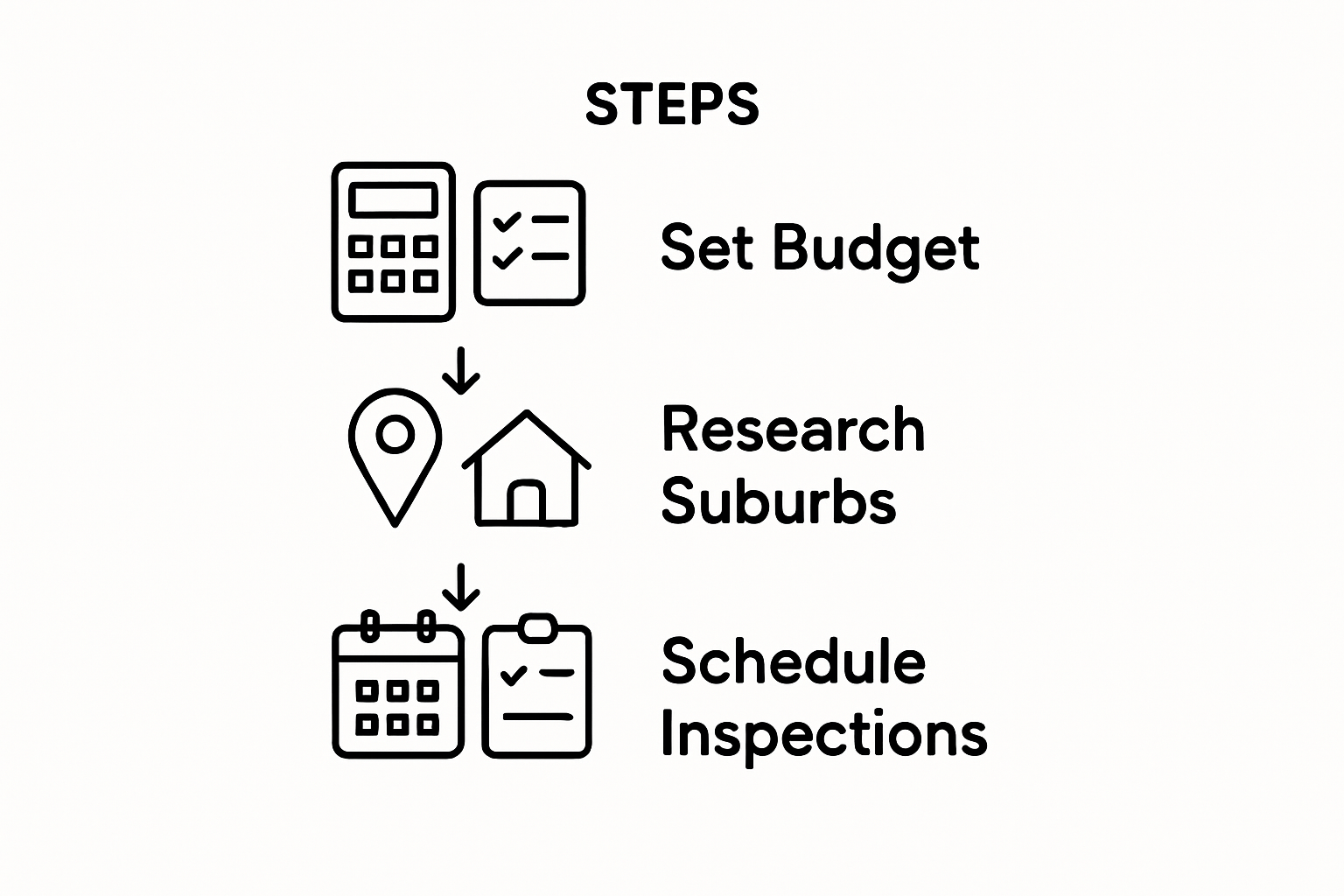
Scheduling and attending property inspections represent a pivotal moment in your Melbourne rental journey. This step transforms your research into tangible opportunities, allowing you to evaluate potential homes firsthand and make informed decisions about your future living space.
Initiate the inspection process by coordinating directly with real estate agents or property managers. Prompt and professional communication is key. When contacting agents, be prepared with specific dates and times that suit your schedule. Many Melbourne real estate agencies offer both scheduled private inspections and weekly open house events, providing flexibility in viewing potential rentals.
According to Consumer Affairs Victoria, proper preparation can significantly enhance your property inspection experience. Before attending, compile a comprehensive checklist of essential aspects to evaluate. This should include examining the property’s overall condition, checking electrical outlets, testing water pressure, inspecting window and door locks, and assessing natural light and ventilation.
During property inspections, adopt a methodical approach. Arrive early and bring critical documentation like identification, proof of income, and employment references. This preparation demonstrates your seriousness as a potential tenant and allows you to submit an application immediately if the property meets your requirements. Take detailed notes and photographs (with the agent’s permission) to help you compare different properties later.
Pay close attention to the property’s maintenance and potential hidden issues. Look for signs of water damage, examine the condition of floors and walls, and test all appliances and fixtures. Ask specific questions about lease terms, utility connections, and any recent renovations or planned maintenance. Inquire about the property’s heating and cooling systems, parking arrangements, and any restrictions on modifications or decorating.
After each inspection, take time to reflect and compare your experiences. Create a scoring system that rates properties based on your priority criteria from previous research. Consider factors like location, condition, rental price, and overall suitability for your lifestyle. This systematic approach will help you make a rational decision rather than being swayed by emotional impulses or rushed choices.
This checklist table helps you prepare for property inspections by organising the key elements to assess and actions to complete during each property visit.
| Inspection Item | What to Check | Action Required |
|---|---|---|
| Property condition | Walls, floors, overall state | Note any damage or wear |
| Safety features | Window/door locks, security | Test all locks and ask agent |
| Utilities | Water pressure, appliances | Run taps/flush, test appliances |
| Natural light | Amount in rooms | Observe at different times |
| Ventilation | Windows, airflow | Open windows, check ventilation |
| Lease terms | Restrictions, recent work | Ask about modifications, repairs |
| Documentation | ID, proof of income, references | Have copies ready to submit |
By approaching property inspections strategically, you transform a potentially overwhelming process into a structured path toward finding your ideal Melbourne rental home.

Preparing a comprehensive and compelling rental application is your gateway to securing your ideal Melbourne home. This critical step requires meticulous organization, strategic presentation, and a thorough understanding of what rental providers seek in potential tenants.
Start by gathering essential documentation well in advance of your property inspections. Your application package should demonstrate reliability and financial stability. Collect and organize key documents including current government-issued photo identification, proof of income (such as recent payslips or employment verification letters), bank statements showing consistent financial health, and contact details for professional references.
According to Consumer Affairs Victoria, rental applications require comprehensive personal and professional information. Create a professional rental resume that highlights your employment stability, current income, and previous rental history. If you’re a first-time renter, include character references from employers, educators, or professional contacts who can vouch for your reliability and responsibility.
When completing the actual application form, precision and honesty are paramount. Fill out every section completely and legibly, ensuring all information is current and accurate. Be prepared to provide details about your employment, income, current and previous rental experiences, and the number of people who will occupy the property. Many Melbourne rental providers will conduct background checks, so transparency is crucial.
Financial preparedness can significantly strengthen your application. Demonstrate your ability to consistently meet rental payments by showing a steady income that is typically three times the weekly rental amount. Have funds ready for the initial expenses, including the first month’s rent and security bond. Some rental providers might request bank statements or a letter from your employer confirming your income and employment status.
Consider including a brief personal cover letter with your application. This optional addition can help you stand out from other applicants by providing context about your professional background, stability, and reasons for seeking the specific property. Highlight any attributes that make you an ideal tenant, such as being a non-smoker, having no pets, or maintaining a professional demeanor.
By approaching your rental application with thoroughness and professionalism, you significantly improve your chances of successfully securing your preferred Melbourne rental property.
Reviewing and signing a lease agreement represents the culmination of your rental journey, transforming your housing search into a concrete living arrangement. This critical step requires meticulous attention to detail and a comprehensive understanding of the legal contract that will govern your tenancy in Melbourne.
Begin by carefully reading every single clause of the lease agreement, resisting the temptation to skim through or hastily sign. According to Consumer Affairs Victoria, understanding your rights and responsibilities is paramount. Pay special attention to sections detailing rental duration, weekly rent amount, payment schedules, bond requirements, and any specific conditions regarding property maintenance, modifications, and termination protocols.
Carefully examine the lease for any additional fees or charges beyond the base rent. These might include utility connection fees, water rates, parking costs, or maintenance charges. Clarify which expenses are your responsibility and which are covered by the rental provider. If any terms seem unclear or ambiguous, request explicit clarification in writing before signing. Do not hesitate to ask the real estate agent or property manager to explain complex legal language or provide additional context for specific clauses.
Prepare a personal checklist to verify all critical lease components. Confirm that the lease accurately reflects the property’s condition as observed during your initial inspections. This includes documenting any existing damages, ensuring agreed-upon repairs are specified, and verifying that the property meets minimum rental standards. Cross-reference the lease agreement with the property condition report, ensuring every detail is accurately captured.
Before signing, make digital and physical copies of the entire lease agreement. Store these securely and ensure you have a signed copy for your personal records. If possible, consider having a trusted friend, family member, or legal professional review the document to provide an additional perspective. Some renters find value in consulting tenants’ rights organizations for independent advice on lease agreements.
When you’re ready to sign, do so methodically. Use blue or black ink, write clearly, and ensure all pages are initialed where required. If the lease involves multiple tenants, confirm that everyone understands and agrees to the terms. Keep communication open with your rental provider, maintaining a professional and cooperative relationship from the outset of your tenancy.
Confirming move-in arrangements is the pivotal moment that transforms your rental journey from paperwork to reality. This crucial step requires careful coordination, strategic planning, and proactive communication to ensure a smooth transition into your new Melbourne home.
Initiate contact with your rental provider or real estate agent at least two weeks before your official move-in date. Establish a precise timeline for key handover and property access, confirming the exact date and time you can collect your keys. During this communication, request a comprehensive walkthrough of the property’s access points, including parking arrangements, building entry protocols, and any specific move-in instructions unique to the property or complex.
Prepare a detailed moving logistics plan that encompasses all practical aspects of your relocation. This includes arranging utilities connections, organizing professional removalists, and ensuring you have comprehensive insurance coverage for your belongings during transit. Consider scheduling utility connections in advance to guarantee electricity, water, internet, and gas are operational from your move-in date.
Develop a systematic approach to documenting the property’s condition upon arrival. Conduct a thorough property condition report, meticulously examining and photographing every area of the rental. Note any existing damages or maintenance issues, comparing them against the initial condition report signed during the lease agreement. This documentation protects your bond and establishes clear expectations for property maintenance.
Coordinate with your rental provider regarding essential move-in protocols. Confirm the process for bond lodgement, understand the key return procedures, and clarify any specific rules about moving furniture or using shared building facilities. If you’re moving into an apartment complex, inquire about elevator access, designated moving zones, and any time restrictions for moving activities.
Finalize your moving day logistics by creating a comprehensive checklist. This should include essential items like cleaning supplies, basic tools, important documents, and an overnight bag with immediate necessities. Arrange for professional cleaning services if required by your lease agreement, and ensure you have all necessary contact information for your rental provider, building management, and emergency services.
By approaching your move-in with thorough preparation and clear communication, you’ll transform what could be a stressful experience into a smooth and organized transition into your new Melbourne home.
You have followed the guide, secured your ideal rental, and sorted the paperwork, but now comes the real challenge—making sure your move is efficient, secure, and completely hassle-free. Organising everything for move-in day can be overwhelming. Coordinating utilities, handling heavy furniture, managing packing and cleaning, and making sure nothing is left behind all add to the pressure. You need a trusted partner who understands the unique pain points of relocating in Melbourne and can deliver a tailor-made solution.
Choose Onyx Removals to ensure your first day in your new home is truly worry-free. Our experienced team manages every detail for you, from safe transport and professional packing through to expert cleaning and storage. Want to see how we take the stress out of moving? Read our customer testimonials and service breakdowns on our website. Ready to book a smooth, personalised moving experience? Visit our main site now and request your free, no-obligation quote. Secure your moving date today and enjoy peace of mind as you settle into your new Melbourne home.
Understanding your budget and specific housing requirements is the first step. Analyze your financial capacity and create a list of must-have features.
Map out Melbourne’s suburbs, utilize digital platforms like Domain and RealEstate.com.au, and consider factors like local amenities, public transport, and lifestyle suitability.
Prepare a checklist to evaluate essential aspects of the property, bring necessary documentation like ID and proof of income, and take notes and photos for comparison.
Gather essential documentation, create a professional rental resume, complete the application accurately, and consider including a personal cover letter to stand out from other applicants.

No Related Post


