


TL;DR:
- Packing paper for moving is a recyclable newsprint used to cushion, wrap, and secure household belongings during relocation. Local suppliers in Melbourne, including wholesalers, big-box stores, and online options, offer various formats suitable for different move sizes and timelines. Proper estimation and layering techniques ensure adequate protection for fragile items and efficient packing during the move.
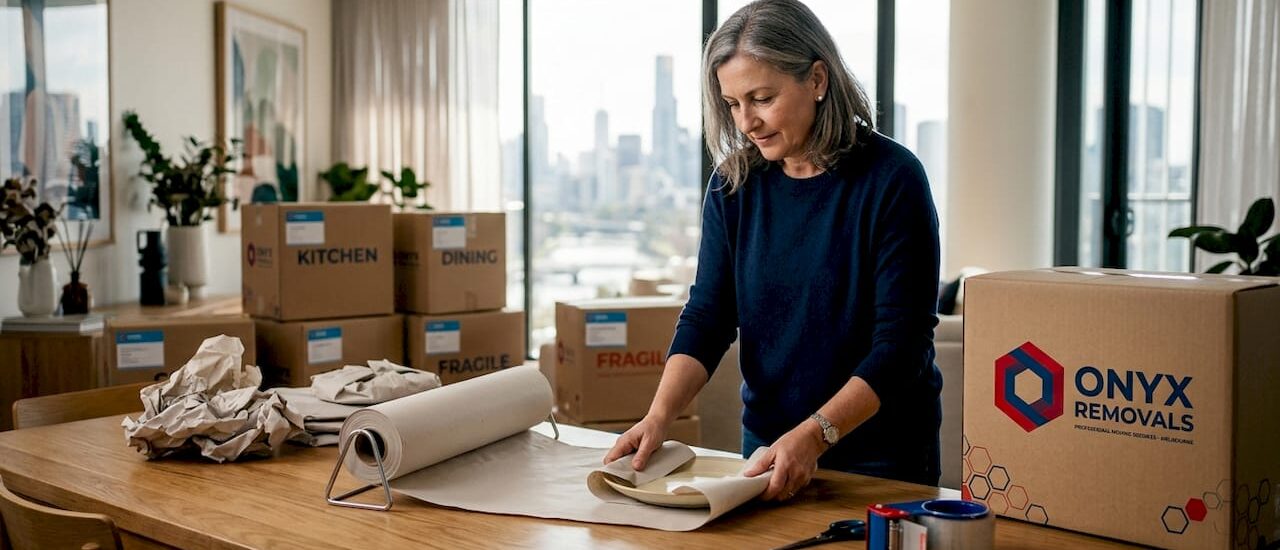
Packing paper for moving is a recyclable newsprint material used to cushion, wrap, and secure household belongings during relocation. If you are searching for packing paper for moving near me in Melbourne, you have more options than most people realise: local packaging wholesalers, big-box retailers, and professional removalists all stock it in formats ranging from loose sheets to bulk rolls. The right source depends on how much you need, how quickly you need it, and whether you want to pick it up today or have it delivered to your door. This guide covers where to buy, how much to get, and how to use it properly.
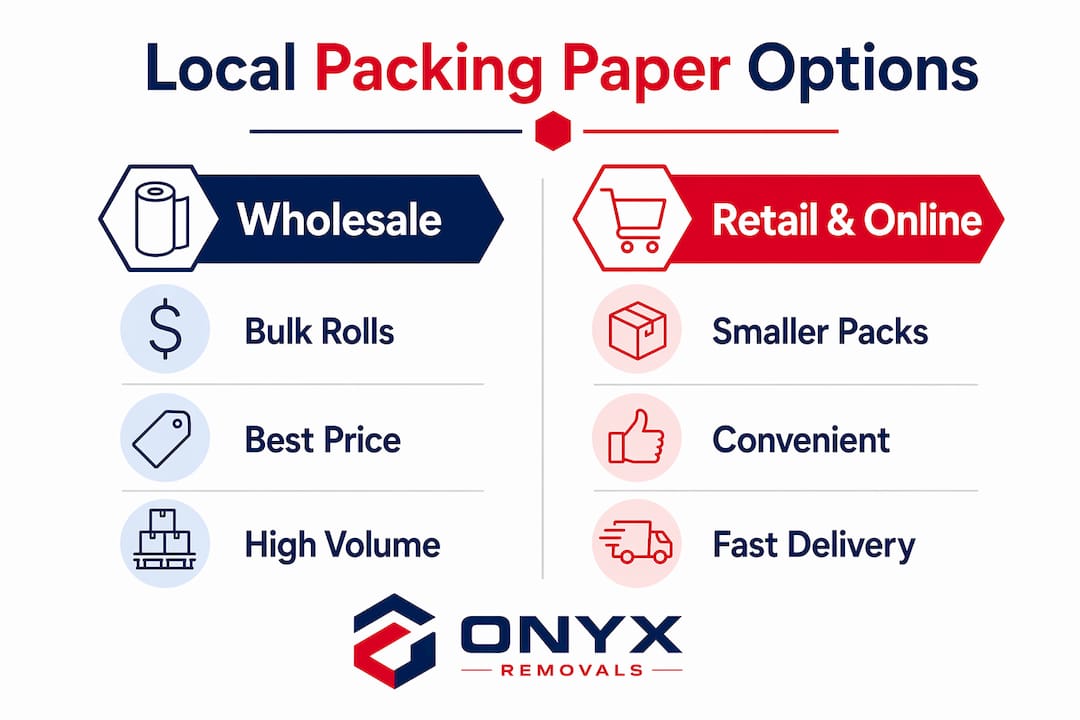
Melbourne residents have three reliable categories of local supplier for moving paper, each with distinct advantages.
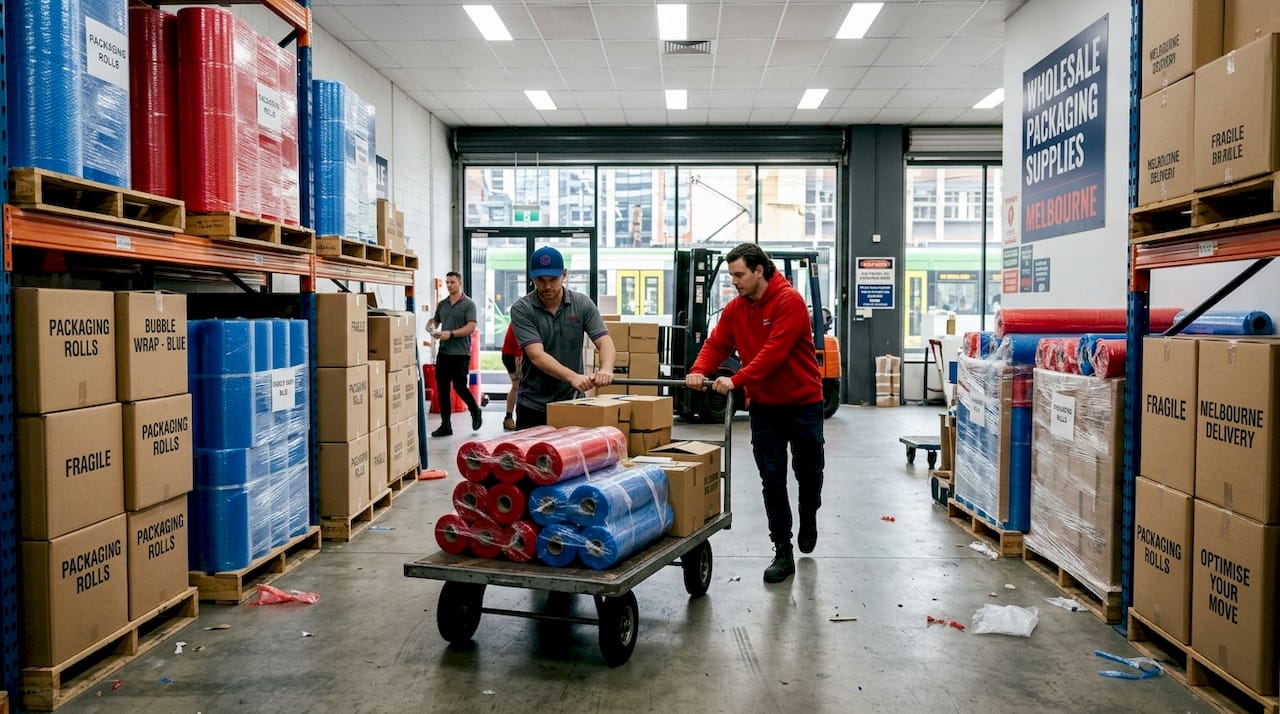
Packaging wholesalers are the strongest option for bulk purchases. Knight Packaging is a Melbourne-based wholesale supplier serving the CBD, Dandenong, and surrounding suburbs, offering recycled paper cushioning and protective wrapping with fast metropolitan delivery. Buying wholesale typically means lower cost per sheet and access to eco-friendly recycled options that standard retailers do not carry.
Big-box retailers such as Bunnings and Officeworks stock packing paper in smaller quantities, making them practical for last-minute purchases or smaller moves. Officeworks carries butcher’s paper and packing rolls in formats suited to single-room moves. Bunnings stocks moving paper alongside other protective materials. Both offer same-day in-store pick-up, which matters when moving day is tomorrow.
Online suppliers with local delivery round out the options. U-Haul sells packing paper in 70, 100, 200, and 500-sheet quantities at 24" x 30" sheet size, priced from $13.95 to $39.95, with next-day delivery and free in-store pick-up available. While U-Haul operates primarily in North America, its pricing benchmarks are useful when comparing Melbourne supplier quotes.
| Supplier type | Format | Best for | Approx. cost |
|---|---|---|---|
| Wholesale (e.g., Knight Packaging) | Bulk rolls or weight-based lots | Large moves, eco-conscious buyers | Lower per-sheet cost |
| Big-box retail (Bunnings, Officeworks) | Sheet packs or rolls | Small to medium moves, urgent needs | Mid-range |
| Online with delivery | Fixed sheet counts | Planned moves with lead time | Varies by quantity |
One important note: Melbourne suppliers often sell by weight or roll length rather than fixed sheet counts. This means you need to convert your estimated sheet requirements into weight or coverage equivalents before ordering, or you risk buying the wrong quantity.
Pro Tip: When buying packing paper locally by weight, ask the supplier how many sheets per kilogram their product yields. A standard 40gsm newsprint roll typically gives you around 50 to 60 A2-equivalent sheets per kilogram, which helps you translate weight-based pricing into usable quantities.
Packing paper protects fragile items through two distinct mechanisms: direct wrapping and void filling. Both are necessary, and understanding the difference changes how you use the material.
When wrapping individual items such as plates, glasses, or ornaments, the paper creates a physical buffer between the item and the box wall. U-Haul’s packing guidance recommends wrapping fragile items with at least two layers and positioning them away from box edges. A single sheet is rarely enough for anything breakable. Two to three overlapping sheets, folded and tucked, provide the thickness needed to absorb minor impacts during transit.
Void filling is the second function, and it is where packing paper gets consumed faster than most people expect. Any empty space inside a box allows items to shift during transport. Crumpled sheets of packing paper fill those gaps and lock contents in place. This is not a minor detail: a box that rattles when shaken is a box where breakage is likely.
Packing paper does have limits. It works best as a secondary protective layer rather than the sole solution, because it fills voids effectively but does not provide the highest shock absorption on its own. For items like electronics, antique glassware, or anything with irregular shapes, combine packing paper with bubble wrap or foam padding. The paper handles the wrapping and gap filling; the bubble wrap handles the impact.
Here is a practical wrapping sequence for fragile items:
For guidance on protecting specific delicate belongings, the fragile item packing tips from Onyx Removals cover room-by-room scenarios in detail.
Underestimating packing paper is one of the most common and costly mistakes in a move. Experienced movers calculate needs based on both the number of fragile items to be individually wrapped and the volume of voids requiring cushioning. These are two separate calculations, and most people only do the first one.
A practical estimation method works as follows:
For a standard two-bedroom Melbourne home, this typically means 150 to 250 sheets for a moderate number of fragile items, plus additional paper for void filling. A three-bedroom home with a full kitchen and dining set can easily require 400 sheets or more.
Packing paper is consumed faster than expected because of its dual role in wrapping and void filling, which is why buying slightly more than your estimate is always the right call. Leftover paper can be recycled; broken items cannot be replaced.
Pro Tip: Do a test pack with one full box before buying in bulk. Count exactly how many sheets you use for wrapping and void filling in that single box, then multiply by your total box count. This gives a far more accurate estimate than any formula.
The format you buy matters too. Local suppliers may price packing paper by weight or wholesale lot rather than sheet count, so translate your sheet estimate into kilograms before you call. Buying by the roll is often more economical for large moves, while sheet packs from retailers suit smaller jobs where precision matters more than price.
Packing paper is not always the right tool. Understanding where it sits relative to other materials helps you spend your budget wisely.
| Material | Protection level | Cost | Environmental impact | Best use |
|---|---|---|---|---|
| Packing paper (newsprint) | Moderate | Low | Recyclable | Wrapping, void fill |
| Butcher’s paper | Moderate | Low to mid | Recyclable, food-safe | Kitchenware, food packaging |
| Bubble wrap | High | Mid to high | Non-recyclable (standard) | Electronics, antiques |
| Foam pads | High | High | Non-recyclable (standard) | Furniture corners, mirrors |
| Packing peanuts | Moderate | Low | Biodegradable options available | Void fill in large boxes |
Butcher’s paper deserves a specific mention because it is often confused with standard packing paper. Butcher’s paper is unbleached, food-safe, and slightly heavier. It works well for wrapping kitchenware and is the correct choice when packing items that will come into contact with food surfaces. Some Melbourne suppliers stock it alongside standard newsprint, and the price difference is minimal.
Eco-friendly options such as recycled paper cushioning and biodegradable loosefill are readily available from local Melbourne suppliers. Knight Packaging, for example, promotes biodegradable packing materials alongside its recycled paper cushioning range. For households prioritising sustainability, these options deliver comparable protection without the landfill footprint of standard bubble wrap or foam.
The practical rule is straightforward: use packing paper as your base layer and primary void filler, then add bubble wrap or foam only where the item’s value or fragility demands it. This approach keeps costs down while maintaining adequate protection for the majority of household goods. For a full breakdown of what to buy and in what quantities, the packing materials guide from Onyx Removals covers Melbourne-specific sourcing in detail.
Buying packing paper locally in Melbourne from a wholesale supplier like Knight Packaging or a retailer like Officeworks gives you the fastest access, the best format options, and the ability to match quantity to your actual move size.
| Point | Details |
|---|---|
| Buy locally for speed | Knight Packaging and Bunnings offer same-day access across Melbourne suburbs. |
| Calculate both uses | Estimate paper for wrapping AND void filling separately to avoid running short. |
| Layer for fragile items | Use at least two to three sheets per item and position away from box edges. |
| Match format to supplier | Convert sheet estimates to weight or roll length when buying from wholesale suppliers. |
| Supplement when needed | Add bubble wrap or foam for high-value items where paper alone is insufficient. |
After years of working with Melbourne families on relocations, the pattern I see most often is not careless packing. It is under-buying. Someone does a careful count of their fragile items, buys exactly the right number of sheets for wrapping, and then runs out halfway through because they forgot that void filling consumes just as much paper as wrapping does. They finish the job with tea towels and old newspapers, and then wonder why three glasses arrived broken.
The second mistake is buying the wrong format. A customer once ordered a bulk roll from a wholesale supplier without asking about sheet yield per kilogram. The roll was excellent quality but yielded far fewer usable sheets than expected because the paper was heavier stock than standard newsprint. The lesson: always ask the supplier for sheet count or coverage area, not just weight.
My honest recommendation for Melbourne movers is to source locally wherever possible. Buying from local Melbourne suppliers means faster delivery, the ability to ask specific questions about product weight and yield, and the option to top up quickly if you underestimate. Online ordering from interstate or international suppliers saves a few dollars but adds days you may not have.
Packing paper paired with a small quantity of bubble wrap covers 90 per cent of what a standard Melbourne household needs. The remaining 10 per cent, things like large mirrors, artwork, or antique furniture, needs specialist materials and often specialist handling. For those items, professional packing and unpacking services are worth the cost.
— Dinshaw
Moving in Melbourne is stressful enough without hunting down packing paper from multiple suppliers on a tight timeline. Onyx Removals supplies packing paper and a full range of moving materials directly to Melbourne clients, so you can sort your supplies and your removalist in one place.

Whether you need a small sheet pack for a studio apartment or bulk paper for a four-bedroom home, Onyx Removals matches the quantity and format to your actual move. The team also advises on complementary materials like bubble wrap and foam pads when your inventory includes fragile or high-value items. Visit the packing materials page to see what is available, or get in touch directly for a quote that covers both supplies and removal services in one package.
Packing paper is available from packaging wholesalers like Knight Packaging, big-box retailers like Bunnings and Officeworks, and professional removalists like Onyx Removals. Local suppliers offer same-day pick-up and fast metropolitan delivery.
A two-bedroom home with a moderate number of fragile items typically requires 150 to 250 sheets for wrapping, plus additional paper for void filling across all boxes. Buying 30 to 40 per cent more than your initial estimate accounts for gap filling.
Butcher’s paper is heavier, unbleached, and food-safe, making it suitable for kitchenware and food-contact surfaces. Standard packing paper is lighter newsprint designed for wrapping and cushioning general household items.
Packing paper is best used as a secondary protective layer rather than the sole solution. For highly fragile or valuable items, combine it with bubble wrap or foam padding to provide adequate shock absorption during transit.
Many Melbourne wholesale suppliers sell packing paper by weight or roll length rather than fixed sheet counts. Ask the supplier for the sheet yield per kilogram before ordering so you can match the quantity to your estimated needs.

No Related Post


