



More than one in three Australian businesses experience significant disruptions during office relocations. For office managers in Melbourne, every decision impacts daily workflow, client commitments, and team morale. Understanding how to maintain business continuity is crucial, especially when even minor interruptions can affect both revenue and reputation. This resource explores proven methods to help you keep operations running smoothly before, during, and after any office move.
| Point | Details |
|---|---|
| Business Continuity Planning | Developing a robust business continuity strategy is essential for maintaining operational stability during relocation. Considerations include risk assessment, employee communication, and contingency plans. |
| Triggers for Relocation | Office relocations typically stem from strategic needs such as cost pressures, technological upgrades, and workforce changes. Understanding these triggers can guide decision-making and planning. |
| Compliance and Safety | Adhering to legal, safety, and compliance issues is critical during relocations. Engaging professionals early can help mitigate risks and streamline the process. |
| Common Pitfalls | To avoid disruption, organisations must proactively address issues like poor communication and inadequate IT planning during relocations. Establishing clear strategies can minimise downtime. |
Business continuity during relocation represents a strategic approach to maintaining operational stability while physically transitioning a company’s workplace. At its core, this process ensures that critical business functions remain uninterrupted, minimising potential revenue loss and organisational disruption during the move.
Understanding business continuity requires recognising the potential vulnerabilities that emerge during physical transitions. Companies must develop comprehensive business continuity strategies that anticipate potential challenges and create robust contingency plans. These strategies typically involve identifying mission-critical operations, establishing alternative work arrangements, and implementing communication protocols that keep teams connected and productive.
The fundamental components of effective business continuity during relocation include comprehensive planning, technological infrastructure maintenance, employee communication, and risk mitigation. Successful organisations approach relocation not as a logistical challenge, but as a strategic opportunity to streamline operations, upgrade systems, and potentially enhance workplace productivity. By treating the relocation process as a holistic organisational transformation, businesses can turn a potentially disruptive event into a positive strategic initiative.
Pro Tip – Strategic Continuity Preparation: Develop a detailed relocation continuity checklist at least three months before your move, identifying potential operational risks and creating specific mitigation strategies for each potential disruption scenario.
Office relocations rarely happen by chance. Instead, they emerge from strategic business needs and external environmental pressures that compel organisations to reconsider their physical workspace. Business location decisions are increasingly complex, influenced by multiple interconnected factors that demand careful consideration.
Key triggers for office relocation typically include infrastructure limitations, cost management, workforce dynamics, and technological adaptation. Growing businesses might outgrow existing premises, while cost-conscious organisations seek more economical locations. The rise of hybrid working models has further complicated these decisions, with companies now prioritising flexible spaces that support diverse working arrangements. Emerging workplace trends demonstrate that physical location is no longer just about square metres, but about creating environments that enhance productivity and employee engagement.
The most common relocation scenarios encompass expansion-driven moves, cost optimisation strategies, technological upgrades, and adaptation to changing workforce expectations. Some organisations relocate to access better talent pools, while others seek locations with superior technological infrastructure or more convenient transportation links. The COVID-19 pandemic has accelerated these trends, with many businesses reimagining workplace strategies to support hybrid work models, emphasising flexibility and employee well-being.
Here is a summary of common triggers for office relocations and their typical business objectives:
| Trigger | Example Scenario | Primary Business Objective |
|---|---|---|
| Infrastructure constraints | Outgrowing current office space | Enable future growth |
| Cost pressures | High rent or overheads | Improve financial sustainability |
| Workforce changes | Adopting hybrid work | Enhance flexibility and morale |
| Tech upgrades | Need modern IT systems | Increase productivity and security |
| Talent access | Relocate near universities | Broaden recruitment opportunities |
Pro Tip – Strategic Relocation Assessment: Conduct a comprehensive workplace needs analysis at least six months before considering relocation, mapping out current operational requirements, future growth projections, and potential workspace configurations that align with your organisational objectives.
Developing an effective business continuity plan requires a strategic and comprehensive approach that anticipates potential disruptions and creates robust mechanisms for maintaining operational stability. Comprehensive preparedness strategies are fundamental to ensuring organisational resilience during complex transitions like office relocations.

The critical components of a successful continuity plan encompass several key dimensions. First, conducting a thorough business impact analysis helps organisations identify mission-critical functions, potential vulnerabilities, and priority areas for protection. This analysis should map out essential workflows, technological dependencies, communication channels, and resource requirements. Second, developing detailed recovery strategies that outline specific protocols for maintaining operations during potential disruption scenarios becomes crucial. These strategies must be flexible, adaptable, and tailored to the unique operational landscape of each organisation.
Implementing an effective continuity plan also demands robust technological infrastructure, comprehensive communication protocols, and a well-trained workforce capable of executing contingency procedures. This includes establishing redundant communication systems, creating backup data storage solutions, developing clear escalation pathways, and ensuring that key personnel understand their roles during potential disruption events. Regular training, simulation exercises, and periodic plan reviews are essential to maintaining the plan’s relevance and effectiveness, allowing organisations to adapt to evolving business environments and emerging challenges.
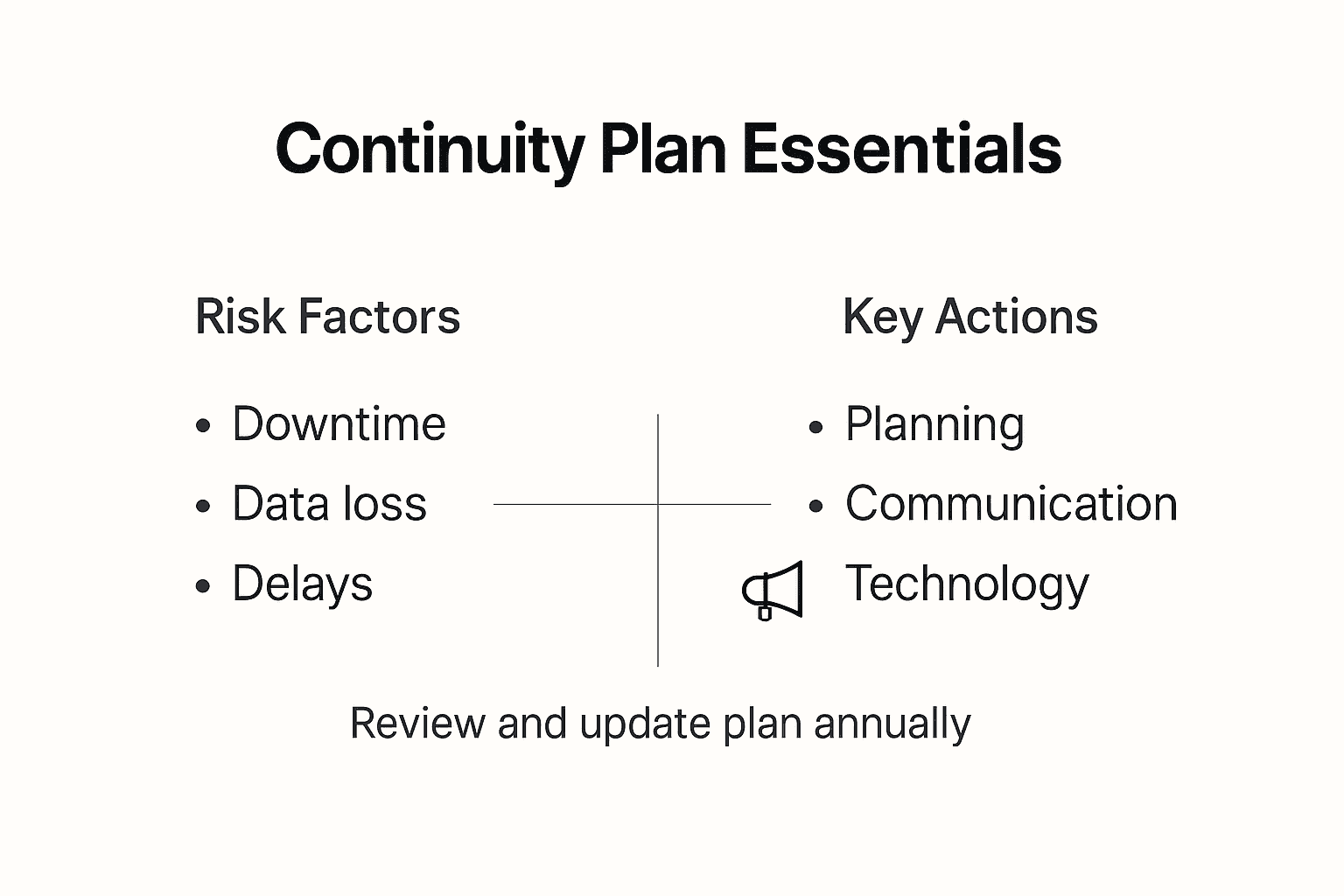
Pro Tip – Continuity Plan Validation: Conduct annual comprehensive review and stress testing of your business continuity plan, involving cross-departmental teams to simulate various disruption scenarios and identify potential improvement areas.
Office relocations in Victoria demand meticulous attention to legal and safety requirements that protect both employers and employees throughout the transition process. Comprehensive workplace health and safety protocols are not just recommended but legally mandated, ensuring organisations maintain rigorous standards during complex operational changes.
Under Victorian regulations, businesses must conduct thorough risk assessments that address potential hazards associated with office relocations. This involves identifying and mitigating risks related to physical infrastructure, equipment transportation, employee ergonomics, and workplace accessibility. Key legal considerations include workers’ compensation requirements, duty of care obligations, and compliance with the Occupational Health and Safety Act. Organisations must develop detailed documentation demonstrating proactive risk management strategies, including comprehensive moving plans, safety briefings, and contingency protocols that protect employee well-being during the transition.
The complexity of legal compliance extends beyond physical safety to encompass data protection, privacy regulations, and workplace communication standards. Businesses must ensure that sensitive information remains secure during the relocation process, maintain transparent communication with employees about potential disruptions, and implement robust systems that protect both physical and digital assets. This holistic approach requires coordination between legal, human resources, and operational teams to create a seamless and compliant relocation strategy that minimises potential legal vulnerabilities.
Pro Tip – Legal Compliance Preparation: Engage a workplace safety consultant and legal professional at least three months before your planned relocation to conduct a comprehensive compliance audit and develop a detailed risk management strategy specific to your organisation’s unique operational requirements.
Business relocations present numerous challenges that can potentially disrupt operational continuity, making proactive planning essential for minimising productivity losses. Comprehensive business continuity planning becomes critical in identifying and mitigating potential risks before they escalate into significant operational challenges.
The most common pitfalls organisations encounter during relocation include inadequate communication, poor technology transition management, insufficient backup systems, and limited contingency planning. Businesses frequently underestimate the complexity of maintaining seamless operations during physical transitions. Critical vulnerabilities often emerge in areas such as network infrastructure, data migration, communication protocols, and employee coordination. Organisations must develop robust strategies that address these potential disruption points, including establishing redundant communication channels, creating detailed migration timelines, and implementing comprehensive backup systems that ensure minimal service interruption.
Successful downtime mitigation requires a multilayered approach that integrates technological, human, and operational considerations. This involves developing strategic relocation recovery plans that outline precise protocols for maintaining critical functions during transition periods. Key strategies include creating temporary operational hubs, developing flexible work arrangements, implementing cloud-based collaboration tools, and establishing clear communication pathways that keep all stakeholders informed and aligned throughout the relocation process. Organisations must also prioritise employee training and support, ensuring team members understand their roles and responsibilities during potential disruption scenarios.
The following table outlines major business continuity pitfalls during relocation and practical strategies to avoid them:
| Common Pitfall | Potential Impact | Effective Prevention Strategy |
|---|---|---|
| Poor communication | Staff confusion and errors | Designate clear info channels |
| Weak IT planning | Service interruptions | Stage technology migration |
| Lack of backups | Data loss risks | Implement cloud backups |
| Insufficient training | Slow recovery response | Conduct relocation simulations |
Pro Tip – Downtime Prevention Preparation: Create a detailed relocation risk matrix at least four months before your move, systematically mapping potential disruption points and developing specific mitigation strategies for each identified vulnerability.
Relocating your office presents a real challenge to maintaining uninterrupted operations. The risks of poor communication, technology mishandling, and insufficient backup plans can cost time and revenue. At Onyx Removals, we understand the critical importance of business continuity during relocation and offer tailored solutions designed to minimise downtime, protect your assets, and keep your team connected throughout the process. Our experienced professionals focus on detailed planning and smooth execution so you can focus on your core business.
Are you ready to transform your relocation into a stress-free, strategically managed move? Explore our specialised business moving services and discover how Onyx Removals can deliver reliability and professionalism at every step. Visit https://onyxremovals.com.au to get a personalised quote today and take the first step towards a seamless transition that safeguards your business continuity.
Business continuity during relocation refers to strategies and plans that ensure essential business operations remain uninterrupted when a company moves its physical workplace. This approach aims to minimize revenue loss and organisational disruption during the transition.
An effective business continuity plan should include a thorough business impact analysis, detailed recovery strategies, redundant communication systems, comprehensive training for employees, and regular plan reviews to ensure preparedness for potential disruptions.
To avoid downtime, businesses should create a detailed relocation risk matrix, establish clear communication channels, stage technology migrations, implement cloud backups, and conduct training simulations for staff to ensure everyone understands their roles during the transition.
Legal and safety considerations during an office relocation include conducting thorough risk assessments related to physical infrastructure and employee ergonomics, adhering to workplace health and safety regulations, ensuring data protection compliance, and maintaining transparent communication with employees throughout the process.

No Related Post


