



Most australian businesses will encounter a relocation challenge at some point, yet over 60 percent of organisations underestimate the risks involved. Moving a business is not just about transferring furniture and computers. It can disrupt operations, impact team morale, and even result in the loss of clients or employees if poorly managed. Understanding the real hurdles behind australian business moves lets you identify the mistakes others make and uncover practical strategies for a smoother transition.
| Point | Details |
|---|---|
| Understanding Relocation Challenges | Businesses in Australia face unique logistical, financial, and human resource challenges during relocations that require meticulous planning. |
| Significance of Strategic Planning | A comprehensive strategy encompassing assessment, resource allocation, and communication is vital to minimising disruptions during the move. |
| Legal Compliance Importance | Businesses must navigate complex legal and regulatory requirements to avoid substantial risks during transitions, making proactive legal planning essential. |
| Avoiding Common Mistakes | Successful relocations demand awareness of potential pitfalls, such as inadequate planning and poor communication, to ensure effective organisational transition. |
Business relocation represents a complex strategic undertaking that extends far beyond simply moving physical assets from one location to another. Business relocations involve intricate logistical, financial, and human resource considerations that can significantly impact organisational performance and stability. Australian businesses face unique challenges when contemplating and executing relocation strategies, which require meticulous planning and strategic foresight.
According to research from Future Cities and Regions Report, many organisations encounter substantial risks during relocation processes. These risks include potential loss of customers and key employees, disruptions to operational workflows, and unexpected financial implications. Some businesses have even moved opportunistically in response to previous relocation failures, underscoring the complexity of managing such transitions effectively.
The primary challenges in business relocation typically encompass several critical dimensions:
Understanding these multifaceted challenges is crucial for Australian businesses contemplating office relocation strategies. Successful relocations demand comprehensive planning, transparent communication, and a strategic approach that balances operational needs with human resource considerations.
Business relocations in Australia are not a one-size-fits-all process, but rather a nuanced strategic decision involving multiple move types with distinct operational challenges. Business move categories range from small-scale office transitions to complex, large-enterprise relocations that demand comprehensive planning and execution strategies.
According to the Future Cities and Regions Report, businesses typically undertake moves in response to strategic opportunities or operational restructuring. These relocations can be categorised into several critical typologies:
Each move type presents unique logistical demands. Local relocations might seem straightforward but still require meticulous commercial moving strategies to minimise operational disruptions. Interstate moves introduce additional complexity, involving intricate planning around infrastructure, workforce transition, and regulatory compliance.
The financial and human resource implications of these moves can be substantial. Businesses must carefully evaluate potential risks such as employee retention, client communication, and technological infrastructure transfer. Successful relocations demand a holistic approach that balances operational efficiency with strategic long-term planning, ensuring minimal disruption and maximum organisational adaptability.

Successful office relocations demand a meticulously crafted strategic approach that balances operational requirements with logistical complexities. Strategic planning serves as the foundational framework for minimising disruptions and ensuring a smooth transition across all organisational dimensions.
According to the Future Cities and Regions Report, businesses must prioritise strategic planning to mitigate risks associated with relocations, particularly concerning customer and employee retention. A comprehensive relocation strategy typically encompasses several critical planning phases:
Technological infrastructure represents a particularly complex aspect of office moves. Businesses must ensure precise IT equipment relocation to prevent data loss and minimise operational downtime. This involves comprehensive inventory management, secure data backup procedures, and carefully coordinated hardware transportation.
The most successful office relocations treat the move as a holistic organisational transformation rather than a mere physical transition. By integrating strategic foresight, meticulous planning, and adaptive communication strategies, businesses can transform potentially disruptive relocations into opportunities for operational enhancement and strategic realignment.
Business relocations are significantly more complex than simple physical moves, involving intricate legal and regulatory considerations that can profoundly impact an organisation’s operational continuity. Legal compliance represents a critical dimension of successful business transitions, requiring comprehensive understanding of multiple regulatory frameworks and potential risk mitigation strategies.
According to the Future Cities and Regions Report, failed restructuring or relocation attempts can trigger substantial legal challenges, underscoring the importance of proactive legal planning. Key legal considerations during business relocations include:
Documentation management becomes paramount in these scenarios. Businesses must ensure secure document transportation to protect sensitive corporate information and maintain regulatory compliance throughout the relocation process.
Successful legal navigation requires a multidisciplinary approach that integrates legal expertise, strategic planning, and meticulous attention to detail. By anticipating potential regulatory challenges and developing comprehensive transition strategies, businesses can transform complex legal requirements from potential obstacles into structured pathways for seamless organisational transformation.
Business relocations represent significant financial and operational investments that demand sophisticated risk management approaches. Strategic cost control emerges as a critical component in mitigating potential financial vulnerabilities during organisational transitions, requiring comprehensive planning and proactive risk assessment.
According to the Future Cities and Regions Report, strategic planning is paramount in avoiding costly relocation failures, particularly concerning potential customer and employee loss. Key risk management strategies include:
Technological infrastructure represents a significant potential cost centre, making understanding commercial moving expenses crucial for effective budgeting. Businesses must conduct thorough equipment audits, assess replacement versus transportation costs, and develop precise migration strategies that minimise operational disruptions.
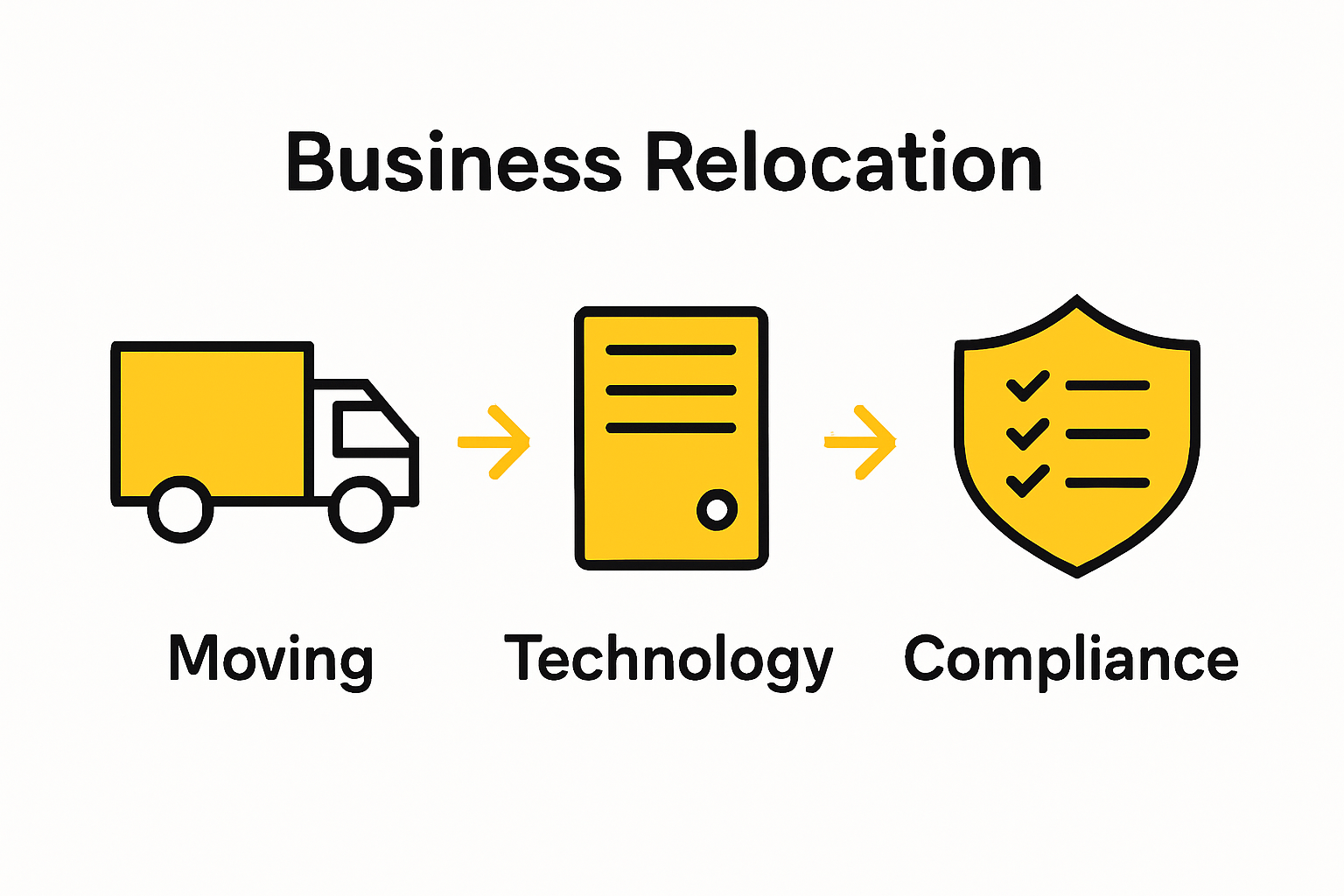
Successful risk management transcends mere financial planning. It requires a holistic approach that balances economic considerations with organisational resilience, transforming potential relocation challenges into strategic opportunities for operational refinement and long-term growth.
Business relocations are fraught with potential pitfalls that can derail even the most meticulously planned transitions. Organisational migration demands strategic foresight and proactive problem-solving to navigate the complex landscape of operational transformation.
According to the Future Cities and Regions Report, failed restructuring attempts frequently stem from strategic oversights that lead to significant customer and employee loss. The most prevalent mistakes businesses encounter during relocation include:
Technological infrastructure presents a particularly nuanced challenge, making comprehensive office equipment relocation critical for minimising operational disruptions. Businesses must develop robust migration strategies that anticipate potential technological challenges, ensuring seamless data transfer and minimal downtime.
Successful relocation requires a holistic approach that transcends mere logistical management. By understanding potential pitfalls, developing comprehensive contingency plans, and maintaining flexible, transparent communication channels, organisations can transform potentially disruptive transitions into strategic opportunities for growth and operational refinement.
Moving your business comes with complex challenges like managing operational disruption, navigating legal compliance, and handling costly logistics effectively. At Onyx Removals, we understand these pressures and offer tailored solutions designed to ease your move and protect what matters most. From precise office equipment relocation to secure document transportation we deliver professional care that keeps your business running smoothly during every step.
Discover how our dedicated business relocation services at Onyx Removals business can simplify your transition. Act now by visiting https://onyxremovals.com.au to get a personalised moving plan that minimises downtime and safeguards your team and assets. Take control of your business move today with trusted experts by your side.
Business relocation faces several challenges including geographic disruption, infrastructure adaptation, financial implications, and employee transition. These factors can greatly affect organisation performance and stability.
To minimize disruptions, businesses should implement meticulous planning, establish clear communication channels, and develop a comprehensive relocation strategy that addresses logistical, financial, and employee concerns.
Key legal considerations include reviewing and transferring existing contractual obligations, ensuring compliance with workplace regulations, managing property lease issues, and understanding tax implications related to the move.
Common mistakes include inadequate planning, poor communication with stakeholders, miscalculating the budget, neglecting technological infrastructure needs, and overlooking employee engagement during the transition.

No Related Post


