



Storing your furniture can seem straightforward, especially when you hear that Aussies used over 4 million square metres of storage space in 2023 alone. Most people think you just wrap it up and chuck it in a shed. But the real surprise is, the way you clean, cover, and position your furniture can be the difference between pulling out a pristine piece in a year or discovering you have an expensive pile of ruined wood and mouldy lounges instead.
| Takeaway | Explanation |
|---|---|
| Thoroughly clean furniture before storage | Cleaning removes dirt and prevents pest infestations, ensuring furniture preservation during storage. |
| Use breathable materials for wrapping | Wrapping furniture with breathable fabrics prevents moisture accumulation and protects against mold while allowing air circulation. |
| Choose climate-controlled storage options | Environmentally controlled storage prevents wood warping and fabric deterioration, providing optimal conditions for preserving furniture quality. |
| Inspect storage facility for safety | Ensure the facility has robust security measures and proper environmental management to safeguard your furniture from damage and theft. |
| Conduct regular maintenance during storage | Regular inspections and maintenance help monitor conditions, preventing long-term damage and ensuring furniture remains in good shape. |
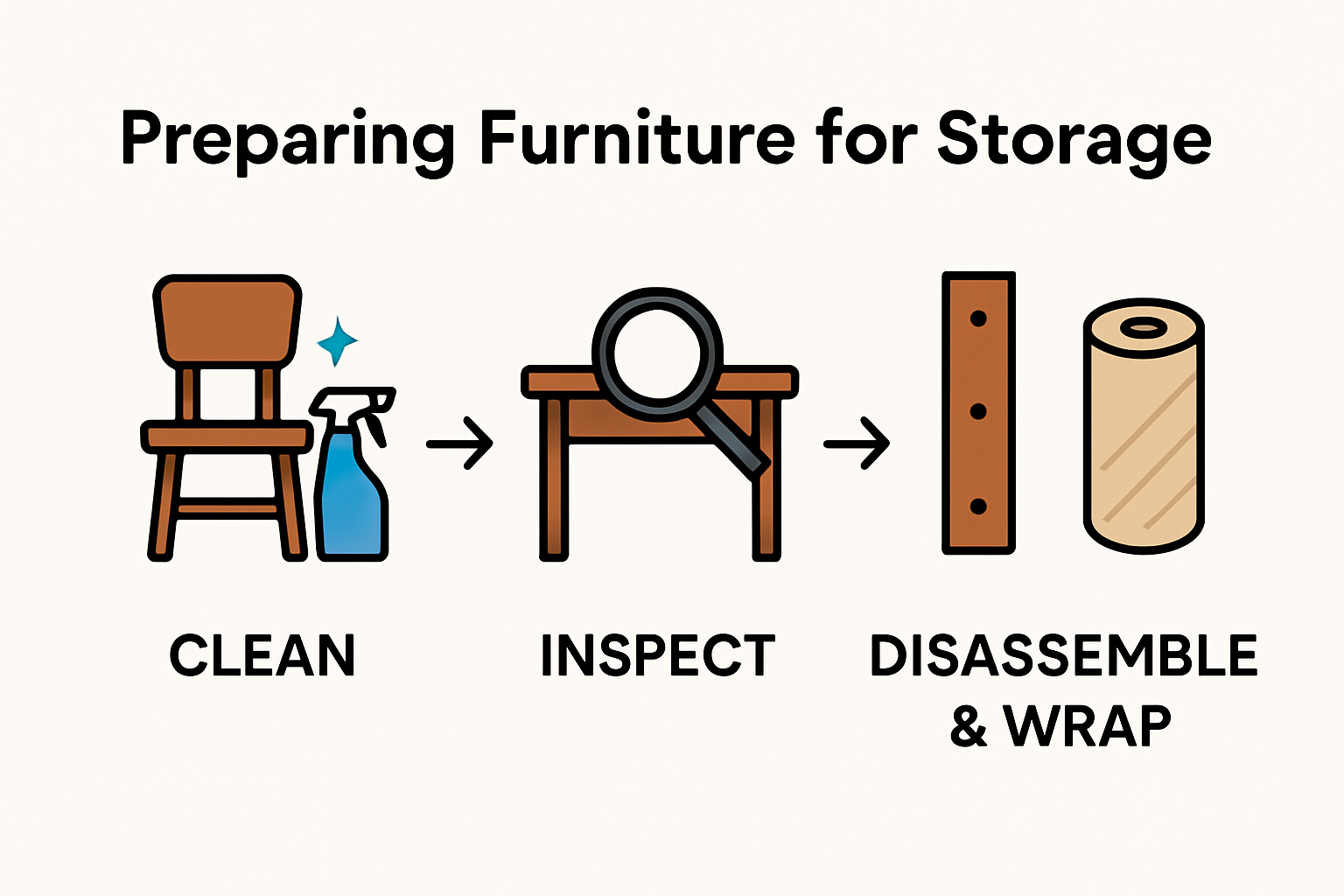
Storing furniture requires strategic planning and careful preparation to protect your valuable pieces during transportation and long-term storage. Proper preparation prevents damage, maintains the integrity of your furniture, and ensures it remains in pristine condition.
Before detailing preparation steps, here’s a summary table organising the key cleaning and protection actions for furniture as mentioned in this section.
| Preparation Step | Purpose | Materials/Actions Needed |
|---|---|---|
| Dust thoroughly | Remove dust and prevent abrasion | Soft microfibre cloth |
| Remove surface dirt | Prevent soiling and pest infestation | Mild detergent, gentle cleaning |
| Inspect for existing damage | Identify repairs before storage | Careful visual and tactile inspection |
| Wrap with breathable materials | Prevent moisture/mould, allow airflow | Cotton sheets, furniture covers |
| Disassemble large pieces | Reduce joint stress, ease transport | Screwdriver/tools, labelled bags |
| Protect delicate features | Avoid scratches and breaks | Extra wrapping, padding |
Before storing any furniture, thorough cleaning is crucial. The National Park Service recommends comprehensive cleaning to remove dirt and prevent potential pest infestations. Begin by carefully inspecting each piece for existing damage, loose joints, or areas that might need repair. Use a soft cloth with mild detergent to clean wooden surfaces, avoiding harsh chemicals that could strip finishes.
Key cleaning steps include:
Protecting furniture during storage involves strategic wrapping and potential disassembly. The Smithsonian Institution’s Museum Conservation Institute emphasizes the importance of using breathable materials to prevent moisture accumulation. Disassemble large furniture pieces when possible to reduce stress on joints and make transportation easier.
For wooden furniture, use cotton sheets or specially designed furniture covers that allow air circulation. Avoid plastic covers that can trap moisture and potentially cause mold growth. When wrapping, ensure complete coverage while maintaining breathability. Pay special attention to delicate areas like table legs, chair arms, and decorative elements.
Environmental conditions play a critical role in furniture preservation. The North Carolina Museum of History advises maintaining stable temperature and humidity levels to prevent wood shrinkage, swelling, and potential mold formation. Choose storage locations away from direct sunlight and extreme temperature fluctuations.
When preparing furniture for storage, consider packing materials that offer optimal protection. Use acid-free materials, wooden wedges for even weight distribution, and avoid stacking furniture in ways that might cause undue pressure on joints or delicate components.
By following these expert preparation techniques, you can ensure your furniture remains in excellent condition during storage, protecting your valuable pieces from potential damage and preserving their quality for years to come.
Selecting the appropriate storage solution is a critical decision that directly impacts the safety and preservation of your furniture. Your choice will depend on various factors including the type of furniture, duration of storage, and specific environmental requirements.
Here’s a comparison table outlining the primary storage facility options discussed in the section, with their respective features and best-use cases.
| Storage Option | Key Features | Best For |
|---|---|---|
| Self-storage units | Flexible access, range of sizes, basic security | Individuals/families, temporary storage |
| Warehouse storage | Large scale, industrial shelving, restricted access | Businesses, large furniture collections |
| Climate-controlled facility | Maintains temperature/humidity, high security | Valuable, antique, or delicate furniture |
Storage facilities come in multiple configurations, each offering unique advantages. The Western Australian Museum recommends prioritizing clean, dry, dark, and cool environments for optimal furniture preservation. Climate-controlled units provide the most comprehensive protection, maintaining consistent temperature and humidity levels that prevent wood warping, metal rusting, and fabric deterioration.
Storage options include:
The University of Iowa’s Environmental Health and Safety department emphasizes the importance of organized and secure storage environments. When evaluating storage solutions, inspect the facility’s infrastructure carefully. Look for robust security features like 24-hour surveillance, secure access controls, and well-maintained premises. The storage area should have strong, stable shelving that can support significant weight without risk of collapse.
Additionally, consider the facility’s approach to pest control, fire prevention, and environmental monitoring. The Northeast Document Conservation Center suggests using storage furniture made of permanent, safe materials like powder-coated steel or anodized aluminum to prevent potential chemical interactions that might damage your furniture.
Different furniture types require tailored storage approaches. Wooden furniture needs environments with stable humidity, while upholstered pieces demand protection from moisture and potential fabric degradation. Consider specialized packing materials that offer additional protection for your unique items.
Antique or delicate pieces might require more specialized storage solutions with individual protective wrapping, climate control, and minimal handling. Modern furniture often tolerates standard storage conditions but still benefits from careful preparation and strategic placement within the storage unit.
Prioritize a storage solution that offers flexibility, security, and environmental control. Your chosen facility should not just store your furniture but actively protect its condition, ensuring that when you retrieve your items, they remain as pristine as the day they were placed in storage.
Furniture storage requires nuanced approaches tailored to different types of items, each presenting unique challenges and preservation requirements. Understanding these specific needs ensures your furniture remains protected and maintains its original quality during storage.
The Smithsonian Museum Conservation Institute highlights the critical importance of environmental control for wooden furniture. Wood is particularly sensitive to temperature and humidity fluctuations, which can cause warping, cracking, and structural damage. When storing wooden pieces, maintain consistent climate conditions and avoid areas with extreme temperature changes.
Wooden furniture protection techniques include:
Upholstered furniture demands specialized storage approaches to prevent fabric deterioration, mold growth, and structural compromise. Clean fabric thoroughly before storage and ensure complete dryness. Use protective covers that allow air circulation while preventing dust accumulation. Disassemble larger pieces when possible to reduce stress on joints and fabric.
For antique or vintage upholstered items, consider additional protective measures such as acid-free tissue paper between fabric layers and avoiding compression that might permanently deform cushions or springs. Store these pieces in climate-controlled environments to minimize potential degradation.
Certain furniture types require extraordinary care during storage. Leather furniture needs specific conditioning to prevent cracking, while glass or marble components demand extra padding and careful positioning. Metal furniture requires protection against potential rust or oxidation.
Consider specialized packing materials designed for unique furniture types. Use custom-sized protective wrappings, foam padding for fragile areas, and strategic placement within storage units to minimize potential damage.
Mattresses and soft furnishings should be stored flat or vertically with proper support to maintain their shape. Avoid placing heavy items on top of these pieces, which could cause permanent deformation. For musical instruments or electronics, seek out storage solutions with precise environmental controls and minimal vibration.
By understanding and implementing these targeted storage strategies, you can ensure that each piece of furniture receives the specialized care it requires, preserving its condition and value throughout storage.
Long-term furniture storage requires ongoing attention and strategic maintenance to preserve the quality and condition of your valuable pieces. Understanding the nuanced approach to preservation can significantly extend the lifespan of your furniture during extended storage periods.
Wikipedia’s Collections Maintenance overview highlights multiple agents of deterioration that can compromise stored items. Critical environmental factors include temperature stability, humidity control, and protection from potential damaging elements. Regular monitoring helps prevent gradual degradation that might otherwise go unnoticed.
Key environmental monitoring strategies include:
The Northeast Document Conservation Center recommends using storage furniture constructed from stable, permanent materials that minimize potential chemical interactions. Powder-coated steel and anodized aluminum shelving provide optimal protection, preventing off-gassing and maintaining structural integrity.
When selecting storage furniture, consider spacing and design carefully. Avoid overcrowding, which can cause physical stress on items. Ensure sufficient air circulation between stored pieces and use adjustable shelving that accommodates different furniture dimensions. Consider implementing high-density storage systems cautiously, as they may introduce vibration risks that could damage delicate items.
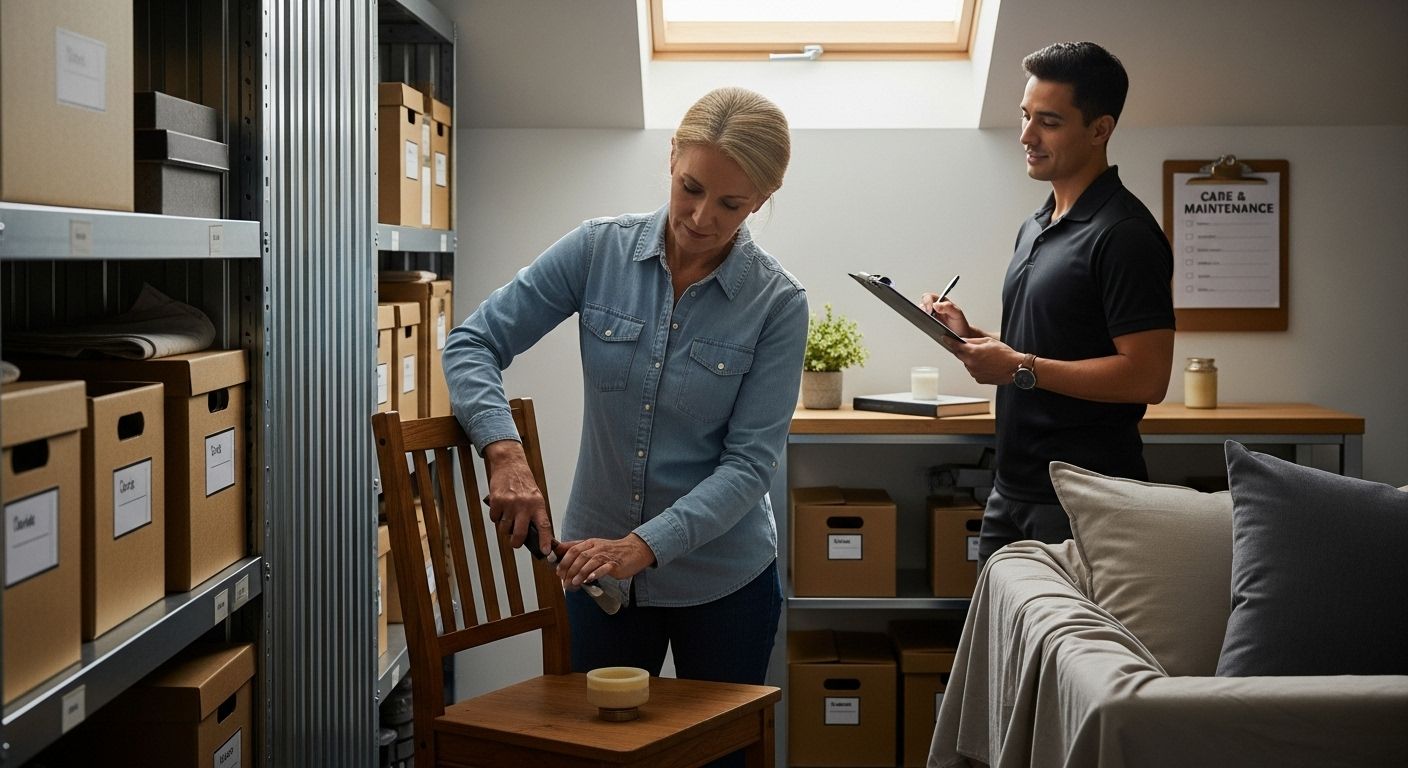
Long-term storage demands proactive maintenance beyond initial preparation. Schedule regular check-ups for your stored furniture, treating each piece as a valuable asset requiring consistent care. Rotate stored items periodically to prevent permanent pressure marks and redistribute weight.
For wooden furniture, apply a thin layer of conservation-grade wax every six to twelve months to maintain surface protection. Leather pieces might require specialized conditioning to prevent cracking, while metal components benefit from occasional light lubrication to prevent oxidation.
Consider specialized packing materials that offer ongoing protection during extended storage. Use acid-free tissue paper, breathable covers, and protective padding that maintains item integrity without causing additional stress.
By implementing these comprehensive long-term care strategies, you transform storage from a passive holding process into an active preservation method. Your furniture will not only remain protected but can potentially emerge from storage in conditions approaching its original quality, ready for immediate use or display.
To clean your furniture before storage, dust thoroughly using a soft microfibre cloth, remove any surface dirt with a gentle cleaning solution, and inspect for existing damage to identify any repairs needed.
Use breathable materials like cotton sheets or specially designed furniture covers to wrap your items. Avoid plastic covers as they can trap moisture and cause mould growth.
A climate-controlled storage facility is the best option for preserving furniture, as it maintains stable temperature and humidity levels, which prevent wood warping and fabric deterioration.
Ensure your upholstered furniture is completely dry and clean before storage, use protective covers that allow airflow, and consider disassembling larger pieces to reduce stress on joints and fabric.
Stressed about keeping your furniture safe during storage? After reading how improper cleaning, wrapping, and storage can destroy your precious pieces, it is clear that simple mistakes lead to costly regrets. Many people end up with mouldy lounges or damaged timber because they skip steps like using breathable covers or forget to choose climate-controlled storage. If you are unsure how to protect delicate furniture or need help with professional packing materials, let reliable experts handle it for you.

Choose peace of mind for your next move. Our experienced team at Onyx Removals offers tailored storage solutions, expert packing, and climate-controlled options so your furniture stays pristine for years. Visit Onyx Removals to request a free quote or discover our packing materials guide. Book now to protect your furniture the professional way before storage season fills up.
[
Top Fashion Staples for Women: Your 2025 Essential Guide
– Be Juliet
](https://bejuliet.com/blogs/blog/fashion-staples-for-women-2025-essential-guide)

No Related Post


