


TL;DR:
- Moving costs in Melbourne vary greatly depending on distance, volume, access difficulty, and timing, often surprising homeowners. Comparing detailed, itemized quotes and planning ahead can help avoid hidden fees and reduce overall expenses. Investing in optional services like professional packing and insurance generally offers better value by minimizing damages and unexpected costs.
Planning a residential move in Melbourne and expecting a simple, flat-rate price? Most homeowners are surprised to discover that moving costs can swing dramatically depending on a handful of variables. A small apartment shift across the suburb might cost $600, while relocating a four-bedroom family home across the city can push past $2,500. This guide explains every factor that shapes your moving home price, how to compare quotes properly, and where to find genuine value. Read on to budget accurately and avoid the costly surprises that catch so many Melbourne homeowners off guard.
| Point | Details |
|---|---|
| Price drivers | Distance, volume, and access difficulty are main factors behind moving costs in Melbourne. |
| Smart quoting | Always request clear and comprehensive quotes to avoid surprise fees. |
| Optional add-ons | Professional packing, storage, and insurance can prevent issues and may save money overall. |
| Avoid pitfalls | Know what’s included and plan ahead to prevent common last-minute expenses. |
| Value over lowest price | The cheapest quote isn’t always best—reputable movers deliver more value. |
With the confusion cleared, let’s detail the actual elements that shape what you’ll pay. Professional moving services have different pricing structures for house removals, and understanding those structures is the first step to controlling your budget.
Here are the key variables that influence your final bill:
A realistic example: moving a three-bedroom home from Richmond to Glen Waverley on a Saturday in December would involve approximately three to four hours of travel and loading, two to three movers, and likely a 10-tonne truck. Factoring in a Saturday surcharge and the festive-season demand spike, that move could easily sit at the upper end of Melbourne’s typical local move range of $900 to $2,500, depending on the company and inclusions. You can review a detailed Melbourne service price breakdown to see how different suburbs and home sizes stack up.
Apartments versus houses also behave very differently on an invoice. Apartments often carry lift waiting time, parking permit costs near the building, and body corporate restrictions on moving hours, all of which add fees that detached home moves simply don’t attract.
Pro Tip: Before your move date, go through every room and donate, sell, or dispose of items you no longer need. Fewer items mean fewer boxes, a smaller truck, and a shorter job. A thorough declutter using a structured moving checklist can genuinely shave hundreds of dollars off your total.
Knowing what drives your price, it’s vital to understand how to compare quotes to get the best deal. Comparing prices is essential to ensure you are not overpaying for the same service, and that means looking beyond the bottom-line figure.
Here is what every quote you receive should clearly address:
| Feature | Quote A | Quote B | Quote C |
|---|---|---|---|
| Hourly rate | $140/hr | $120/hr | $155/hr |
| Minimum hours | 3 hours | 2 hours | 3 hours |
| Packing materials included | No | Yes | No |
| Transit insurance | No | Basic | Full |
| Stair/access fees | Not stated | $50 per floor | Included |
| After-hours surcharge | Not stated | 20% | 15% |
| Fuel levy | $15 flat | Included | $20 flat |
At first glance, Quote B looks competitive. But once you add the stair fee, packing materials, and transit insurance for a property with a first-floor apartment, the totals often equalise or even reverse. Unexpected charges are common; always ask about what’s not included in the quote before you sign anything.
Follow these steps to shortlist quotes confidently:
Thinking carefully about getting removal quotes and what to ask is one of the most protective steps you can take for your budget. Many homeowners also find useful context in third-party moving companies comparison resources that explain how the removalist industry structures its pricing.
Pro Tip: Ask every removalist directly, “What charges could come up on move day that aren’t in this quote?” A reputable company will give you a straight, detailed answer. Evasive or vague responses are a red flag.
Once you’ve compared quotes, it’s important to sidestep extra costs and common oversights people make on move day. Many people lose money not because they chose the wrong company, but because they were underprepared.
The most frequent mistakes Melbourne homeowners make include:
“The small details are where budgets blow out. A removalist who can’t get their truck within thirty metres of the front door will charge you for the extra time, and rightly so. A little planning before move day eliminates most of these charges entirely.” — Onyx Removals operations team
Unexpected moving fees often catch people out, especially for packing and difficult access. If you’re considering whether to pack yourself or hand it over to professionals, understanding professional packing costs in detail will help you make a fair comparison.
It’s also worth knowing what impacts movers’ prices at a granular level, because some of the biggest cost variables (like dismantling and reassembling flat-pack furniture) are ones most homeowners don’t even think about until they’re standing in an empty room at 6 pm.
Now that you understand base prices and hidden costs, let’s look at smart add-ons that can protect your investment and sanity. Certain optional services may feel like extras, but used strategically, they can actually reduce your total spend.
Here’s a snapshot of what common add-ons typically cost for a three-bedroom Melbourne home:
| Service | Estimated cost | What it covers |
|---|---|---|
| Professional packing | $300 to $700 | Labour, materials, full room pack |
| Unpacking service | $200 to $500 | Placing items, removing boxes |
| Short-term storage (4 weeks) | $150 to $350 | Secure climate-controlled unit |
| Transit insurance (full) | $100 to $250 | Replacement value for all items |
| Furniture disassembly/reassembly | $80 to $200 | Beds, wardrobes, flat-pack items |
Packing and unpacking services come with additional fees but can prevent damages and delays. Here’s how to weigh each option:
Professional packing
Storage solutions
Full transit insurance
When it comes to overall spend, you can get a solid benchmark by reviewing the average movers cost for Melbourne moves of different sizes. The data shows that homeowners who invest in one or two key optional services typically experience fewer complications, fewer damaged items, and less follow-up stress than those who strip the quote down to the bare minimum.
If you’re time-poor, moving with young children, or relocating valuable or fragile items, professional packing is almost always worth it. The time you save and the damage you avoid frequently outweigh the additional cost several times over.
Here is an uncomfortable truth we see play out regularly. The homeowner who hunts down the cheapest possible quote often ends up spending more overall, not less. They find a bare-bones price, book without reading the fine print, and then face a series of on-the-day charges for stairs, fuel, materials, and overtime that the original quote never mentioned.
The real savings in this industry come from transparency, not from the lowest number on the page. A company that spells out every influencing price factor upfront, including the uncomfortable ones like access fees and minimum charges, is a company you can trust to show up on move day without surprises.
We’ve also observed that many Melbourne homeowners dramatically underestimate how disruptive a poorly managed move is to their finances beyond the removalist invoice. Lost work days, damaged furniture replacements, follow-up cleaning costs, and the sheer mental toll of a chaotic move all have real dollar values. Choosing a reputable, full-service removalist who is honest about pricing is genuinely cheaper when you factor in total move cost, not just the hourly rate.
The other mistake worth calling out is the assumption that DIY packing saves money. It often doesn’t. Improper packing is the single biggest cause of move-day damage claims. A broken television, cracked marble tabletop, or scratched antique dresser can cost far more to repair or replace than the packing service itself. Hire professionals for the items that matter, pack the low-risk boxes yourself, and you’ll strike the right balance.
Armed with insights and checklists, here’s how to put your move in expert hands.
At Onyx Removals, we believe every Melbourne homeowner deserves a quote that tells the full story. No vague estimates. No surprise fees on move day. Our team takes the time to understand your specific situation, from the number of rooms and access conditions to settlement timelines and specialist items, before providing a detailed, itemised price.

Whether you’re moving across the suburb or across the city, our residential removal services cover everything from packing and transport through to storage, cleaning, and furniture reassembly. The easiest way to get started is to secure home removal quotes online and let our team build a plan around your exact move. No guesswork. No hidden costs. Just a clear path to your new home.
For most homes, the average price ranges from $600 to $2,500 depending on home size, distance, and inclusions. Larger homes with access challenges or specialist items will sit at the higher end of that range.
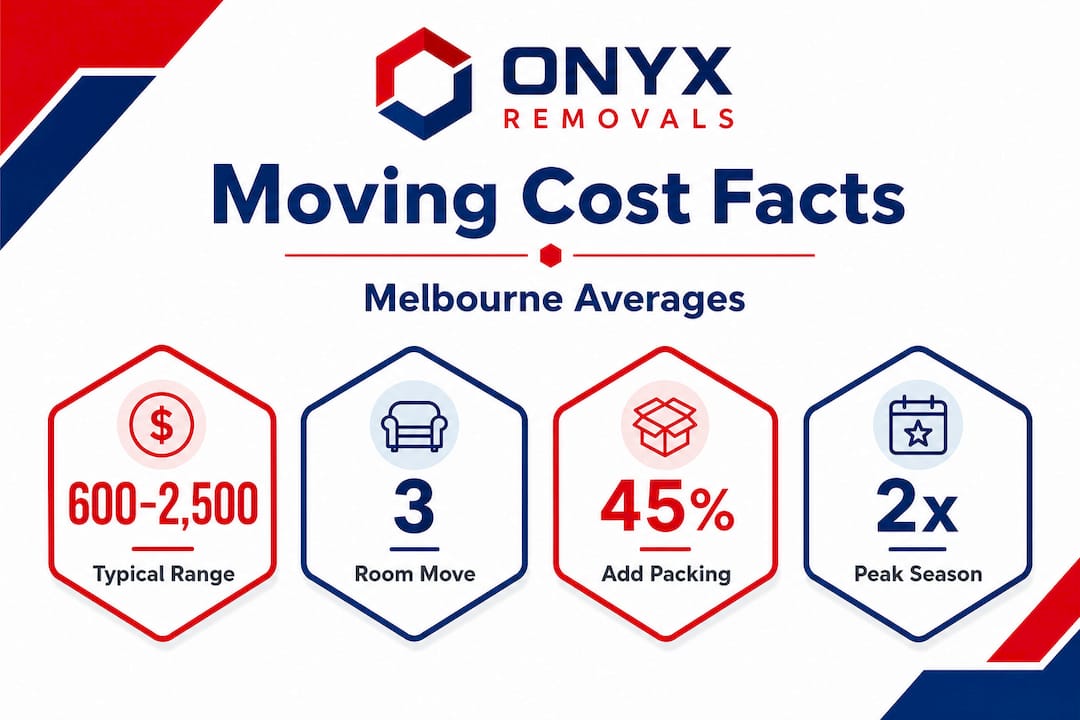
Declutter before you book, pack non-fragile items yourself, and always compare detailed quotes from at least three companies. Booking mid-week and avoiding peak season (December and end-of-month dates) also lowers your cost noticeably.
Yes, particularly for fragile, valuable, or high-volume moves. Packing services prevent damage and reduce the overall move time, which can offset the added cost, especially when you factor in the value of your time and the risk of breakages.
Different removalists structure their quotes differently, including or excluding various charges and fees such as insurance, fuel levies, access surcharges, and minimum hours. Always request an itemised written quote so you’re comparing like for like.

No Related Post


