



Getting ready for a long distance move in 2025 comes with more than just choosing a place and booking a truck. Most people expect the biggest hassle is the heavy lifting or hours of packing boxes. But only careful planning can slash your moving costs by up to 25 percent and keep your stress levels under control. Forget winging it, a strategic checklist is your ticket to a smoother and far less expensive fresh start.
| Takeaway | Explanation |
|---|---|
| Start planning at least 8-10 weeks in advance. | Early planning minimizes complications and can reduce moving costs by up to 25%. |
| Conduct a thorough inventory before packing. | Evaluate items to declutter and reduce moving expenses by eliminating unnecessary items. |
| Use protective materials for fragile items. | Invest in quality packing materials like bubble wrap and sturdy boxes to avoid damage during transport. |
| Coordinate utility transitions three weeks before moving. | Systematically manage service activations to prevent disruptions at your new home. |
| Create a detailed moving day kit. | Include important documents and necessities to ensure comfort and organization on moving day. |
A long distance move requires meticulous planning and strategic preparation to ensure a smooth transition. Unlike local relocations, these moves involve complex logistics, significant emotional investment, and substantial financial considerations. Understanding the critical steps can transform a potentially stressful experience into a manageable and even exciting journey.
Successful long distance moves start with comprehensive planning. According to the Federal Motor Carrier Safety Administration, developing a structured moving folder is crucial. This document repository should include critical paperwork such as moving contracts, inventory lists, insurance documents, and personal identification records. Organize these materials chronologically and keep digital and physical copies for added security.
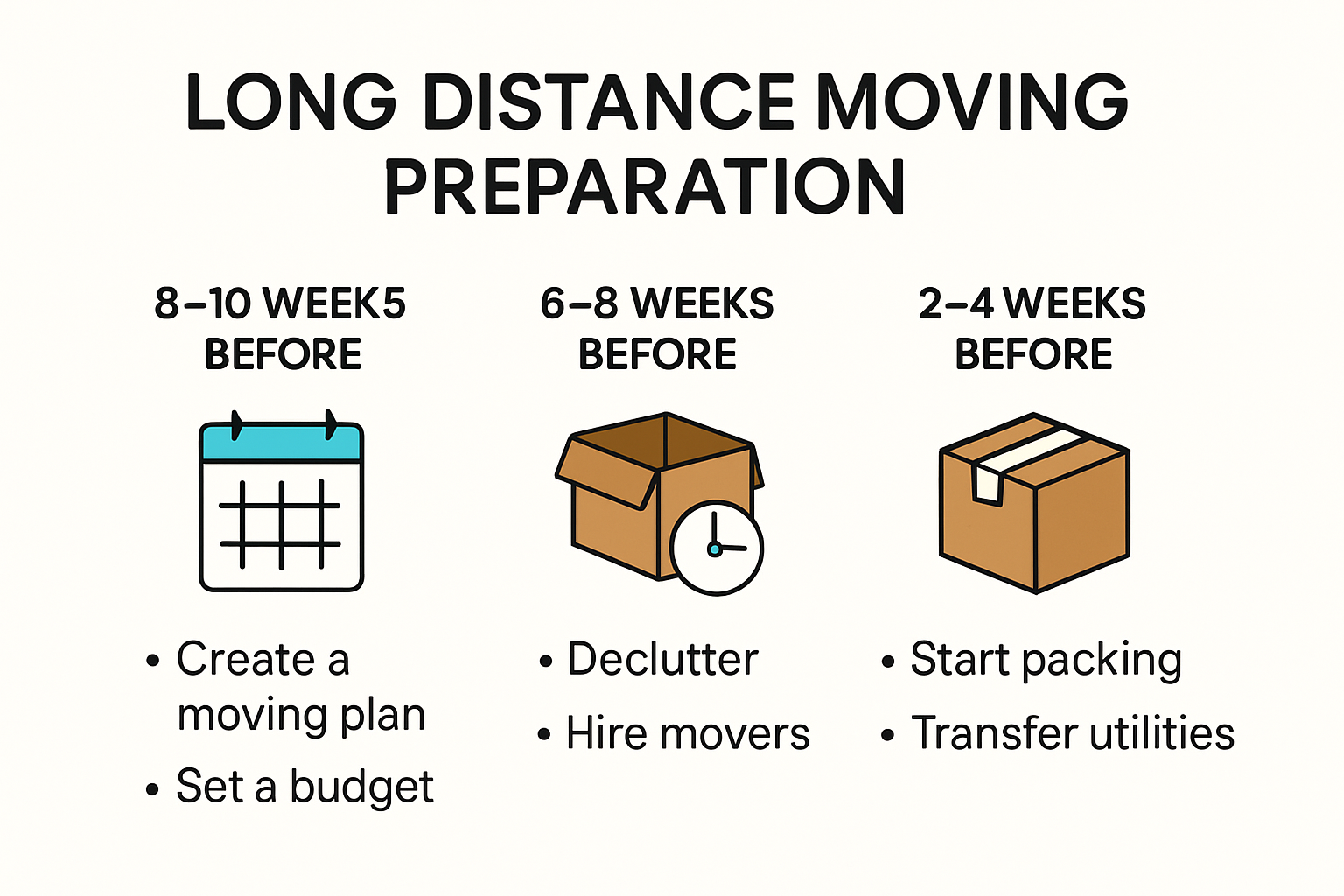
Your moving plan must also account for timeline flexibility. Professional movers recommend starting preparations at least 8-10 weeks before your scheduled move date. This window allows sufficient time for researching moving companies, obtaining multiple quotes, and making informed decisions about transportation and logistics. Research indicates that early planning can reduce moving costs by up to 25% and minimize potential logistical complications.
Before packing a single box, conduct a comprehensive home inventory. This process involves systematically evaluating every item you own and making deliberate decisions about what to keep, donate, sell, or discard. Long distance moves are expensive, and transporting unnecessary items increases overall moving costs. Consider the replacement value of items versus shipping expenses.
Decluttering is more than just reducing volume it is a strategic approach to simplifying your relocation. Start by categorizing items into clear groups: essentials, sentimental items, replaceable goods, and unnecessary possessions. For items with emotional significance but limited practical use, consider photographing them or finding alternative preservation methods. This approach helps manage both physical and emotional attachments during the moving process.
For those seeking additional guidance on apartment and residential moves, check out our comprehensive moving tips to streamline your preparation process. Each move presents unique challenges, and having a robust strategy can make all the difference in ensuring a smooth transition to your new home.
By approaching your long distance move with careful planning, systematic organization, and a clear strategic vision, you can transform a potentially overwhelming experience into a structured and manageable journey. Remember, preparation is the cornerstone of a successful relocation.
Here is a table to help you organise the decluttering and inventory process mentioned above. It summarises key item categories and suggested actions for each, based on the advice provided in the content.
| Item Category | What to Consider | Suggested Action |
|---|---|---|
| Essentials | Daily use, immediate need | Pack first and keep accessible |
| Sentimental Items | Emotional value, memory | Photograph or preserve carefully |
| Replaceable Goods | Easily bought again, low value | Sell, donate, or discard |
| Unnecessary Possessions | No use, no emotional value | Donate, sell or discard |
| Valuable Documents | Personal/legal importance | Place in moving folder, transport yourself |
Packing for a long distance move requires more than simply throwing items into boxes. Strategic packing protects your belongings, reduces potential damage, and streamlines the entire moving process. Understanding the nuanced approach to packing different types of items can save time, money, and significant stress during your relocation.
According to This Old House, gathering free packing supplies from local businesses can significantly reduce moving expenses. Smart packers use household items like blankets and towels as protective packing materials, creating a cost effective and environmentally conscious approach. Systematic packing begins with purging unnecessary items and creating a comprehensive inventory.
Professional movers recommend a room-by-room packing strategy. Start with storage areas and less frequently used spaces, gradually moving towards daily essential zones. Constellation’s moving guide suggests color-coding boxes by room and clearly labeling contents. This method ensures efficient unpacking and helps movers understand where each box belongs in your new home.
Specialty items require extra attention during long distance moves. Invest in specialty packing equipment for fragile possessions such as bubble wrap, sturdy boxes, and custom padding. Electronics, artwork, antiques, and delicate instruments need individual wrapping and cushioning. Consider original packaging for electronics when possible, as these provide the most secure transportation.
For those seeking additional guidance on managing complex moving logistics, explore our apartment moving tips to ensure a smooth transition. Each item requires a tailored approach to guarantee its safe arrival at your new destination.
Valuable documents, jewelry, and irreplaceable personal items should be packed separately and transported personally. Create a dedicated moving folder containing these critical items, keeping them within your immediate control throughout the relocation process. This approach minimizes risk and provides peace of mind during what can be a stressful transition.
Remember that proper packing is an investment in protecting your belongings. Take time to pack carefully, use quality materials, and approach the task with patience and methodical precision. Your future self will appreciate the extra effort when your items arrive safely and intact at your new home.
Here is a summary table comparing packing strategies for general belongings versus fragile/specialty items, based on the tips provided in the article.
| Packing Strategy | General Belongings | Fragile/Special Items |
|---|---|---|
| Packing Materials | Blankets, towels, free boxes | Bubble wrap, sturdy boxes, padding |
| Packing Method | Room-by-room, label/color-code | Individual wrapping, custom support |
| Unpacking Approach | By room, essential zones first | Personally supervised/unpacked first |
| Special Instructions | Use household items for protection | Use original packaging if possible |
| Transport | With main moving service | Personally transport valuables |
Long distance moves require intricate coordination of multiple services and meticulous final arrangements. This complex process involves more than simply transporting belongings from one location to another. Successful moves demand strategic planning, comprehensive communication, and systematic approach to managing numerous logistical elements.
Transitioning utility services represents a critical component of long distance moving preparations. According to Yale University’s Household Moving Checklist, comprehensive service coordination should begin at least three weeks before your scheduled move date. This involves systematically disconnecting services at your current residence and establishing new connections at your destination.
Key utility services requiring attention include electricity, water, gas, internet, phone lines, and municipal services. Create a detailed spreadsheet tracking each service provider, cancellation dates, and new account activation timelines. Proactively managing these transitions prevents potential service interruptions and ensures a smoother relocation experience.
Documentation plays a pivotal role in long distance moving preparations. The Federal Motor Carrier Safety Administration recommends obtaining estimates from multiple moving providers and verifying their official registration. Collect and organize critical documents including moving contracts, insurance policies, inventory lists, and personal identification records.
Ensure you thoroughly understand your moving company’s policies regarding liability, transportation timelines, and potential additional fees. Request a comprehensive written agreement detailing all service parameters. Maintain digital and physical copies of all documentation to protect yourself during the moving process.
The final weeks before a long distance move demand precise coordination and attention to detail. Assign a dedicated move coordinator responsible for overseeing the entire relocation process. This individual will track progress, communicate with service providers, and manage unexpected challenges.
Our comprehensive moving services can provide additional support in navigating these complex arrangements. Confirm all logistical details with your moving company, including precise pickup and delivery schedules, transportation methods, and special handling requirements for delicate items.
Prepare a personal moving day kit containing essential documents, medications, important electronics, and immediate necessities. This preparedness ensures you remain comfortable and in control during the transition, regardless of potential unexpected circumstances.
Remember that successful long distance moves are the result of thorough planning, clear communication, and strategic coordination. By approaching your relocation with methodical precision and comprehensive preparation, you can transform a potentially stressful experience into a manageable and organized transition.
The final stages of a long distance move are just as critical as the preparation phase. Successfully transitioning from your old residence to a new home involves strategic planning, careful management, and a systematic approach to unpacking and organizing your belongings.
Move-out day requires meticulous attention to detail and careful coordination. Professional movers recommend conducting a final walkthrough of your original residence to ensure nothing is left behind. Consumer Reports suggests creating a final checklist that includes checking all closets, cabinets, storage areas, and outdoor spaces. Take photographs of the empty space as documentation, which can be crucial for securing your security deposit or proving the condition of the property upon departure.
Ensure all fragile and valuable items are personally supervised during loading. Maintain a detailed inventory and cross-reference it with the moving company’s documentation. Watch carefully as items are loaded, noting any potential damage or special handling requirements. Communication with your moving team is paramount during this critical transition phase.
Upon arrival at your new location, approach unpacking with a strategic mindset. The National Association of Productivity and Organizing Professionals recommends prioritizing essential areas first. Begin with the kitchen and bedroom, as these spaces are crucial for immediate functionality. Unpack bedding, basic kitchen essentials, and personal care items before tackling less critical areas.
Create a systematic unpacking plan that minimizes chaos. Unpack room by room, starting with the most essential spaces. Check out our apartment moving tips for additional guidance on efficiently settling into your new home. Label boxes clearly and have a designated staging area for unpacked items to maintain order during the process.

Beyond physical unpacking, settling into a new home involves emotional and practical adaptation. Take time to familiarize yourself with the new space, locate essential utilities, and understand the home’s unique characteristics. Create a list of immediate home maintenance tasks and necessary purchases to make the space feel like home.
Establish a routine quickly to ease the transition. Explore your new neighborhood, locate essential services, and begin to create a sense of community. Update your address with important institutions, transfer medical records, and register with local services. Consider creating a home maintenance schedule to stay organized in your new environment.
Remember that moving is more than a physical transition it is an emotional journey. Be patient with yourself and your family during this significant life change. Celebrate small victories, take breaks when needed, and approach the settling-in process with flexibility and optimism.
A successful long distance move is not just about transporting belongings it is about creating a smooth transition to a new chapter of your life. By maintaining a strategic approach, staying organized, and remaining adaptable, you can transform a potentially stressful experience into an exciting new beginning.
Start planning at least 8-10 weeks in advance to minimize complications and potentially reduce moving costs by up to 25%. Create a strategic moving plan that includes organizing essential documents and developing a timeline.
Conduct a thorough home inventory, categorizing items as essentials, sentimental, replaceable, or unnecessary. Making deliberate decisions about what to keep, donate, sell, or discard will help reduce moving expenses.
For packing fragile items, invest in quality packing materials such as bubble wrap, sturdy boxes, and custom padding. Ensure each item is individually wrapped and cushioned to prevent damage during transport.
Coordinate utility transitions at least three weeks before moving day. Create a detailed spreadsheet to track each service provider, cancellation dates, and new account activation timelines to prevent service interruptions.
Feeling overwhelmed by all the planning, decluttering, and preparation in your long distance moving checklist? You are not alone. Many Melbourne residents face the same challenges: hidden costs, complicated logistics, and worries about protecting fragile belongings and seamlessly organising utilities and documentation. These pains can turn your fresh start into a stressful situation fast.
Let Onyx Removals show you a better way. Our expert team makes every stage of your move simple and secure, from providing professional packing solutions to handling delicate items with care. You get detailed planning, reliable service, and clear communication, matching the strategic approach outlined in your checklist. Do not leave your peace of mind to chance. Visit Onyx Removals to see how our tailored moving services take the hassle out of relocations. Want to make sure every detail is covered? Explore our practical moving tips or reach out today to start building your personalised moving plan. Spots are filling up quick for 2025, so act now and secure your move with confidence.

No Related Post


