



Moving house in Melbourne can be a massive challenge and nearly half of Aussies list moving as one of their most stressful life events. You might think packing is just about boxes and bubble wrap but the real clincher is organisation. Starting as early as four weeks ahead, with colour-coded stickers proven to speed up unpacking and lower stress, surprises most people. Turns out, a calm and smooth move is not luck. It is the result of specific steps you probably have not even heard about.
| Takeaway | Explanation |
|---|---|
| Start packing early | Begin packing at least four weeks in advance to avoid last-minute stress. Organise and label boxes by room to streamline the moving process. |
| Organise critical documents | Keep essential paperwork in a designated folder that is easily accessible throughout the move. Include lease agreements and utility transfer records. |
| Establish clear roles on-site | Designate a point person to coordinate activities and communicate effectively with the moving team to ensure a smooth transition. |
| Consider special transportation needs | Prepare for the transport of plants and fragile items requiring special care, including temperature control and protection during transit. |
| Plan for emotional readiness | Maintain a positive mindset and flexibility to manage unexpected challenges on moving day, contributing to a less stressful experience. |
What happens on moving day depends entirely on how well you prepare in the weeks leading up to your relocation. A strategic approach can transform a potentially chaotic experience into a streamlined transition. Proper preparation minimises stress and ensures every aspect of your move is carefully orchestrated.
Packing represents the cornerstone of successful moving preparation. Professional movers recommend starting this process at least four weeks before your scheduled moving date. Begin by creating a comprehensive inventory of all items you plan to transport. According to HGTV’s moving guide, systematic categorisation helps prevent last-minute panic and potential item loss.
Start with non-essential items first. Pack room by room, labelling each box with its contents and designated location in your new space. Colour-coded stickers can help movers quickly identify where each box belongs. Consider creating a separate box for essential items you’ll need immediately upon arrival – including toiletries, basic kitchen utensils, and a change of clothes.
Here is a table summarising key packing and organisation strategies for a smooth move:
| Strategy | Description |
|---|---|
| Start early | Begin packing at least four weeks before moving day |
| Inventory all items | Create a list of everything to be moved |
| Pack room by room | Organise and pack items according to each room |
| Label boxes clearly | Write contents and destination room on each box |
| Use colour-coded stickers | Attach stickers by room to speed up unloading and unpacking |
| Separate essentials box | Pack items needed for the first night separately and label as ‘Essentials’ |
Documentation management is crucial on moving day. Yale University’s Household Moving Checklist emphasises the importance of having all necessary paperwork organised and easily accessible. This includes lease agreements, identification documents, moving contracts, and utility transfer records.
Create a dedicated folder containing these critical documents. Make digital and physical copies, storing them in separate locations to prevent potential loss. Ensure contact information for your moving company, real estate agent, and key service providers is readily available. Pro tip: store this folder in a clearly marked, easily transportable bag that stays with you throughout the move.
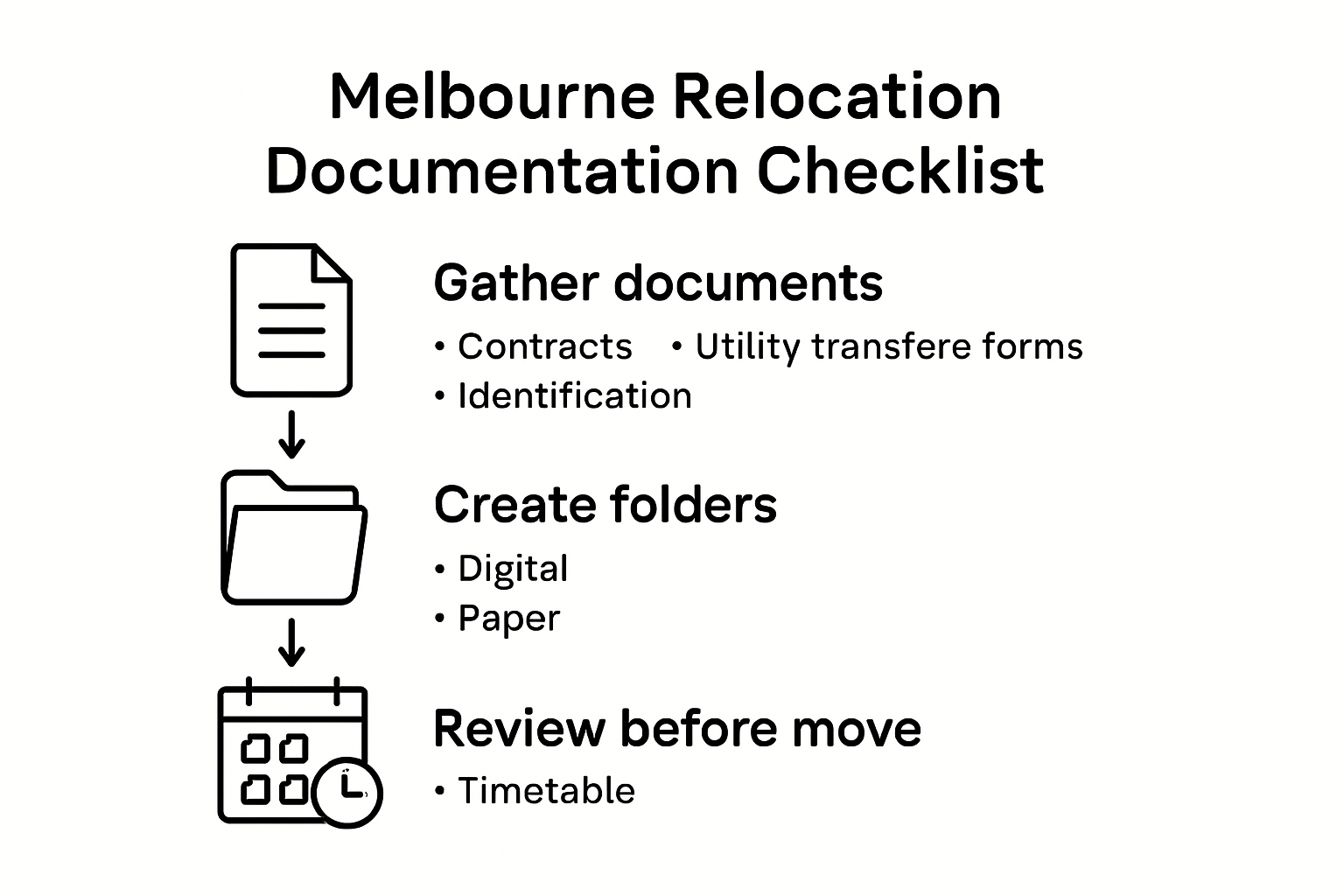
In the 48 hours before moving day, conduct a final comprehensive review of your preparation. Check that all items are packed, utilities are scheduled for disconnection and reconnection, and you have confirmed the arrival time with your removalist team for apartment relocations. Charge all electronic devices and prepare a basic “first night” kit with essentials like phone chargers, basic cleaning supplies, and a few snacks.
Remember that successful moving preparation is about anticipating potential challenges and having flexible solutions. While no move is perfectly predictable, a well-structured plan significantly reduces unexpected complications. By investing time in meticulous preparation, you transform moving day from a potentially stressful event into a manageable, even exciting, life transition.
Moving day represents the culmination of weeks of preparation, where carefully planned strategies transform into real-world action. Understanding the precise sequence of on-site activities helps ensure a smooth, efficient relocation process that minimises potential disruptions and stress.
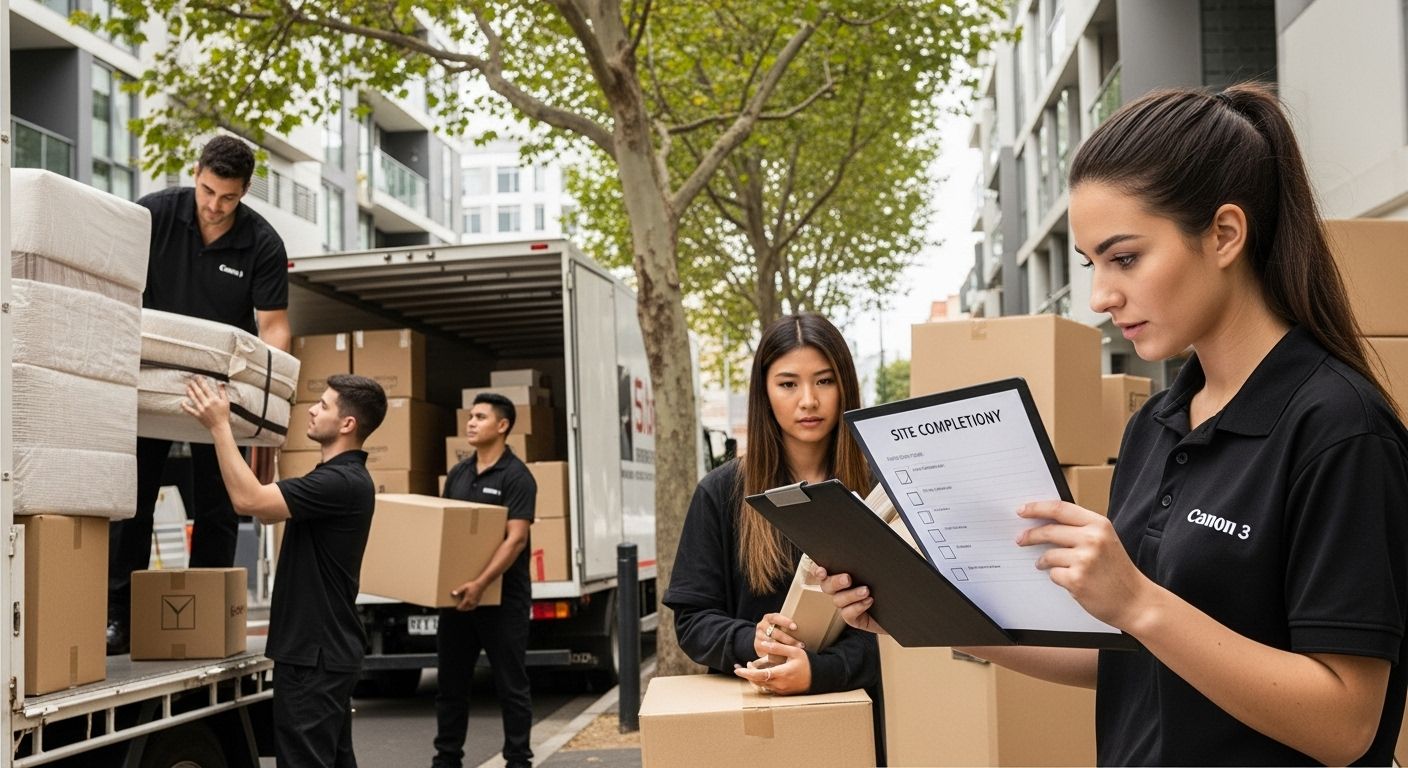
The first few hours of moving day are critical for establishing a structured workflow. According to the National Business Officers Association’s relocation strategies, effective on-site coordination begins with clear communication and designated roles. When the moving team arrives, a designated point person should be ready to greet them and provide a comprehensive overview of the moving plan.
Prioritise creating a strategic pathway for moving items. This involves clearing potential obstacles, protecting floor surfaces, and establishing specific zones for different types of items. Furniture protection and pathway preparation are crucial to prevent damage and ensure efficient movement. Communicate any specific handling instructions for delicate or valuable items before loading begins.
Oregon State University’s Move Guide emphasises the importance of equipment readiness and logistical precision. Ensure all necessary moving equipment is prepared and accessible. This includes dollies, protective wrapping materials, straps, and any specialized transportation tools required for unique items.
Maintain a real-time inventory tracking system during the move. Use digital or physical checklists to monitor the progress of item transportation. This helps prevent items from being misplaced and provides immediate accountability. Assign team members to specific responsibilities: some managing loading, others overseeing documentation, and some coordinating transportation logistics.
As the moving process progresses, continuous communication and verification become paramount. The EPA’s project management guidelines recommend regular on-site meetings and progress checks. Conduct periodic walkthroughs to ensure all items are being handled correctly and nothing is accidentally left behind.
Before finalizing the move, perform a comprehensive site inspection. Check that all rooms are empty, no items are overlooked in storage spaces or hidden corners, and any pre-agreed cleaning or repair tasks are completed. Obtain written confirmation from the moving team that all items have been transported and verify the condition of both the original and new locations.
A successful moving day is not just about transporting items from one location to another. It’s about maintaining professionalism, protecting your belongings, and executing a well-orchestrated plan. By staying organized, communicative, and attentive to details, you can transform what could be a stressful experience into a smooth, efficient transition.
Below is a table summarising the key on-site responsibilities and who should handle them:
| Task | Responsible Party | Description |
|---|---|---|
| Greeting/removalist briefing | Point person (owner/tenant) | Welcome moving team, outline day’s plan |
| Pathway & surface prep | Owner/tenant & movers | Remove obstacles, protect floors, set item zones |
| Delicate item instructions | Owner/tenant | Alert movers to valuables, explain instructions |
| Equipment handling | Movers | Operate dollies, straps, padding, etc. |
| Inventory checklist | Owner/tenant or assistant | Track items as they’re loaded and unloaded |
| Final walkthrough | Owner/tenant & movers | Confirm rooms empty and no items left behind |
| Cleaning/repairs | Owner/tenant or cleaning crew | Fulfil end-of-lease cleaning/repair obligations |
Moving involves more than simply transporting standard household items. Certain belongings require specialized handling and care, particularly delicate living things like plants, fragile deliveries, and the often-overlooked process of thorough cleaning. Understanding these unique requirements ensures a comprehensive and professional moving experience.
Transporting plants demands exceptional care and strategic planning. Unlike furniture or boxed items, living organisms require specific environmental conditions to survive relocation. Temperature, humidity, and physical movement can significantly impact plant health during transportation. Professional movers recommend preparing plants weeks in advance by gradually acclimating them to potential transportation stress.
Prepare plants by pruning excess growth, checking for pests, and ensuring they are adequately hydrated but not waterlogged. Use specialized plant containers that provide stability and protection. Protective wrapping and temperature-controlled transportation are crucial. For larger or more sensitive plants, consider professional plant moving services that understand the nuanced requirements of different species.
Commercial and retail moves require precision and advanced logistical planning. Apartment Moving Tips for 2025 highlight the importance of detailed inventory management for business relocations. Businesses must coordinate delivery schedules, manage sensitive equipment, and ensure minimal disruption to operational workflows.
Specialized delivery protocols involve careful packaging of electronics, fragile equipment, and valuable inventory. Use shock-absorbent materials, custom crating for unique items, and implement real-time tracking systems. Coordinate with warehouse management to ensure seamless transition of stock and equipment. Professional movers can provide dedicated teams experienced in handling complex commercial moving requirements.
Cleaning represents a critical yet often underestimated aspect of moving. Comprehensive cleaning ensures the return of rental bonds, maintains property value, and demonstrates professional responsibility. Begin by conducting a thorough assessment of the property, identifying areas requiring deep cleaning or repair.
Focus on key areas such as kitchen appliances, bathroom fixtures, wall surfaces, and flooring. Remove all personal belongings, patch any wall holes, and ensure the space is returned to its original condition. Professional cleaning services can provide detailed end-of-lease cleaning that meets strict rental agreement standards. They use specialized equipment and cleaning agents to restore properties to pristine conditions.
Special moving needs demand more than standard transportation services. They require expertise, careful planning, and a nuanced understanding of specific requirements. By approaching plants, deliveries, and cleaning with professional attention to detail, you transform a potentially stressful moving experience into a smooth, efficient transition that protects your valuable possessions and maintains your professional reputation.
Moving day can often feel overwhelming, particularly in a dynamic city like Melbourne. Strategic preparation and a calm approach can transform what might seem like a chaotic experience into a smooth, manageable transition. Understanding key stress-reduction techniques helps ensure your moving day proceeds with minimal complications.
Psychological readiness is as crucial as physical preparation. Moving Tips from Onyx Removals emphasise the importance of maintaining a positive mindset throughout the relocation process. Start your moving day with a structured morning routine that includes adequate rest, a nutritious breakfast, and a few moments of calm reflection.
Mental preparation involves anticipating potential challenges without catastrophising. Create a flexible mindset that allows for unexpected developments. According to TSI’s moving stress guide, successful movers approach the day with patience and adaptability. Emotional resilience becomes your most valuable asset when navigating the complexities of relocation.
Practical planning can significantly diminish moving day anxiety. Churchill Mortgage’s relocation insights recommend creating a detailed day-of survival kit. Pack a separate bag with essential items: important documents, medications, phone chargers, basic toiletries, a change of clothes, and some snacks. Having these readily accessible prevents unnecessary searching and reduces potential frustration.
Establish clear communication channels with your moving team. Provide them with your contact information and a comprehensive overview of your expectations. Designate a point person who can make quick decisions and coordinate logistics. This approach minimises confusion and helps maintain a smooth workflow throughout the moving process.
The Dulles Regional Chamber of Commerce highlights the significance of contingency planning. Despite meticulous preparation, unexpected situations can arise. Have a backup plan for potential challenges such as traffic delays, equipment issues, or last-minute packing requirements.
Consider the practical comforts that can make your moving day more bearable. Arrange for refreshments, ensure you have comfortable clothing, and plan for short breaks. If you have children or pets, arrange alternative care to reduce additional stress. Melbourne’s unpredictable weather means having appropriate clothing and protective gear for your belongings is essential.
A stress-free moving day is not about eliminating all potential challenges but about developing a resilient approach to managing them. By combining thorough preparation, emotional readiness, and flexible problem-solving, you can transform moving day from a potentially overwhelming experience into an exciting new chapter in your life. Remember, every challenge is an opportunity to demonstrate your adaptability and strength.
Start preparing for moving day at least four weeks in advance. Create an inventory of items, pack room by room, use colour-coded labels, and keep essential items in a separate box for easy access upon arrival.
Keep all critical documents in a dedicated folder, including lease agreements, utility transfer records, and identification. Make both digital and physical copies and have them easily accessible throughout the moving process.
Designate a point person to coordinate with the moving team, manage the packing and unpacking workflow, and conduct regular checks to ensure everything is on track. Assign specific tasks, such as inventory management and equipment handling, to streamline the process.
Develop a mental preparedness plan by maintaining a positive mindset, having a detailed day-of survival kit with essentials, and establishing clear communication channels with the moving team. Be flexible and ready to adapt to any unexpected challenges that may arise.
You have just discovered how much organisation and last-minute panic moving can create. Whether you are worrying about lost boxes, sorting through legal papers or prepping delicate plants for transport, the right support can completely change your experience. The article highlights common pain points like time-pressured packing, disorganised documentation and the overwhelming feeling you get when things slip through the cracks.
Onyx Removals specialises in personalised and stress-free moving solutions for Melbourne. Our experienced team uses proven systems such as colour-coding, thorough planning and professional packing so you can avoid costly mistakes and unnecessary stress. We take care of everything from residential to business moves, including careful handling of plants, detailed cleaning and full logistics support. Ready to move smarter? Start your journey to a calm and seamless relocation by visiting Onyx Removals for practical tips and trusted moving services. You can also explore our step-by-step moving tips or get expert advice for apartment moves in Melbourne. Take the first step now and discover how effortless moving day can feel when you trust Melbourne’s dedicated removalist team.

No Related Post


