



TL;DR:
- Moving costs in Melbourne vary widely depending on services, distance, and move size.
- Preparing in advance, decluttering, and obtaining detailed quotes help reduce expenses.
- Prioritize value and clear insurance over the lowest quote to avoid costly surprises.
Moving house in Melbourne seems straightforward until the quotes start rolling in and the numbers don’t match your expectations. Most people assume a local move costs a few hundred dollars, but the reality is far more variable. Volume, access, timing, and the services you choose all push that number up or down in ways that catch people off guard. Whether you’re a renter moving between suburbs, a family upgrading to a larger home, or a small business shifting offices, understanding what drives moving costs puts you firmly in control. This guide breaks down every major cost factor, shares practical savings strategies, and helps you avoid the hidden fees that blow out budgets.
| Point | Details |
|---|---|
| Plan for variable costs | Moving costs in Melbourne vary based on home size, distance, and optional services. |
| Major cost drivers | Timing, access challenges, and special items increase your final bill. |
| Practical money-saving steps | Compare quotes, declutter, and move on off-peak days to save money. |
| Avoid hidden charges | Careful planning and detailed estimates help prevent nasty last-minute surprises. |
The first thing to accept is that there’s no single “standard” price for a Melbourne move. Moving costs in Melbourne can range from a few hundred to several thousand dollars depending on services and distance. A basic studio flat move across a few suburbs looks nothing like a four-bedroom family home shifting from the inner north to the Mornington Peninsula.
So what actually makes up the total? At the core, you’re paying for labour (the removalists themselves), the truck, travel time, and any additional services like packing, storage, or specialist handling. The cost breakdown for removalists typically separates these into fixed and variable components, which is why two quotes for the “same” move can look very different.
Here’s a quick overview of the main factors that shape your final bill:
To give you a clearer picture, here’s how three common moving options compare:
| Moving option | Estimated cost range | What’s typically included |
|---|---|---|
| DIY truck hire | $150 to $400 | Truck rental, fuel, your own labour |
| Standard removalist | $600 to $1,800 | Two movers, truck, travel time |
| Full-service removalist | $1,500 to $4,500+ | Packing, moving, unpacking, insurance |
For budgeting your move, it pays to map out exactly which services you need before requesting quotes. Removalists price what you ask for, so vague requests lead to vague quotes and unexpected extras on the day.
“Getting a detailed, itemised quote before moving day is the single most effective way to avoid bill shock.”
Knowing the basic cost range is just the start. It’s the details of your move that usually decide your final bill.
Once you understand the baseline, the next step is identifying which variables will hit your specific move hardest. Professional movers in Melbourne charge different rates depending on factors such as move size, distance, and service level. But some variables carry far more weight than others.
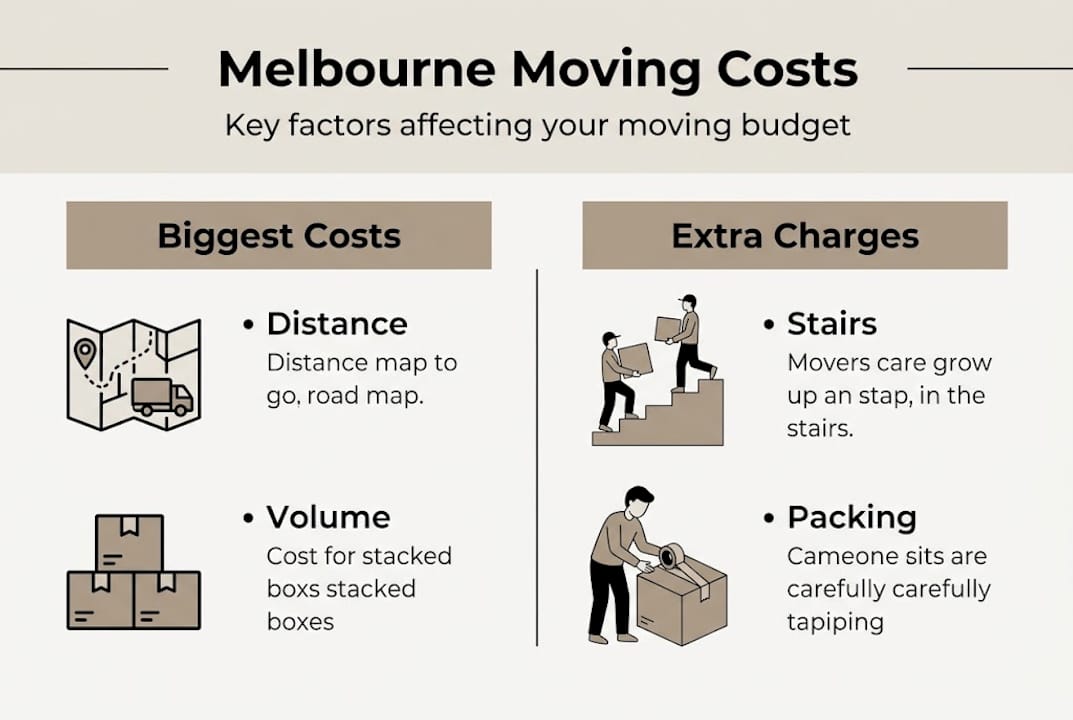
Here’s a breakdown of the most influential cost factors:
To put numbers to these variables, here’s what you can typically expect:
| Variable | Lower cost scenario | Higher cost scenario |
|---|---|---|
| Access | Ground floor, clear path | Third floor, no lift, narrow stairs |
| Move size | Studio or 1-bedroom | 4+ bedroom family home |
| Timing | Tuesday, off-peak month | Saturday, long weekend |
| Packing | Self-packed, boxes supplied | Full packing service required |
| Specialty items | Standard furniture only | Piano, antiques, fragile art |
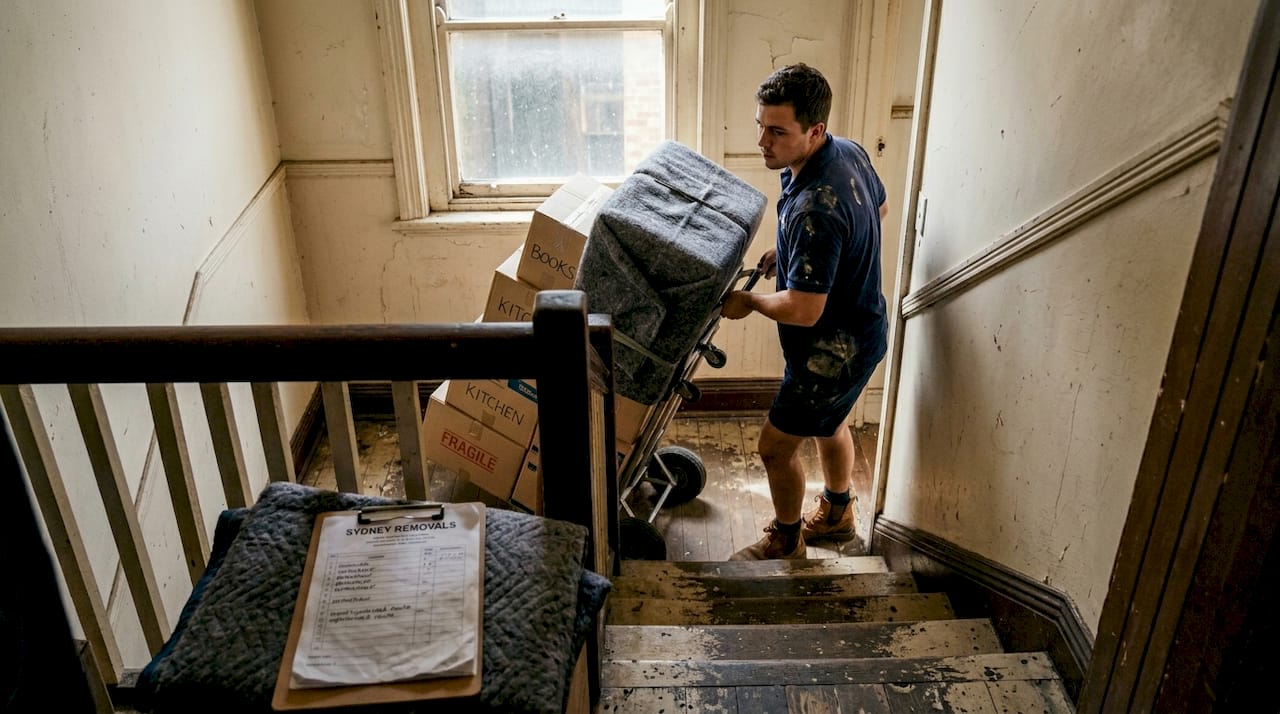
The house movers cost breakdown shows that access conditions alone can add 20 to 40 per cent to a quote. If you live in an apartment with a slow lift or a heritage terrace with a narrow staircase, factor that in from the start.
For organising your move efficiently, it also helps to think about what can be done in advance to reduce complexity on the day itself.
Pro Tip: Bundling packing and moving services with the same company often works out cheaper than hiring separately. Removalists can sometimes offer a package discount, and having one team handle everything reduces the risk of items being damaged during the handover between services.
You can’t control every factor, but there are concrete ways to save on your next move.
Choosing the right moving option and preparing early can significantly reduce moving costs. The key is knowing where the real savings live, because not every cost-cutting move is worth the trade-off.
Here are the most effective strategies, in order of impact:
For a broader look at what moves actually cost across Melbourne, the moving cost guide from Canstar provides useful benchmarks by property size and service type.
Pro Tip: When requesting quotes, be specific about your access conditions, the number of items you’re moving, and any specialty pieces. Vague requests lead to estimates, not quotes. A precise brief gives you a firm price and removes the risk of surprise charges on the day.
Saving on main expenses is great, but it’s often the hidden and last-minute costs that catch people out.
Most moving cost blowouts happen due to last-minute add-ons or missed details in planning. These aren’t usually large individual charges, but they add up fast and are almost always avoidable with a bit of preparation.
Here’s a checklist to keep your move on budget:
Easy-to-miss extras that regularly appear on final invoices:
The Victorian moving checklist from the state government is a practical resource for covering the administrative side of your move, including utility transfers and address changes.
“The best way to estimate your moving costs accurately is to treat your quote as a contract, not a rough guide.”
For a full set of practical Melbourne moving tips, covering everything from packing fragile items to managing move-day logistics, it’s worth reading through before you book.
Here’s something most moving guides won’t tell you: the cheapest quote is often the most expensive move you’ll ever have.
We see it regularly. Someone books a removalist on price alone, the team arrives without adequate equipment, items get damaged, the job takes twice as long, and the “savings” evaporate in stress, repairs, and lost time. Ultra-low quotes frequently signal under-insured operations, inexperienced crews, or hidden charges that surface on the day.
The real sweet spot is the mid-tier option. Not the cheapest, not the most premium. A company with verified reviews, clear insurance, and a detailed written quote. That combination delivers the best cost-to-benefit outcome for most Melbourne movers.
When you’re evaluating quotes, ask yourself: does this price reflect the actual complexity of my move? If a quote seems too low for a four-bedroom home with stairs and specialty items, it probably is. Check what Melbourne residents pay for moves of your size and complexity before accepting any quote at face value. Value, not just price, is what makes a move genuinely cost-effective.
Putting a solid budget together before your move is one thing. Having an experienced team to execute it without surprises is another.

At Onyx Removals, we help Melbourne homeowners, renters, and businesses plan moves that stay on budget and run smoothly on the day. From detailed upfront quotes to flexible Melbourne moving services that cover everything from packing to storage, we make sure nothing is left to chance. Need to sort your packing supplies before the big day? We’ve got that covered too. Get in touch with our team for a no-obligation quote tailored to your move.
The average cost to move a typical Melbourne home ranges from $600 to $2,500, depending on the size of the property, distance, and services required.
Yes. Decluttering before your move, booking on a mid-week off-peak day, and comparing at least three detailed quotes are among the most effective ways to lower your total moving costs.
Most Melbourne removalists do charge additional fees for stairs, difficult access, or specialty items like pianos. Always disclose these details when requesting a quote.
Provide your removalist with precise details about your property size, access conditions, number of rooms, and any specialty items or requirements to receive a firm, itemised quote rather than a rough estimate.

No Related Post


