



Moving house seems straightforward until you realise just how many critical documents are tucked away in drawers and folders. You might be surprised that proper document management can slash the risk of administrative hassles by more than half during a move according to the Department of Finance. Most people worry about breaking a plate or two but the real disaster is losing that one irreplaceable certificate when you need it most.
| Key Point | Explanation |
|---|---|
| 1. Identify Critical Documents | List and categorise vital paperwork to avoid chaos during relocation. |
| 2. Use Secure Packaging Materials | Invest in high-quality, moisture-resistant containers to protect documents during transit. |
| 3. Arrange Reliable Transportation | Choose professional courier services with tracking and insurance for secure delivery. |
| 4. Implement Tracking Solutions | Integrate multiple tracking methods for real-time updates and security during transport. |
| 5. Verify Document Condition on Arrival | Inspect all documents upon receipt to ensure they are intact and undamaged. |
Secure document transportation begins with meticulous identification and categorisation of your critical paperwork. Understanding which documents require special handling can make the difference between a smooth relocation and potential administrative chaos.
Critical documents encompass more than just official paperwork. These include personal identification, legal certificates, financial records, medical documentation, and professional credentials that are challenging or impossible to replace quickly. Your goal is to create a comprehensive inventory that protects your most important personal and professional records during transportation.
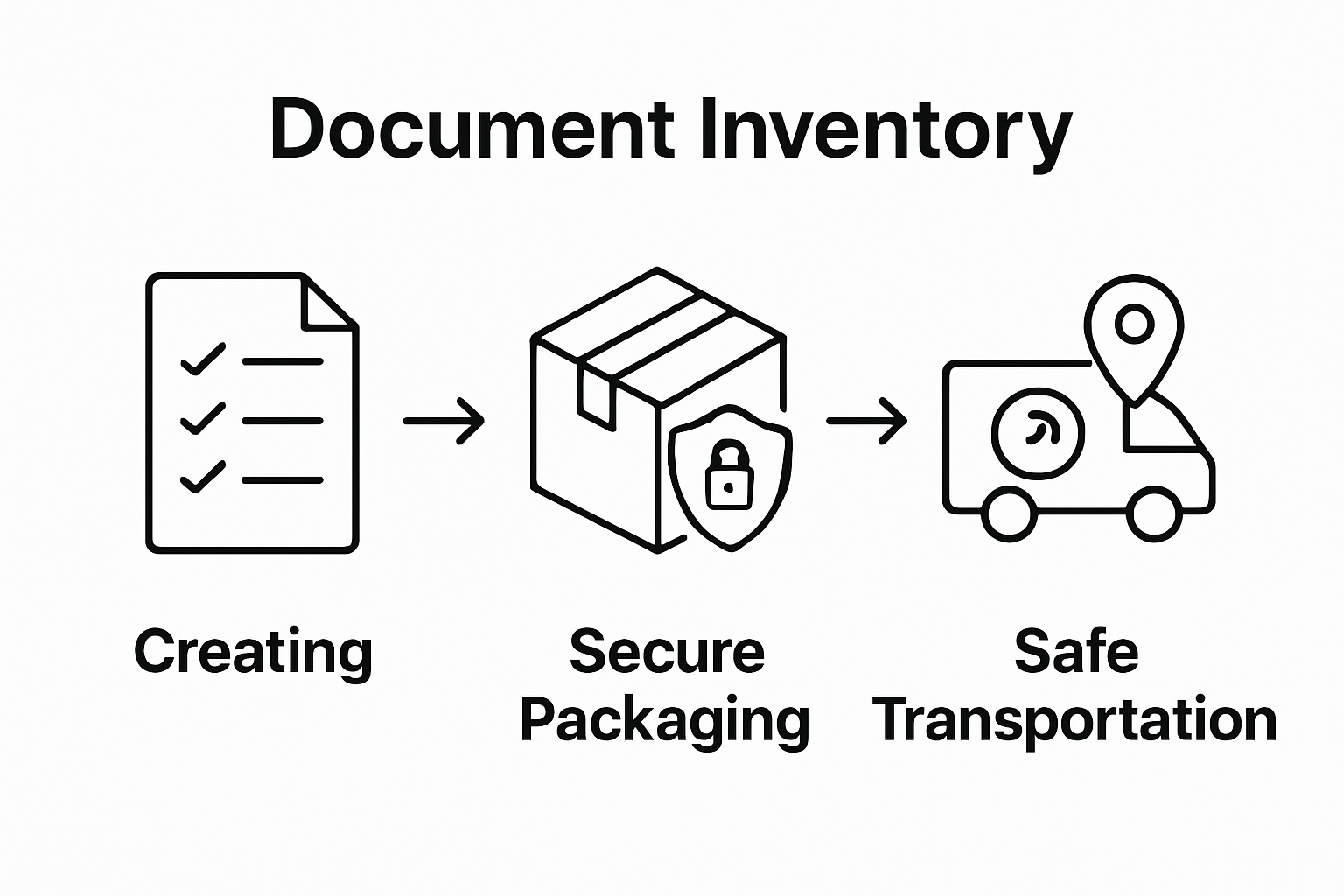
Start by gathering essential documents into a dedicated secure collection zone. This might include:
As you compile these documents, adopt a systematic approach. Use a high-quality, waterproof document organiser with separate compartments for different document categories. This strategy ensures each critical record remains protected and easily accessible during your move.
Prioritise original documents over photocopies whenever possible. While duplicates serve as backup, original certificates often carry legal weight and are more challenging to replace. Consider creating digital scans as an additional safeguard, storing encrypted copies in a secure cloud service or on an encrypted external hard drive.
Remember that document transportation isn’t just about physical protection. You’ll want to create a detailed inventory listing each document, its location, and its significance. This inventory serves two crucial purposes: helping you track your documents during relocation and providing a reference in case any paperwork goes missing.
According to the Department of Finance, maintaining a comprehensive relocation checklist that includes document management can significantly reduce stress and potential administrative complications during your move.
By meticulously identifying and preparing your critical documents, you’re laying the groundwork for a secure and organised relocation process.
Selecting the right packaging materials is a critical component of secure document transportation. Your goal is to create a protective environment that shields sensitive paperwork from potential damage during transit, ensuring your critical documents remain intact and legible.
Begin by investing in professional-grade protective materials specifically designed for document preservation. Standard cardboard boxes or plastic containers won’t suffice when dealing with important paperwork. You’ll need specialised solutions that offer multiple layers of protection against moisture, dust, compression, and potential environmental hazards.
Consider purchasing archival-quality document storage containers constructed from acid-free materials. These containers are engineered to prevent chemical degradation and provide a stable environment for your most sensitive documents. Look for containers with tight-sealing lids that create a moisture-resistant barrier, protecting your paperwork from potential water damage or humidity exposure.
For additional security, incorporate these protective elements into your packaging strategy:
Layering is key to comprehensive document protection. Start by placing individual documents in acid-free protective sleeves, which prevent direct contact and potential transfer of acids or oils. Next, group related documents together in sealed, waterproof pouches. These pouches not only protect against moisture but also help organise your paperwork by category.
Prioritise climate-controlled packaging for documents with long-term preservation requirements. Some papers, particularly those with historical or legal significance, demand extra environmental consideration. Archival-grade containers with built-in temperature and humidity stabilisation can prevent degradation during transportation.
Digital backup remains an excellent complementary strategy. While physical protection is crucial, creating high-quality scanned copies stored securely in encrypted digital formats provides an additional safety net. Consider using professional scanning services that can produce archival-quality digital reproductions of your most important documents.
According to the National Archives of Australia, proper storage materials can significantly extend the lifespan of important documents and protect them from environmental damage.
Here is a table summarising the most common secure packaging materials for document protection, along with their main purpose and any special considerations.
| Material | Purpose | Special Considerations |
|---|---|---|
| Acid-free archival sleeves | Protects from acid damage | Use for all original documents |
| Waterproof document pouches | Shields against moisture | Essential for transport in wet weather |
| Silica gel moisture absorbers | Keeps interior dry | Replace regularly for effectiveness |
| Rigid document storage boxes | Prevents bending and crushing | Choose archival quality if possible |
| Bubble wrap (anti-static) | Extra cushioning during movement | Use sparingly to avoid bulkiness |
| Foam padding | Extra protection in transit | Line boxes for fragile items |
| Archival-quality storage containers | Provides stable storage environment | Check for tight-sealing lids |
By meticulously selecting and implementing these protective packaging strategies, you’re establishing a robust defence mechanism for your critical documents during transportation.
Transporting critical documents requires strategic planning and selecting transportation methods that prioritise security, reliability, and traceability. Your primary objective is to create a comprehensive transportation strategy that minimises risks and ensures your important paperwork arrives safely and intact.
Begin by evaluating different transportation options based on your specific document characteristics and distance requirements. Professional courier services specialising in secure document transportation offer the most comprehensive protection. These services provide end-to-end tracking, insurance, and specialised handling protocols designed specifically for sensitive paperwork.
Consider breaking down your transportation approach into multiple layers of security. If transporting documents locally, hand delivery with a signed receipt provides the most direct control. For longer distances, registered mail or professional courier services become essential. Select services that offer:
Prioritise transportation methods that provide comprehensive tracking and accountability. Digital tracking systems allow you to monitor your documents’ journey in real-time, giving you peace of mind and immediate notification of any potential issues. Request detailed documentation of the transportation process, including pickup times, transit routes, and delivery confirmations.
When selecting a courier, investigate their security protocols thoroughly.
Professional document transportation services should demonstrate rigorous employee screening, vehicle security measures, and strict confidentiality agreements. Ask potential service providers about their handling procedures for sensitive documents, including how they protect against potential loss, theft, or unauthorized access.
Consider creating a secure transportation log that records every stage of your documents’ journey. This log should include detailed information such as document descriptions, packaging details, transportation method, carrier information, expected delivery timeframes, and actual delivery confirmation. Maintaining this documentation provides an additional layer of accountability and serves as a crucial reference in case of any transportation discrepancies.
Digital backup remains an essential complementary strategy. While physical transportation requires meticulous planning, having encrypted digital copies stored securely provides an additional safety net. This approach ensures you have alternative access to critical information, even in unlikely scenarios where physical documents might be compromised.
According to the NSW Government’s recordkeeping guidelines, proper documentation and secure transportation protocols are fundamental to maintaining the integrity of important records during relocation.
By implementing these comprehensive transportation strategies, you create a robust system that protects your critical documents throughout their entire journey.
Tracking solutions transform document transportation from a nerve-wracking experience into a transparent, manageable process. By implementing robust tracking methods, you gain real-time insights into your critical documents’ journey, providing confidence and reducing potential anxiety about their safe passage.
Start by selecting tracking technologies that offer comprehensive monitoring capabilities. Modern tracking solutions go far beyond simple postal tracking numbers. Digital tracking platforms now provide granular location updates, environmental condition monitoring, and instant notification systems that keep you informed throughout the transportation process.
Consider integrating multiple tracking approaches to create a multilayered monitoring strategy. Professional courier services often provide their proprietary tracking systems, but supplementing these with additional technology can offer enhanced security. GPS-enabled tracking devices designed specifically for document transportation can be discreetly placed within your document containers, providing continuous location monitoring.
Your tracking toolkit should include these essential elements:
Develop a systematic approach to documentation that complements your tracking strategy. Create a detailed transportation log that records every significant event in your documents’ journey. This log should include precise timestamps, geographical coordinates, environmental conditions, and any handling interactions. Such comprehensive documentation serves not just as a tracking mechanism but also as a legal safeguard and potential insurance documentation.
Technology offers remarkable solutions for document tracking. Bluetooth and cellular-enabled tracking devices can now provide near-instantaneous location updates, allowing you to monitor your documents’ progress with unprecedented precision. Some advanced tracking systems even offer geofencing capabilities, which trigger immediate alerts if your documents deviate from predetermined transportation routes.
Remember that effective tracking is about more than just location monitoring. Environmental tracking becomes crucial for sensitive documents that might be damaged by extreme temperatures or humidity. Select tracking solutions that provide comprehensive environmental condition monitoring, ensuring your documents remain in optimal preservation conditions throughout their transportation.
According to the NSW Government’s recordkeeping guidelines, maintaining accurate records and implementing robust tracking mechanisms are essential for secure document transportation.
By embracing these advanced tracking solutions, you transform document transportation from a uncertain process into a transparent, controlled journey that provides genuine peace of mind.
The final stage of secure document transportation is a critical verification process that ensures your critical paperwork has survived the journey intact. This step transforms your careful preparation into confirmed success, providing the ultimate peace of mind after navigating complex transportation logistics.
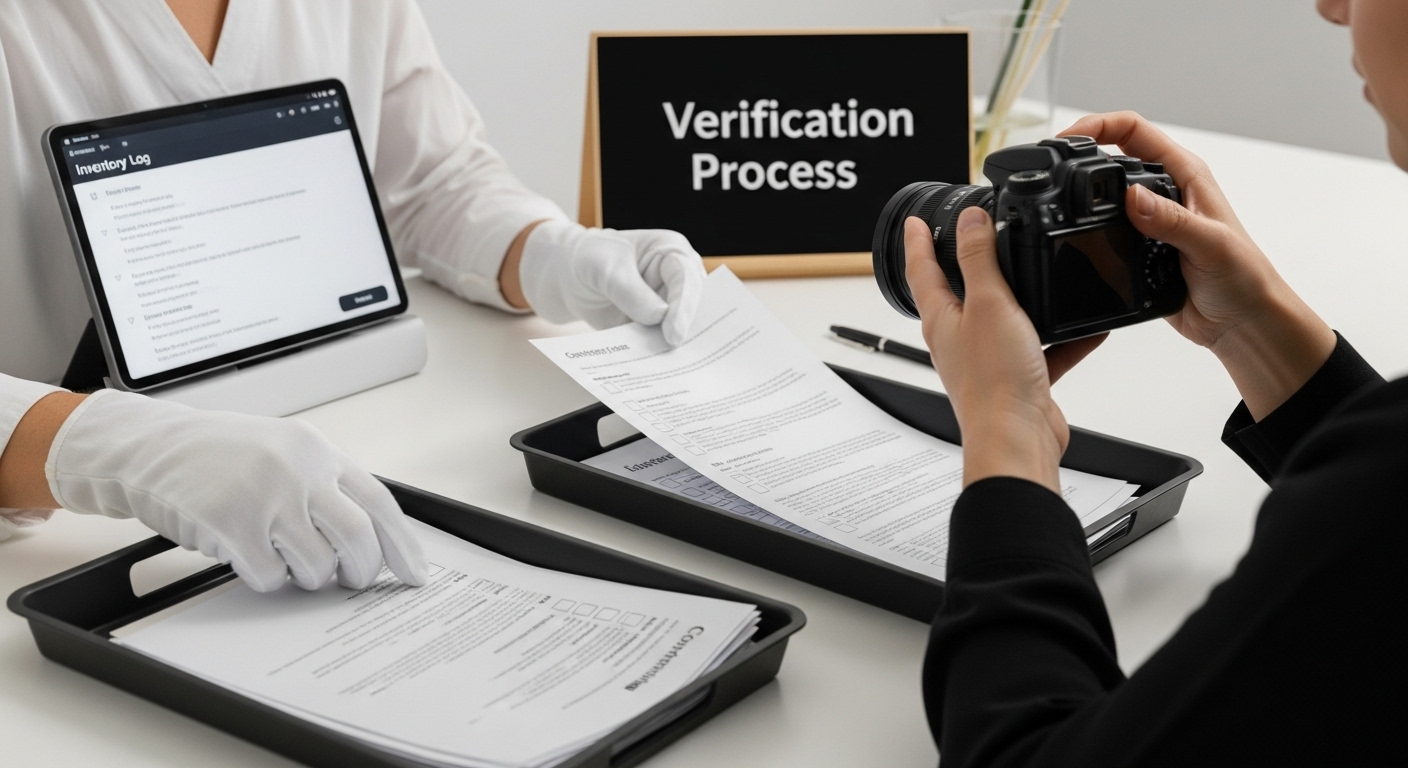
Begin your verification immediately upon receiving the transported documents. Create a quiet, clean workspace with excellent lighting that allows for detailed visual and physical inspection. Natural daylight or bright, consistent lighting helps reveal even subtle changes or potential damage that might be missed under less optimal conditions.
Develop a systematic verification approach that methodically examines each document. Start by comparing the current collection against your original inventory list, confirming that every single document has arrived. Check each document’s physical condition, looking for signs of moisture exposure, creasing, discolouration, or any structural compromises that might have occurred during transportation.
Key verification criteria should include:
Photographic documentation becomes an essential component of your verification process. Take high-resolution images of each document before and after transportation, creating a visual record that can serve as evidence of condition. These images provide additional protection, especially if you need to make insurance claims or pursue compensation for potential transportation damage.
Digital verification complements physical inspection. Cross-reference your digital backups with the physical documents, ensuring that no information has been lost or altered during transportation. This dual-verification approach provides multiple layers of security and confirms the integrity of your critical paperwork.
Pay special attention to documents with long-term preservation requirements. Archival and legal documents demand extra scrutiny. Use white cotton gloves when handling these sensitive papers to prevent oil transfer from your skin, and consider using an archival-quality magnifying glass to inspect minute details that might indicate potential degradation.
If you discover any discrepancies during your verification process, document them immediately. Take detailed notes, photograph the specific areas of concern, and contact your transportation provider promptly. Timely reporting is crucial for potential insurance claims or resolution of transportation issues.
According to the NSW Government’s recordkeeping guidelines, maintaining accurate records and implementing thorough verification processes are essential for secure document management.
By executing this meticulous verification process, you transform document transportation from a potential risk into a controlled, manageable experience that protects your most important paperwork.
Use the following checklist to systematically verify the condition and integrity of your critical documents upon arrival at your new location.
| Verification Step | Action Required |
|---|---|
| Compare with inventory list | Ensure every document has arrived |
| Inspect for moisture or water damage | Check for spots, discolouration |
| Check for fraying, tears, or creasing | Examine edges and paper surfaces |
| Confirm seal integrity of pouches | Ensure all protective seals remain intact |
| Look for unauthorised markings/alterations | Review for unexpected changes |
| Verify order matches original sequence | Confirm documents remain categorised |
| Photograph each document | Create a condition record |
| Cross-check with digital backups | Ensure information is unchanged |
Worried about how your most important documents will make the move? You have just learned how fragile and irreplaceable critical paperwork can be and why a secure process, from proper packaging to meticulous verification, is so important when relocating. Whether you need climate-controlled storage, tracking, or careful handling, leaving your critical documents to chance is a real risk.

Let Onyx Removals take the stress out of your next move. Our highly trained team understands every step of secure document transportation and uses professional-grade materials with proven tracking solutions. Your peace of mind starts with a phone call or a click, so get in touch now through our main site. If you are ready for a detailed, free quote or need immediate help, visit our contact page. Protect your vital documents and guarantee a seamless transition with Melbourne’s most trusted relocation experts. Do not wait until it is too late – secure your move with Onyx Removals today.
Critical documents include personal identification (like passports and driver’s licences), legal certificates (birth and marriage certificates), financial records (tax documents, banking information), medical records, and professional credentials. Compiling these into an organised inventory is essential for security during transportation.
To package documents securely, invest in professional-grade protective materials such as acid-free archival sleeves, waterproof document pouches, and archival-quality storage containers. Layer your documents using these materials to protect against moisture, dust, and environmental damage.
The best transportation methods include using specialised courier services that offer secure document transportation, which typically includes detailed tracking, insurance, and signature confirmation. For local movements, hand delivery with a signed receipt is highly recommended.
To verify document condition, create a clean workspace for inspection. Check each document against your inventory list and examine for any signs of damage like moisture or discolouration. Take photographs before and after transportation as evidence of their condition.

No Related Post


