


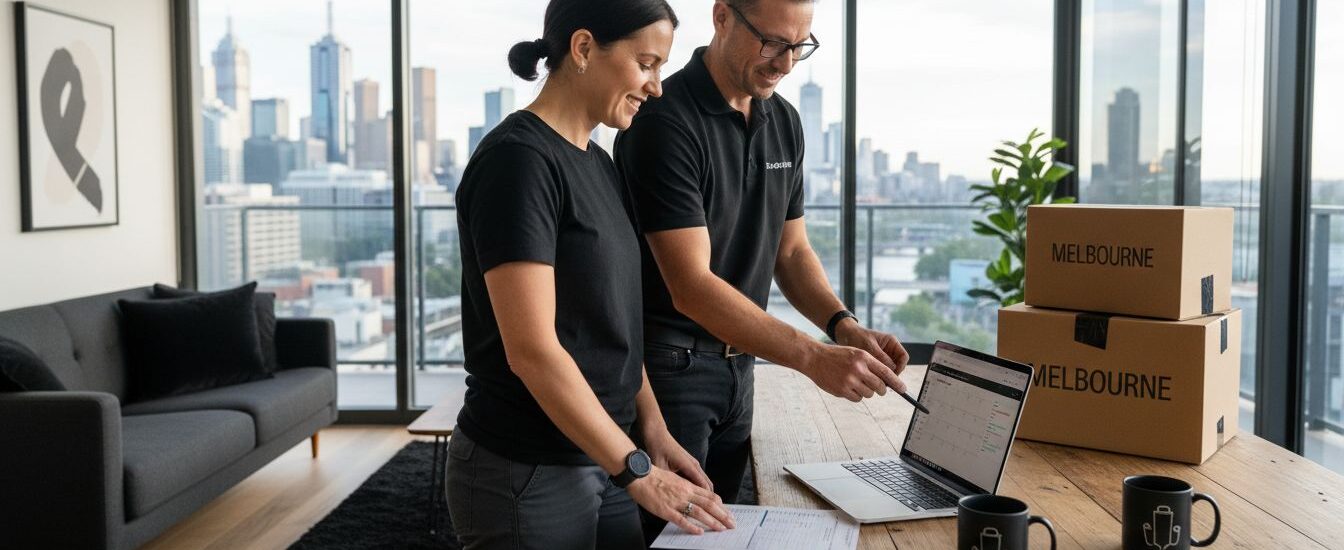
Nearly half of Australians admit that moving is one of life’s most stressful events. Whether you are changing suburbs or upgrading your home in Melbourne, the logistics can pile up fast. Smart planning and a few expert tips take the pressure off and keep your relocation on track. This guide breaks down practical steps that will help you organize, pack, and settle in with confidence.
| Key Point | Explanation |
|---|---|
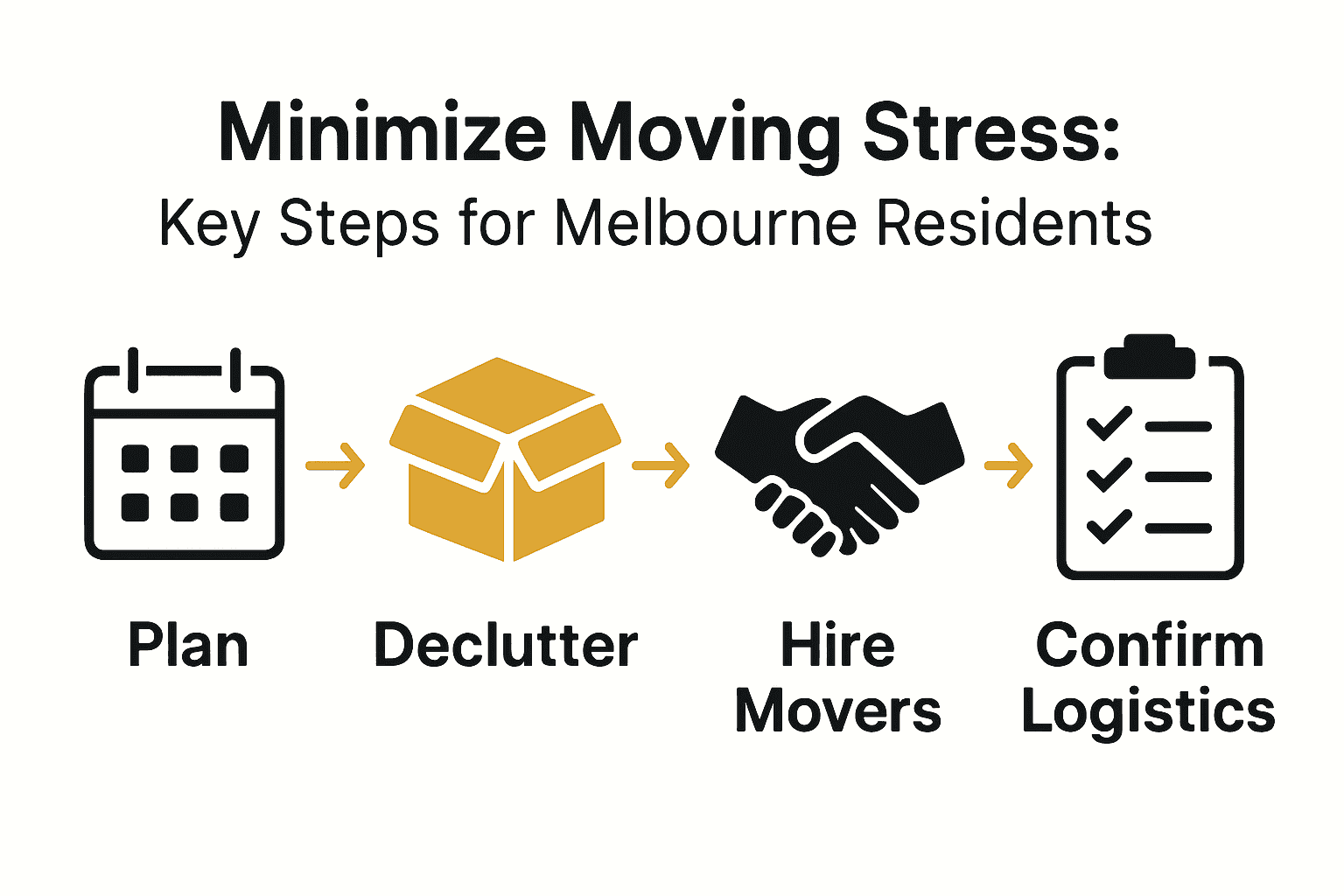
| 1. Plan your timeline early | Establish a moving timeline at least 8 weeks in advance to organize tasks and reduce stress. |
| 2. Declutter strategically | Sort belongings into categories and focus on one room at a time to simplify packing and minimize overwhelm. |
| 3. Hire professional movers | Research and select reputable movers to handle logistics, ensuring your belongings are transported safely and efficiently. |
| 4. Pack with efficiency | Dedicate small daily sessions to packing, using quality materials, and labeling items for easy organization. |
| 5. Confirm logistics before moving | Create a checklist to ensure all details are finalized, from utility transfers to address updates, for a seamless move. |
Planning your moving timeline is the foundation of a stress free relocation process in Melbourne. By establishing a strategic schedule weeks or months in advance, you can transform a potentially chaotic experience into a smooth transition.
According to Better Homes & Gardens Australia, setting a clear deadline is crucial for staying motivated and organized during your move. Start by creating a comprehensive timeline that breaks down tasks into manageable stages. Begin approximately 8 weeks before your moving date by mapping out key activities such as sorting belongings, arranging packing materials, and scheduling removalist services.
Your initial planning should include a detailed checklist that covers every aspect of your relocation. Consider factors like your current lease end date, new property availability, and potential workplace transitions. A moving timeline checklist can help you track progress and ensure no critical tasks slip through the cracks.
Pro tip: Create a digital or physical master calendar where you can visually track all moving related tasks and deadlines. This approach helps reduce mental clutter and provides a clear overview of your moving journey.
Organizing and decluttering your belongings is a crucial step in reducing moving stress and creating a smooth relocation experience. This process will help you streamline your move and ensure you only transport items that truly matter.
According to Bunnings Australia, creating strategic storage solutions is key to effective decluttering. Start by sorting your belongings into clear categories: keep, donate, sell, and discard. Focus on one room at a time to prevent feeling overwhelmed.
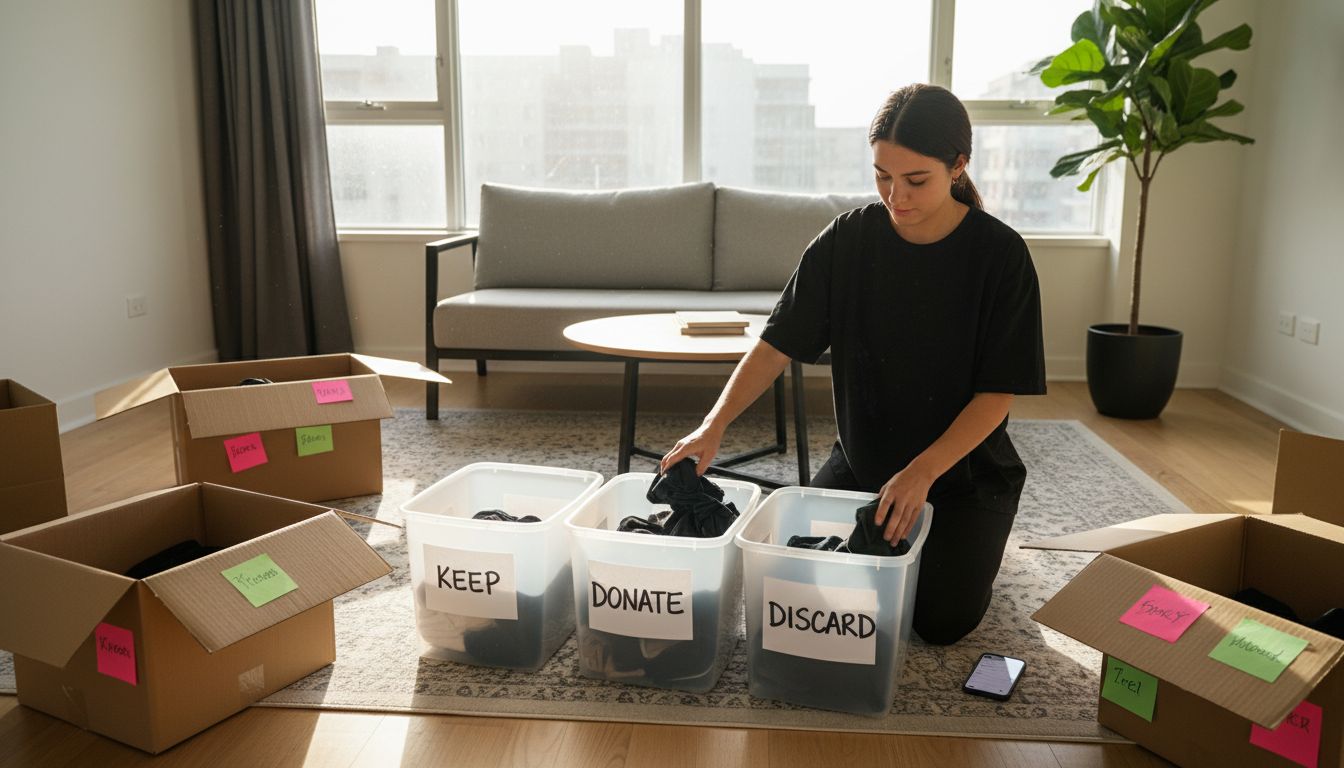 For high traffic areas, consider creating a ‘drop zone’ where daily items can be quickly and neatly stored.
HCF highlights that decluttering is not just about physical organization but also mental well being. By removing excess items, you reduce stress and eliminate potential health hazards like dust and mold that can accumulate in forgotten spaces. Consider using clear storage containers and labeling systems to make your sorting process more efficient.
Pro tip: As you declutter, create a detailed decluttering guide that helps you systematically approach each area of your home. This approach will make your moving process significantly smoother and less stressful.
Securing professional moving support transforms your relocation from a potentially overwhelming experience into a smooth and manageable process. By engaging experts who understand the intricacies of moving, you can significantly reduce stress and ensure your belongings are handled with care.
As recommended by the Department of Foreign Affairs and Trade, professional support is crucial for managing complex logistics and collecting important documents during your move. Begin by researching reputable moving companies in Melbourne that offer comprehensive services. Look for providers with positive customer reviews, transparent pricing, and a range of support options including packing, transportation, and potential storage solutions.
When selecting a moving company, request detailed quotes from multiple providers and compare their offerings. Benefits of professional movers extend beyond simple transportation they can provide specialized packing materials, handle fragile items with expertise, and offer insurance protection for your belongings. Be sure to discuss your specific requirements, such as handling delicate items or managing tight urban moving conditions in Melbourne.
Pro tip: Schedule an in home assessment with potential moving companies. This allows them to provide a more accurate quote and helps you understand the full scope of services they can provide during your relocation.
Efficient packing is the cornerstone of a stress free moving experience. By developing a strategic approach to organizing and protecting your belongings, you can transform a potentially chaotic process into a smooth and controlled transition.
According to HCF, effective decluttering is key to efficient packing. Start by dedicating short daily sessions to sorting your items. As they recommend, spend just 10 minutes each day going through your belongings and deciding what to keep, donate, or discard. This approach prevents overwhelming marathon sorting sessions and helps you systematically prepare for your move.
When selecting packing materials for moving, focus on quality and protection. Invest in sturdy boxes, bubble wrap, packing paper, and specialized containers for fragile items. Group similar items together and create a labeling system that helps you track contents and destination rooms. For delicate possessions, consider learning specialized techniques for packing fragile items to ensure their safe transportation.
Pro tip: Create a packing timeline that breaks down the process into manageable chunks. Start with non essential items weeks before your move and gradually progress to everyday essentials, leaving a final box for last minute items you will need right up to moving day.
Coordinating logistics is the critical backbone of a successful move, ensuring every detail is meticulously planned and executed. This step transforms your moving strategy from a theoretical plan into a practical roadmap that accounts for potential challenges and contingencies.
As recommended by the Department of Foreign Affairs and Trade, finalizing arrangements requires comprehensive preparation. Create a master checklist that covers all essential logistics including utility transfers, address changes, transportation arrangements, and accommodation details. Confirm specific timelines with your moving company, ensuring they understand exact pickup and delivery windows for your belongings.
Reach out to all relevant parties to verify and reconfirm critical details. This includes notifying your current and future landlords, updating your address with banks, employers, and government agencies, and scheduling utility disconnections and reconnections. When to Book Movers becomes crucial at this stage make certain your moving team understands your specific requirements and has all necessary access information for both your current and new locations.
Pro tip: Create a digital folder with all critical documents including contracts, inventory lists, contact information, and moving day instructions. Having everything organized and easily accessible will reduce stress and provide a sense of control during this potentially chaotic transition.
The final review of your moving preparations is a crucial moment that can mean the difference between a smooth transition and potential chaos. This comprehensive task check ensures you have not overlooked any critical details that could disrupt your moving day.
Following the guidance from the Department of Foreign Affairs and Trade, create a detailed final checklist that comprehensively covers all essential arrangements. Review your documentation, confirm all logistics are in place, and verify that you have completed key tasks such as transferring utilities, updating addresses, and arranging transportation. Pay special attention to move out cleaning requirements to ensure you leave your current property in excellent condition and secure the return of your full bond deposit.
On the day before your move, conduct a final walkthrough of your current property. Check every room, cupboard, and storage space to confirm nothing has been forgotten. Pack a separate essentials box with items you will need immediately upon arrival at your new home such as basic toiletries, a change of clothes, important documents, and some basic kitchen supplies. This preparation will provide peace of mind and ensure you are not scrambling for necessities during the first day in your new space.
Pro tip: Create a digital backup of all important documents and send copies to a trusted family member or store them securely in cloud storage. This extra precaution ensures you have access to critical information even if something unexpected occurs during the move.
Moving can feel overwhelming with so many tasks to manage from planning your timeline to coordinating logistics. The stress of sorting belongings, packing efficiently, and confirming details can quickly add up. Onyx Removals understands these challenges and offers tailored solutions to ease your relocation journey in Melbourne, whether residential or commercial. Their professional team ensures every step is handled with care so you can focus on what matters most.
Experience a seamless move by choosing expert support from Onyx Removals. Visit their business – Onyx Removals page to explore specialised services designed to reduce moving stress. Act now to benefit from personalised moving plans, reliable packing assistance, and comprehensive logistics coordination. Your stress-free relocation starts today at https://onyxremovals.com.au.
Start by planning your moving timeline at least 8 weeks before your move. Break down tasks into manageable stages, create a detailed checklist, and track your progress using a calendar to stay organized.
Sort your items into categories: keep, donate, sell, and discard. Focus on one room at a time to simplify the process and aim to declutter at least 10-15 items from each space to reduce what you need to move.
When selecting a moving company, research options and request detailed quotes from several providers. Schedule an in-home assessment to ensure you receive accurate estimates and understand the full scope of services offered.
Dedicate short daily sessions to packing non-essential items several weeks before your move. Label your boxes clearly and group similar items together to streamline the unpacking process when you arrive at your new home.
Create a master checklist covering crucial logistics such as utility transfers and address changes. Conduct a final walkthrough of your current property to ensure nothing is overlooked, and have a separate essentials box ready for immediate use upon arrival.
Pack items that you need right away, such as toiletries, a change of clothes, important documents, and basic kitchen supplies. Aim to have this box easily accessible during the move to avoid unnecessary stress on your first day in your new home.

No Related Post


