


Hire a professional removalist when you need furniture gone fast, when items are heavy or awkward, or when you want proof they’re recycled or donated responsibly. Use your council’s bulky-waste collection for smaller loads that fit within local limits and you can wait a few weeks for a scheduled pickup. Either way, check your council’s booking rules or strata requirements before you commit, then call for a free quote or book your collection window today.
TL;DR:
- Most furniture removalists provide accurate, written quotes based on photos or on-site assessments, with prices increasing for same-day or difficult-access jobs.
- Hazardous items such as chemicals, gas bottles, and asbestos are not accepted, and mattresses are often charged extra but should be sent to recyclers rather than landfills.
- Pricing is volume-based, with larger loads like full house clear-outs costing significantly more than small pickups, and dismantling ahead of time can lower costs.
- Responsible waste disposal prioritizes reuse, donation, and recycling, with clear communication needed about where loads are actually sent to avoid illegal dumping.
- Council bulky-waste collection is suitable only for small loads under volume caps and requires upfront booking within strict windows to avoid fines or illegal street dumping.
Most jobs start with a quote, not a truck rolling up unannounced. You send photos or describe what’s going on, and a reputable operator gives you a firm figure before anyone touches the couch.
Here’s the typical sequence from first call to empty room:
Before the crew arrives, clear pathways, remove personal items from drawers, and dismantle anything you can manage yourself, like flat-pack wardrobes or bed frames. If you’re not confident pulling a bed frame apart safely, a furniture dismantling service can do it as part of the job rather than leaving you wrestling with an Allen key at 7am.
Most crews take the everyday bulky stuff without hesitation. Where it gets tricky is anything hazardous, oversized, or tied to strata rules.
Commonly accepted:
Usually excluded or requiring special handling:
Hazardous items like these almost never go in a standard bulky-waste load. Paint has its own dedicated recycling scheme through Paintback, and gas bottles need to go back to a supplier or a specific drop-off point, not into the back of a removal truck.
Mattresses deserve a mention on their own. Because they’re bulky and hard to compact, many operators charge slightly more to take them, but the ones doing this properly send them to a mattress recycler rather than landfill. If you live in a unit block, check with your building manager before booking anything. Strata properties usually require items to go through a coordinated collection rather than being left in a hallway or car park for pickup.
Pricing almost always comes down to volume, not the number of items. A single-item pickup, like one mattress, costs far less than a full lounge room clear-out.
Most operators quote in cubic metres or box-trailer equivalents. A quarter-trailer load (a couple of chairs, a small table) sits at the low end. A full trailer load, covering a whole living room set plus a mattress, sits considerably higher. Expect the price to climb with:
A transparent quote should spell out the scope in writing before the truck turns up. Look for a written breakdown that names the items included, the disposal fee, and any surcharges for access issues. If a quote is just one lump number with no explanation, that’s your cue to ask more questions before you agree to anything.
Pro Tip: Dismantle what you can before the crew arrives. A bed frame or flat-pack desk takes up a fraction of the space broken down, and that directly lowers your volume-based quote.
To compare quotes fairly, get at least two written estimates covering the same item list, and ask each provider to confirm whether disposal fees are already included or added separately. Bundling multiple items into one booking, rather than calling separately for the mattress and the old couch, usually works out cheaper than paying two call-out fees.
The order that matters here is reuse first, repair second, donation third, and recycling or landfill only when nothing else works. That’s the waste hierarchy the NSW EPA and most state agencies point to, and it exists because so much furniture is a mix of materials that’s genuinely hard to pull apart for recycling.
In practice, a responsible removal follows this rough path:
Operators who partner with charities and verified resource recovery centres divert a real share of usable furniture away from landfill instead of dumping everything in one bin, and that partnership is one of the clearest signs a removalist takes disposal seriously, according to reporting on how Australians discard hard waste. National waste data collected by the Australian Bureau of Statistics tracks how much bulky waste moves through recovery versus landfill each year, and it’s a reminder that where your couch ends up is rarely random. It depends entirely on whether the people collecting it bothered to sort it.
Ask any removalist upfront where loads typically go. A vague “we take it to the tip” answer is very different from “we sort on-site and split loads between charity, recycler, and resource recovery centre.”
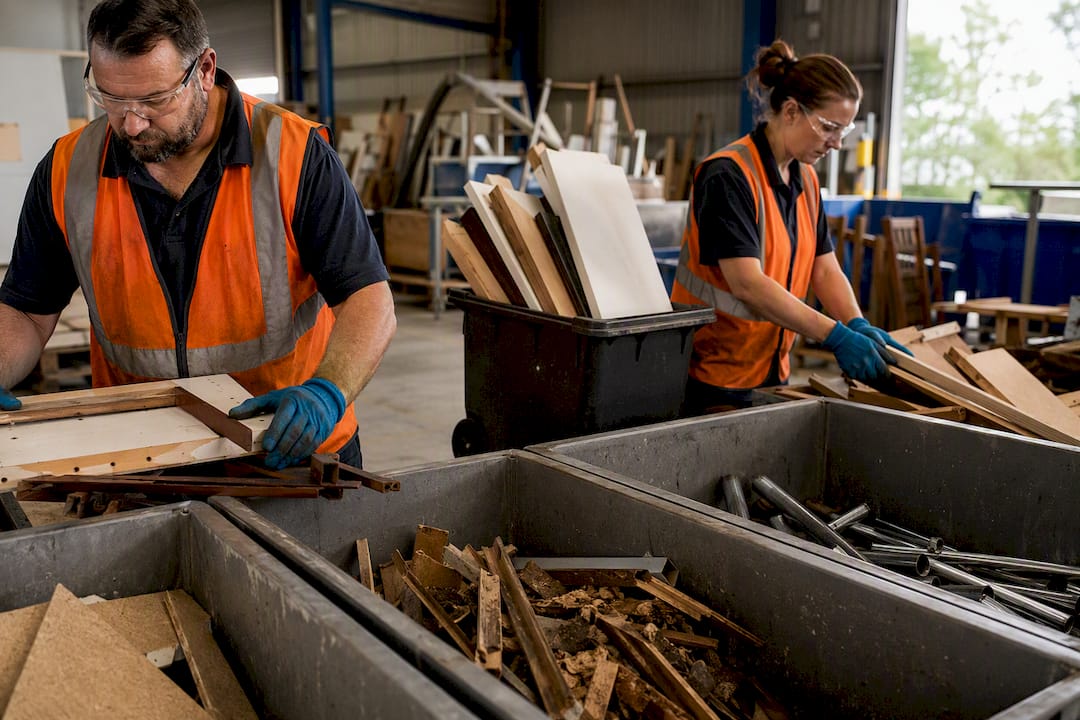
Council collection suits small, straightforward loads where you’re not in a rush. It’s usually free or low-cost, but the limits are tighter than most people expect.
Leaving furniture on the street outside a booked window isn’t a grey area. It’s illegal in many council areas and can carry fines up to $4,000 in some jurisdictions, on top of the environmental mess.
A short list of questions upfront saves you from a bad experience later. Here’s what actually separates a reliable operator from a risky one.
Pro Tip: If a quote feels suspiciously low and the operator wants cash only with no paperwork, that’s usually a sign your furniture is heading somewhere it shouldn’t. Reputable operators are happy to put everything in writing.
Red flags worth walking away from: refusal to provide a written scope, pressure to pay upfront in cash, and vague answers about where items end up. None of these are minor quibbles. They’re the exact behaviours that precede illegal dumping, which lands the legal risk back on whoever booked the job.
We treat furniture waste removal as part of the same job as moving, not a separate afterthought. That’s why our quotes cover dismantling, removal, and disposal together, with storage available if you need to hold onto items while you sort out what’s staying and what’s going.
If you’re clearing a whole property rather than a single piece, our large furniture disposal service handles bigger jobs with the same sorting approach, item by item, rather than treating everything as one indiscriminate load.
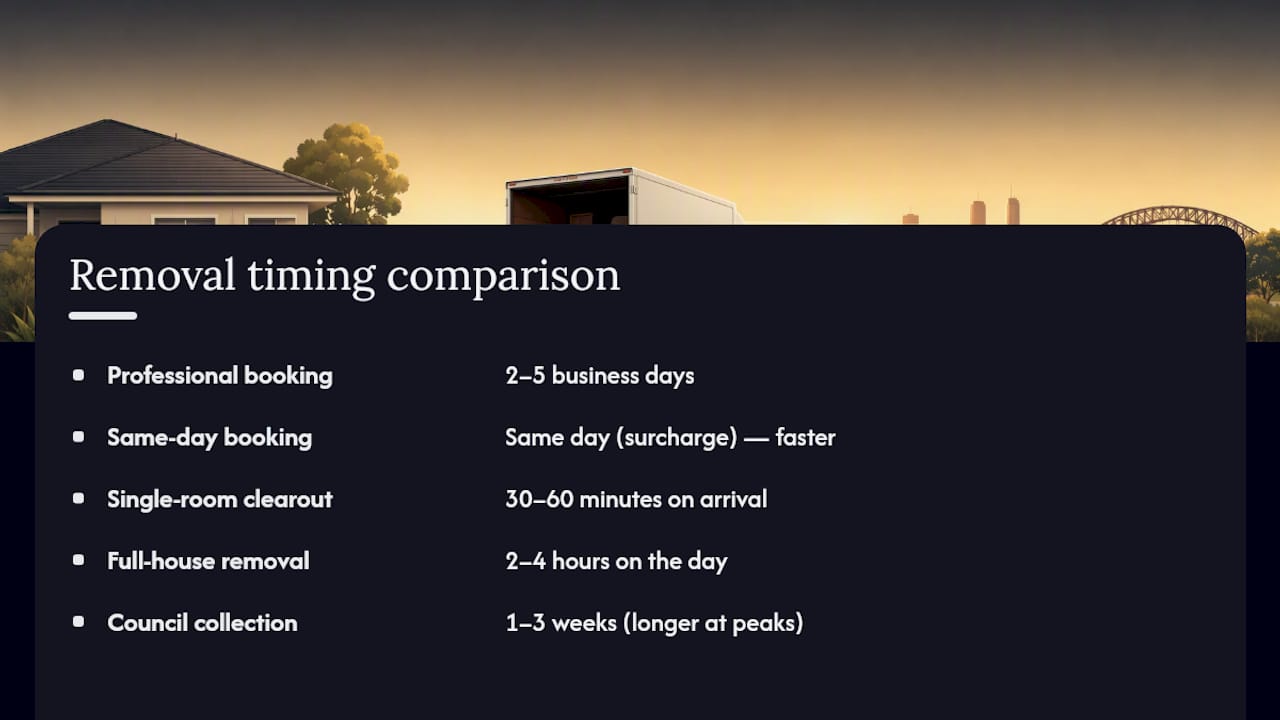
From the moment you call, a standard booking usually lands within two to five business days, depending on how busy the calendar is and whether you need same-day service. Same-day bookings are possible with most operators but carry a surcharge, since it means rearranging a crew’s existing schedule.
On the day itself, a typical single-room clear-out takes between 30 minutes and an hour once the crew arrives, including loading and a final walkthrough. Full-house jobs with multiple large items, several mattresses, whitegoods, and a garage full of odds and ends, can run two to four hours depending on access and crew size.
Council collections run on a much longer clock. Once you book, expect to wait anywhere from one to three weeks for your scheduled pickup date, and longer again around public holidays or peak moving periods like the end of a lease cycle. That’s the trade-off: council collection costs less or nothing, but you’re working around their calendar, not yours.
If you’re tight on time, say you’re moving out in four days and the new tenant needs the place empty, a professional removalist is almost always the faster route. Book at least a few days ahead where possible; last-minute same-day requests aren’t always guaranteed, especially during busy periods like January and the end of financial year when a lot of households are clearing out at once.
For most households, no permit is required to have furniture removed from a private residence. The rules that do apply come from your local council, not a separate licensing body, and they mostly concern where and how bulky waste can be collected rather than whether you’re allowed to dispose of it at all.
Council rules typically govern: booking windows for kerbside collection, volume limits per collection, and how many free collections you’re entitled to each financial year. These vary from one council area to the next, so a rule that applies in one Melbourne suburb might not apply two council boundaries over.
Strata and apartment buildings often add their own layer of requirements on top of council rules. Building managers typically need to approve and coordinate bulky-waste bookings, since items can’t just be left in a lobby or car park without disrupting other residents. Check with your building manager before you book anything if you live in a unit or apartment complex.
Commercial properties and larger-scale clearances, like a full office fit-out removal, sometimes fall under separate waste transport or disposal regulations depending on the volume and type of material involved. If you’re managing a bigger job like that, it’s worth asking your removalist whether any additional documentation applies to your specific site, particularly if hazardous materials are part of the load.
Most professional removalists accept a mix of payment methods: credit and debit cards, bank transfer, and sometimes cash on the day, though cash-only demands with no receipt are a warning sign rather than a convenience. A legitimate operator will give you a receipt regardless of how you pay.
Deposits aren’t always required for straightforward furniture removal jobs, but larger bookings, like a full-house clear-out, might ask for a partial deposit to secure the date. Ask about this upfront when you get your quote so there are no surprises.
Cancellation policies vary between operators, but a reasonable standard is free cancellation with at least 24 to 48 hours’ notice, with a smaller fee for same-day cancellations that leave a crew with an empty slot they can’t refill. If a quote doesn’t mention cancellation terms at all, ask before you book, not after you need to change plans.
Refunds typically apply if a job wasn’t completed as agreed, say, items were left behind that were quoted for, or if the final price didn’t match the written scope. Keep your written quote and any confirmation emails; they’re your reference point if a dispute comes up later.
Dismantle bed frames and flat-pack furniture before the crew arrives; it shrinks your volume and your quote. Check lift bookings and stairwell width in advance if you’re in an apartment, blocked lifts are the single biggest cause of delays on the day.
— Dinshaw
Council collections work fine if you can wait a few weeks and your load fits under 2 cubic metres. If you need it gone this week, want dismantling handled for you, or you’re clearing more than a couch and a mattress, local crews can get it done faster and sort every load for reuse and recycling rather than a straight tip run.
To get an accurate quote, tell us what’s going (a quick photo works fine), roughly how much of it there is, and anything about access, stairs, narrow hallways, or no parking out front. Most quotes come back within a few hours, and same-day slots are often available if you call early. Every quote is written and itemised before anyone books a truck, so you know exactly what you’re paying for and where your furniture is heading. Head to our residential removal page to request a free quote, or check our full range of services if you also need packing, storage, or dismantling handled as part of the same job.
Check your council’s bulky-waste page first for booking rules and volume limits. For leftover paint, Paintback offers a dedicated drop-off scheme, and the NSW EPA’s waste hierarchy page explains the reuse-first principle behind most state guidance.
Booking a professional removalist is the fastest route since they handle lifting, transport, and disposal in one visit. If you’re not in a rush and your load is small, a council bulky-waste booking is a cheaper alternative.
Book through Access Canberra’s recycling and waste service, which allows bookings up to around 2 cubic metres, or hire a professional removalist for larger loads or faster turnaround.
For a full clear-out, a professional removalist handling the whole load in one visit is usually more practical than multiple council bookings, since council collections cap volume per booking. Onyx Removals can quote a full-house job as a single scoped booking rather than several separate trips.
Melbourne households can book a council bulky-waste collection for smaller loads within local volume limits, or hire a removalist for same-week pickup, dismantling, and sorted disposal across donation, recycling, and landfill.
Most crews exclude paint, gas bottles, chemicals, asbestos, tyres, and items with embedded batteries, since these need specialist handling through programs like Paintback rather than a standard bulky-waste load.

No Related Post


