


TL;DR:
- Most Australian professional removalists offer furniture disassembly and reassembly services, with costs varying based on complexity. Proper preparation and clear service confirmation help prevent damage and delays during moves involving bulky or delicate furniture. Carefully selecting experienced providers ensures safe handling of complex pieces and access challenges for a stress-free relocation.
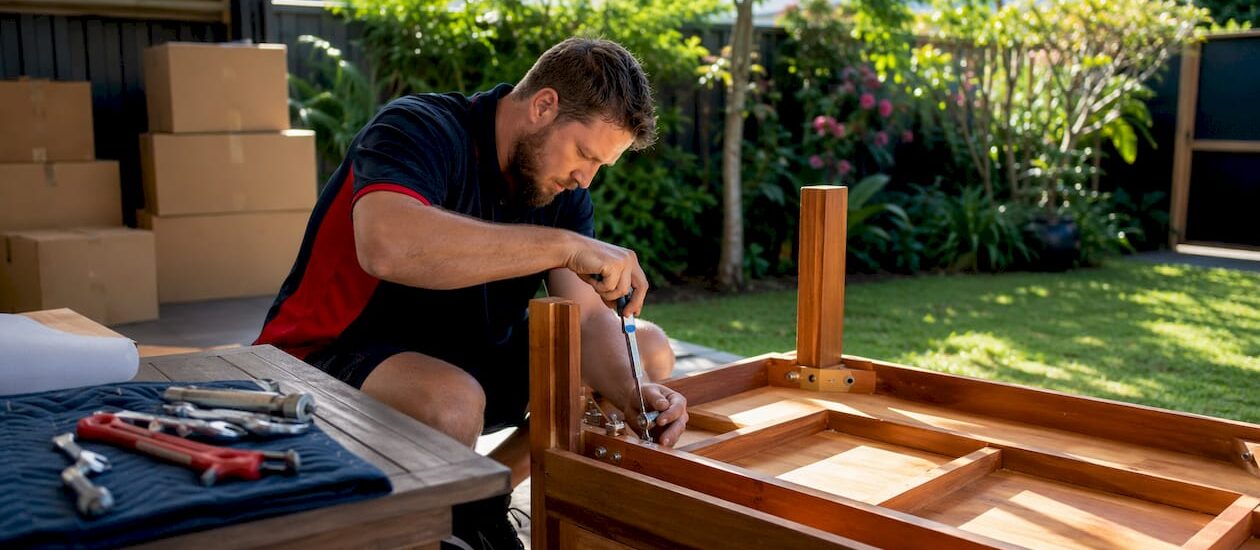
Most professional removalists in Australia do offer furniture disassembly and moving as part of their service, though whether it’s bundled into your quote or charged as an extra depends entirely on the company and the complexity of your pieces. Getting that detail confirmed before booking day is the single most important step you can take.
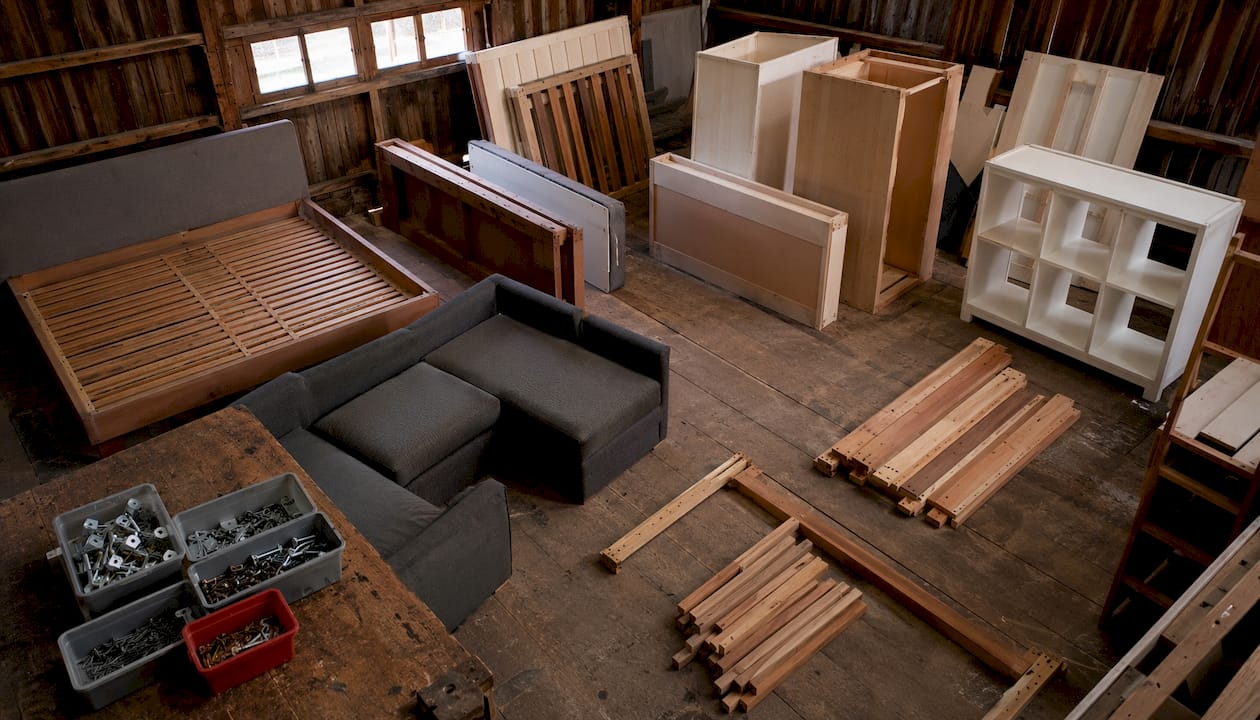
Furniture disassembly means breaking down bulky items into smaller components so they can pass safely through doorways, down stairwells, and onto a truck without damaging the furniture or your home. In Australian properties, this matters more than many people expect. Older houses and heritage apartments often have narrow hallways, tight landings, and doorways that simply won’t accommodate a fully assembled queen bed frame or a large wardrobe. Forcing the issue risks gouging walls, cracking door frames, and splitting the furniture itself.
The core benefits of professional disassembly and reassembly are worth spelling out quickly:
Beds, wardrobes, dining tables, desks, modular sofas, and shelving units are the pieces most commonly taken apart during Australian moves.
Standard professional services cover disassembly, transport, and reassembly of common furniture items, along with packing and unpacking where requested. The scope varies between providers, so knowing what each tier actually delivers helps you compare quotes properly.
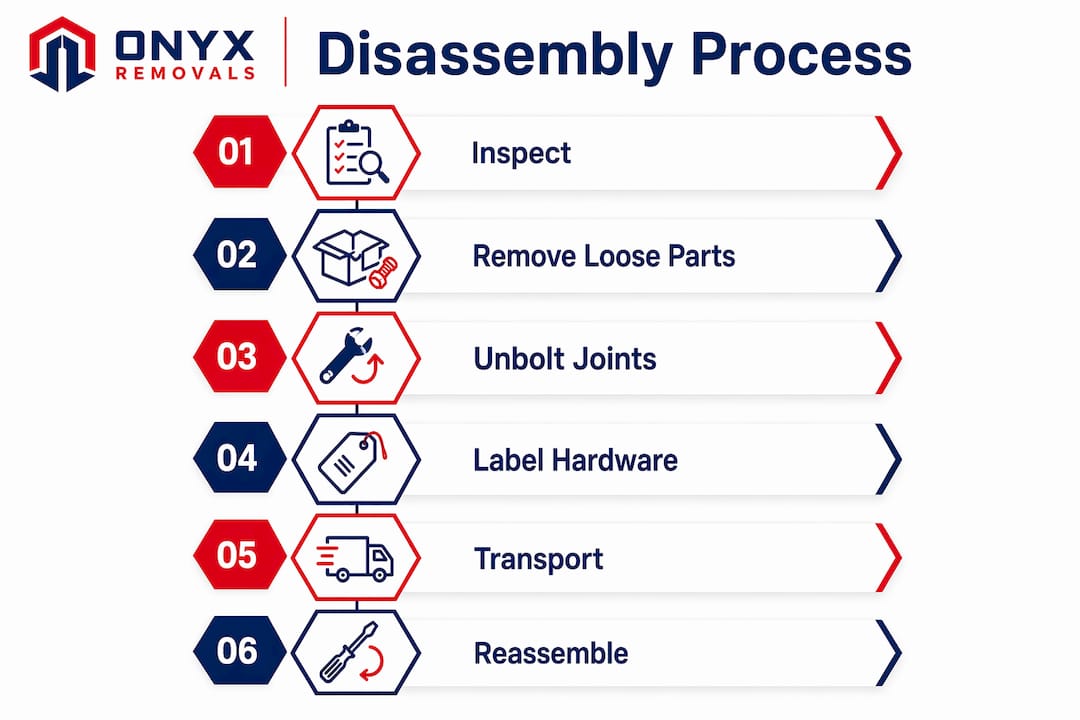
Professional removalists follow a systematic process: inspecting the furniture, removing loose parts first, unbolting joints, wrapping delicate components, and labelling all hardware in sealed bags. That labelling step is what separates a clean reassembly from a frustrating puzzle at the other end.
Pricing in Australia typically runs from moderate hourly rates for a basic two-person crew with a truck, up to higher hourly or fixed fees for a full-service house move. Premium specialist work is quoted per item on top of those rates.
Pro Tip: Ask your provider to confirm in writing exactly which items are covered for disassembly and reassembly before you sign anything. Verbal assurances on moving day carry no weight if something goes wrong.
Large beds almost always require disassembly. A queen or king frame with headboard, footboard, and side rails simply won’t clear a standard Australian doorway intact. Wardrobes with bulky panels are in the same category, particularly flat-pack or modular designs.
Some pieces should not be disassembled without specialist involvement. Forcing disassembly on glued or nailed antique furniture can cause irreparable damage. The same applies to flat-pack units that have been assembled and disassembled multiple times, as the cam locks and particle board weaken with each cycle. Built-in cabinetry, large stone tops, and items fixed to walls fall outside standard removalist scope entirely.
Good preparation cuts the time professionals spend on your job and protects your belongings. Stripping bedding, emptying drawers, and removing loose items from shelves before the crew arrives reduces lost parts and speeds up the whole process.
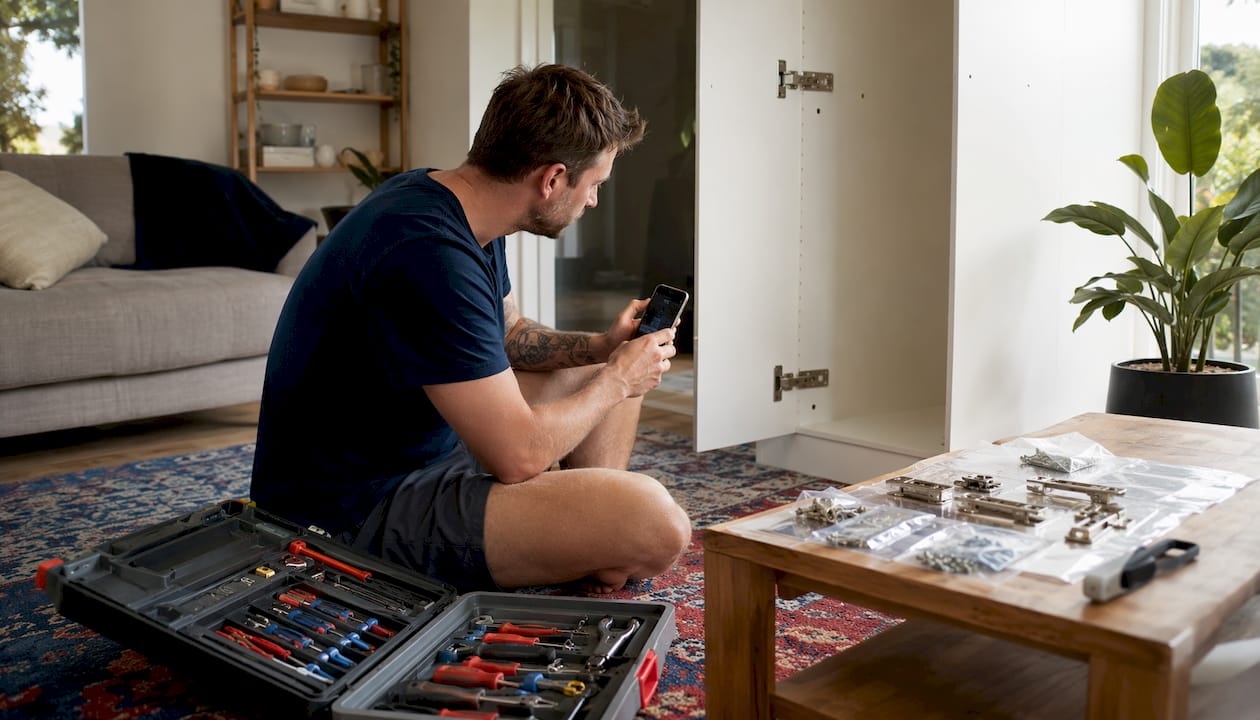
Pro Tip: If you’re photographing furniture before disassembly, capture close-ups of brackets, hinges, and hardware placement. Those details are what make reassembly straightforward rather than guesswork.
The right provider is not always the cheapest one. A quote that omits reassembly, or that doesn’t account for your specific access challenges, will cost you more in time and stress than a slightly higher upfront price.
Transparency in a quote is a reliable indicator of professionalism. A provider who lists inclusions and exclusions clearly is far less likely to surprise you on the day.
Professional furniture disassembly and reassembly services are available across Australia’s major cities and regional centres. Providers range from large national removalist companies to local specialists who focus on particular suburbs or property types.
In Sydney, services such as We Move Sydney and Adelaide Delivery Services in South Australia handle both residential and commercial disassembly jobs, with scope varying from standard flat-pack furniture to more complex modular office setups. The Furniture Assembly Co operates as a dedicated assembly and disassembly specialist, which suits clients who need help with a single complex piece rather than a full move. Reassembly is usually included when the same provider handles disassembly, restoring furniture to its original condition and placement at the destination.
For Melbourne clients, Onyx Removals provides full-service disassembly and reassembly as part of its residential and commercial moving packages, with personalised planning for properties that present access challenges.
The level of care a professional team applies goes well beyond simply unscrewing legs. A trained crew works methodically to protect both the furniture and your property throughout the entire process.
At the start, they inspect each piece to identify difficult joints, check hardware condition, and flag anything that warrants specialist handling. Loose parts come off first: drawers, shelves, knobs, and legs. Hardware goes straight into labelled bags, which are taped to the corresponding furniture component so nothing gets separated in transit. Delicate panels get wrapped in moving blankets or bubble wrap before they leave the room.
At the destination, the process reverses. Beds go back together first so you have somewhere to sleep that night. The crew matches bolts to their original positions, checks stability, and reattaches all loose components before they leave. For furniture wrapping and protection during transit, professional-grade blankets and stretch wrap do the job that a few old sheets simply cannot.
Timing depends on the volume and complexity of furniture, the distance between properties, and access conditions at both ends. A straightforward two-bedroom apartment move with standard furniture typically takes a full day for a two-person crew. Larger homes or properties with difficult access run longer.
For individual pieces, a simple bed frame disassembly is usually quick, whereas a large, complex wardrobe with mirrors and internal fittings can take significantly longer. Factor in wrapping, loading, transit, unloading, and reassembly, and a single complex item can add two to three hours to your overall move time. Communicating your full furniture list to the provider before booking lets them allocate the right crew size and time window.
Fragile and complex pieces are where the gap between a professional crew and a DIY attempt is most obvious. Glass tops, marble surfaces, antique joinery, and mechanical beds all carry a high risk of damage if handled without the right technique and equipment.
Attempting to disassemble glued furniture without expertise frequently causes irreversible damage. Professionals stop at the point where a piece feels structurally unstable rather than forcing further disassembly. Glass panels come off first and travel in padded glass boxes or wrapped in moving blankets, never stacked flat under other items. Antique pieces may be moved fully assembled with extra wrapping and specialist strapping rather than taken apart at all. For pool tables, pianos, and bespoke wardrobes, a dedicated specialist with the right equipment is the only sensible option.
A few warning signs reliably indicate a provider worth avoiding. Vague quotes that list “furniture moving” without specifying what disassembly and reassembly cover are the most common problem. If a provider can’t tell you which items are included before you book, you’ll find out the hard way on moving day.
Other red flags include: no written confirmation of service inclusions, pressure to pay a large deposit before any work begins, no evidence of public reviews or customer testimonials, and crews who arrive without their own tools. A provider who dismisses your questions about access challenges or complex furniture is telling you something important about how they’ll handle problems when they arise.
Onyx Removals handles furniture disassembly and moving for residential and commercial clients across Melbourne, with personalised moving plans built around the specific access and furniture challenges of each property.
“The Onyx Removals team took apart our entire bedroom suite and a large modular wardrobe without a scratch on the walls or the furniture. Everything was back together and in place before they left. Genuinely stress-free.” — Dinshaw, Melbourne client
The service covers the full scope:
Onyx Removals also offers packing and unpacking services alongside storage solutions for clients who need a gap between leaving one property and accessing another.
Pro Tip: Book your disassembly and moving service at least two weeks ahead for Melbourne metro moves, particularly if your property has stairs, a heritage facade, or a narrow driveway. Last-minute bookings limit crew and truck options.
Ready to move without the stress? Onyx Removals offers residential moving services across Melbourne with full furniture disassembly, reassembly, and care built into every job. Get in touch for a tailored quote.
Professional furniture disassembly and moving requires clear service confirmation, proper preparation, and a provider with the tools and experience to handle your specific furniture and access conditions.
| Point | Details |
|---|---|
| Confirm inclusions in writing | Ask before booking whether disassembly and reassembly are included or charged as extras. |
| Prepare furniture before the crew arrives | Empty drawers, strip bedding, label hardware, and photograph complex pieces in advance. |
| Know which pieces need specialist handling | Antiques, glued furniture, and mechanical beds require expert care; never force disassembly. |
| Access challenges affect time and cost | Narrow hallways, stairs, and heritage properties add complexity; communicate these details early. |
| Reassembly is standard when movers disassemble | A professional crew restores furniture to its original condition and placement at the destination. |

No Related Post


