


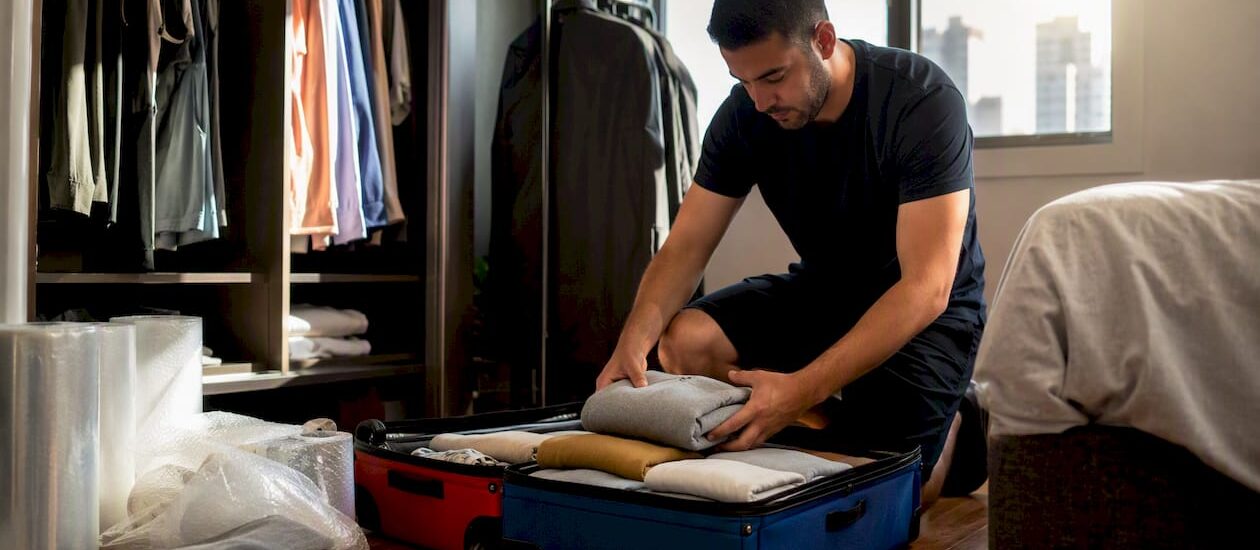
The most reliable way to pack clothes for a move is to declutter first, launder everything and let it dry completely, then match each garment type to the right container — wardrobe boxes for hanging items, vacuum bags for puffers and doonas, suitcases for everyday wear — and finish with clear labels and a separate essentials bag you keep in your own car.
Start today with these five actions:
Pro Tip: Pack your essentials bag last and put it in your car, not on the removalist truck. If the truck is delayed or you arrive after dark, you will have everything you need without unpacking a single box.
Must-have materials before you start:
The fastest, safest way to pack clothes for a move is to declutter and launder first, match every garment to the right container, and keep an essentials bag in your own car.
| Point | Details |
|---|---|
| Declutter and launder first | Sort into keep, donate, discard before packing; wash and fully dry everything to prevent mildew. |
| Match container to garment | Wardrobe boxes for hanging items, vacuum bags for puffers and doonas, suitcases for folded everyday wear. |
| Never compress wool or delicates | Vacuum-sealing wool, cashmere, and shaped knits deforms fibres and can trap moisture permanently. |
| Label clearly with priority levels | Mark each box with room, category, and open-first status; number boxes for a simple inventory. |
| Onyx Removals packing service | Professional wardrobe packing, box hire, and residential removal available across Melbourne. |
Decluttering before packing can cut your moving load significantly and save time when unpacking — sort items into keep, donate, and discard piles, as Jack Cooper’s moving guide recommends. The rule of thumb: if you haven’t worn it in 12 months and it holds no sentimental value, it goes. Give yourself 30–60 seconds per item maximum; longer and you’ll talk yourself into keeping things you don’t need.
The packing timeline:
Essentials bag contents:
Keep this bag with you, not on the truck. Delays happen, and arriving at a new home at 9 PM without a toothbrush or clean clothes is entirely avoidable.
Pro Tip: Follow the complete packing timeline to keep the whole move on schedule, not just the clothes.
The right container depends on the garment, not convenience. Using a bin bag for a suit jacket or a wardrobe box for socks wastes money and space. Here is a practical breakdown.
| Container | Best for | Pros | Cons | Australian availability |
|---|---|---|---|---|
| Wardrobe box | Suits, dresses, long coats | Hangers stay in; no folding; minimal creasing | Bulky; costs more | Removalist suppliers, Bunnings, online |
| Vacuum/compression bag | Puffer jackets, doonas, bulky knitwear | Massive space saving | Heavy when compressed; damages wool/delicates | Kmart, Big W, online |
| Garment bag | Single suits, formal wear, delicate dresses | Protects fabric; easy to carry | Limited capacity | Dry cleaners, department stores |
| Suitcase | Everyday clothes, folded items | Wheeled; easy to move; built-in weight distribution | Limited space if half-empty | Already own one |
| Medium cardboard box | Folded jeans, jumpers, activewear | Cheap; stackable | Can split if overfilled | Bunnings, supermarkets, removalists |
| Plastic storage bin | Heavier folded items | Waterproof; reusable | Heavy; less stackable | Kmart, Big W, Bunnings |
| Heavy-duty rubbish bag | Hanging clothes (quick hack) | Free; fast | Tears easily; no structure | Supermarkets |
For tape, use brown packing tape rather than masking tape — it holds under weight. A thick permanent marker is non-negotiable for labelling. For delicates, acid-free tissue paper and individual garment bags substantially cut wrinkling and friction damage during transit.
Pro Tip: Suitcases, duffel bags, and even chest of drawers can serve as ready-made containers — Find A Mover notes that suitcases are ideal for weight distribution and mobility, but avoid packing them half-empty or contents will shift and wrinkle. Fill gaps with rolled socks or scarves.
Check the packing supplies guide for sourcing wardrobe boxes and tissue paper locally in Melbourne.
The method matters as much as the container. Rolling, folding, and layering each suit different fabrics and different destinations in a box.
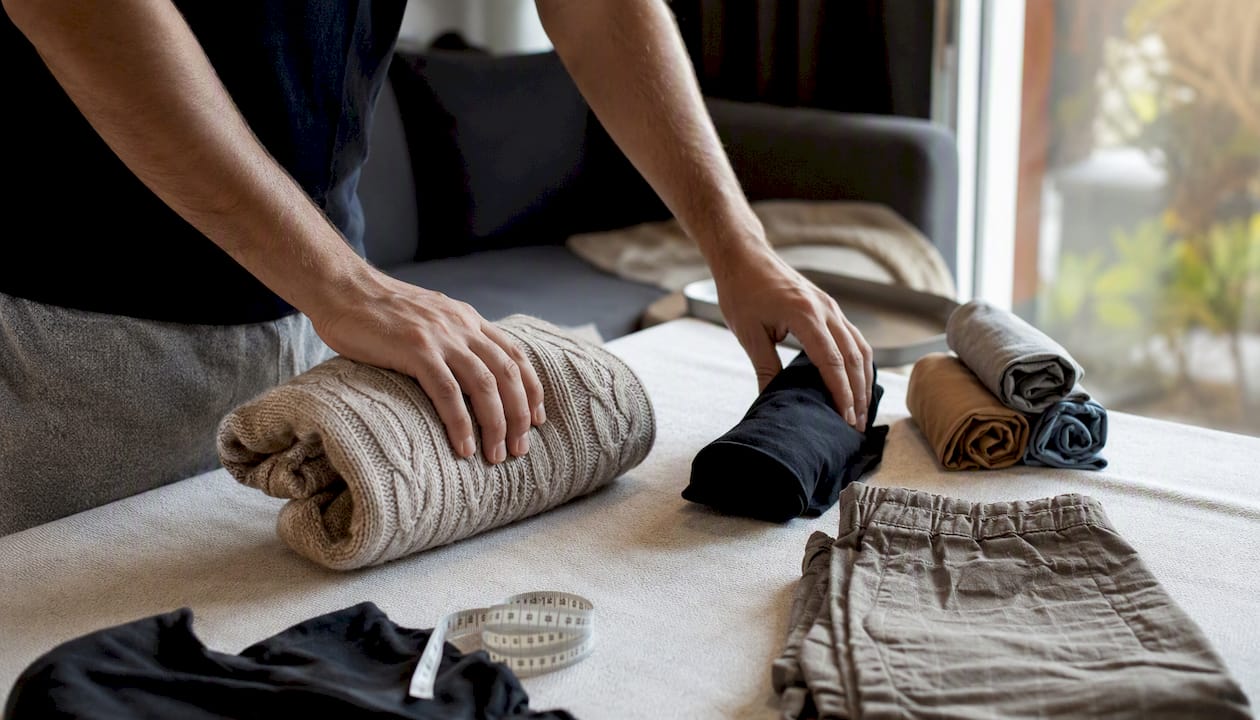
Rolling works best for soft, everyday fabrics: T-shirts, activewear, pyjamas, and casual cotton. Roll tightly from the hem up, and stand rolls upright in a box or suitcase so you can see every item at a glance — this is the core idea behind KonMari-style packing, and it genuinely speeds up unpacking.
Folding flat suits jeans, jumpers, and structured trousers. Stack these in the lower half of a medium box, keeping the heaviest at the base.
On the hanger is the right call for button-down shirts, blazers, and anything with a collar or structured shoulder. Folding a blazer compresses the shoulder padding; keeping it on a hanger in a wardrobe box or garment bag preserves the shape entirely.
Delicate silks and fine fabrics need acid-free tissue between each layer and either a small dedicated box or a garment bag. Never roll silk — the friction damages the weave.
The layering method inside a box:
This approach, supported by Find A Mover’s packing guide, saves space and prevents heavier items from crushing lighter ones.
Never use compression bags for wool, cashmere, or shaped knits. The pressure deforms fibres and can trap residual moisture even in items that feel dry.
Pro Tip: Fill gaps in boxes with rolled socks, belts, or scarves. They protect collars and cuffs from shifting, and you use up small items that would otherwise rattle around loose.
Hanging clothes are the easiest to damage and the easiest to protect — if you use the right method.
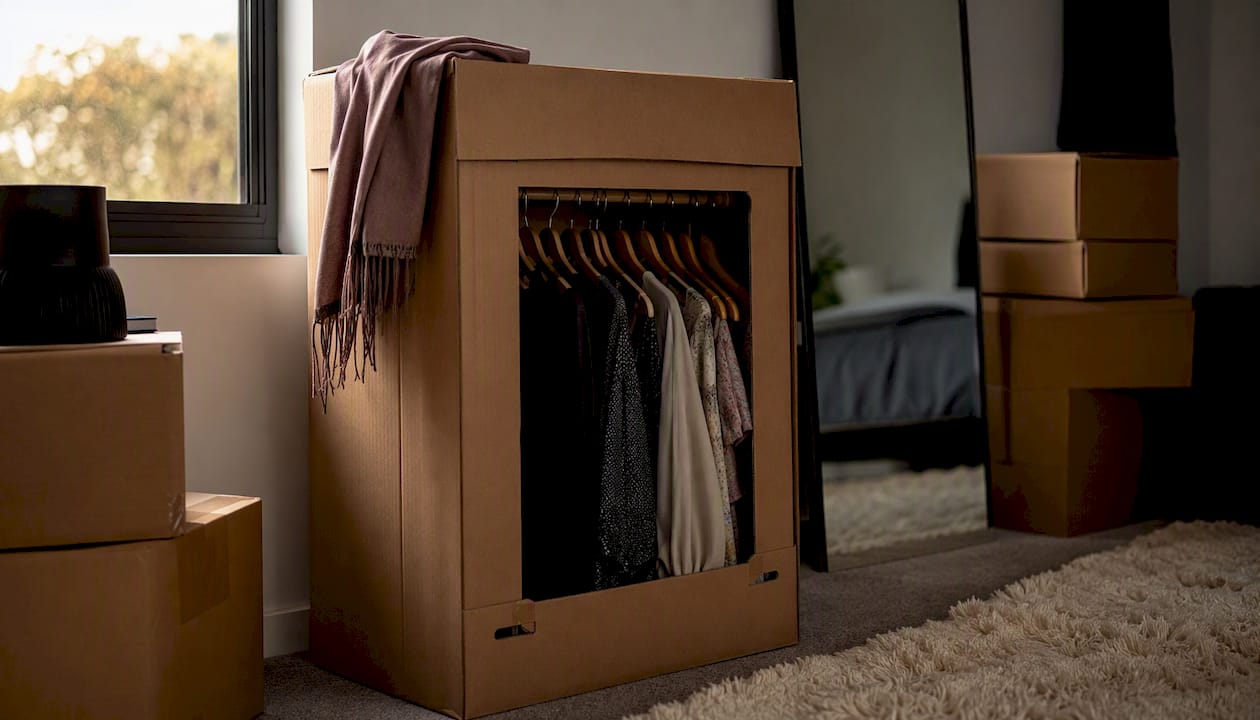
Wardrobe boxes are the gold standard. They include a hanging rail so clothes travel exactly as they sit in your wardrobe. Emmanuel Transport’s guide confirms that wardrobe boxes with a hanging rail allow clothes to travel on their hangers and reduce re-ironing on arrival, making them especially worthwhile for suits, dresses, and long formal items. Hire or buy them from most Melbourne removalist suppliers.
For a faster, cheaper option, the bin-bag hack works well for casual hanging clothes:
Garment bags suit single valuable items — a wedding dress, a tailored suit, a formal coat. They zip closed and protect against dust and friction. Most dry cleaners will give you one for free if you ask.
Pro Tip: For long-haul or interstate moves, use cardboard rod protectors or removable hanger clips to stop hangers tangling in transit. A knotted bundle of 20 hangers arriving at the other end is a 20-minute untangling job you don’t need on moving day.
Vacuum bags are genuinely useful here, but only for the right items.
When compression bags work well: puffer jackets, synthetic-fill doonas, sleeping bags, and bulky fleece. These items compress without fibre damage and spring back to shape when you open the bag. The trade-off is weight — a compressed doona bag becomes dense and heavy, so distribute these across the truck floor rather than stacking them on top of other boxes.
When to avoid compression bags: wool, cashmere, structured knits, and any garment with padding or boning. Home Removal Sydney’s guide is direct on this: vacuum and compression bags should be avoided for wool and delicate knits because compression can deform fibres or trap moisture. A wool jumper that has been vacuum-sealed for a week can emerge misshapen in ways that don’t fully recover.
For woollens: fold along the natural seams, place flat in a medium box, and layer acid-free tissue between items. Don’t roll wool — it stretches the fibres at the fold points.
For high-value delicates (silk blouses, beaded garments, vintage pieces): wrap each item individually in acid-free tissue, place in a small box, and keep that box with you in your car rather than on the truck.
Prolonged compression of structured or natural-fibre garments can cause permanent creasing, fibre deformation, and moisture trapping — even in items that feel completely dry before packing. When in doubt, fold and breathe rather than compress and seal.
Box weight is where most people get it wrong. A large box filled with denim jeans can weigh 25 kg or more — that’s a back injury waiting to happen and a box that’s likely to split at the base.
The rule: use small-to-medium boxes for heavy clothing (denim, jumpers, boots) and reserve large boxes for light, bulky items only (pillows, light jackets, bed linen).
Pro Tip: Before sealing any box, attempt a single-person lift. If you can’t lift it comfortably from the floor to waist height, redistribute some contents into a second box. No box of clothes should require two people to carry.
Good labelling on moving day takes five minutes. Poor labelling costs hours at the other end.
Label every box with:
Number each box and keep a simple index — even a note in your phone works. This creates a basic inventory for unpacking and supports any insurance claim if something goes missing or is damaged. Better Removalists Adelaide recommends colour-coded labels and box numbering to make unpacking faster and to create a simple inventory system. A roll of coloured tape (one colour per room) costs almost nothing and saves real time.
Unpacking sequence:
Resist the urge to unpack everything at once. Work through the priority order and you’ll have a functional wardrobe within a few hours of arriving, even if the rest of the house is still in boxes. For a full inventory approach, the Melbourne move inventory guide covers numbering and tracking in detail.
Most packing problems are avoidable. Here are the ones that come up repeatedly:
If things go wrong:
Before moving day, photograph high-value garments and note their condition. If anything is damaged in transit, you will need that documentation to support an insurance claim with your removalist or contents insurer.
See the items not to pack guide for a broader list of what should never go on a removalist truck.
DIY packing works well for most moves. There are situations, though, where professional packers earn their cost back quickly.
Consider hiring professionals when:
Professional packing services typically provide wardrobe boxes, garment bags, acid-free tissue, and professional labelling as part of the service. Full-service moves include packing, loading, transport, and unpacking. Packing-only services are also available if you want to handle transport yourself.
When requesting a quote, ask specifically about:
Pro Tip: For extremely valuable garments, request an itemised packing service with photographs taken before items are packed. Keep those photos somewhere accessible — not in a box on the truck. If you can carry the item yourself, do so.
The professional packing vs DIY guide breaks down the cost and time comparison in detail.
The packing mistakes I see most often on the job aren’t about technique — they’re about timing. People pack their clothes last, in a rush, the night before the move. That’s when damp items end up sealed in boxes, when the good suits get stuffed into bin bags, and when the essentials bag never gets made.
The other thing worth saying: wardrobe boxes are underused. Plenty of people skip them to save money, then spend an hour re-ironing shirts at the other end. For a business wardrobe or anything you wear to work, the box pays for itself in time alone.
One tip I haven’t seen emphasised enough: when you load hanging clothes into the truck, keep them vertical. Laying garment bundles flat means the weight of the hangers presses into the fabric for the whole journey. Vertical loading, even just leaning against the truck wall, makes a real difference to how clothes arrive.
Packing a full wardrobe properly takes time, the right materials, and a clear system. Onyx Removals offers a packing and unpacking service in Melbourne that covers exactly this: wardrobe boxes, garment handling, professional labelling, and careful loading so your clothes arrive in the same condition they left.

Whether you need a full residential removal with packing included, or just want to hire wardrobe boxes and moving equipment to handle it yourself, Onyx Removals can help. The team services Melbourne and surrounding areas, and quotes are obligation-free. Get in touch to request a quote and confirm availability for your move date.

No Related Post


