



A storage container rental for moving suits you if you’ve got driveway space, some flexibility on dates, and either the muscle or the budget to load it yourself. It struggles for tight inner city sites, strata buildings with loading rules, or fragile high value items on a fixed deadline. Budget for delivery, pickup and any redelivery fee on top of the hire rate, and check whether summer heat is a risk for what you’re storing.
TL;DR:
- Container hire costs include delivery, pickup, and potential storage-in-transit or redelivery fees, which can significantly increase the total price beyond the base rate.
- Proper access assessment involves measuring driveway width, obstacle clearance, and permit requirements, with a photo review helping prevent delivery failures.
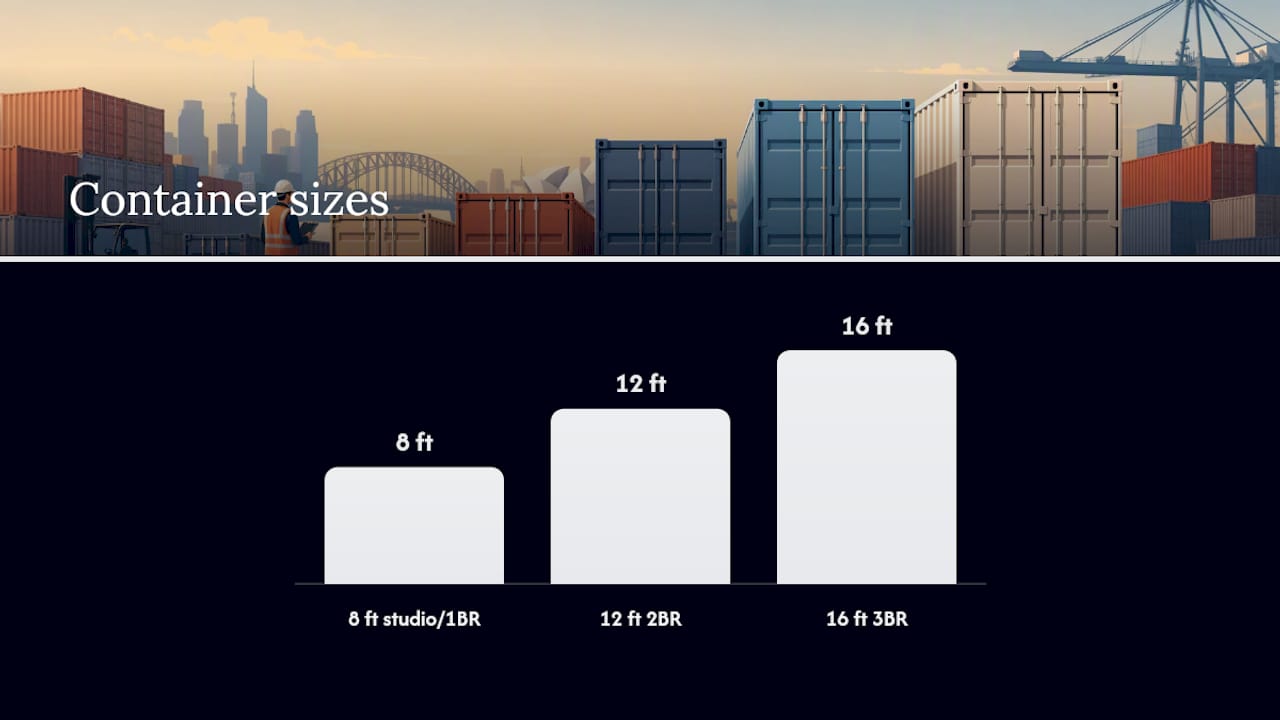
- Suitable container sizes range from 8 to 16 feet, but payload weight limits often matter more than volume, requiring careful weighing of dense or heavy items.
- Container rental is ideal for short-term gaps of two to six weeks, while long-term storage or very tight access scenarios favor traditional storage or professional movers.
- Insurance often excludes damage caused by poor packing, so owners should ask specifically about coverage for fragile or heat-sensitive items packed by themselves.
A portable container earns its keep when you’ve got somewhere flat and legal to park it, and when your move has a gap between exit and entry dates. Loading over several days beats a single frantic move day, and you avoid handing your gear to a warehouse and then unloading it again at the other end. Moving containers buy time, letting you pack at your own pace while settlement dates shift underneath you.
It’s a poor fit in other scenarios, though.
Traditional self storage still wins for anything beyond a few months, since long-term rates are lower and you’re not paying for a container sitting idle on a driveway.
Container hire generally comes in three practical bands, and common portable sizes run around small, medium, and large sizes, each suited to a different household scale.
Pro Tip: Payload limits catch people out more than volume does. A container can look half empty and still be at its weight cap if you’ve packed books, tiles or tinned pantry goods, so weigh dense items separately before you assume there’s room for more.
Before you book, walk each room and note dimensions of large furniture, count boxes by size, and flag anything unusually heavy (pianos, safes, stone benchtops). That fifteen minute audit prevents the awkward call where the driver says your load won’t fit or the axle weight is over.
The headline hire rate is rarely the full bill. Total cost depends on container hire, delivery and collection, linehaul distance and storage-in-transit, and each of those can move the final number more than the base rate does.
Expect to see these line items on a proper quote:
Longer dwell time pushes the price up fast, since most providers charge storage by the week once you’re past the included hire window. Difficult access adds cost too. If a driver arrives and can’t place the container because of a narrow gate or a steep driveway, that redelivery attempt is billed separately and can add more than the original delivery fee.
Pro Tip: Ask every provider for a written quote itemising each of the above, then compare like-for-like. A “cheap” quote missing storage-in-transit or redelivery cover almost always ends up the most expensive once the invoice lands.
Access problems cause more delivery failures than anything else in container hire, and most are avoidable with a five minute check beforehand.
Providers differ on whether they’ll help chase permits themselves, so ask directly rather than assuming it’s included. A quick, practical habit that heads off most failures: photograph the intended placement spot from two angles and send it to the provider before the truck is booked. Misjudged gate widths and driveway slopes cause the majority of failed deliveries, and a photo catches both in seconds.
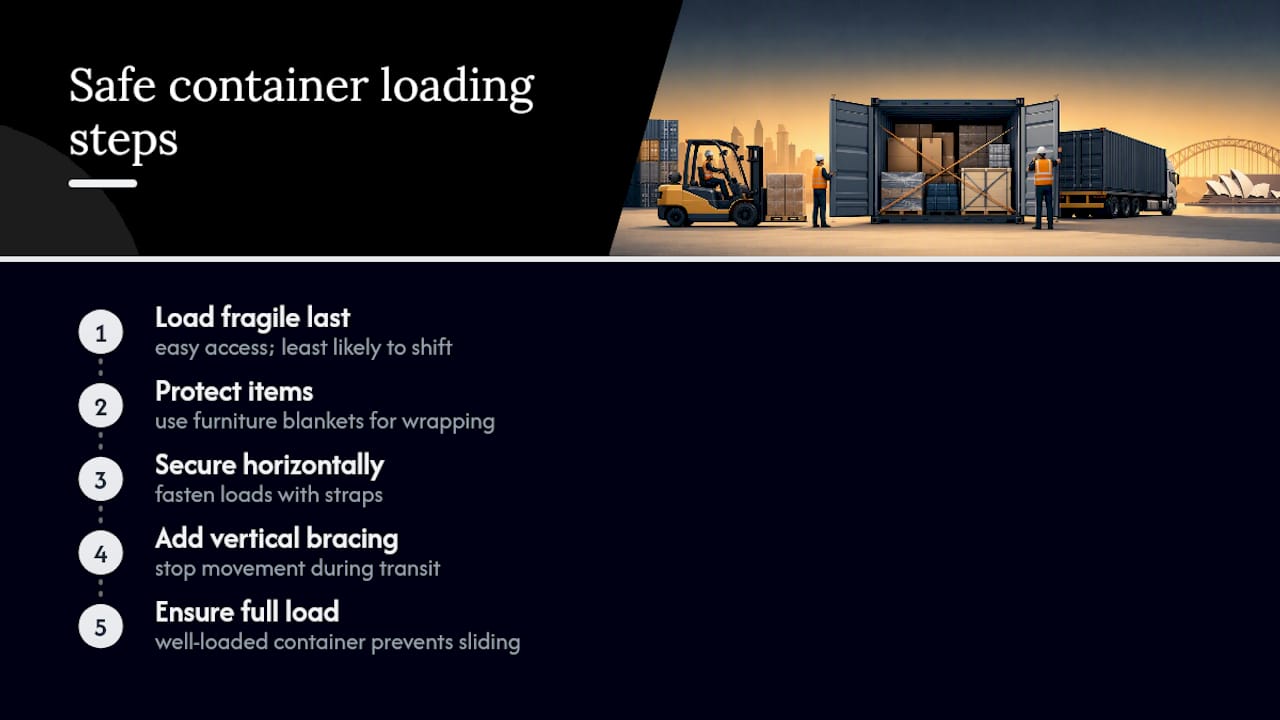
Pack fragile and heat sensitive items last so they’re easiest to reach and least likely to shift, and use furniture blankets, straps and vertical bracing to stop movement during transit. A container that’s well loaded travels far better than one where boxes are stacked loose and left to slide.
Climate control matters more than most people expect. Steel containers left on site through an Australian summer can damage timber furniture, electronics and artwork through heat and condensation, so anything heat sensitive, including musical instruments, deserves a climate-controlled option if it’s sitting for more than a few weeks.
Insurance is where owner-packed loads get caught out. Most policies exclude damage caused by poor packing rather than by transit itself, so ask specifically what’s covered if you load the container yourself versus if a crew does it.
One useful callout: mobile storage professionally loaded tends to reduce damage risk compared with transferring goods between a truck and a storage facility, because items are handled once rather than twice. If you want extra guidance on wrapping and organising fragile items before they go in, a home organisation guide on protecting stored belongings covers practical bracing and labelling techniques worth applying before the container arrives.
Run through this checklist before signing anything, and challenge any vague answer rather than assuming it’ll be fine on the day.
Pro Tip: A quote that says “delivery included” without naming a distance radius is the single biggest red flag in this industry. Ask for the radius in kilometres and get it in writing before you commit.
Containers earn their place in a move when timing is the real problem, not access or fragility. We see two situations where they shine: staged packing over a week or two before settlement, and a short gap of a few weeks between leaving one property and entering the next.
We push clients toward a removalist crew instead when access is tight (narrow lanes, apartment loading docks) or when the load includes anything genuinely fragile or specialised, like pianos or artwork. The container itself isn’t the risk. Poor loading and poor access planning are.
. . .
— Dinshaw
If the access checks above have you second guessing whether a driveway container is worth the hassle, that’s usually a sign a crew-based move fits better. Some moving companies run residential moves with site assessment done before the truck ever leaves the depot, so you’re not gambling on gate widths or turning radius on the day.
Our service scope covers full packing support, short-term storage options for gaps between settlement dates, and flexible labour levels depending on how much you want to do yourself. If fragile items, awkward access or a tight deadline have you leaning away from a DIY container, get a proper site assessment and quote for your move and we’ll tell you straight whether a crew or a container makes more sense for your address.
Cost depends heavily on linehaul distance, delivery and pickup fees, and how long the container sits in storage-in-transit, so there’s no single flat figure. Get an itemised quote covering hire, delivery, storage and redelivery fees before comparing providers.
The base hire rate is only part of the bill. Delivery, pickup, distance charges and any redelivery fee for a failed placement attempt can add substantially more than the headline hire price suggests.
Pricing scales with container size, hire duration and distance, and most providers charge separately for delivery, pickup and any storage-in-transit period. Ask for a written, itemised quote rather than comparing quoted headline rates alone.
Most household moves fall into short gaps of two to six weeks, which suits portable containers well; for gaps under a week, a removalist warehouse hold is often cheaper, and anything beyond a few months usually favours traditional self storage.
Often not fully. Many policies exclude damage caused by poor packing rather than damage during transit, so ask specifically what’s covered for owner-packed loads before you sign.

No Related Post


