



TL;DR:
- Interstate moving costs depend on weight, distance, service level, and seasonal timing, often exceeding initial quotes by 20-35%. Proper planning, decluttering, and asking for itemized, binding estimates help avoid unexpected expenses. Full-service moves can range from $2,000 to over $10,000, with careful comparison essential for budget accuracy.
Planning an interstate move throws most people one big surprise: distance is only the beginning. The average cost to move out of state sits anywhere between $2,000 and $10,000 depending on your household size, how far you are travelling, and the level of service you choose. In the industry, this is referred to as interstate removal or long-distance moving, and understanding how it is priced is the single most useful thing you can do before you request a single quote. This guide breaks down every cost driver, gives you realistic numbers by home size and mileage, and shows you exactly where budgets blow out.
| Point | Details |
|---|---|
| Distance is not the only driver | Shipment weight, service level, and timing all shape your final bill as much as kilometres travelled. |
| Plan for cost overruns | Final bills often exceed base quotes by 20–35% due to add-ons most people overlook. |
| Timing matters financially | Moving in peak season (summer) can add thousands to your interstate removal cost compared to off-peak months. |
| Decluttering pays directly | Because interstate moves are priced by weight, reducing your load before moving day has a direct and measurable dollar impact. |
| Know your quote type | Binding, non-binding, and not-to-exceed estimates each carry different financial risks and need to be compared carefully. |
Most people picture one number on one invoice when they think about moving expenses out of state. The reality is that your final bill is built from several distinct components, and long-distance moves are priced differently from local ones. Rather than hourly labour rates, interstate removalists charge based on the weight of your shipment and the distance it travels.
The key factors that shape your cost include:
Pro Tip: Get at least three quotes and ask each removalist to itemise every potential additional charge. A quote that looks $800 cheaper may carry $1,200 worth of unlisted extras.
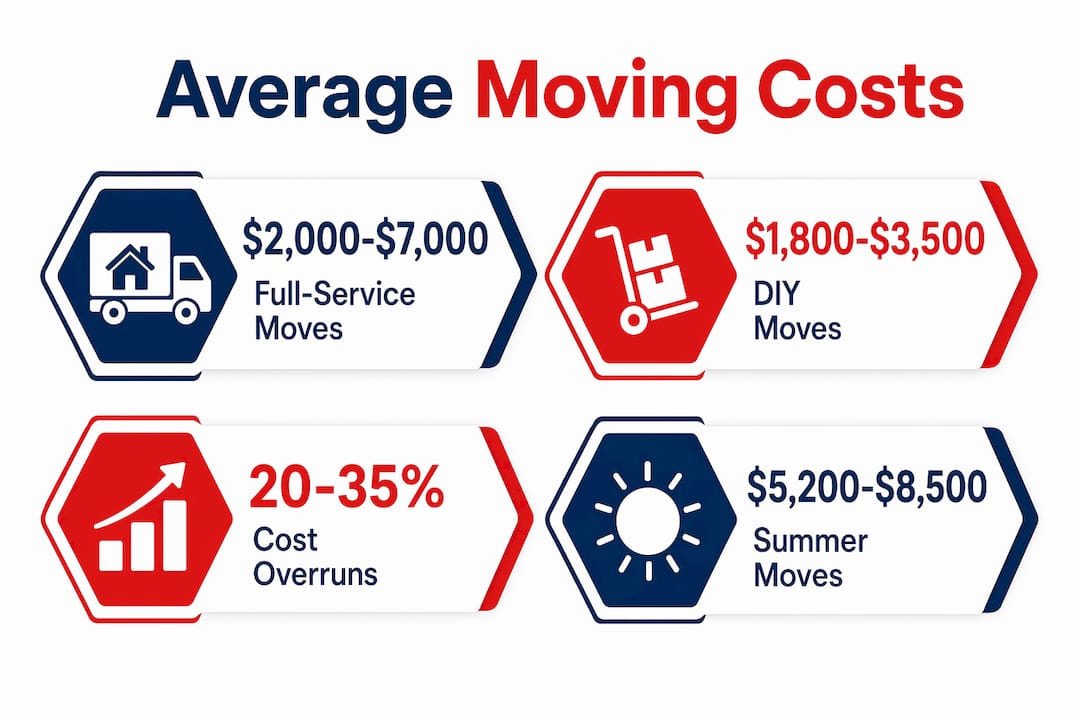
Seasonal impact deserves more attention than most guides give it. Summer interstate moves cost $5,200–$8,500 compared to $3,400–$5,800 during off-peak periods. If your timeline has any flexibility at all, even shifting by four to six weeks can represent real savings.
Concrete numbers are more useful than ranges, so here is how moving from state to state cost typically breaks down across common household sizes and distance bands.
| Home size | Under 500 km | 500–1,500 km | 1,500 km+ (cross-country) |
|---|---|---|---|
| Studio or 1 bedroom | $1,200–$2,500 | $2,000–$3,800 | $3,500–$5,500 |
| 2 bedroom | $2,000–$3,800 | $3,500–$5,500 | $5,000–$7,500 |
| 3 bedroom | $3,500–$5,500 | $5,000–$7,500 | $6,500–$10,000 |
| 4+ bedroom | $5,000–$7,500 | $6,500–$10,000 | $8,500–$14,000+ |
These figures reflect full-service moves. Average interstate moves range $2,000–$7,000 for standard household sizes, while a 2–3 bedroom home moving 1,000 miles averages $5,450 based on shipment weight calculations.
For comparison, the cost of interstate moving by full-service sits far above a DIY alternative. A full-service cross-country move for a 2-bedroom home typically costs $5,500–$10,000, whereas a DIY truck rental for the same move runs $1,800–$3,500. That gap reflects real value for effort, time, and risk, not just professional margin.
Pro Tip: If you are trying to get a rough figure before requesting quotes, use an average moving cost calculator and enter your actual inventory rather than just “2 bedroom.” The difference between a fully furnished home and a lightly furnished one can be $1,500 or more.
Understanding the difference in cost between local vs interstate moves also provides useful context. Local moves average around $1,250, which is why the jump to interstate pricing surprises so many people. The pricing model is structurally different, not just proportionally larger.
This is the section most articles skip, and it is where disputes and unexpected charges most commonly originate. When you are comparing quotes for how much to move across states, you need to understand which billing method each company uses.
Weight-based pricing is the most common method for interstate removals. Your belongings are weighed on a certified scale before and after loading. Certified scale tickets provide transparent billing and give you a verifiable record that reduces the risk of disputes. The tariff is then applied to that confirmed weight.
Volume-based pricing calculates cost based on the cubic metres your belongings occupy in the truck. This method is common for shorter interstate distances and smaller loads. It can work in your favour if you have lightweight but bulky items, or against you if your furniture is dense and compact.
The practical implications for comparing quotes are significant:
If a quote looks unusually low, the billing method is often the explanation. A volume-based quote with generous cubic metre estimates may look attractive until your final weight exceeds what the cubic metre figure implied.
Even well-researched moves regularly end up over budget. The base quote from most removalists covers transportation of standard household items in accessible conditions. Everything beyond that carries an additional charge, and those additional services add materially to your total.
Here is a practical checklist of add-ons to budget for before you confirm any booking:
The gap between quoted and final costs is well documented. Final bills commonly exceed base quotes by 20–35%, and a real-world example of a quote rising from $7,500 to $9,350 illustrates exactly how quickly those extras accumulate.
There is one cost-reduction strategy that consistently outperforms all others: decluttering before your move. Because interstate pricing is weight-based, every box you eliminate has a direct financial return. Decluttering has a bigger impact on interstate moves than on local ones, and most people underestimate how much they are paying to transport items they no longer use or need.
I’ve worked alongside families and individuals planning interstate relocations for long enough to notice a consistent pattern. The moves that go over budget almost always come down to one thing: people treat the initial quote as the final cost rather than as a starting point.
What I’ve found is that the quote conversation itself is where the real budgeting work happens. If you walk into that conversation with a detailed room-by-room inventory, a clear list of access challenges at both ends, and a direct question about estimate type, you will get a far more accurate number to plan around. Without that, you are essentially being quoted for a hypothetical move, not yours.
The other thing I’d push back on is the instinct to go with the cheapest quote. I’ve seen moves where the lowest quote ended up costing more than the middle quote once the add-ons landed. The removalists who give you detailed, itemised quotes are usually the ones who have nothing to hide in the final bill. Ask every mover you speak to: “What would cause this quote to change?” The quality of that answer tells you more than the number itself does.
Decluttering is genuinely underestimated too. I’ve watched a client reduce their moving bill by over $900 simply by selling or donating furniture they were planning to move out of habit rather than need. That kind of saving takes an afternoon, not a negotiation.
— Dinshaw
Moving interstate is complex. Getting the pricing right from the start makes everything that follows considerably smoother.

Onyx Removals provides residential moving services built around transparent, detailed quotes so you know exactly what you are paying for before a single box is lifted. The team walks you through every cost component, from packing and specialty items to storage and insurance, so there are no surprises on moving day. If you are ready to plan your interstate relocation with confidence, request a detailed quote and get accurate figures tailored to your actual household, timeline, and destination.
Full-service interstate moves typically range from $2,000 to over $10,000 depending on home size, distance, and services included. A 2-bedroom home moving 1,000 miles averages around $5,450 based on current weight-based pricing data.
A DIY truck rental for a cross-country 2-bedroom move costs roughly $1,800–$3,500, compared to $5,500–$10,000 for a full-service move. The savings are real, but factor in fuel, accommodation, and the physical effort of loading and unloading yourself.
Base quotes rarely include extras like stair fees, packing materials, specialty item handling, insurance upgrades, and storage. These add-ons can push your final bill 20–35% higher than the original estimate, which is why itemised quotes matter.
Off-peak periods (autumn and winter) deliver meaningfully lower costs. Peak summer pricing runs $5,200–$8,500 compared to $3,400–$5,800 in quieter months, so shifting your move date even slightly can produce genuine savings.
A binding quote locks in the price regardless of final weight, giving you certainty. A non-binding quote is an estimate that can increase if your shipment weighs more than expected. Always ask which type you are receiving before signing any agreement with a removalist.

No Related Post


