



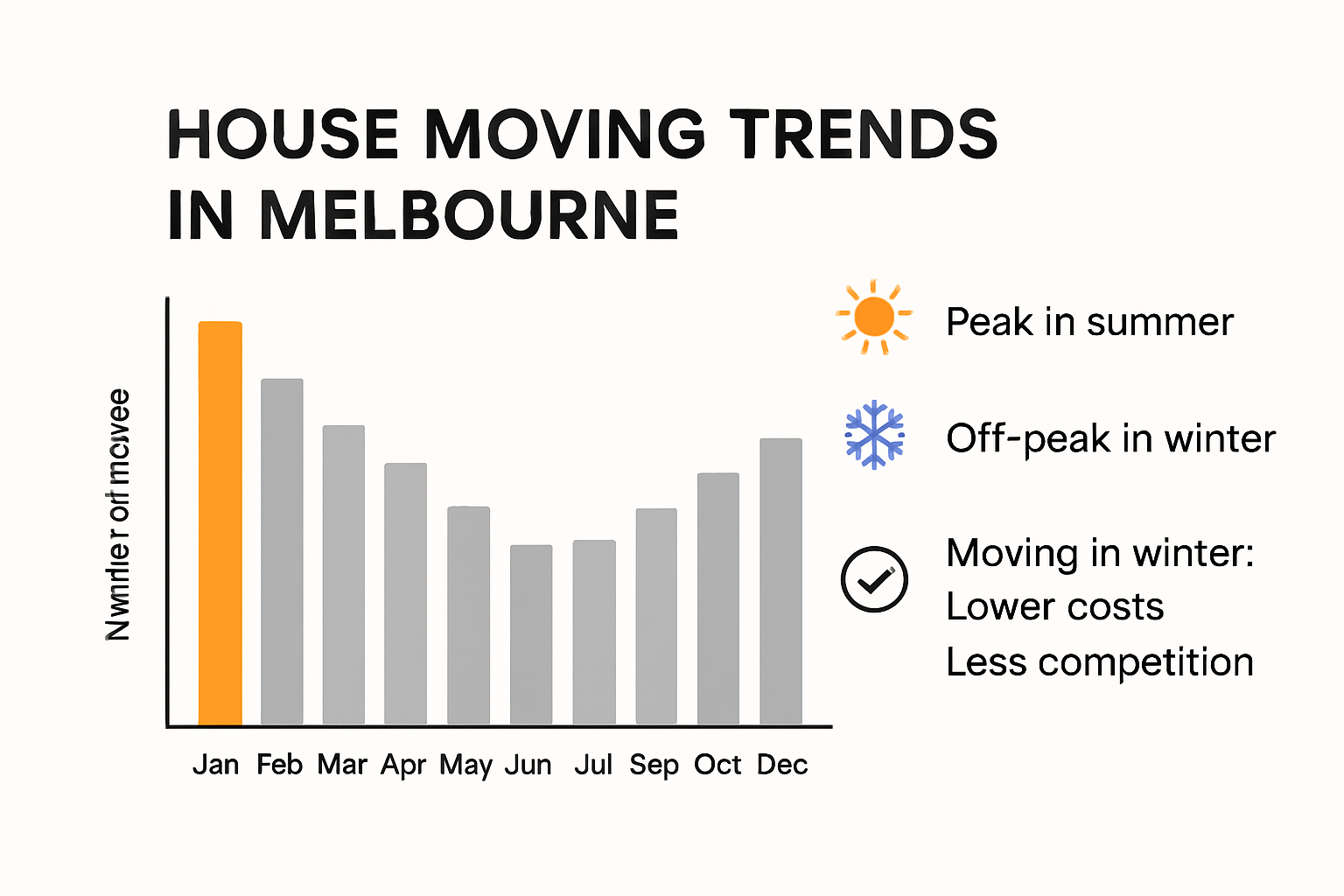
Every year, thousands of Melburnians face the same challenge—when’s the right time to pack up and move house. You’d think most people would avoid the hassle of summer heat, but get this. Australians are up to 50% more likely to move in January than any other month. The real surprise is that some of the savviest movers wait for winter, quietly scoring lower costs and more flexible booking dates while everyone else sweats it out.
| Takeaway | Explanation |
|---|---|
| Summer is peak moving season. | Melbourne’s summer sees increased moving activity; January is the busiest month due to holidays and weather. |
| Weekday moves offer efficiency. | Moving Monday to Thursday ensures better service, experienced staff, and reduced congestion compared to weekends. |
| Winter can save you money. | Off-peak winter months provide lower prices and flexible scheduling due to reduced demand for moving services. |
| Plan business moves strategically. | Timing is crucial for corporate relocations; aim for slow business periods to minimize disruptions. |
| Use technology to streamline moving. | Embrace digital tools for organization and planning, making your move more efficient and less stressful. |
Moving house involves strategic timing, and understanding Melbourne’s seasonal patterns can significantly impact the success of your relocation. Each season presents unique challenges and opportunities for those planning to move.
Summer emerges as the most popular moving period in Melbourne, driven by several compelling factors. Budget Direct’s analysis reveals that January stands out as the most preferred month for relocations, with Australians being up to 50% more likely to move during this time. The reasons are multifaceted: school holidays create flexible schedules, weather conditions are generally more predictable, and longer daylight hours provide extended moving windows.
However, this popularity comes with challenges. Peak season means higher demand for moving services, potentially increasing costs and reducing availability of professional removalists. Temperatures can also be intense, with Melbourne experiencing summer days that frequently exceed 30 degrees Celsius, making physical moving tasks more demanding.
Selectra’s research indicates that moving during off-peak seasons like winter can offer significant advantages. While November to February represents the traditional peak moving period, the winter months present unique opportunities for budget-conscious movers. Removalist services typically have lower demand, potentially translating to more competitive pricing and greater scheduling flexibility.
Winter moving requires careful planning. Melbourne’s winter can be unpredictable, with occasional rain and cooler temperatures. Movers need to protect belongings from moisture, ensure proper packing of temperature-sensitive items, and potentially schedule moves during the milder parts of the day. Protective coverings, waterproof packaging, and strategic timing become crucial considerations.
Interestingly, broader economic factors are increasingly influencing moving trends. Recent Reuters reporting highlights how housing market dynamics can impact relocation decisions. Record high property values and interest rate fluctuations may prompt more strategic moving timelines.
For those seeking comprehensive guidance through these seasonal complexities, our moving tips resource offers detailed insights into navigating Melbourne’s unique relocation landscape. Understanding these seasonal nuances empowers individuals to make informed decisions that balance logistical efficiency, cost-effectiveness, and personal convenience.
Ultimately, while summer remains the most popular moving season, successful relocations depend on careful planning, flexibility, and a thorough understanding of individual circumstances. Each season presents its own set of opportunities and challenges, making personalized strategy key to a smooth moving experience.
To help you compare the benefits and drawbacks of moving in different seasons in Melbourne, the following table summarises key points discussed in the article:
| Season | Advantages | Challenges |
|---|---|---|
| Summer | – Most popular time to move – Predictable weather – Longer daylight hours – School holidays provide flexibility |
– Peak demand & higher costs – Lower availability of removalists – Heat can make moving tiring |
| Winter | – Lower demand, more flexible bookings – Competitive prices |
– Colder, rainy weather – Need to protect items from moisture |
| Spring | – Mild weather – Lower moving costs (particularly early spring) |
– Allergies may be an issue – School schedule considerations |
| Autumn | – Milder temperatures – Often less busy than summer |
– Timing may clash with end-of-financial-year for businesses |
Choosing between weekday and weekend moves represents a critical decision that can significantly impact the overall moving experience. Understanding the nuanced advantages and challenges of each option helps Melbourne residents make more informed relocation choices.
Moving industry experts consistently recommend scheduling moves between Monday and Thursday to optimize logistical advantages. Weekday moves typically offer superior professional support, with moving companies operating at full capacity and staffing levels. This translates to more experienced personnel, greater scheduling flexibility, and potentially more streamlined service delivery.
Professional moving teams are generally less stressed during weekdays, allowing for more focused and efficient services. Reduced traffic congestion in Melbourne during standard working hours can also facilitate smoother transportation of belongings. Additionally, utility companies and administrative services are more readily available during weekdays, simplifying processes like address changes, utility transfers, and potential last-minute administrative tasks.
Weekend moves present unique advantages for individuals with complex work schedules or family commitments. Real Estate industry research highlights that many individuals prefer weekend relocations due to increased personal availability and reduced workplace disruption.
However, weekend moving is not without challenges. Higher demand during weekends often results in elevated moving service costs and reduced availability of professional removalists. Melbourne’s weekend traffic can also complicate moving logistics, with increased personal and commercial vehicle movements potentially causing delays and added stress.
Making an optimal moving day selection requires careful evaluation of personal circumstances, professional availability, and logistical constraints. Factors such as work schedules, family obligations, and specific moving requirements should guide decision-making. Some individuals might find a Friday move offers an ideal compromise, providing professional weekday efficiency while minimizing workplace interruption.
Our comprehensive moving tips resource provides additional insights into navigating these complex scheduling decisions. Understanding the nuanced trade-offs between weekday and weekend moves empowers Melbourne residents to design relocation strategies that align with their unique needs.
Ultimately, successful moving experiences stem from meticulous planning, realistic expectations, and a thorough understanding of individual constraints. Whether choosing a weekday or weekend move, prioritizing careful preparation and professional support remains paramount in ensuring a smooth transition to a new home or office location.
Business and specialized moves demand a significantly different approach compared to residential relocations. Strategic timing becomes crucial for minimizing operational disruptions and ensuring seamless transitions across various professional and unique moving scenarios.
Moving industry experts at Chipman Relocation emphasize the critical importance of selecting optimal timing for corporate moves. Businesses must carefully consider multiple factors including operational cycles, fiscal calendars, and minimal productivity interruption. Typically, the most advantageous periods for office relocations are during slower business quarters or between major project milestones.
Timing a business move requires meticulous planning. Companies should aim to schedule relocations during periods of reduced client activity, potentially during holiday seasons or traditional industry downtimes. This approach minimizes potential revenue loss and ensures smoother operational transitions. Advanced scheduling also allows for comprehensive IT infrastructure planning, ensuring minimal communication and technology disruptions.
Turnkey Operations research highlights that specialized moves involving sensitive equipment, scientific laboratories, or technological infrastructure require even more nuanced timing considerations. Factors such as temperature sensitivity, equipment calibration, and precise logistical coordination become paramount.
For instance, medical facilities, research institutions, and technology companies must plan moves with extraordinary precision. Relocating sensitive scientific equipment demands controlled environmental conditions, specialized transportation, and minimal vibration risks. Moves during moderate temperature periods reduce potential equipment stress and ensure optimal preservation of delicate instruments.
Bigfoot Moving’s analysis reveals that financial planning plays a significant role in timing business relocations. Off-peak moving seasons can offer substantial cost savings, with reduced service rates and greater availability of professional moving teams. Businesses can potentially negotiate more favorable rates by scheduling moves during less demanding periods.
Our apartment moving guide provides additional insights for businesses considering complex relocation strategies. Understanding the intricate balance between operational continuity, financial efficiency, and logistical precision becomes crucial for successful moves.
Ultimately, successful business and specialized moves transcend simple scheduling. They require comprehensive planning, risk assessment, and a deep understanding of organizational unique requirements. Engaging professional moving services with expertise in complex relocations ensures that businesses can transition smoothly while maintaining operational integrity and minimizing potential disruptions.
For business and complex moves, planning and preparation are critical. Use the table below for a quick reference to key timing and planning considerations mentioned for different business relocation scenarios:
| Scenario | Key Timing Considerations | Specific Needs |
|---|---|---|
| Corporate/Office Relocations | – Schedule during slower business periods – Avoid peak quarters and project milestones |
– Minimise staff disruption – Plan IT infrastructure |
| Medical/Scientific Facilities | – Move during mild weather | – Controlled environment – Protect sensitive equipment |
| Technology/IT Companies | – Coordinate to avoid major work cycles | – Specialist handling for equipment – Minimal downtime |
| General Commercial Moves | – Target off-peak seasons for better rates | – Financial efficiency – Greater service availability |

Planning a move in 2025 requires strategic thinking, careful preparation, and a comprehensive approach that addresses both logistical and personal considerations. As the moving landscape continues to evolve, understanding key planning strategies becomes crucial for a successful relocation experience.
HGTV recommends that moving between October and April can significantly reduce moving expenses. Specifically, scheduling moves on Tuesdays or Wednesdays during the middle of the month can result in more competitive pricing and greater availability of moving services. This approach takes advantage of lower demand periods, potentially offering substantial cost savings.
The timing of your move can dramatically impact overall expenses and logistical efficiency. This Old House highlights that spring offers an ideal balance of mild weather and lower moving costs. However, movers should carefully consider factors such as school schedules and potential seasonal challenges like spring allergies when planning their relocation.
Angi’s moving experts suggest that April and September represent optimal moving windows, offering mild weather conditions and more favorable moving rates. Preparing for a 2025 move requires a multifaceted approach that goes beyond simple scheduling.
Key preparation steps include:
Our comprehensive apartment moving guide provides additional insights into navigating the complexities of modern relocations. Understanding the intricate details of move planning can transform what might seem like an overwhelming process into a manageable and even enjoyable experience.
Moving in 2025 requires embracing technological solutions and personal flexibility. Digital tools now offer unprecedented support in moving preparation, from inventory management apps to virtual home tours and online moving service bookings. Movers should leverage these technologies to streamline their relocation process.
Personal circumstances remain a critical factor in move planning. Considerations such as work commitments, family needs, school transitions, and personal health should guide your moving timeline. Flexibility and advanced planning become your most valuable assets in ensuring a smooth transition.
Ultimately, successful moving experiences in 2025 demand a holistic approach. By combining strategic timing, comprehensive preparation, technological support, and personal adaptability, individuals can transform moving from a stressful experience into an exciting opportunity for new beginnings. The key lies in starting early, staying organized, and maintaining a positive, proactive mindset throughout the relocation process.
The best time to move in Melbourne is during the summer months, particularly January, when many people relocate due to school holidays and favourable weather. However, winter can be budget-friendly with lower costs and reduced demand for moving services.
Yes, moving during winter can offer advantages such as lower service costs and greater flexibility in scheduling due to decreased demand for removalists. However, it’s important to consider the potential for colder, rainy weather and protect your belongings accordingly.
Weekdays, particularly Monday to Thursday, are generally more efficient for moving as professional removalists tend to have better availability, reduced costs, and less traffic congestion. Weekends are more flexible for personal schedules but may come with higher costs and limited service options.
Business moves should be planned during slower periods to minimize disruptions, ideally scheduled during off-peak seasons or traditionally quieter business quarters. This allows for a smoother transition without affecting productivity significantly.
Worried about sky-high moving costs, limited booking slots, or unpredictable Melbourne weather? If you have spent hours wondering whether to book in summer, risk a winter move, or pick a weekday for better efficiency, you are not alone. This guide has highlighted that successful moves rely on timing, preparation, and flexibility. But getting it right can be stressful without the right support.

Let Onyx Removals take the hassle out of your next relocation. Our experienced team makes sure you benefit from cost-friendly booking windows, professionally timed removals, and custom solutions designed for your circumstances. You can access personalised tips and start planning now using our moving tips resource or go straight to Onyx Removals to get your free quote. Secure your preferred date and beat the seasonal rush before you miss out.

No Related Post


