



TL;DR:
- Elderly relocation services provide specialized support that combines planning, emotional care, and physical moving expertise. They help seniors transition smoothly into new homes or care facilities while safeguarding belongings and wellbeing. Early planning, credentialed providers, and compassionate communication are essential for a successful move, avoiding common emotional and logistical pitfalls.
Elderly relocation services are specialised support systems designed to help seniors and their families manage the physical, emotional, and logistical demands of moving to a new home or senior living community. These services go well beyond standard removalists. They combine strategic planning, compassionate communication, and hands-on moving expertise to protect both the belongings and the wellbeing of older Australians. With 70% of people turning 65 requiring some form of long-term care, the demand for professionals who understand senior moves has never been greater. Getting this right matters deeply, and knowing where to start makes all the difference.
Elderly relocation services is the umbrella term families use when searching for help, but the recognised industry term is senior relocation services. This field covers two distinct professional roles that often work side by side.

Senior Move Managers focus on the strategic and emotional side of the transition. They assess the senior’s current home, help sort and catalogue belongings, coordinate donations or estate sales, and create a floor plan for the new space. They act as a project manager throughout the entire process. The National Association of Senior Move Managers (NASMM) certifies these professionals in the United States, and their standards are widely referenced by Australian practitioners as a credibility benchmark.
Senior Moving Companies handle the physical execution. Trained crews pack, transport, and unpack belongings, assemble furniture, and set up the new home so it feels familiar and functional from day one. Many senior moving companies subcontract their physical crews while the move manager retains oversight of the project. Using both together delivers the most thorough and sensitive experience for the senior and their family.
When evaluating providers, look for these qualities:
Pro Tip: Ask any provider whether they have worked directly with aged care facilities or retirement villages in your area. Those who have will already know the facility’s scheduling rules, which saves time and avoids costly delays on move day.
For a broader overview of senior moving services in Melbourne, it helps to understand what local providers offer before committing to a package.
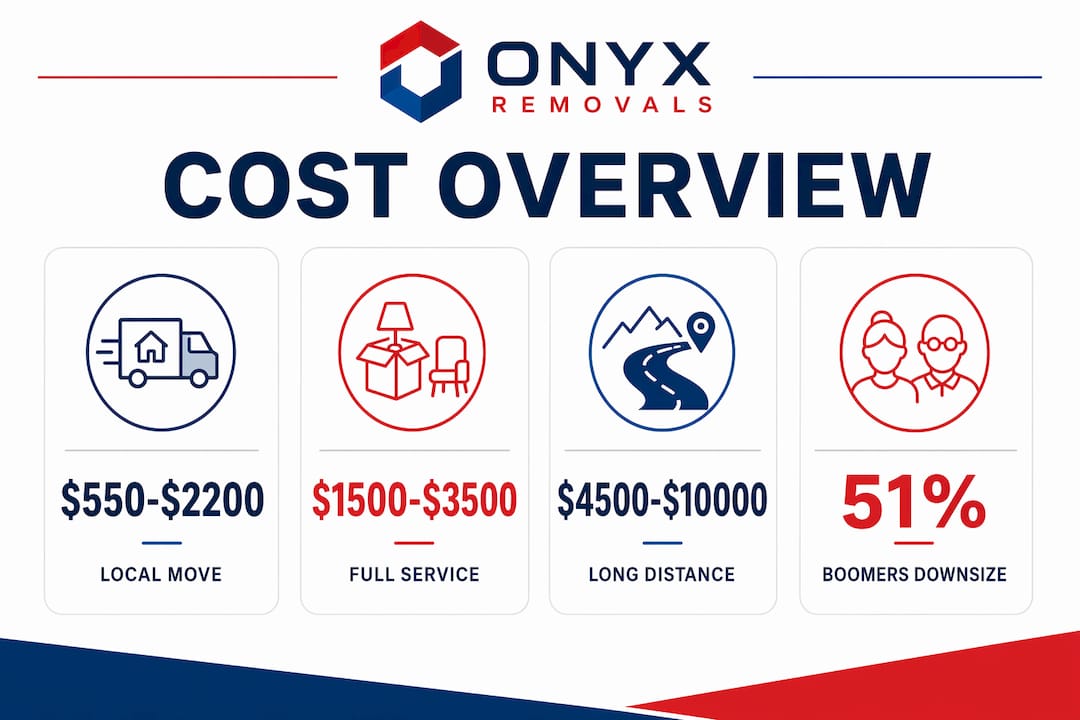
Cost is one of the first questions families ask, and the answer depends heavily on distance, volume, and the level of service required. Local moves average around $1,250, while long-distance relocations typically range from $4,500 to $10,000. That wide range reflects differences in travel distance, the amount of furniture being moved, and whether full packing and unpacking services are included.
Senior moving companies bill local moves hourly with a three-hour minimum for moves under 250 miles (roughly 400 kilometres), while long-distance jobs are quoted at a flat rate. This distinction matters for budgeting because hourly billing can escalate quickly if a home has not been downsized before the movers arrive.
| Service type | Typical cost range | What is included |
|---|---|---|
| Local move (basic) | $550 to $2,200 | Transport, loading, unloading |
| Local move (full service) | $1,500 to $3,500 | Packing, transport, unpacking, setup |
| Long-distance move | $4,500 to $10,000 | Full service across states or regions |
| Senior Move Manager fees | $50 to $150 per hour | Planning, sorting, coordination, floor planning |
| Downsizing assistance only | $300 to $1,500 | Sorting, donations, estate referrals |
Downsizing before the move is the single most effective way to reduce cost. Approximately 51% of Baby Boomers are already downsizing or planning to, which means the market for these services is growing and pricing is becoming more competitive. Always request a binding written estimate rather than a verbal quote. Binding estimates protect families from unexpected charges on move day, particularly when a senior’s home contains decades of accumulated belongings.
For practical guidance on getting accurate removal quotes, it pays to prepare a detailed inventory before contacting providers.
The recommended planning window is 8 to 12 weeks from the decision to move through to move day. Starting too late creates rushed decisions, emotional distress, and logistical gaps that are difficult to recover from. The timeline below gives families a realistic framework.
Pro Tip: Do not schedule the move for a Monday or Friday if the destination is a retirement village or aged care facility. Mid-week moves face less competition for elevator access and loading dock time, which keeps the day calmer and on schedule.
The downsizing step-by-step guide from Onyx Removals walks through the sorting and decluttering process in detail, which is particularly useful for families managing large family homes.
Pacing matters as much as the timeline itself. Decision fatigue is real, and asking a senior to make dozens of choices about possessions in a single afternoon leads to distress and poor outcomes. Spread decisions across multiple shorter sessions and prioritise the items that carry the most emotional weight first, when energy is highest.
Moving into a retirement village, aged care facility, or assisted living community introduces logistical requirements that standard residential moves do not face. Experienced movers coordinate directly with facility staff to obtain move-in packets that specify elevator reservation times, loading dock access windows, and building-specific rules. Families who attempt to manage this coordination themselves often encounter delays that extend move day by hours.
Key considerations for senior living moves include:
Compassionate communication throughout this process is not optional. Seniors who feel consulted and respected during their move adapt to new environments faster and with less distress. Providers who treat the move as purely logistical miss the most important part of the job.
Successful elderly relocation services combine early planning, credentialled professionals, and compassionate communication to protect both the senior’s belongings and their emotional wellbeing.
| Point | Details |
|---|---|
| Start 8 to 12 weeks ahead | Beginning early prevents rushed decisions and reduces emotional fatigue for the senior. |
| Use both service types | Senior Move Managers and senior moving companies serve different roles; combining them delivers the best outcome. |
| Get binding written quotes | Verbal estimates leave families exposed to unexpected costs on move day. |
| Coordinate with the facility | Elevator bookings, loading dock access, and move-in packets must be confirmed weeks in advance. |
| Downsize before packing | Reducing volume before the move lowers cost and simplifies the transition to a smaller space. |
Most families underestimate how much the emotional dimension shapes every practical decision in a senior move. I have seen families arrive with a perfectly organised checklist, only to lose two weeks because the senior became distressed during the first sorting session and the family had no plan for that. The logistics are the easy part. The emotional architecture of the move is where things succeed or fall apart.
The most common oversight I encounter is families skipping credential checks on providers. Not every removalist who advertises “senior moves” has genuine experience with aged care facilities, medical equipment, or the specific communication style that older adults need during a stressful transition. Ask for references from families who moved a parent into a similar type of facility. That single question filters out the generalists quickly.
Another thing families consistently overlook is the value of practical moving advice for seniors that addresses the senior’s perspective directly, not just the caregiver’s logistics. Seniors who understand what is happening, why it is happening, and what their new home will look like before they arrive cope far better than those who are simply told “it’s all sorted.” Involve them in the floor planning. Show them photos of the new space. Let them choose where their favourite chair goes.
Finally, do not treat the move as finished when the last box is unpacked. The first two weeks in a new environment are the most disorienting for older adults. Plan for regular visits, familiar routines, and patience. The physical move is one day. The transition is months.
— Dinshaw

Onyx Removals provides residential moving services in Melbourne tailored specifically to the needs of seniors and their families. The team handles every stage of the process, from packing and downsizing assistance through to transport, unpacking, and storage solutions for items that need temporary holding during a transition. Onyx Removals works directly with aged care facilities and retirement villages across Melbourne to coordinate access requirements and scheduling, so families are not left managing that complexity alone. If you are planning a senior relocation in 2026 and want a personalised quote from a team that understands what is at stake, contact Onyx Removals for an obligation-free consultation.
A Senior Move Manager handles strategic planning, downsizing, and emotional support throughout the relocation process. A senior moving company provides the trained crew for physical packing, transport, and setup at the new home.
Book at least 8 to 12 weeks before the intended move date. This window allows time for downsizing, facility coordination, and avoiding rushed decisions that cause stress for the senior.
Local full-service moves typically range from $1,500 to $3,500, while long-distance relocations can reach $4,500 to $10,000 depending on volume and distance. Always request a binding written estimate before confirming any booking.
Experienced providers request move-in packets from facilities that detail elevator booking times, loading dock access, and building rules. This coordination is a key advantage of using a specialist over a general removalist.
Involve them in decisions at a manageable pace, show them photos and floor plans of the new space before move day, and arrange familiar items in the new home to mirror the old layout as closely as possible.

No Related Post


