



Moving furniture always looks simple until you stare down a couch too wide for your doorway or a bookshelf that feels welded together. Most Aussies do not realise that a single missing bolt can turn a quick move into a full-blown headache and cost hours during reassembly. The real secret is, disassembling furniture is not just about muscle and tools at all. It is about doing things in the right order, staying organised, and knowing a few clever prep tricks before you even touch a screwdriver.
](#strategic-packaging-techniques)
* Comprehensive Labelling System
* Hardware And Small Part Management
| Takeaway | Explanation |
|---|---|
| Gather a comprehensive disassembly toolkit | Assemble essential tools like screwdrivers, pliers, and safety gear for effective furniture disassembly. |
| Plan and document before disassembling | Create a detailed inventory, take photos, and strategize your approach to avoid losing parts. |
| Organize hardware during disassembly | Use labelled bags for screws and bolts to keep parts sorted and prevent misplacement. |
| Use caution with delicate furniture | Be extra careful with antique or fragile items, documenting their condition and using gentle methods. |
| Adopt tailored techniques for each furniture type | Recognize that different materials and designs require specific disassembly strategies for safe handling. |
Disassembling furniture requires careful planning and the right equipment. Proper preparation can transform a potentially stressful process into a smooth, manageable task. This guide will walk you through the essential tools and strategic steps needed to successfully take apart furniture for moving or storage.
Before you begin breaking down furniture, assembling a comprehensive toolkit is crucial. Check out our apartment moving guide for additional moving preparation insights. According to Angi’s furniture disassembly guide, you’ll need several key tools to ensure a successful dismantling process:
Here’s a summary table of the essential toolkit items mentioned, including their purpose to help ensure you have everything needed before starting the job.
| Tool | Purpose/Use |
|---|---|
| Screwdriver Set | Handle various screws/hardware (Phillips & flathead) |
| Adjustable Wrench | Remove nuts and bolts of varying sizes |
| Pliers | Grip and turn stubborn fasteners |
| Hammer | Gentle tapping to loosen stuck components |
| Measuring Tape | Track dimensions & aid in reassembly |
| Safety Glasses | Protect eyes from debris |
| Work Gloves | Prevent hand injuries and improve grip |
Hansen Bros. Moving & Storage recommends creating a detailed inventory and strategy before starting disassembly. Begin by thoroughly examining each piece of furniture and understanding its construction. Take clear, well-lit photographs of the furniture from multiple angles before you start dismantling. These images will serve as valuable reference points during reassembly.
Organise your workspace by clearing a large, clean area with ample room to work. Lay down a protective drop cloth or blanket to prevent scratching floors or damaging the furniture. Ensure you have adequate lighting and a stable surface to work on.
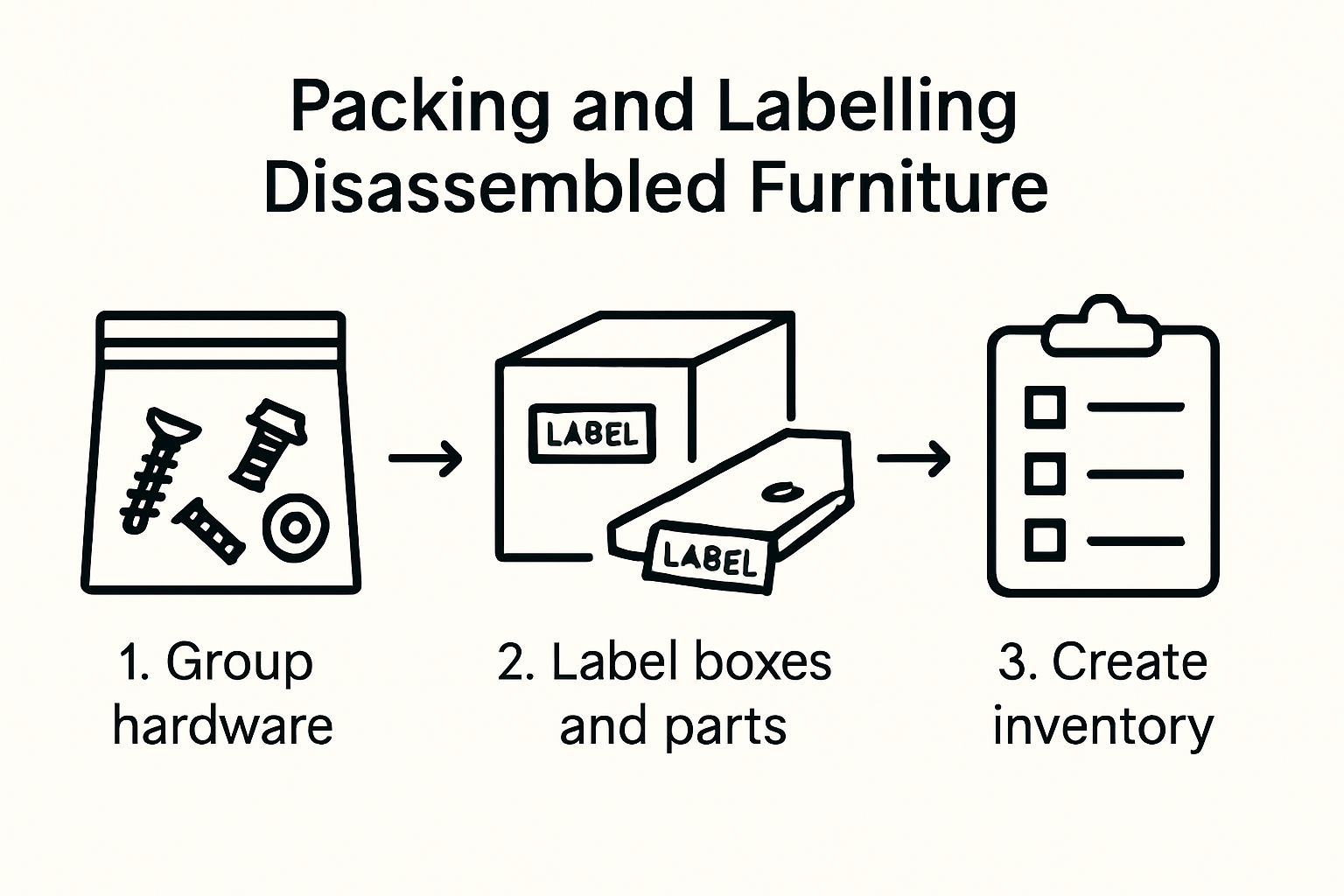
According to 1-800-GOT-JUNK?, developing a systematic approach is key to successful furniture disassembly. Start by removing any removable components like cushions, drawers, or shelves. As you dismantle each piece, immediately place screws, bolts, and small hardware into clearly labeled, resealable plastic bags. Pro tip: tape these bags directly to the corresponding furniture piece or store them in a dedicated, clearly marked container to prevent loss.
Proceed slowly and methodically. Identify visible and hidden fasteners, and use the appropriate tool for each. When removing screws or bolts, keep them organised and track which piece they belong to. If a connection seems tight, use gentle persuasion with a rubber mallet rather than excessive force that might damage the furniture.
Remember, patience is your greatest tool during furniture disassembly. Taking time to carefully document and organise each step will make future reassembly significantly easier and reduce the risk of losing critical components.
Furniture comes in countless designs and materials, each requiring a unique approach to disassembly. Understanding the specific characteristics of different furniture types can help prevent damage and ensure safe, efficient dismantling during moves or renovations.
Fine Woodworking suggests carefully examining wooden furniture before disassembly to identify potential weak points and construction methods. Wooden furniture typically requires a delicate touch, as older pieces might have complex joinery or fragile components. Start by removing drawers, shelves, and detachable hardware. Use a rubber mallet for gentle tapping when separating joints, avoiding metal hammers that could cause splintering or structural damage.
Pay special attention to antique or vintage wooden furniture. The Spruce Crafts recommends documenting the original construction with detailed photographs and noting any unique connection points. Some wooden furniture uses intricate dovetail joints or mortise and tenon connections that require precise handling. Always work on a clean, padded surface and wear soft cotton gloves to prevent oils from your hands damaging delicate wood finishes.
Upholstered furniture presents unique challenges during disassembly. Begin by carefully removing cushions, pillows, and any removable fabric components. According to ASID Professional Design Magazine, modular sofas and sectionals often have hidden connection mechanisms that require specific techniques. Look for clips, bolts, or interlocking frames beneath the upholstery. Take photographs of the original configuration and label each section to ensure proper reassembly.
For furniture with complex upholstery, consider taking measurements and documenting the original fabric placement. Some high-end pieces have specific tension and alignment requirements that can be challenging to replicate without careful documentation. Use painter’s tape to mark connection points and keep track of small hardware.
Metal and modular furniture often requires a more systematic approach. Industrial Design Resource recommends using precision tools like Allen wrenches and adjustable spanners for metal furniture connections. Start by identifying load-bearing joints and support structures. Carefully document the disassembly process, as modern modular furniture can have complex interlocking mechanisms.
Check out our apartment moving guide for additional insights into managing different furniture types during relocation. When working with metal furniture, pay special attention to potential rust or corrosion that might complicate disassembly. Apply a light lubricant to stuck bolts and use steady, controlled pressure to prevent breaking delicate connection points.
Remember that each piece of furniture is unique. Approach disassembly with patience, careful observation, and a methodical strategy. Taking time to understand the specific construction of your furniture will save you significant frustration during the moving or renovation process.
Here’s a comparison table outlining key differences in techniques for disassembling wooden, upholstered, and metal/modular furniture, so you can quickly reference the best approach for each material type.
| Furniture Type | Key Disassembly Steps | Special Precautions/Notes |
|---|---|---|
| Wooden Furniture | Remove drawers/shelves, gentle tapping with rubber mallet, document joinery | Beware fragile/antique joints, use padded surfaces/gloves |
| Upholstered/Soft | Remove cushions, locate hidden mechanisms, label sections, document fabric | Check for clips/interlocks, mark connection points with tape |
| Metal/Modular | Use Allen wrenches/spanners, document interlocking structures, apply lubricant as needed | Watch for corrosion, use steady pressure, match fastener sizes |
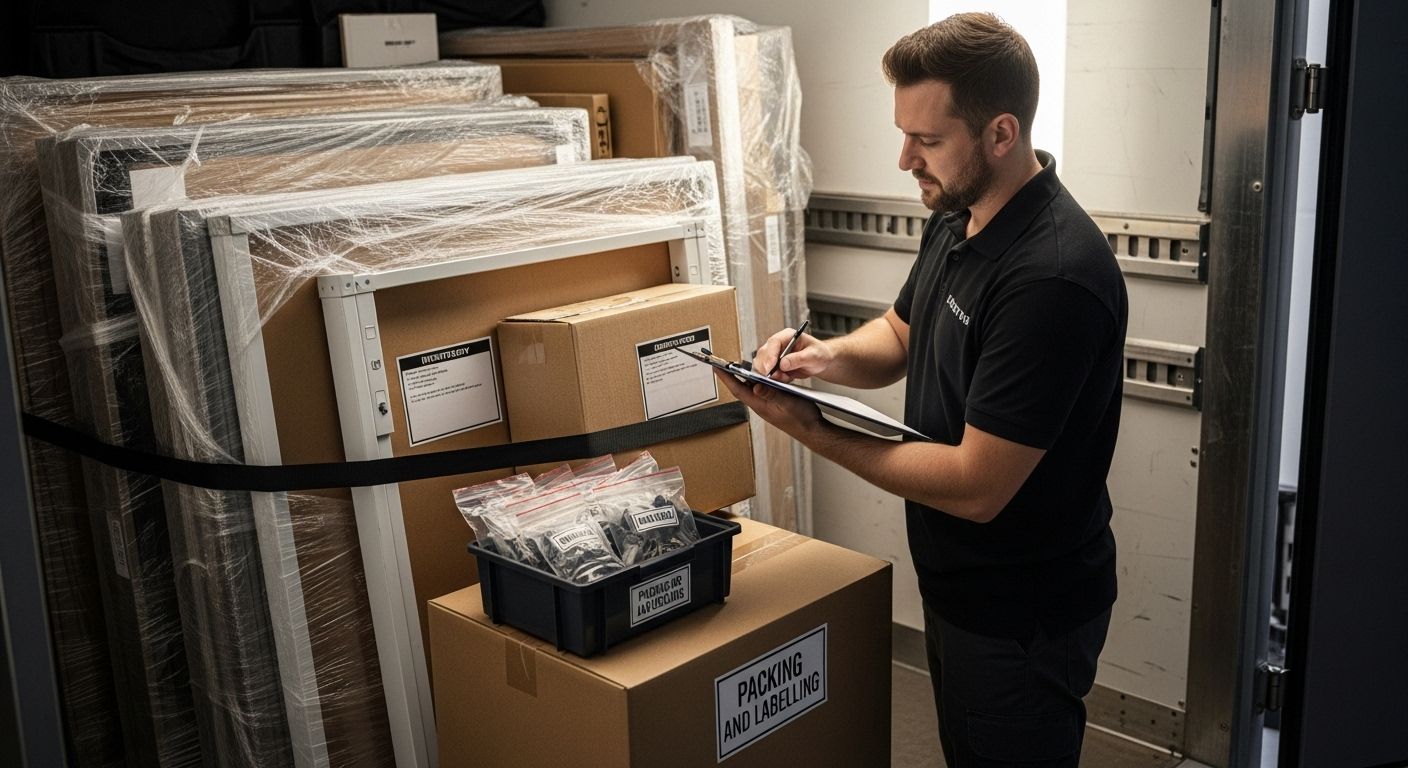
Successful furniture moving hinges on meticulous packing and labelling strategies. Proper preparation prevents damage, simplifies reassembly, and ensures a smooth relocation process. Learn more about our comprehensive packing materials to support your moving efforts.
According to University of California, Berkeley’s moving guidelines, effective packaging requires careful planning and systematic approach. Begin by selecting appropriate containers for different furniture components. Use sturdy, appropriately sized boxes that can support the weight of disassembled parts without compromising structural integrity. Avoid oversized boxes that might allow components to shift during transportation.
Prioritise protecting delicate surfaces and intricate parts. Wrap wooden joints, metal connections, and fragile components in bubble wrap or soft packing paper. For wooden furniture, use additional cushioning to prevent scratches and potential structural damage. Create a protective layer between each component, ensuring minimal contact and movement during transit.
University of Cincinnati Clermont College emphasizes the critical importance of a robust labelling system. Develop a clear, consistent method for marking each packed component. Include essential information such as:
Use waterproof markers and durable labels that won’t smudge or detach during moving. Place labels on multiple sides of boxes and directly on wrapped components to ensure visibility from various angles.
Managing small hardware is crucial to successful furniture reassembly. Place screws, bolts, and connection pieces in clearly labeled, resealable plastic bags. Attach these bags directly to corresponding furniture components or store them in a dedicated, clearly marked container. Take close-up photographs of connection points and hardware arrangements before disassembly to serve as visual reference during reconstruction.
Consider creating a detailed inventory spreadsheet documenting each furniture piece, its components, and associated hardware. This digital backup provides an additional layer of organisation and can be invaluable if physical labels become separated or damaged.
Remember that patience and meticulousness are your greatest allies in furniture packing. By investing time in careful packaging and labelling, you significantly reduce the risk of lost parts, potential damage, and reassembly challenges. Each methodical step you take now will translate into a smoother, more efficient moving experience.
Moving furniture involves navigating complex challenges that vary depending on specific scenarios. Understanding nuanced strategies can transform potentially stressful relocations into smooth, efficient experiences. Explore our comprehensive moving tips to enhance your moving preparation.
The Smithsonian Institution’s furniture handling guidelines emphasize the critical importance of strategic planning when moving furniture through restricted spaces. Begin by carefully measuring doorways, hallways, and stairwells before attempting to move large pieces. When standard disassembly isn’t sufficient, consider more advanced techniques like removing door frames or temporarily disassembling complex furniture structures.
Identify the strongest lifting points on each piece of furniture. Some items might require partial disassembly to navigate tight corners. Remove table legs, detach headboards from bed frames, and carefully separate modular components. Use furniture sliders on hard floors and protective moving blankets to prevent surface damage during challenging maneuvers.
Detailed moving guides recommend specialized approaches for fragile and valuable furniture pieces. Antique furniture requires extra precautions beyond standard moving techniques. Begin by thoroughly documenting the current condition with detailed photographs. Create a comprehensive inventory that includes detailed measurements, existing damage, and unique structural characteristics.
For delicate wooden pieces, use acid-free tissue paper and custom-fitted protective covers. Wrap glass components and decorative elements separately, using bubble wrap and custom-sized boxes. Consider professional packing for extremely valuable or irreplaceable items. Vintage furniture often has unique joinery and delicate finishes that demand gentle, methodical disassembly techniques.
Specialized moving resources highlight the importance of strategic disassembly for complex furniture pieces. Modern furniture often features intricate mechanisms that require careful approach. Home office furniture, modular storage systems, and contemporary design pieces may have hidden connection points or specialized fastening mechanisms.
Prepare a dedicated workspace with adequate lighting and a clean, padded surface. Gather specialized tools beyond standard screwdrivers, including Allen wrenches, precision pliers, and potentially manufacturer-specific tools. Take high-resolution photographs of connection points before disassembly, creating a visual reference for future reassembly. Consider creating a digital documentation system with annotated images and detailed notes about each piece’s unique characteristics.
Remember that each moving scenario presents unique challenges. Patience, careful planning, and a methodical approach are your most valuable assets. By understanding the specific requirements of different furniture types and moving environments, you can ensure the safe transportation of your valuable possessions. Approach each piece as a unique challenge, taking time to assess, plan, and execute your moving strategy with precision and care.
To safely disassemble wooden furniture, first remove any drawers or shelves. Use a rubber mallet to gently tap apart joints, avoiding metal tools that could splinter the wood. Document the original construction with photographs and note any fragile components.
Essential tools for disassembling furniture include a screwdriver set, adjustable wrench, pliers, hammer, measuring tape, safety glasses, and work gloves. These tools will help you handle various fasteners and ensure safety during the process.
Use sturdy boxes to pack disassembled parts, wrapping delicate components in bubble wrap. Develop a labelling system that includes the furniture piece name, component description, orientation markers, and reassembly sequence for easier reassembly.
When handling delicate or antique furniture, document its condition with detailed photographs, use acid-free tissue paper for wrapping, and consider professional packing for irreplaceable items. Work slowly and carefully to avoid damaging intricate structures.
Struggling to keep track of screws, instructions and fragile pieces while dismantling your furniture? It is stressful trying to avoid lost hardware and scratched timber, especially when you want a quick and safe move. The article covered the importance of being systematic, labelling and protecting your furniture—yet even with the best advice, DIY can still leave you worrying about damage or missing parts.

Let the professionals at Onyx Removals take the stress off your hands. We specialise in careful disassembly, secure packing, and smooth transport for every type of furniture. Our Melbourne team brings experience, protective materials and organisational know-how so you can focus on settling in rather than sorting screws. Take the easy path and request your tailored moving plan today. Find out how our dedication makes moves seamless for families and businesses across Melbourne. Spots fill quickly during peak moving season—contact us now for a no-obligation quote and experience our trusted service firsthand.

No Related Post


