


Most Melbourne business owners assume their removalist’s liability coverage will protect their assets during a commercial move. This misconception leaves valuable equipment, furniture and stock vulnerable to significant financial loss. Standard removalist liability typically caps at just $200 per item and requires proof of negligence, offering minimal protection for your business assets. Commercial move insurance, specifically Goods in Transit coverage, provides comprehensive protection tailored to your needs. This guide explores the insurance options available to Melbourne businesses, explaining what coverage you actually need, typical costs, legal requirements and how to secure proper protection for your relocation.
| Point | Details |
|---|---|
| Goods in Transit insurance protects business assets | Covers office furniture, equipment and stock during moves against collision, fire, theft and loading damage |
| Removalist liability is limited | Typically caps at $200 per item and requires negligence proof, leaving businesses underprotected |
| Premiums depend on multiple factors | Cost ranges from 1.2 to 3% of goods value based on location, coverage limits and asset types |
| High value items need declaration | IT equipment and fragile items must be declared to avoid sub limits and ensure full replacement value |
| Certificate of insurance required | Commercial building moves need COI showing $1M+ liability coverage naming landlords as additional insured |
Commercial move insurance primarily refers to Goods in Transit (GIT) insurance, protecting business assets like office furniture, equipment and stock during transit. This coverage addresses risks including collision, fire, flood and theft that could damage or destroy your property while moving between locations. Unlike basic carrier liability, GIT insurance provides comprehensive protection specifically designed for business relocations.
The critical distinction lies in how GIT insurance differs from standard removalist liability. Removalist carrier liability is limited, requires negligence proof, and often only covers $200 per item. GIT insurance covers damage without fault proof, offering full replacement value for your declared assets. This difference becomes crucial when you’re moving high value office equipment, specialised machinery or substantial inventory across Melbourne.
Typical GIT policies cover multiple risk scenarios during your move. Protection extends to damage from vehicle collisions, fire incidents, theft during transit, loading and unloading accidents, and even temporary storage periods between locations. Some policies include coverage for natural disasters like floods or storms, though weather protection often requires specific inclusion. This comprehensive approach ensures your business assets remain protected throughout every stage of relocation.
Why do Melbourne business owners need separate GIT insurance rather than relying on removalist coverage? The answer centres on adequate protection levels and claim simplicity. When damage occurs, GIT insurance allows you to claim directly without proving the commercial removalist’s negligence. You receive compensation based on your declared values, not arbitrary per item limits. Premiums typically range around 1.2 to 3% of your goods’ total value, making comprehensive coverage surprisingly affordable compared to potential replacement costs.
Pro Tip: Always verify your removalist’s liability limits in writing before relying on them for protection. Many business owners discover coverage gaps only after damage occurs, when it’s too late to secure proper insurance.
Understanding policy exclusions prevents unpleasant surprises when you need to claim. Standard GIT policies exclude cash, documents, self packed fragile items with limited liability, and weather or mould damage unless specifically included. These exclusions mean you cannot claim for money lost during transit, important contracts damaged in boxes, or china you packed yourself without professional assistance. Knowing these limitations helps you take additional precautions for vulnerable items.
Declaring high value IT equipment and fragile items becomes essential for full protection. Many policies impose sub limits on electronics, artwork or antiques unless you specifically list them with declared values. A $50,000 server might only receive $5,000 compensation under generic coverage if not properly declared. Take time to identify your most valuable assets and ensure they’re individually listed on your policy schedule before moving day arrives.
Transport damage risks extend beyond obvious accidents. Vibration during interstate moves creates particular concerns for sensitive equipment. About 40% of interstate moves experience damage due to vibration, highlighting the importance of declaring high value IT equipment to avoid sub limits. This statistic underscores why proper packaging and specific coverage for electronics, servers and delicate machinery matters significantly for Melbourne businesses relocating beyond metropolitan areas.
About 40% of interstate moves experience damage due to vibration, highlighting critical risks for sensitive business equipment during long distance relocations.
Self packing affects your liability protection in ways many business owners overlook. When you pack items yourself rather than using professional packing services, insurers typically limit coverage for those goods. Fragile items you pack may only receive 50% compensation if damaged, or no coverage at all depending on policy terms. This limitation encourages professional packing for valuable or delicate assets, ensuring proper protection methods and full insurance coverage.

Commercial building moves introduce additional requirements beyond standard coverage. Property managers and landlords typically demand certificates of insurance before allowing moving trucks into their buildings. These certificates must show adequate liability coverage, name the building owner as additionally insured, and meet minimum coverage thresholds. Failing to provide proper certification can delay your move or prevent building access entirely.
Common exclusions Melbourne businesses should verify include:
Selecting appropriate coverage starts with accurately assessing your business assets’ total value. Create a detailed inventory listing all furniture, equipment, stock and other items you’re relocating. Assign replacement values rather than depreciated worth, since you’ll need to replace damaged items at current market prices. This inventory becomes your foundation for determining necessary coverage limits and obtaining accurate premium quotes from insurers.
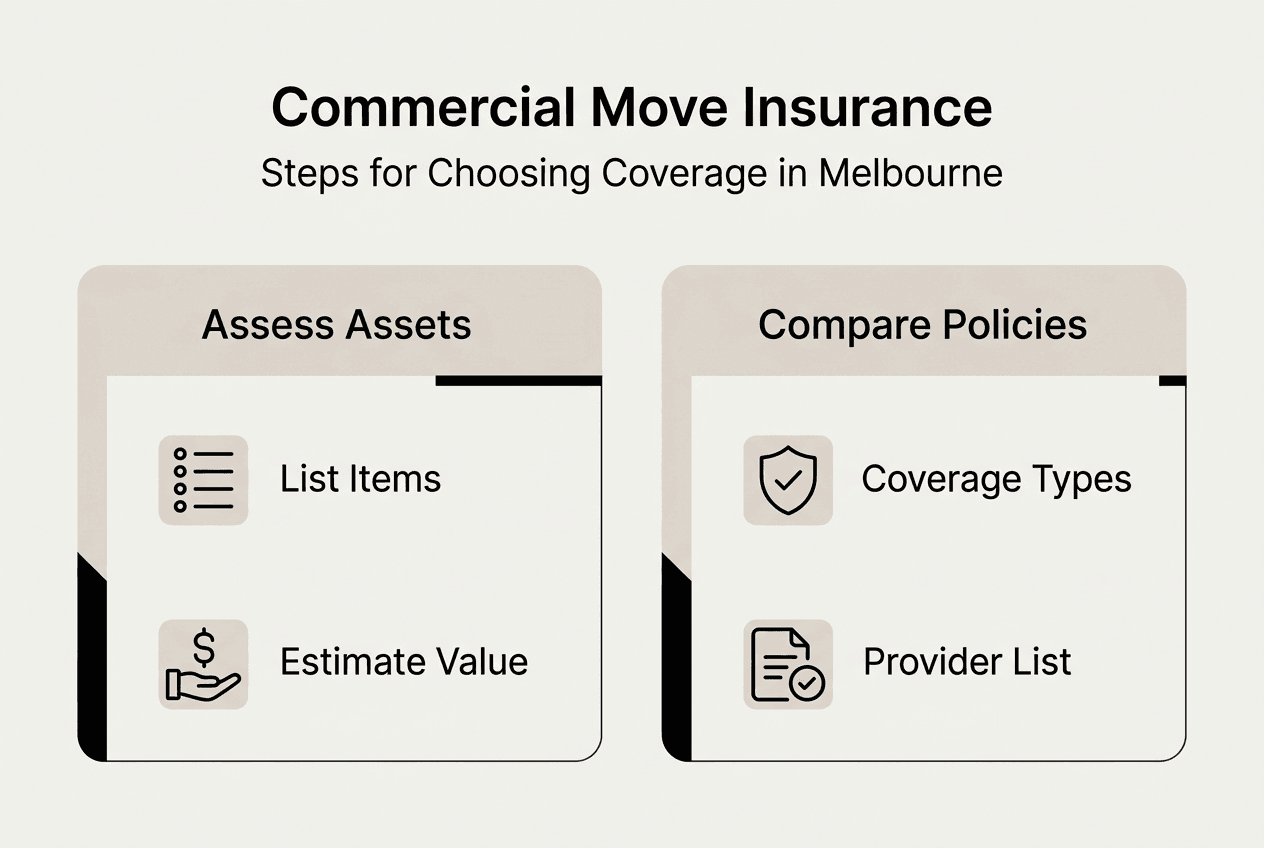
Comparing Melbourne insurance providers helps you find coverage matching your specific business needs and budget. Different insurers specialise in various business types and move scenarios, affecting both coverage options and premium costs.
| Provider | Target Market | Policy Types | Typical Premium Range |
|---|---|---|---|
| BizCover | SMEs and startups | Annual GIT, single transit | 1.5 to 2.5% of goods value |
| Tank Insurance | Logistics specialists | Comprehensive transit cover | 1.2 to 2.8% of goods value |
| NTI | Larger transport fleets | Fleet and cargo insurance | 1.8 to 3% of goods value |
| Local removalists | Small business moves | Single move coverage | 2 to 3.5% of goods value |
Premium costs vary from 1.2 to 3% of goods value, depending on factors including turnover, location risk premiums such as higher urban risks in Melbourne, and coverage limits. Urban Melbourne locations often attract higher premiums than suburban areas due to increased theft risks, traffic density and accident likelihood. The type of goods you’re moving also influences costs, with electronics and fragile items commanding higher rates than standard office furniture.
Securing proper coverage involves several critical steps you should complete well before moving day:
Providers serving Melbourne businesses include established insurers and specialist options. BizCover targets SMEs, Tank Insurance specialises in logistics operations, NTI serves larger transport fleets, and local movers like various Melbourne removalists offer integrated coverage packages. Each provider brings different strengths, so comparing removal companies and their insurance partnerships helps you find the best fit.
Pro Tip: Bundle your Goods in Transit insurance within your existing business insurance package for potential cost savings of 10 to 20% compared to standalone policies. Many insurers offer multi policy discounts that reduce your overall premium burden.
Consider whether your business qualifies for coverage through corporate relocation programmes if you’re moving due to employer arrangements. Some larger organisations include move insurance as part of their relocation benefits, potentially saving you significant premium costs. Verify what coverage your employer provides before purchasing additional insurance to avoid paying for duplicate protection.
Certificates of insurance serve as proof you carry adequate coverage to protect building owners and property managers during your move. A COI documents your insurance policy details, coverage limits, effective dates and lists additional insured parties as required. Building managers request these certificates to verify you can cover potential damage to common areas, lifts, walls or flooring during the moving process.
Commercial building moves require COI showing $1M+ general liability coverage naming landlords as additional insured, typically $1M per occurrence and $2M aggregate. These minimum coverage levels protect property owners against claims arising from your moving activities. Without meeting these thresholds, many commercial buildings refuse access for moving trucks and equipment, potentially delaying your entire relocation schedule.
Your removalist’s insurance compliance matters equally to your own coverage. Reputable commercial removalists carry public liability insurance, workers compensation and often goods in transit coverage for items in their care. Verify these coverages exist before signing contracts, requesting certificates that confirm current policies and adequate limits. This verification protects you from liability if movers injure themselves or damage property during your relocation.
Obtaining and verifying your certificate of insurance involves straightforward steps:
Consequences of missing or insufficient COI documentation can severely disrupt your business operations. Building managers may refuse lift access, loading dock usage or after hours moving permissions without proper certificates. These refusals force rescheduling, potentially incurring additional removalist fees, extended downtime and lost business productivity. Some buildings impose substantial fines for unauthorised moves or damage claims when adequate insurance proof wasn’t provided upfront.
Pre move documentation extends beyond insurance certificates to include detailed condition reports and photographic evidence. Document your current office space’s condition before moving day, photographing walls, floors and common areas you’ll use during the move. This evidence protects you from unfair damage claims for pre existing issues. Similarly, photograph your goods before packing to establish their condition, supporting insurance claims if damage occurs during transit.
Navigating commercial move insurance requirements becomes simpler when you work with experienced professionals who understand Melbourne’s specific regulations and building requirements. Onyx Removals specialises in commercial relocations across Melbourne, bringing expertise in insurance coordination, certificate procurement and compliance with building management demands. Their team guides you through coverage selection, ensuring you secure appropriate protection without overpaying for unnecessary features.
Onyx Removals offers integrated service packages combining professional moving with insurance guidance tailored to your business assets and relocation scope. Their familiarity with Melbourne commercial buildings means they know exactly what coverage and documentation each property requires, preventing last minute complications that delay your move. From packing services that maintain full insurance coverage to secure transport and careful handling, their comprehensive approach protects your business throughout the entire relocation process. Explore their complete service range to discover how professional support simplifies your commercial move while ensuring proper insurance protection.
Goods in Transit insurance protects your business assets during moves with comprehensive coverage for collision, fire, theft and loading damage at full replacement value. Removalist liability only covers $200 per item typically and requires you to prove negligence, leaving significant gaps in protection. GIT insurance lets you claim directly without fault proof, ensuring adequate compensation for damaged or lost business property.
Premiums generally range from 1.2 to 3% of your total goods value, meaning a $100,000 office relocation would cost approximately $1,200 to $3,000 for comprehensive coverage. Costs vary based on your specific assets, move distance, urban location risks in Melbourne and coverage limits you select. High value electronics or fragile items may increase premiums, while bundling with existing business insurance often reduces overall costs.
Create a detailed inventory listing each high value item with its replacement cost, then provide this to your insurer when purchasing coverage. They’ll include these items specifically on your policy schedule, ensuring full protection beyond standard sub limits. Request your certificate of insurance immediately after purchase, confirming it names your building owner as additionally insured and meets the required $1M+ liability minimums before submitting to property management.
Most standard business property policies exclude coverage while goods are in transit, protecting only items at your fixed business location. Review your current policy carefully or contact your insurer to verify whether transit coverage exists. If not included, you’ll need separate Goods in Transit insurance to protect assets during your move, as the gap in coverage leaves you vulnerable to significant uninsured losses.
Verify you have Goods in Transit insurance covering your full asset value with high value items individually declared, confirm your removalist carries adequate public liability and workers compensation, obtain a certificate of insurance meeting building requirements, and document your goods’ condition before moving. Review all policy exclusions to understand limitations, arrange professional packing for fragile items to maintain coverage, and keep copies of all insurance documents accessible throughout your relocation process.

No Related Post


