


TL;DR:
- Reliable removalists prioritize transparency, proper equipment, and clear written estimates.
- Hidden costs often stem from unclear pricing, access issues, or extra charges, emphasizing the importance of detailed quotes.
- Asking specific questions about policies, insurance, and equipment saves money and reduces move-related stress.
Moving house sounds straightforward until the truck arrives late, your antique sideboard gets scratched, and a surprise fuel levy appears on the final invoice. Most homeowners and renters in Pakenham assume that booking a removalist handles everything, but the reality is messier. Customer review platforms reveal a consistent pattern of complaints about unclear charges, inadequate equipment, and unexpected delays sitting right alongside glowing praise for careful wrapping and professional handling. The difference between a smooth move and a stressful one often comes down to the questions you ask before moving day, not after.
| Point | Details |
|---|---|
| Insist on clear quoting | Always ask for itemised costs and seek clarifications to avoid surprise charges. |
| Check real reviews | Scan positive and negative customer feedback to spot patterns and avoid risky providers. |
| Protect your furniture | Request professional wrapping, padding, and confirm equipment used by the removalist. |
| Ask tough questions | Direct, detailed queries help reveal potential issues and increase your peace of mind. |
With the risks established, it helps to understand what actually separates trustworthy removalists from problematic ones. Reliability is not just about showing up on time. It is about transparency, preparation, and consistent handling quality from the first phone call through to the final item being placed in your new home.
The core checklist for evaluating any removalist
Before you sign anything, run through these points with every company you consider:
The following table shows what separates reliable operators from unreliable ones at a glance:
| Factor | Reliable removalist | Red flag removalist |
|---|---|---|
| Quoting process | Itemised, written quote | Verbal estimate only |
| Insurance | Clearly outlined coverage | Vague or absent details |
| Equipment | Modern trolleys, blankets, straps | Brings minimal tools |
| Communication | Proactive updates | Hard to reach after booking |
| Reviews | Consistent, across platforms | Only on own website |
| Contract clarity | All charges listed | Hidden or unclear fees |
Red flags in reviews tend to cluster around the same issues: furniture left unprotected, crew arriving without the right tools, and invoices that do not match what was quoted. Customer reviews for operators like Holloway demonstrate this split clearly, with some customers praising meticulous wrapping and others citing damage or cost surprises.
“A removalist who hesitates to explain their insurance, pricing, or handling process in detail is telling you something important before you’ve even booked.”
Transparent communication is genuinely protective. When a removalist walks you through exactly what their quote covers, what triggers extra charges, and how they protect specific furniture types, you are far less likely to face surprises. The same principle applies to office furniture removal, where mishandled equipment or unclear timelines can have financial consequences beyond the move itself. For anyone managing a business furniture removal, the stakes of poor communication are even higher.
Reliability is crucial, but understanding the true cost of your move can be just as important. Many Pakenham residents receive a quote that looks reasonable, only to find the final invoice is significantly higher. Knowing how pricing actually works gives you the power to compare accurately.

The two main pricing structures
Most removalists use one of two approaches:
What is typically included and what is not
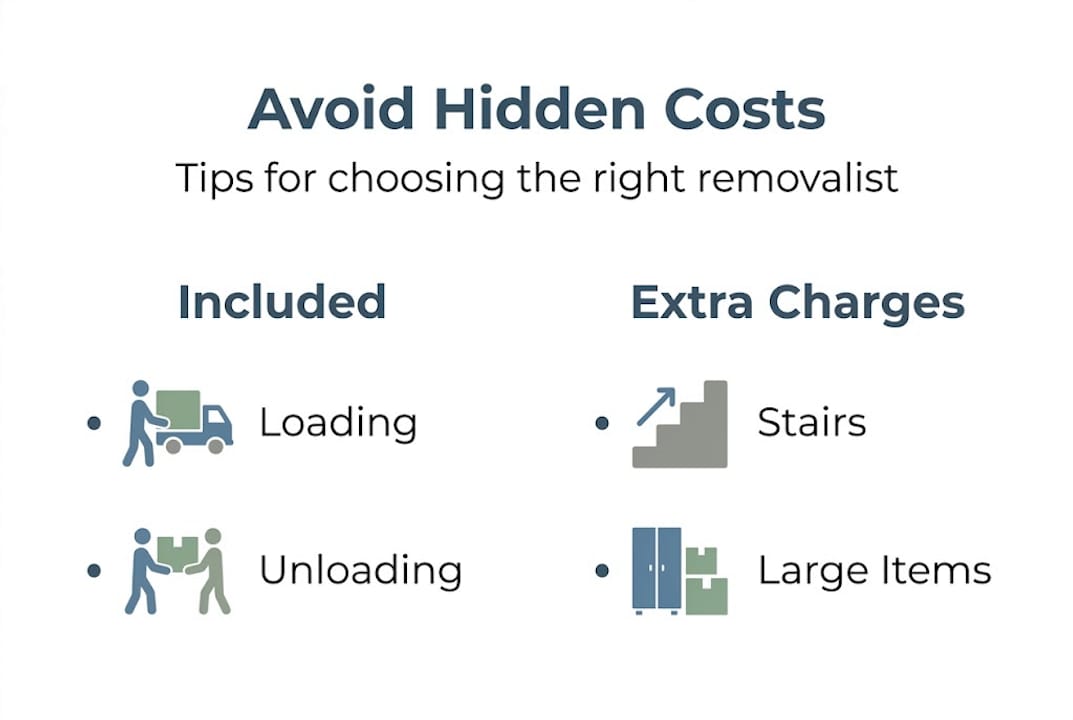
| Item | Often included | Often charged extra |
|---|---|---|
| Loading and unloading | Yes | Not usually |
| Furniture blankets and straps | Yes (good operators) | Sometimes |
| Packing materials | No | Yes |
| Insurance | Transit only (basic) | Full cover costs extra |
| Stair or lift access | No | Yes |
| Long carry distance | No | Yes |
| Fuel levy | No | Often added |
Common scenarios where costs spike include properties with narrow driveways, apartments with no lift, moves on public holidays, or jobs requiring disassembly and reassembly of flat-pack furniture. Review evidence consistently shows that extra charges and unclear pricing are among the most frequent complaints from customers who felt misled.
When comparing moving quotes from multiple companies, always request a line-by-line breakdown. A quote that simply says “$600 for a two-bedroom move” tells you almost nothing. A quote that lists labour, travel, equipment, and any access-based surcharges tells you everything. Understanding transparent removalist pricing is not complicated once you know what to look for.
You can also use online resources to benchmark what a fair price looks like in your area. Understanding moving costs in Melbourne broadly, and then getting a specific moving cost estimate for your situation, puts you in a much stronger negotiating position. It is also worth reviewing house moving prices across service types before committing to any single provider.
Pro Tip: Ask every removalist you contact to send their quote in writing with a full breakdown before you make any payment. If they push back on this, treat it as a serious warning sign and move on to the next option.
Now that you know how to avoid hidden costs, the next priority is keeping your belongings physically safe throughout the process. Furniture damage during a move is surprisingly common, and most of it is preventable with the right preparation and technique.
Step-by-step approach to safe furniture handling
Wrap everything before it moves. Furniture blankets, bubble wrap, and stretch wrap should cover all surfaces before any item leaves the room. Corners and legs are the most vulnerable points.
Disassemble where possible. Large items like bed frames, dining tables, and wardrobes are far safer when broken down. Fewer protruding parts means fewer opportunities for damage.
Use proper lifting equipment. Furniture dollies and hand trucks take the physical strain off the crew and reduce the chance of dropping or dragging items. A well-equipped removalist brings this as standard.
Strap loads inside the truck. Furniture that shifts during transit is furniture that gets damaged. Every item should be positioned and secured so it cannot slide, tip, or fall during the drive.
Protect doorways and floors. Corner guards and floor runners prevent scuffs and damage to your old and new property. Professional crews use these as a matter of course.
Carry fragile items separately. Glass tabletops, mirrors, and artwork should travel in purpose-built packaging and be loaded last so they are unloaded first and never buried under heavier items.
“The most damage happens in the first and last five minutes of a move: at the doorway and at the truck tailgate. These two points need the most care and the most hands.”
Moving heavy furniture safely is a skill, not just a matter of strength. The technique matters enormously, especially for items like refrigerators, upright pianos, and hardwood dining sets. If you are storing any furniture between moves, understanding how to store furniture safely is equally important to avoid moisture or compression damage over time.
Review data for various operators paints a clear picture: the moves that go wrong almost always involve one of three failures. The crew arrived without adequate wrapping materials, heavy items were carried rather than wheeled, or the truck was loaded without securing straps. Reading about these situations in reviews before you book is exactly the kind of preparation that protects you. You can find practical removal safety tips that cover the specific hazards common to residential moves across Melbourne and its outer suburbs, including Pakenham.
Pro Tip: Take photos of all your valuable furniture before the removalists arrive. Timestamped photos serve as evidence if a damage claim is needed later, and many insurers require them.
Even the best-reviewed removalists are not immune to problems, so reading reviews strategically is one of the most powerful risk management tools available to you. The key is knowing how to read them, not just how many stars a company has.
Where to look and what to look for
How to interpret what you read
Positive reviews alone are not enough. A company can accumulate hundreds of five-star reviews and still have a meaningful subset of complaints that reveal consistent weaknesses. The pattern in negative reviews is what matters most.
Watch for these recurring themes in negative feedback:
Reading between the lines on positive reviews
Even glowing reviews contain useful information. If reviewers specifically praise wrapping, communication, and punctuality, that tells you those things are consistent strengths. If the praise is vague (“great guys, would recommend”), it is less useful as evidence.
Pro Tip: Contact the removalist directly and mention a specific concern you noticed in their reviews. How they respond tells you more than the review itself. A confident, professional operator will address it directly and explain what they changed or why it was an isolated incident.
Once you have done your review research, compare your shortlisted companies side by side. Look for operators whose negative reviews are isolated, old, and responded to professionally. That combination signals a business that takes quality seriously and learns from mistakes.
Most people feel uncomfortable pushing a service provider for specific details. It feels confrontational, or they worry about seeming difficult. From our experience working in the removalist industry, this hesitation is one of the most expensive habits a customer can have.
The customers who fare best are not the most polite ones. They are the most specific ones. They ask exactly what happens if the truck is delayed, what the policy is if furniture is damaged, and what specific equipment will be brought for their particular items. These questions do not offend professional operators; they reassure them that you are a serious customer worth looking after.
Every complaint visible in customer review data about surprise charges or inadequate handling could likely have been avoided with a single targeted question before booking. The uncomfortable truth is that most hidden costs are not hidden at all. They are in the contract, buried in terms that customers never ask about.
Comparing moving quotes in detail, line by line, while asking specific questions about each unfamiliar term, almost always results in a lower final cost and a calmer moving day. The companies that resent those questions are the ones worth avoiding.
When you’re ready to move, here’s how to use what you’ve learned and connect with trusted local experts.
Choosing a furniture removalist in Pakenham does not need to be a gamble. The guidance above gives you a clear framework for evaluating quotes, reading reviews critically, and asking the right questions before committing. The next step is putting it into practice with a provider you can trust.
Onyx Removals offers Melbourne moving services built around transparency, careful handling, and real customer support. Our residential removal services cover Pakenham and the broader south-east Melbourne region, with itemised quotes and experienced crews who arrive equipped for the job. You can also browse our Melbourne moving tips to prepare your home and your expectations well before moving day arrives.
Common hidden costs include extra hourly charges, fees for difficult access or stairs, and surcharges for large or fragile items. Always request itemised quotes before booking, since unclear extra charges appear repeatedly in customer complaints across review platforms.
Use professional wrapping, padding, and confirm with your removalist exactly what equipment and handling processes they use. Review evidence consistently shows that damage most often results from inadequate wrapping materials or lack of proper lifting equipment on the day.
Yes, especially negative reviews, because they reveal recurring issues such as wrong equipment, delays, or pricing mismatches. Review platforms help identify patterns that a single five-star average cannot communicate on its own.
Not necessarily. Always ask about insurance details and coverage limits before booking, and confirm whether their policy covers transit damage, public liability, or both.
Combine local referrals, thorough review research across multiple platforms, and direct questions about handling, equipment, and contract terms. Reading negative reviews is a genuinely effective risk management step that most customers skip.

No Related Post


