



Every australian homeowner planning a move faces one undeniable reality. Professional relocation costs in Melbourne can range dramatically, with families sometimes spending over $3,500 for a typical move. Sorting through removalist quotes, extra fees, and service options becomes a daunting task when clear breakdowns are hard to find. This guide uncovers what really drives moving prices, highlights hidden expenses, and offers direct advice so you can manage your money confidently while easing the stress of your next Melbourne relocation.
| Point | Details |
|---|---|
| Understand the Cost Factors | Moving costs in Melbourne vary based on size, distance, and specific services; typical expenses range from $300 to $5,850. |
| Choose the Right Service Type | Opt for basic transportation or full-service packages based on your needs; specialised handling is recommended for valuable items. |
| Budget for Hidden Costs | Anticipate additional expenses like utility connections and cleaning fees, which can add significantly to your moving budget. |
| Get Multiple Quotes | Always obtain written quotes from multiple removalists to ensure accurate pricing and coverage of all required services. |
Moving house in Melbourne can be an expensive and complex process, with costs varying significantly based on multiple factors. Typical moving expenses range from $300 to $3,500 depending on the size of your home, distance of relocation, and specific service requirements. A small local move might cost around $1,750, while an interstate move for a three-bedroom house could escalate between $2,600 and $5,850.
The primary cost determinants include the volume of belongings, moving distance, accessibility of properties, and timing of the move. Factors like stairs, narrow doorways, complex furniture, and peak moving seasons can substantially impact your final moving expenses. Professional movers typically charge based on hours worked, number of personnel required, truck size, and additional services such as packing, unpacking, and special item handling.
Most Melbourne families will encounter several standard cost components when budgeting for a move. These generally include removalist fees, packing materials, potential storage costs, insurance, transportation expenses, and utility connection charges. Some additional hidden costs might involve cleaning deposits, rental bond payments, and potential temporary accommodation if there’s a gap between property settlements.
Pro tip: Request detailed written quotes from at least three removalist companies and ensure they conduct an in-home assessment to provide the most accurate pricing for your specific moving requirements.
Moving services in Melbourne offer a comprehensive range of options designed to simplify the complex process of relocation. Removalists provide multiple service levels that cater to different customer needs, from basic transportation to full-service packing and unpacking. These services typically include loading, transport, unloading, and optional extras like specialised item handling and temporary storage solutions.
Professional moving companies generally offer several distinct service categories. Basic moving services involve transportation of items from one location to another, with movers handling loading and unloading. Full-service packages provide more comprehensive support, including professional packing, careful wrapping of fragile items, furniture disassembly and reassembly, and complete unpacking at the destination. Some companies even offer specialised services for unique items like pianos, artwork, antiques, and delicate electronics that require extra care and expertise.

Additional moving services can address specific client requirements, such as short-term or long-term storage, cleaning services, utility connection assistance, and insurance options. Professional movers often provide flexible solutions that can be customised to individual moving circumstances, whether it’s a small apartment relocation or a large family home transfer across Melbourne or interstate.
Here’s a comparison of Melbourne house moving service types and what each typically includes:
| Service Type | Typical Inclusions | Suitability | Business Impact |
|---|---|---|---|
| Basic Move | Loading, transport, unloading | Small homes, budget moves | Lower cost, limited support |
| Full-Service | Packing, fragile wrapping, furniture assembly | Families, complex relocations | Saves time, reduces stress |
| Specialised Handling | Pianos, antiques, artwork | Valuable or delicate items | Prevents damages, insured expertise |
| Extra Services | Storage, cleaning, utility setup | Transitional moves, tight timing | Smooth transition, covers gaps |
Pro tip: Always request a detailed, written quote that clearly outlines all services included, and confirm the removalist’s accreditation with the Australian Furniture Removers Association to ensure professional standards.
Moving prices in Melbourne are influenced by a complex interplay of factors that can significantly impact the overall cost of relocation. Rental market conditions play a crucial role in determining moving expenses, with fluctuations in housing demand and economic trends directly affecting service pricing. The size and accessibility of your current and destination properties, the volume of belongings, and the specific moving services required all contribute to the final cost.
Key pricing determinants include the distance of the move, whether it’s a local Melbourne suburb transfer or an interstate relocation. Property characteristics such as multi-level homes, narrow staircases, or difficult access points can increase moving complexity and, consequently, pricing. The time of year also plays a significant role, with peak moving seasons like summer and university semester breaks typically commanding higher rates. Additional factors like the need for specialised equipment, extra packing materials, or handling of delicate items can further influence the overall moving expenses.
The scope of moving services selected dramatically impacts pricing. Professional movers offer tiered service packages ranging from basic transportation to comprehensive full-service moves. Factors such as packing assistance, furniture disassembly and reassembly, temporary storage requirements, and insurance options all contribute to the final quote. Volume of belongings is typically measured by the number of rooms or cubic metres of items, with larger moves naturally incurring higher costs due to increased labour, transportation, and time requirements.
Pro tip: Request detailed quotes from multiple removalists during off-peak seasons and be prepared to provide precise information about your move to receive the most accurate pricing estimates.
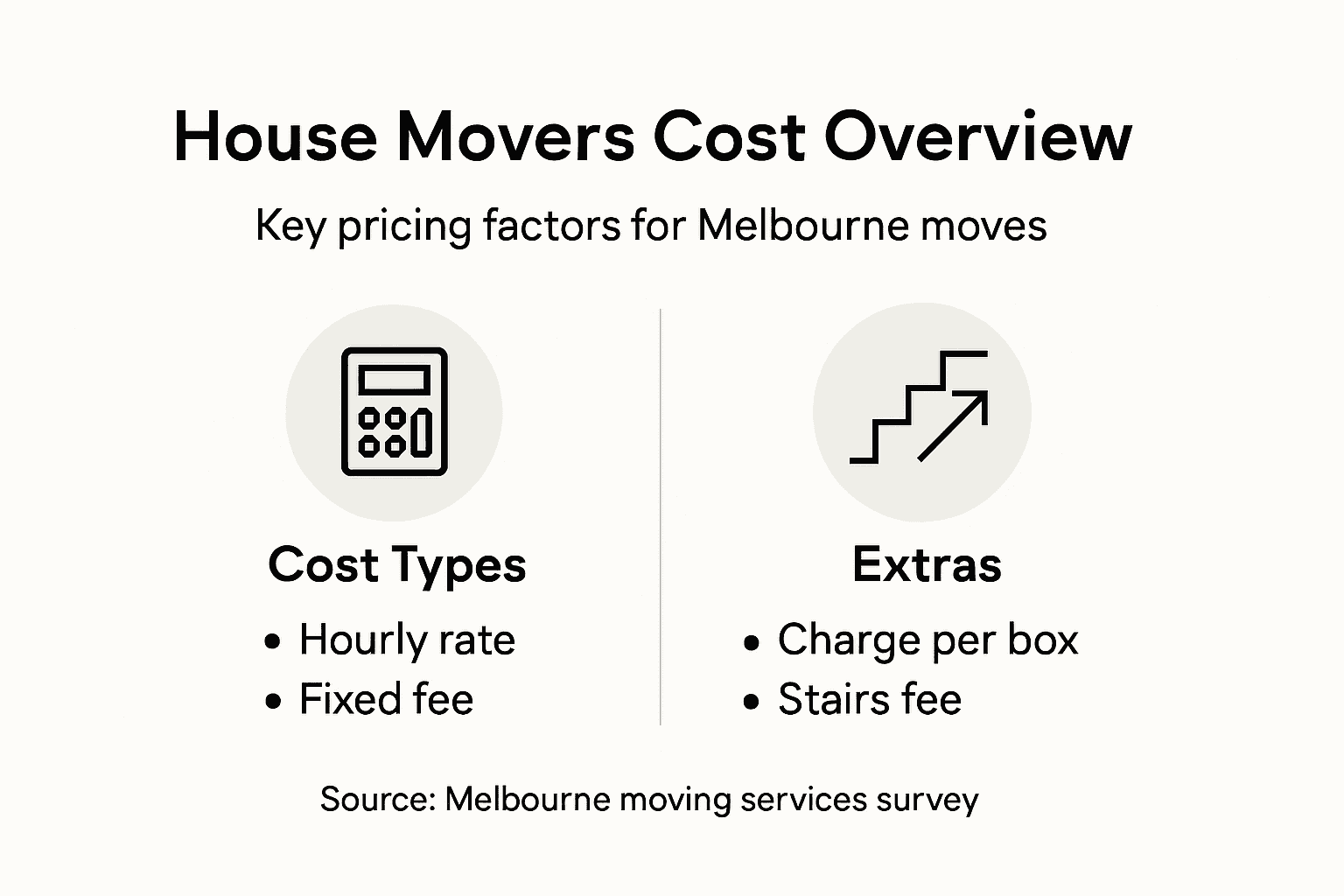
Moving services in Melbourne typically employ a combination of pricing structures for relocation costs, including hourly rates, fixed fees, and additional service charges. Hourly rates are most common for local moves within metropolitan Melbourne, with professional removalists charging between $100 to $250 per hour depending on the number of movers and truck size. These rates usually cover loading, transportation, and unloading of belongings.
Fixed fee pricing offers an alternative approach, particularly for moves with predictable parameters. This method calculates costs based on the total volume of items, moving distance, and property accessibility. Typically, fixed fees range from $300 for small apartment moves to $1,500 for larger family homes. Additional extras can significantly impact the final price, including services such as packing and unpacking, furniture disassembly, specialty item handling, and temporary storage solutions. Professional moving services often provide itemised quotes that break down these potential additional charges, allowing customers to customise their moving package.
Most removalist companies in Melbourne structure their pricing with transparent fee models that account for various moving complexities. Travel time, fuel surcharges, and weekend or holiday rates can add to the base cost. Specialty items like pianos, antique furniture, or delicate electronics typically incur extra charges due to the specialised handling required. Some companies offer package deals that bundle multiple services at a discounted rate, providing cost-effective options for customers looking to manage their moving expenses.
Pro tip: Request a detailed, written quote that itemises all potential charges and extras, and clarify the billing method upfront to avoid unexpected costs during your move.
Moving house involves numerous unexpected expenses that can quickly derail your financial planning. Budgeting for moving costs requires a comprehensive approach that goes beyond basic removalist fees. Hidden costs typically include utility connection charges, rental bonds (often up to four weeks’ rent), cleaning fees, parking permits, and potential short-term accommodation expenses. These additional charges can easily add hundreds of dollars to your overall moving budget.
Utility and administrative expenses represent a significant portion of hidden moving costs. Expect to budget for electricity and gas connection fees, internet setup charges, and potential break lease or property cleaning expenses. Some landlords require professional cleaning services, which can cost between $200 to $500 depending on property size. Insurance costs are another critical consideration, with many movers recommending contents and transit insurance to protect valuable belongings during relocation. Professional moving services often provide detailed breakdowns of potential additional expenses, helping families anticipate and plan for these financial requirements.
Effective budgeting strategies can help Melbourne families manage moving expenses more efficiently. Creating a detailed spreadsheet that tracks all potential costs, including one-off and ongoing expenses, provides clarity and prevents financial surprises. Consider setting aside an additional 10-15% of your total moving budget for unexpected expenses. Timing your move during off-peak seasons, comparing multiple quotes, and being flexible with moving dates can also help reduce overall costs. Some families find success in selling unnecessary items before moving to offset relocation expenses.
The following table summarises common hidden expenses to watch out for when moving in Melbourne:
| Hidden Expense | Typical Cost Range | When Applied | Impact on Budget |
|---|---|---|---|
| Utility Connections | $100–$300 | At new property setup | Essential, unavoidable cost |
| Cleaning Services | $200–$500 | End of lease or sale | Required for bond return |
| Rental Bond | Up to 4 weeks’ rent | New rentals | Large upfront expense |
| Short-Term Accommodation | $100–$250 per night | Delayed settlements | Adds to total move cost |
| Parking Permits | $30–$150 | Limited access streets | Ensures legal truck parking |
Pro tip: Create a dedicated moving expenses spreadsheet and track every potential cost, including small items like packing materials and utility connection fees, to avoid financial surprises during your relocation.
Moving house in Melbourne can be costly and complicated with all the pricing variables and hidden fees highlighted in this article. Whether you are dealing with packing, specialised item handling, or navigating unexpected expenses like utility connections and cleaning, the challenge is real. You want a stress-free and seamless relocation experience tailored to your unique needs and budget.
Onyx Removals understands these concerns and offers expert removalist services designed to take the weight off your shoulders. From comprehensive full-service moves to specialised handling, their professional team ensures transparency with detailed quotes and personalised moving plans. Learn more about how their reliable services can make your next move smooth by visiting their business – Onyx Removals page.

Ready to avoid hidden costs and surprises on moving day? Get a tailored quote and expert guidance now at https://onyxremovals.com.au. Explore all their service options and trust a Melbourne-based company committed to making your relocation effortless and affordable.
Moving costs are influenced by factors such as the size of the home, volume of belongings, moving distance, property accessibility, and timing of the move. Additional factors like stairs, narrow doorways, and peak seasons can also impact prices.
Typical moving expenses in Melbourne range from $300 to $3,500, depending on various factors. Local moves for small homes might cost around $1,750, while larger interstate moves could be between $2,600 and $5,850.
There are several service types, including basic moving services (transportation only), full-service packages (packing and unpacking included), and specialised handling for delicate items. Additional services may also be available for storage and utility connections.
Hidden costs may include utility connection fees, cleaning services, rental bonds, parking permits, and temporary accommodation expenses. It’s essential to budget for these additional financial requirements to avoid surprises during your move.

No Related Post


