



More than 60 percent of australian homeowners admit their biggest moving regret is not creating a proper inventory before relocation. Sorting your possessions for a move within Melbourne involves more than tossing items into boxes. With a well-organised system tailored to your household, you can reduce frustration, save time, and protect your belongings. This step-by-step guide reveals practical inventory strategies that help you stay in control from start to finish.
| Key Point | Explanation |
|---|---|
| 1. Organise a dedicated inventory space | A well-lit area with enough flat surfaces eases tracking and reduces stress during the move. |
| 2. Sort by category and room | Group items systematically to simplify packing, making it easier to decide what to keep or discard. |
| 3. Maintain detailed inventory lists | Create comprehensive lists with essential item details to protect against loss and aid in packing. |
| 4. Label and photograph items effectively | Use clear labels and photos to document belongings for easy identification and potential insurance claims. |
| 5. Conduct a final inventory review | Cross-check items against your list to ensure nothing is missed before the moving day. |
Preparing an organised workspace is critical for a smooth Melbourne move. You will transform your current space into a strategic inventory management zone that tracks every item efficiently and reduces potential moving day stress.
Start by selecting a dedicated area with good lighting and enough flat surface space to spread out your inventory materials. This could be a home office desk, dining table, or clear kitchen counter. Your workspace needs room for key tools like spreadsheets, clipboards, labelling materials, and measurement devices. Detailed inventory management guidance recommends creating a systematic approach that allows clear categorisation and tracking.
Gather essential inventory preparation supplies including multiple copies of your inventory sheets, different coloured markers, packing tape, labels, a reliable measuring tape, and a digital camera or smartphone for documenting items. Consider creating digital and physical backup systems where you photograph items and simultaneously record their details in a spreadsheet. This dual approach provides redundancy and helps prevent loss during the chaotic moving process.
Here’s how each workspace tool contributes to successful inventory preparation:
| Tool | Purpose | Benefit for Moving |
|---|---|---|
| Spreadsheets | Record and organise inventory details | Prevents item loss |
| Coloured markers | Categorise and code items | Eases tracking and grouping |
| Digital camera | Photograph items for records | Supports insurance claims |
| Measuring tape | Document item dimensions | Aids packing decisions |
| Packing tape/labels | Secure and identify boxes | Speeds up unpacking |
Insider Tip: Create a “command centre” for your inventory preparation with all materials within arm’s reach to maximise efficiency and reduce unnecessary movement.
Sorting your belongings strategically is the key to a stress-free move across Melbourne. You will create a systematic approach that not only simplifies packing but also helps you understand exactly what you own and what you truly need to transport.
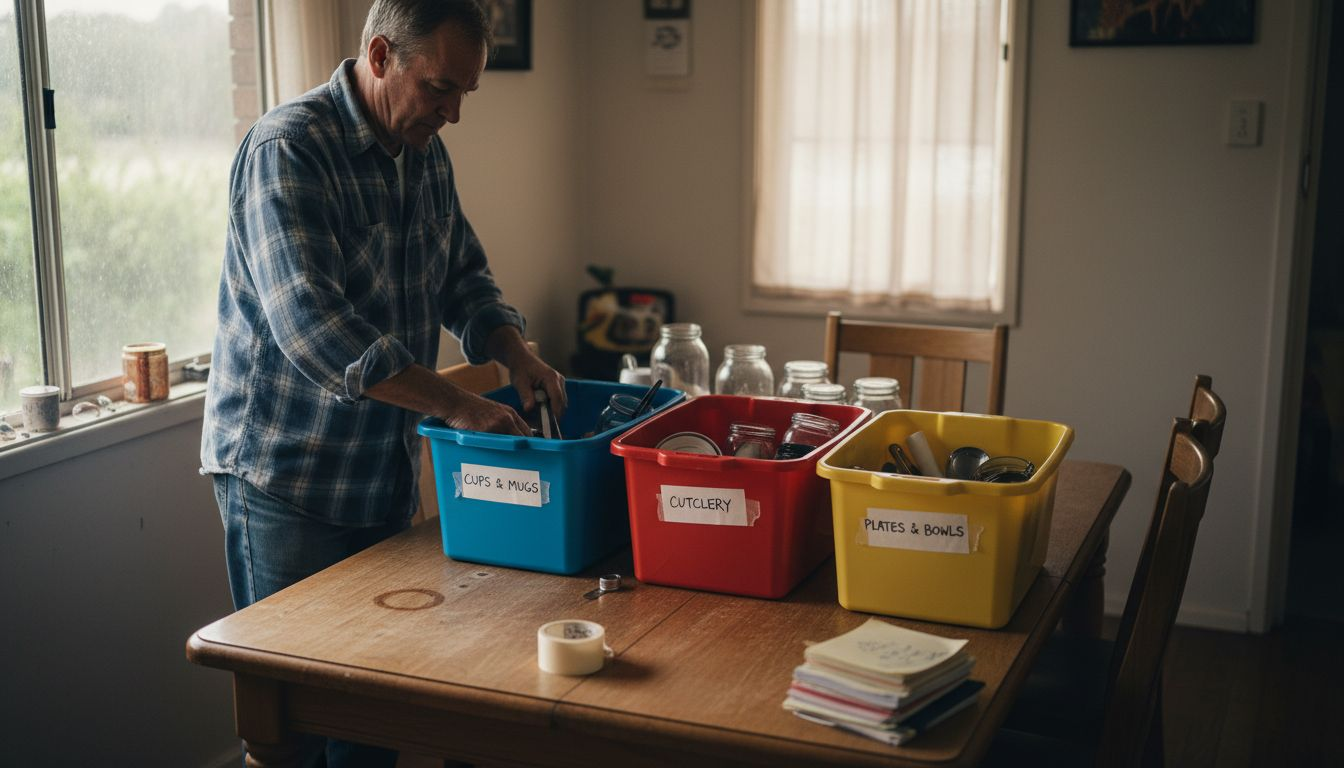
Systematic moving organisation recommends starting by creating distinct categories for your items. Begin with broad classifications like kitchen items, bedroom belongings, office supplies, and personal collections. Within each category, subdivide further into specific groups like cookware, clothing, electronics, and sentimental items. This method allows you to track items precisely and make informed decisions about what to keep, donate, or discard.
As you sort, create a room-by-room inventory that captures each item’s details. Use different coloured markers or stickers to indicate categories like fragile, essential, storage, or donate. Moving house checklists suggest balancing box weights by mixing heavier items with lighter ones and always labelling boxes with their destination room. This approach ensures efficient packing and makes unpacking at your new home significantly smoother.
Insider Tip: Create a digital spreadsheet alongside your physical sorting to maintain a comprehensive record of all your belongings and their designated categories.
Creating meticulous inventory lists is your roadmap to a seamless Melbourne move. You will transform your belongings into a comprehensive, trackable collection that protects your items and simplifies the entire relocation process.
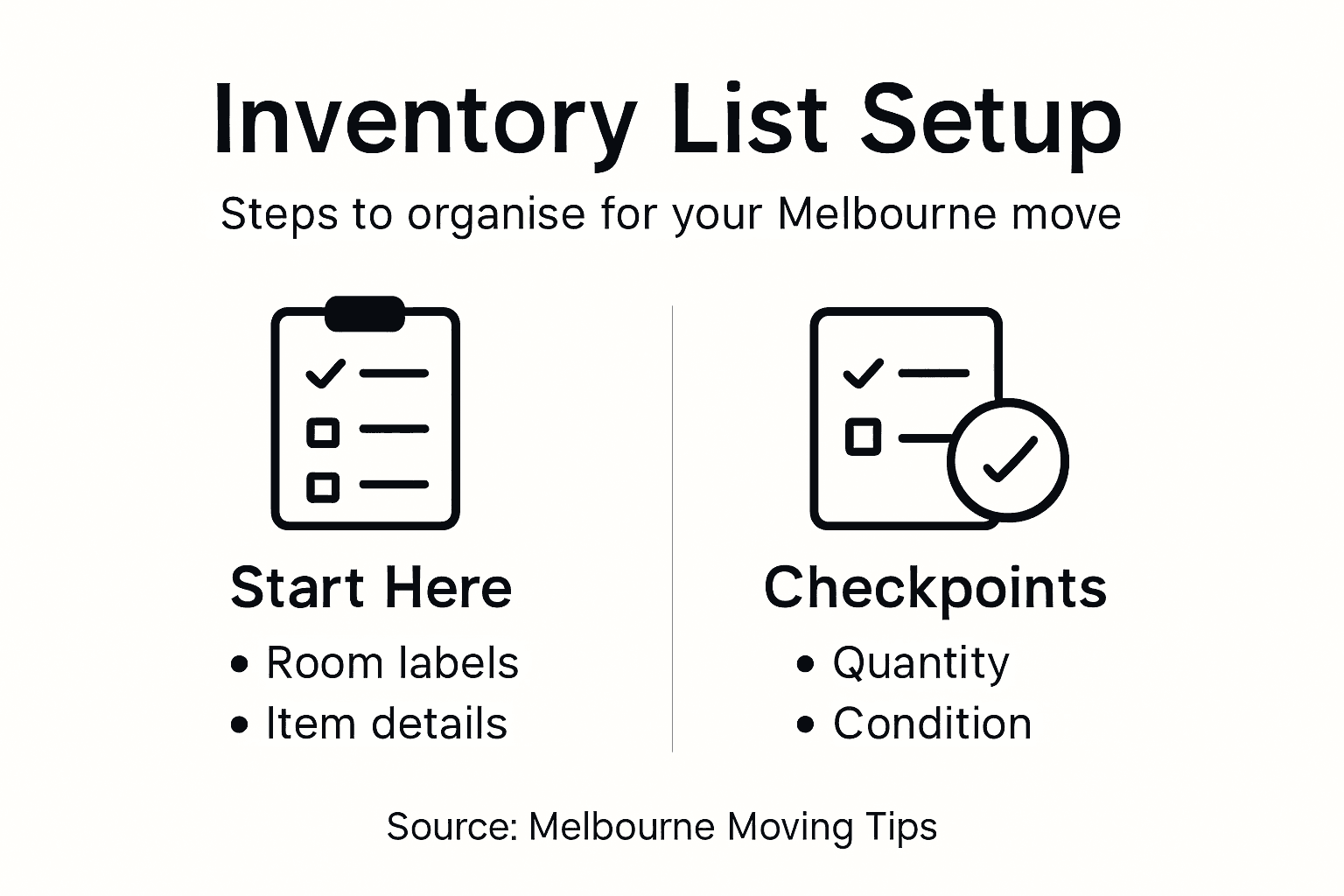
Professional moving inventory strategies recommend developing a systematic approach that captures every item’s essential details. Begin by creating a spreadsheet or dedicated notebook with columns for item name, description, quantity, condition, estimated value, and any unique identifiers like serial numbers. Photograph each item before packing and assign a unique code that corresponds with your written inventory. This method provides multiple layers of documentation to safeguard against potential loss or damage during transit.
Organise your inventory list room by room, starting with the most complex spaces like kitchens and home offices. For each item, note its current condition and any special handling requirements. Include details such as fragility, weight, and whether professional packing is recommended. This granular approach not only helps movers handle your possessions with care but also provides crucial documentation for insurance purposes and personal tracking.
Insider Tip: Use cloud storage to backup your digital inventory list and keep a printed copy in a waterproof folder for additional security.
Labelling and photographing your belongings is crucial for creating a foolproof moving record that protects your valuables and simplifies your Melbourne relocation. You will transform each item into a documented, traceable asset that can be easily managed during and after your move.
Comprehensive packing and labelling strategies recommend developing a systematic approach to documenting your possessions. Start by obtaining high-quality labels and permanent markers in different colours to distinguish between rooms, fragility levels, and priority of items. Photograph each valuable or significant item from multiple angles before packing, ensuring clear, well-lit images that capture the item’s current condition. Include close-up shots of any existing damage or unique characteristics to provide a comprehensive visual record.
Create a consistent labelling system that includes the box contents, destination room, and handling instructions. Use waterproof labels or clear packing tape to protect your markings from moisture or handling wear. For particularly fragile or valuable items, consider adding special handling symbols or notes that alert movers to exercise extra care. This meticulous documentation not only helps protect your belongings but also provides critical evidence for potential insurance claims or dispute resolution.
Insider Tip: Create a digital folder with your item photographs and label a physical backup copy with the corresponding digital file name for ultimate tracking.
Reviewing and verifying your inventory is the final critical checkpoint before your Melbourne move, ensuring every item is accounted for and ready for transport. You will transform your meticulous documentation into a foolproof tracking system that minimises potential moving day complications.
Australian moving inventory verification recommends conducting a comprehensive cross-reference process. Begin by comparing your digital spreadsheet against physical items, systematically checking each room and ensuring nothing has been overlooked. Walk through your space methodically, marking off items as you confirm their presence and packing status. Pay special attention to valuable or sentimental items, double checking their condition and documentation before finalising your inventory.
Take time to review your inventory with your removalist, sharing your detailed documentation and discussing any specific handling requirements. For international or interstate moves, customs documentation requirements make this verification even more crucial. Create a final master list that includes photographs, condition notes, and unique identifiers for each significant item. This comprehensive approach provides protection and peace of mind throughout your relocation journey.
Here’s a quick summary of inventory verification benefits for your move:
| Verification Action | Main Purpose | Moving Day Advantage |
|---|---|---|
| Digital cross-check | Ensure nothing is missed | Increases accountability |
| Room-by-room walkthrough | Confirm all items are packed | Reduces last-minute stress |
| Removalist review | Clarify special handling needs | Minimises transport risks |
| Master list creation | Centralise all inventory data | Simplifies referencing |
Insider Tip: Create a digital backup of your final inventory and store a printed copy in a waterproof folder separate from your moving documents.
Preparing a detailed inventory can feel overwhelming when moving across Melbourne. The article highlights key challenges such as organising your belongings by category, creating thorough inventory lists, and labelling items accurately to minimise stress and avoid last-minute surprises. If you want to ensure everything is accounted for and handled with care, Onyx Removals offers personalised moving solutions designed to make your relocation seamless and worry-free. Their experienced team understands the importance of meticulous inventory management and provides professional packing, secure transportation, and careful unpacking to protect your valuables.

Make your Melbourne move smoother by partnering with a trusted local company that treats your belongings like their own. Visit Onyx Removals today to explore comprehensive residential and commercial removal services tailored to your needs. Start your stress-free journey now and ensure every item on your inventory list arrives safely at your new home or office.
To create an effective inventory workspace, select a well-lit area with sufficient flat surface space for your inventory materials. Gather tools like spreadsheets, clipboards, labels, and a measuring device, and arrange them within arm’s reach to maximise efficiency.
When sorting your belongings, start with broad categories such as kitchen items, bedroom belongings, office supplies, and personal collections. From there, divide them into specific groups like cookware or clothing to simplify packing and help identify what to keep, donate, or discard.
Your inventory lists should include essential details such as item names, descriptions, quantities, conditions, and unique identifiers. Additionally, photograph each item and assign a unique code to provide thorough documentation that safeguards against potential loss or damage during transit.
To label and photograph your items effectively, use high-quality labels in different colours to indicate room destinations and handling instructions. Take clear photographs of each item from multiple angles, particularly capturing any existing damage, to ensure a comprehensive visual record for your move.
To ensure your inventory is accurate, conduct a thorough cross-reference of your digital spreadsheet against the physical items in each room. Walk through your space carefully, marking items as confirmed, and review all documentation with your removalist to clarify any special handling needs.
If you discover missing items during your inventory review, immediately check your packing boxes and verify against your list. Document any discrepancies and consider contacting your removalist to discuss potential solutions for any items that appear unaccounted for.

No Related Post


