



Moving house comes with a surprising share of risk. Most people assume their belongings are fully protected just because a moving company is involved. But around 80 percent of Aussies don’t realise standard moving insurance will only pay out about 60 cents per kilogram if something precious breaks or goes missing. That means your thousand dollar TV might fetch you less than the cost of lunch if it gets smashed in the truck. There’s a smarter way to make sure your stuff is safe and your move runs smoothly.
| Takeaway | Explanation |
|---|---|
| Invest in comprehensive moving insurance. | Standard moving company coverage is often inadequate; consider additional protection for high-value items. |
| Assess your moving needs before selecting coverage. | Conduct a thorough inventory to determine the appropriate insurance based on the value and type of belongings. |
| Understand insurance options like Full Value Protection. | Full Value Protection offers better compensation for damaged items compared to Released Value Protection, which is minimal. |
| Plan strategically to mitigate moving stress. | Create checklists and manage personal tasks to make the relocation smoother and reduce anxiety during the moving process. |
| Consult insurance professionals for tailored advice. | Different moving scenarios require specific insurance; seek expert guidance to ensure the best coverage for your unique situation. |
Moving house involves significant financial and emotional investment, making insurance a critical consideration for protecting your belongings and minimizing potential risks. Understanding the importance of insurance during relocation can save you from substantial financial and emotional stress.
Moving inherently presents numerous risks to your personal property. According to the National Association of Insurance Commissioners, standard moving company coverage is often insufficient. Typically, moving companies provide basic insurance based on item weight, which means high-value possessions might receive minimal compensation in case of damage or loss.
The financial implications can be substantial. Imagine losing expensive electronics, antique furniture, or irreplaceable family heirlooms during transit. Without comprehensive insurance, you could face significant out-of-pocket expenses to replace these items. The Insurance Information Institute emphasizes that homeowners and renters policies provide only limited coverage during moves, making additional protection crucial.
Understanding your insurance options is key to comprehensive protection. Federal regulations mandate that moving companies offer two primary valuation options: released value coverage and full value protection. However, these options often provide minimal safeguards. U.S. News & World Report recommends exploring additional moving insurance to ensure complete coverage.
Key insurance considerations include:
Beyond financial protection, moving insurance offers peace of mind. Unexpected events like vehicle accidents, weather-related incidents, or handling mishaps can compromise your belongings. Comprehensive insurance ensures you’re protected against these unpredictable scenarios.
Before your move, consult with your insurance provider to understand your current policy’s limitations. Consider supplementary coverage that fills potential gaps. Check out our comprehensive guide on moving preparations to ensure a smooth, well-protected relocation experience.
Remember, investing in proper insurance is not an expense but a strategic protection of your valuable possessions and financial stability during one of life’s most significant transitions.
Here is a table summarising the differences between the two main types of moving company coverage, as described above:
| Coverage Type | Compensation Provided | Cost | Who is Responsible for Replacement/Repair | Best For |
|---|---|---|---|---|
| Released Value Protection | Up to 60 cents per pound per item | Free | Basic liability by mover | Budget moves, minimal value |
| Full Value Protection | Replacement cost/repair/cash value | Extra fee | Mover is responsible | High-value, full coverage |
Moving insurance is not a one-size-fits-all solution. Different moving scenarios require tailored insurance approaches to ensure comprehensive protection for your valuable possessions. Understanding the various coverage options helps you make informed decisions that safeguard your belongings during relocation.
The Federal Motor Carrier Safety Administration mandates two primary liability coverage types for interstate moves. Released Value Protection offers minimal coverage at no additional cost, compensating up to 60 cents per pound per item. This basic coverage means that a 50-pound television valued at $1000 would only receive $30 in compensation if damaged.
Full Value Protection provides more comprehensive coverage. Under this option, movers are responsible for replacing lost or damaged items at their current market value. This can include repair, replacement with a similar item, or cash settlement. While more expensive, it offers significantly better protection for your belongings.
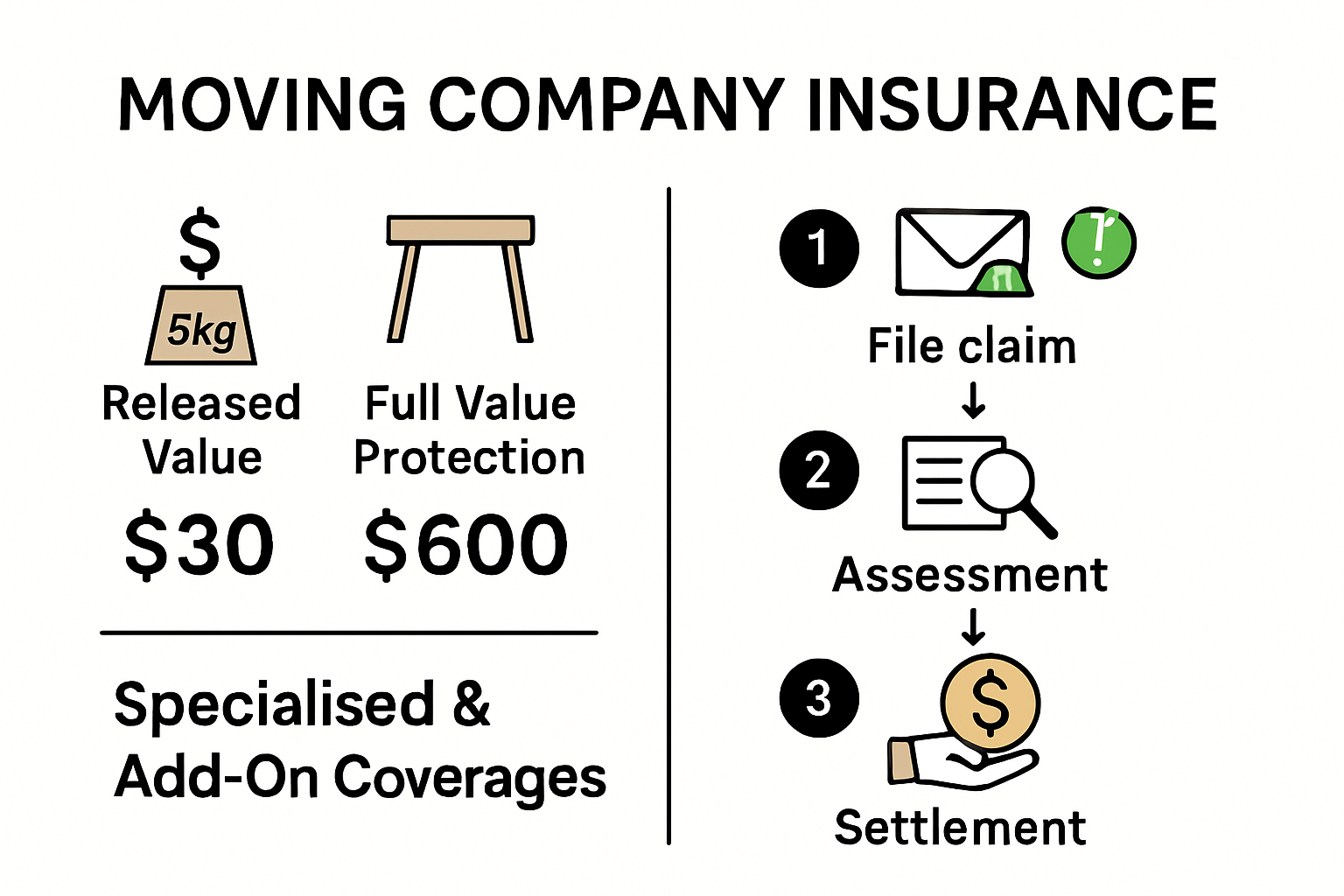
The Insurance Information Institute recommends additional insurance options for comprehensive protection. Trip transit insurance covers personal property against specific perils like theft or fire during transportation and storage. Special perils contents coverage extends protection for breakage of non-fragile items, addressing gaps in standard moving insurance.
Key specialized coverage options include:
Residential moves, commercial relocations, and specialized transportations each require unique insurance considerations. The National Association of Insurance Commissioners highlights that coverage varies based on move type. In-state moves typically offer $0.30 per pound coverage, while interstate moves provide $0.60 per pound protection.
For those planning a complex move, consulting with insurance professionals becomes crucial. Learn more about preparing for your specific moving requirements to ensure you select the most appropriate insurance coverage.
Remember, the right insurance protects not just your belongings, but provides peace of mind during what can be a stressful transition. Carefully evaluate your moving needs and choose coverage that offers comprehensive protection tailored to your unique situation.
Selecting the appropriate moving insurance policy requires careful consideration and strategic planning. The right coverage can protect your valuable possessions and provide peace of mind during what is often a stressful transition.
Before selecting an insurance policy, conduct a comprehensive inventory of your belongings. The Federal Motor Carrier Safety Administration recommends understanding the two primary liability options for interstate moves: Full Value Protection and Released Value Protection.
Key factors to evaluate include:
Full Value Protection offers more comprehensive coverage, making movers responsible for replacing lost or damaged items at their current market value. This option provides more substantial protection but comes at a higher cost. Released Value Protection, while free, offers minimal compensation of up to 60 cents per pound per item.
The Insurance Information Institute advises exploring supplementary insurance options beyond standard moving company coverage. Trip transit insurance and special perils contents coverage can fill crucial gaps in protection.
Consider these additional insurance strategies:
The Federal Trade Commission emphasizes the importance of thorough research and careful contract review. Obtain written estimates from multiple moving companies and carefully examine the details of their insurance offerings.
Critical steps in choosing your moving insurance:
Check out our comprehensive moving preparation guide to ensure you’re fully prepared for your relocation.
Remember that the cheapest option is not always the best. Prioritize comprehensive coverage that provides adequate protection for your unique moving situation. Take time to understand the fine print, ask questions, and choose a policy that offers genuine peace of mind during your move.
Moving can be an overwhelming experience, fraught with potential challenges and unexpected complications. By implementing strategic planning and proactive measures, you can transform your moving process into a smoother, less stressful journey that protects both your belongings and your peace of mind.
Amica Insurance recommends a comprehensive approach to moving that begins well before moving day. Start by creating a detailed moving checklist that covers every aspect of your relocation. This includes organizing important documents, scheduling utility transfers, and planning for potential contingencies.
Essential pre-move preparation steps:
Documenting your belongings not only helps with insurance claims but also provides a clear record of your possessions during transit. Photograph valuable items and keep detailed records of their condition before packing.
Below is a checklist table to help you track essential moving preparation steps as described above:
| Task | Completed? |
|---|---|
| Create inventory of all belongings | |
| Secure personal/financial documents | |
| Arrange utilities and change of address | |
| Schedule cleaning and inspections | |
| Photograph and document valuables |
Gerber Life Insurance highlights the importance of managing personal stress during relocation. Moving involves significant emotional and physical transitions that can be overwhelming. Develop strategies to maintain your mental well-being throughout the process.
Stress management techniques include:
Consider arranging temporary accommodation or flexible storage solutions if your move involves complex logistics. This provides a buffer against potential delays or unexpected challenges.

In the final stages of your move, focus on smooth execution and personal comfort. Check out our comprehensive moving preparation guide for additional insights into making your transition as seamless as possible.
Prioritize self-care during this significant life transition. Pack a personal essentials bag with medications, important documents, a change of clothes, and basic toiletries. This ensures you have immediate access to critical items during the move.
Remember that a successful move is not just about transporting items from one location to another. It’s about managing the entire process with patience, preparation, and a strategic approach. By implementing these tips, you can reduce stress, minimize risks, and create a positive moving experience that sets the foundation for your new chapter.
There are several types of moving insurance available, including released value protection and full value protection. Released value protection offers minimal coverage, while full value protection provides more comprehensive coverage and ensures that lost or damaged items are replaced at their current market value.
Yes, getting additional moving insurance is worth it, especially if you have high-value or fragile items. Standard moving company coverage often falls short, providing limited compensation that may not cover the actual value of your belongings.
To assess your moving insurance needs, conduct a thorough inventory of your belongings, evaluate the total value of your items, and consider any specific high-value or fragile items. Also, think about the distance of your move and the type of transportation you’ll use.
If your items are damaged during the move, you should file a claim with the moving company or the insurance provider you purchased coverage from. Ensure you have documented evidence, such as photographs and records of the item’s condition before the move, to support your claim.
Worried your treasured belongings might not be fully protected on moving day? The article highlighted that most Aussies are left shocked by how little standard moving insurance actually covers. Items with sentimental and real financial value deserve better protection and a smooth, stress-free move. At Onyx Removals, we get how important your possessions are and how stressful the unknowns of relocation can feel. Our experienced team delivers not just transport but genuine security by offering personalised moving plans with extra care for high-value, fragile and unique items. From full packing to safe storage, we tailor every step to your needs so you can focus on starting fresh with confidence.
Why settle for less when your peace of mind is at stake? Discover how a professional approach make insurance concerns a thing of the past. Connect with our experts today and experience a move that’s both efficient and worry-free. Learn about our solutions and request your moving quote now at Onyx Removals. For extra tips on preparing for your relocation, visit our moving tips guide or see how we can help with packing materials for moving.

No Related Post


