



Staring at a sofa that barely fits through the doorway can quickly turn moving day into a headache for Melbourne households. Sorting out what to do with bulky items is a common hurdle, especially under the pressure of relocation. With legal requirements and multiple disposal options to consider, finding efficient and stress-free solutions becomes essential. This guide explains large furniture disposal clearly, featuring practical tips to help you make responsible, hassle-free choices during your move.
| Point | Details |
|---|---|
| Understand Local Regulations | Familiarise yourself with the specific waste disposal guidelines in your local council to avoid fines and ensure compliance. |
| Explore Sustainable Options | Prioritise reusing and donating furniture to charities to reduce landfill waste and benefit the community. |
| Select Professional Services Wisely | Choose qualified removalists or recycling centres to facilitate efficient and eco-friendly disposal of large items. |
| Prepare for Collection Properly | Assess the condition of your furniture and prepare items in compliance with collection protocols to avoid rejected pickups. |
Large furniture disposal involves systematically removing bulky household items like sofas, wardrobes, dining tables, and bedroom sets that cannot be handled through standard waste collection services. In Melbourne, this process requires careful planning, understanding local regulations, and choosing appropriate removal methods that align with sustainable waste management practices.
The key components of effective large furniture disposal include:
Australia’s national waste management framework emphasises reducing waste and supporting a circular economy. This means prioritising furniture reuse, repair, and responsible recycling over immediate disposal. Professional removalists can help navigate these considerations, ensuring items are handled sustainably.
Disposal Options:
Pro tip: Always photograph large furniture items before disposal to track their destination and ensure proper environmental handling.
Here’s a comparison of major furniture disposal methods and their eco-friendly impact:
| Disposal Method | Environmental Impact | Typical Cost Range | Community Benefit |
|---|---|---|---|
| Council Collection | Moderate – landfill use | Usually free-$50 | Limited – council services |
| Donation to Charities | High – reuse, zero waste | Free | Supports local families |
| Recycling Centre | High – materials salvaged | $10-$60 | Promotes recycling economy |
| Professional Removalist | Variable – depends on company | $70-$250 | Convenience but low reuse |
| Skip Bin Hire | Low – mostly landfill | $150-$400 | No direct community benefit |
Large furniture disposal encompasses several distinct categories, ranging from residential household items to commercial office furnishings. Furniture waste statistics in Australia reveal significant annual volumes of discarded items, highlighting the importance of understanding comprehensive disposal strategies.
Common Furniture Types for Disposal:
Disposal methods vary depending on item condition, material composition, and local waste management guidelines. Some furniture can be recycled, donated, or repurposed, while others might require specialised removal services.
Disposal Strategies:
Responsible furniture disposal reduces landfill waste and supports circular economy principles.
Pro tip: Always check the condition of furniture before disposal to maximise potential reuse or recycling opportunities.
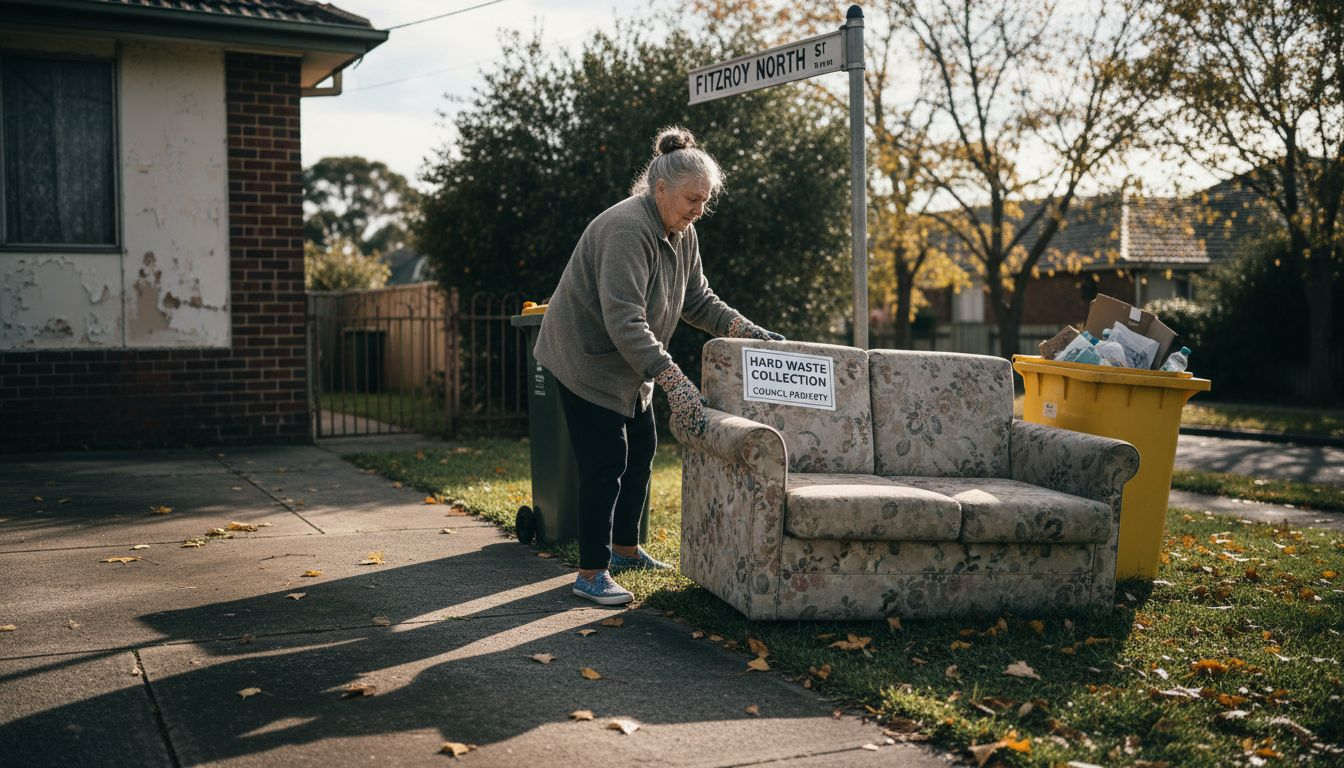
Navigating the legal landscape of furniture disposal requires a comprehensive understanding of local council regulations and potential penalties. Waste disposal rules vary significantly across different Melbourne municipalities, making it crucial to research specific local guidelines before discarding large items.
Key Legal Considerations for Furniture Disposal:
Most local councils in Victoria offer structured hard rubbish collection services, but residents must adhere to strict protocols. Failure to comply can result in substantial financial penalties, with some jurisdictions imposing fines up to $4,000 for inappropriate waste disposal.
Council Collection Process:
Proper research and communication with local authorities can prevent costly mistakes and ensure environmentally responsible furniture disposal.
Pro tip: Always request a written confirmation of your hard rubbish collection booking to avoid potential disputes.
For Melbourne residents, here are key legal requirements compared with typical mistakes to avoid:
| Requirement | Consequence if Ignored | Practical Solution |
|---|---|---|
| Council approval needed | Up to $4,000 fine | Book collection in advance |
| Disposal location mandated | Illegal dumping penalties | Use approved drop-off points |
| Item quantity restricted | Refused collection, fines | Check council guidelines first |
| Environmental compliance | Legal action possible | Follow recycling and reuse rules |
Reducing furniture waste requires thoughtful consideration of sustainable disposal methods that benefit both the community and the environment. Charitable organisations offer excellent furniture redistribution options for Melbourne residents seeking responsible ways to manage unwanted large items.
Eco-Friendly Disposal Channels:
Charity organisations like The Bower provide critical services by collecting furniture in good condition and redistributing these items to families experiencing financial hardship. This approach not only prevents unnecessary landfill waste but also supports vulnerable community members through practical assistance.
Donation Process Steps:
Sustainable furniture disposal transforms potential waste into valuable community resources.
Pro tip: Always photograph furniture items before donation to maintain a record of their condition and potential tax deductibility.
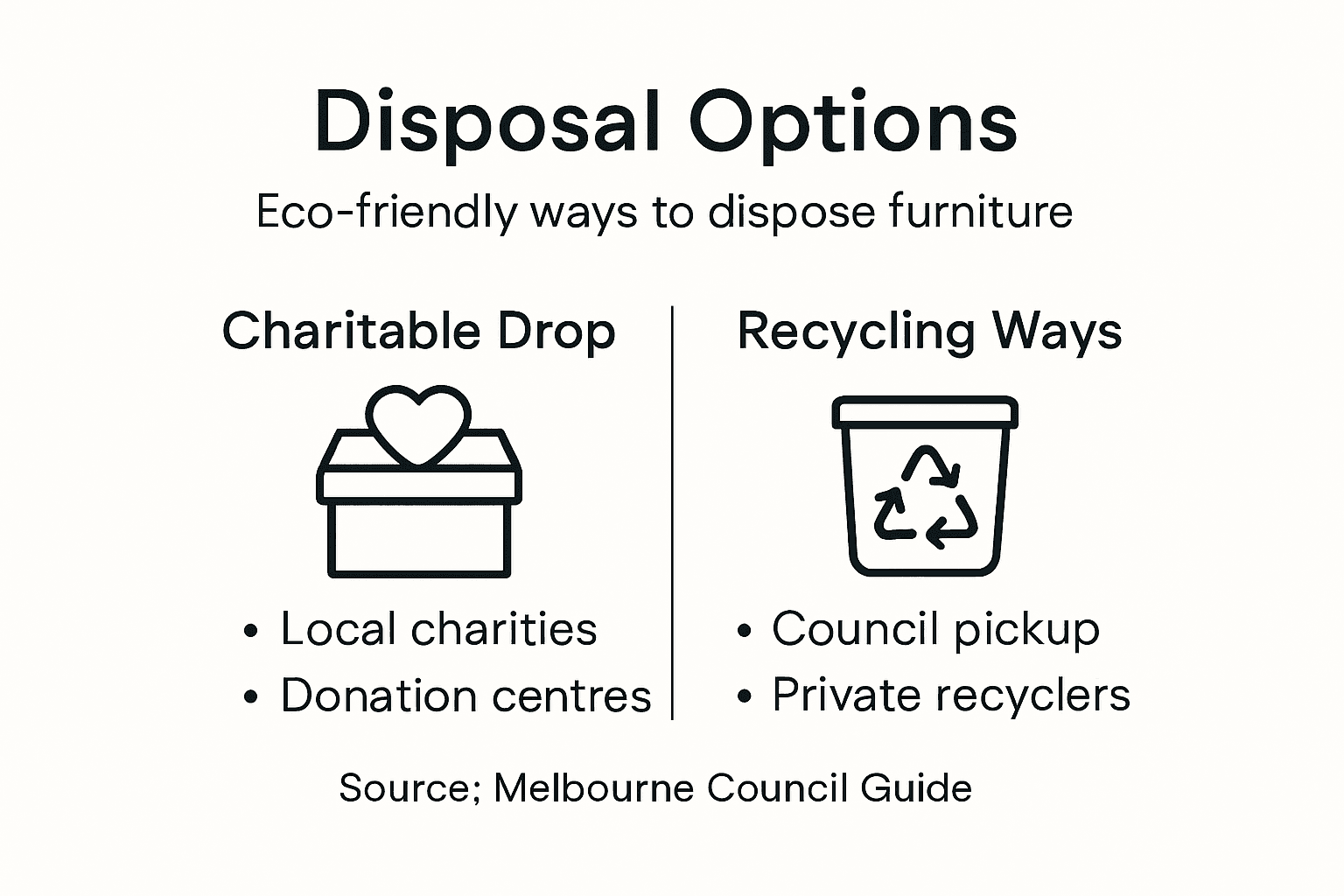
Navigating large furniture disposal involves understanding potential financial and legal pitfalls that can significantly impact your moving experience. Furniture disposal mistakes can be surprisingly costly for Melbourne residents who aren’t strategic about their waste management approach.
Common Financial Risks:
Many homeowners underestimate the complexity of furniture disposal, which can lead to unintended expenses and logistical challenges. Improper disposal methods might result in substantial financial penalties, ranging from modest fines to significant legal repercussions for environmental non-compliance.
Major Disposal Mistakes to Avoid:
Strategic planning can transform potential disposal costs into opportunities for community contribution and environmental responsibility.
Pro tip: Always obtain written quotes from multiple removal services and verify their waste disposal credentials before committing.
Facing the challenge of disposing bulky furniture can be overwhelming in Melbourne. The need to follow council regulations, avoid costly fines, and find eco-friendly disposal options adds complexity to your move or cleanout. Whether you are concerned about illegal dumping penalties or want to embrace sustainable furniture disposal methods like donation and recycling, understanding your options is key to a stress-free solution.
Onyx Removals offers tailored services that make large furniture disposal simple and compliant. Our experienced team handles everything from disposal adherence to recommended removal techniques, ensuring your bulky items are managed responsibly. Discover how our business removal services can ease your commercial or residential move, while keeping your furniture disposal eco-conscious and legally sound.
Take control of your large furniture disposal today and avoid unexpected fees or fines. Visit Onyx Removals to schedule a personalised consultation and explore comprehensive moving and disposal solutions. Trust our professionals to make your Melbourne relocation or cleanout truly stress-free.
There are several effective options for large furniture disposal, including council bulk waste collection, professional removalist services, donations to charities, recycling centres, and private waste removal companies. Each method varies in environmental impact and cost, so it’s important to choose the one that suits your needs best.
To ensure responsible recycling or donation, assess the condition of your furniture, clean and repair it if possible, and check with local charities or recycling centres about their acceptance criteria. Always photograph items before disposal for documentation purposes.
You should be aware of local council regulations regarding bulk waste collection, including obtaining prior approval, maximum item quantities, approved disposal locations, and compliance with environmental waste management regulations to avoid potential fines.
Common mistakes include ignoring local council guidelines, attempting self-removal without proper equipment, failing to prepare items for collection, overlooking recycling or donation opportunities, and disposing of items without assessing their potential value.

No Related Post


