



Every australian family knows the chaos that comes with moving house, especially when little ones are involved. Research shows that over 70 percent of Melbourne households with children say planning is the biggest factor in a low-stress relocation. For local homeowners, staying organised is not just a preference but a necessity when life feels pulled in all directions. This guide lays out a clear, actionable timeline and checklist to turn confusion into confidence for your next Melbourne move.
| Point | Details |
|---|---|
| Start Planning Early | Begin your moving preparations 8-10 weeks in advance to minimise stress and ensure a structured approach. |
| Involve the Family | Engage all family members in decluttering and packing to create a collaborative and enjoyable moving experience. |
| Organise Utilities and Services | Prepare a detailed checklist for utility transfers and local service updates at least three weeks before moving day. |
| Support Children’s Emotional Needs | Maintain open communication and involve children in the moving process to help them adjust to the changes. |
Moving home requires strategic planning and organisation, particularly for Melbourne families managing complex household relocations. Understanding the fundamental principles of an effective moving process can dramatically reduce stress and ensure a smooth transition. Comprehensive moving guides recommend breaking down the entire process into manageable phases that start well in advance of moving day.
A successful move begins approximately eight weeks before your planned relocation date. During this initial planning phase, you’ll want to start strategic decluttering and creating a comprehensive inventory of your belongings. This involves systematically sorting items into categories: keep, donate, sell, and discard. Families with children should involve everyone in this process, transforming it from a chore into an engaging family activity that helps everyone feel invested in the move.
The logistical elements of moving require meticulous coordination across multiple domains. Detailed moving checklists recommend tracking tasks across several key areas: packing supplies, utility transfers, address changes, and transportation arrangements. Create a centralised tracking system – whether a digital spreadsheet or a physical planner – to monitor progress and ensure no critical tasks slip through the cracks.
Pro tip: Create a dedicated moving folder where you store all important documents, quotes, contracts, and checklists to keep everything organised and easily accessible throughout your relocation journey.
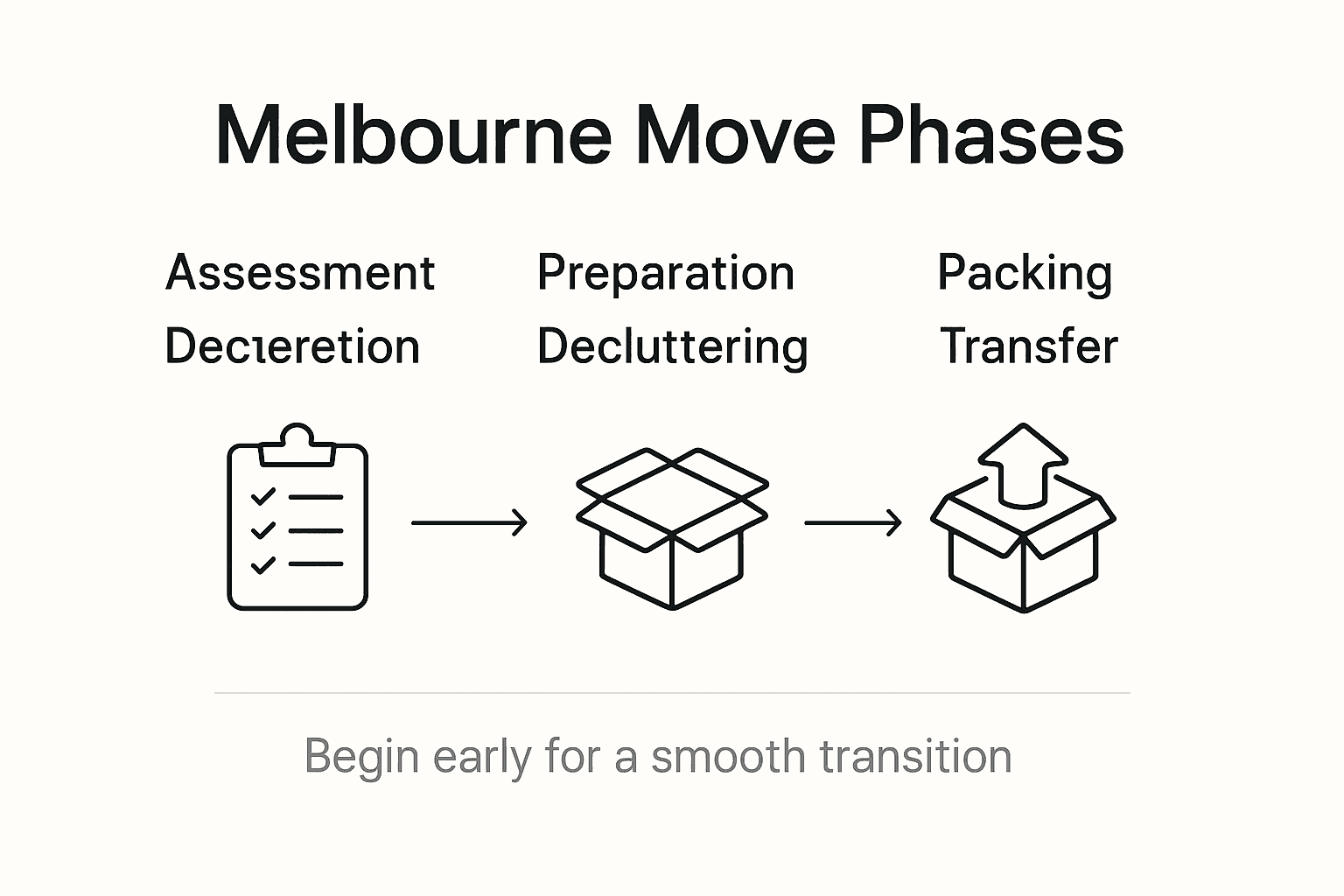
Moving is a complex process that requires careful planning and strategic execution. Comprehensive relocation guidance emphasises understanding the critical phases that transform a potentially stressful experience into a structured, manageable journey. For Melbourne families, breaking down the relocation process into distinct stages helps create a clear roadmap for success.
The first phase involves comprehensive assessment and preparation. This initial stage typically begins eight to ten weeks before moving day and includes critical activities like inventory creation, decluttering, and initial logistics planning. Families should conduct a thorough household audit, identifying items to keep, donate, or discard. This stage also involves researching potential moving services, obtaining quotes, and creating a preliminary budget for the entire relocation process.
Detailed relocation strategies recommend developing a structured timeline that breaks down tasks into manageable segments. The middle phases of relocation focus on practical implementation: packing non-essential items, coordinating utility transfers, updating address details, and arranging transportation. Melbourne families should create a centralised tracking system to monitor progress and ensure no critical task is overlooked. This might involve a digital spreadsheet, a physical planner, or a dedicated moving app that helps coordinate multiple aspects of the relocation.
Pro tip: Create a dedicated moving folder with colour-coded sections for documents, contracts, checklists, and receipts to maintain perfect organisation throughout your relocation journey.
Here’s a concise overview of each relocation phase and its primary focus:
| Relocation Phase | Main Activities | Key Outcomes |
|---|---|---|
| Preparation (8-10 weeks) | Inventory, decluttering, quote collection | Organised plan, clear budget |
| Coordination (4-6 weeks) | Packing non-essentials, booking services | Progress tracking, logistics |
| Execution (1-2 weeks) | Packing essentials, utility transfers | Seamless transition, readiness |
| Arrival (Moving day) | Unpacking, essential setup, change of address | Settled in new home, comfort |
Decluttering and packing for a family move requires a strategic approach that transforms a potentially overwhelming task into a manageable, even enjoyable experience. Effective decluttering techniques emphasise creating systematic processes that involve every family member, turning the preparation into a collaborative effort that reduces stress and builds anticipation for the new home.

The first critical step involves creating a comprehensive sorting system. Families should establish clear categories: keep, donate, sell, and discard. This approach helps make decisive choices about household items and prevents unnecessary emotional attachment to objects that no longer serve a purpose. Children can be actively involved by helping to sort their own belongings, which not only lightens the parents’ workload but also helps them feel part of the moving process. Organisational strategies recommend tackling decluttering in timed sessions, typically 30-45 minutes, to maintain focus and prevent exhaustion.
Packing efficiently requires a room-by-room approach, with careful attention to labelling and categorisation. Create a colour-coded system for boxes, assigning specific colours to different rooms or family members. Pack non-essential items first, leaving everyday necessities for last-minute preparation. Consider creating an ‘essentials’ box for each family member, containing items they’ll need immediately upon arriving at the new home – a strategy that provides comfort and reduces initial moving day stress.
Pro tip: Create a family moving day survival kit with snacks, basic toiletries, chargers, and a few comfort items to ensure everyone stays comfortable and calm during the transition.
Compare decluttering approaches for families and individuals:
| Aspect | Family Move Approach | Individual Move Approach |
|---|---|---|
| Decision Makers | All family members involved | Sole decision-maker |
| Sorting Categories | Keep, donate, sell, discard | Often keep/discard only |
| Emotional Impact | Shared discussions, more negotiation | Personal attachment prevails |
| Efficiency Strategies | Timed sessions, group sorting | Flexible timing, solo pace |
Managing utility transfers and local service updates represent a crucial aspect of any successful Melbourne relocation. Comprehensive utility connection guidelines emphasise the importance of early preparation and strategic planning to ensure seamless service transitions during your move.
The first step involves creating a detailed utility transfer checklist that encompasses all essential services. This includes electricity, gas, water, internet, telephone, and postal redirections. Begin by contacting current service providers at least three weeks before moving, providing them with your exact move date and new address. For rental properties, confirm with the property manager or landlord about existing utility connections and any specific transfer protocols. Many utility companies offer online transfer services, which can significantly streamline the process and reduce potential administrative complications.
Local updates extend beyond utility connections and require a systematic approach. Families should create a comprehensive change of address register, notifying key institutions like Medicare, the Australian Taxation Office, banks, insurance providers, schools, and employers. Consider creating a digital spreadsheet to track communication with various organisations, recording dates of notification and confirmation details. Some services offer bulk address change platforms that can simplify this process, allowing multiple updates through a single platform. Remember to update your driver’s licence and vehicle registration with VicRoads, which is a critical administrative requirement for Melbourne residents.
Pro tip: Create a dedicated email folder to store all utility transfer confirmations and change of address correspondence, ensuring you have a centralised digital archive of all important moving documentation.
Moving can be an emotionally complex experience for children, requiring sensitive and strategic support from parents. Mental health experts highlight the significant impact that major life transitions can have on children’s emotional wellbeing, emphasising the critical need for understanding and proactive communication during relocation.
Establishing emotional safety and predictability becomes paramount during the moving process. Children often experience anxiety about leaving familiar environments, so involving them actively in preparations can help mitigate stress. This might include allowing them to pack their own special belongings, decorate moving boxes, or make decisions about room arrangements in the new home. Transition support strategies recommend maintaining consistent routines as much as possible, creating a sense of continuity that helps children feel secure during change.
Open, age-appropriate communication is crucial in helping children process the move. Encourage them to express their feelings, validating any concerns or mixed emotions they might experience. For younger children, this might involve using storytelling or drawing activities to help them articulate their thoughts. Older children and teenagers might appreciate more direct conversations about the move, potential challenges, and exciting opportunities in the new location. Consider creating a family ‘moving adventure’ narrative that frames the relocation as an exciting journey rather than a disruption.
Pro tip: Create a special ‘moving memories’ scrapbook where children can document their feelings, paste photographs of the old home, and add exciting expectations about the new home to help them emotionally process the transition.
Facing the challenges of the moving checklist and timeline can feel overwhelming, especially when juggling decluttering, packing, and utility transfers. This article highlights the importance of strategic organisation and phased scheduling to reduce stress and ensure a smooth relocation. If navigating these complexities feels daunting, you are not alone. The need to create detailed inventories, coordinate logistics, and support your family through change demands professional help that understands your unique needs.
At Onyx Removals, we specialise in making your Melbourne move stress-free by offering personalised moving plans tailored to your timeline and household requirements. Our experienced team handles everything from packing and unpacking to secure transport and storage solutions. We help you stay on track with your moving checklist so that no detail is overlooked.
Take control of your moving journey today by trusting the professionals who prioritise reliability and care. Visit Onyx Removals to explore our comprehensive services. For seamless coordination and expert advice that transforms your timeline into a well-executed plan, connect with us now and experience the ease of a truly coordinated move.
A comprehensive moving checklist includes phases such as preparation (8-10 weeks before), coordination (4-6 weeks), execution (1-2 weeks), and arrival (moving day). Each phase entails specific tasks like inventorying items, packing, and managing utility transfers to ensure a smooth transition.
To declutter effectively, sort items into categories: keep, donate, sell, and discard. Involve all family members in this process, helping everyone feel part of the move, and use timed sessions to maintain focus and efficiency.
Supporting children during a move includes involving them in preparations, maintaining routines, and facilitating open communication about their feelings. Consider creating a scrapbook for them to document the transition, helping them process the change positively.
Begin managing utility transfers by creating a checklist that includes all essential services like electricity and internet. Contact current providers at least three weeks prior to moving, and maintain a log of notifications and confirmations to ensure seamless service transitions.

No Related Post


