



Packing for a move feels massive. There are boxes everywhere, cords tangled, and the pressure to get it all sorted on time. But here’s the bit most people miss. Nearly 60 percent of moves are reported as more stressful than starting a new job or planning a wedding. Still, that stress drops sharply with a simple fix. Starting your packing as early as eight weeks out changes the whole story.
| Takeaway | Explanation |
|---|---|
| Start packing eight weeks ahead. | Begin decluttering and sorting items to relieve last-minute stress and ensure an organized move. |
| Categorize your belongings clearly. | Sort your items into categories: keep, donate, sell, or discard to streamline the packing process. |
| Maintain flexibility in your timeline. | Adapt your packing schedule based on unique needs to accommodate any specific circumstances surrounding your move. |
| Utilize professional moving services. | Leverage local services for packing, transportation, and cleaning to simplify your relocation. |
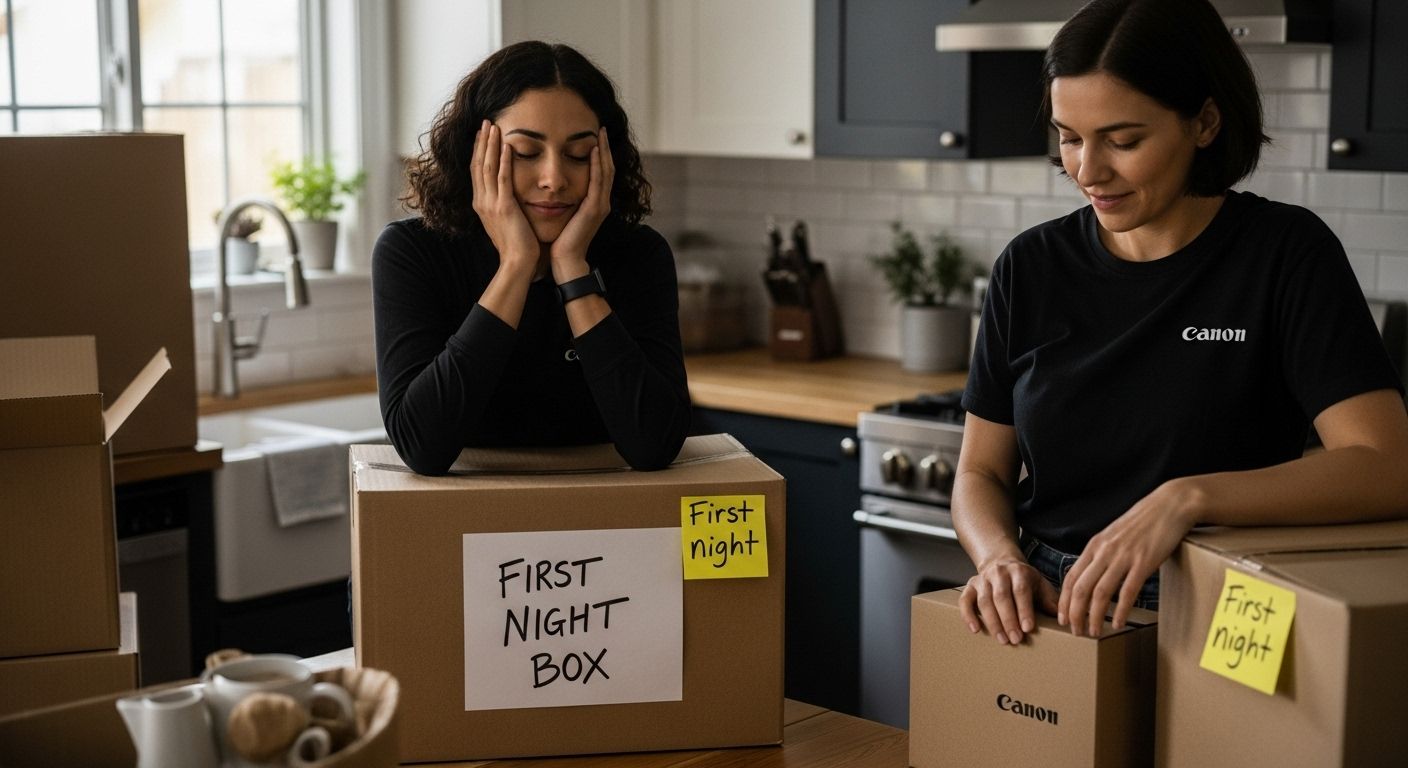
| Prepare a ‘first night’ box. | Include essentials for your first night in the new home to ease the transition and maintain comfort. |
|
Successful moving preparation begins with creating a strategic packing timeline that transforms a potentially chaotic process into a manageable journey. Your approach to packing determines not just the efficiency of your move, but also your stress levels and overall moving experience.
Moves are never one-size-fits-all. The complexity of your packing timeline depends on multiple factors including your household size, distance of relocation, and available resources. Check out our guide on preparing for different moving scenarios to understand how unique your moving requirements might be.
According to the Federal Motor Carrier Safety Administration, professional moving preparations typically require a comprehensive timeline starting several weeks before your actual moving date. This involves strategic planning across multiple dimensions such as inventory management, packing supplies acquisition, and systematic item categorisation.
A robust packing timeline requires understanding your specific needs. Key considerations include:
Research from Yale University’s Household Moving Checklist suggests starting your packing process six to eight weeks before moving. This approach allows sufficient time for methodical sorting, decluttering, and organised packing.
While standard timelines provide guidance, individual circumstances vary. Some individuals might require compressed timelines, while others need extended preparation periods. The University of Pittsburgh’s Off-Campus Student Services emphasises the importance of creating a customised moving checklist that accommodates your unique requirements.
Remember that a successful packing timeline is not about rigidity, but adaptability. By understanding your specific moving needs, you can develop a personalised strategy that reduces stress and ensures a smoother transition to your new space. Thoughtful preparation transforms moving from a potentially overwhelming task into an exciting new chapter of your life.
Navigating the packing process requires a structured approach that transforms an overwhelming task into a manageable series of strategic steps. By breaking down your moving preparation into a systematic schedule, you can reduce stress and ensure nothing gets overlooked.
The initial phase of your packing timeline focuses on preparation and initial sorting. Our comprehensive guide to apartment moving recommends starting with strategic decluttering. According to the University of California, Berkeley, this is the ideal time to assess your belongings and decide what to keep, donate, or discard.
Key activities for this stage include:
Research from Yale University’s Household Moving Checklist suggests this is the critical period for beginning your actual packing process. Focus on non-essential items that won’t be immediately needed in your daily life. The University of Utah recommends innovative packing techniques like using laundry hampers and rolling clothes to maximize space and protect your belongings.
Recommended packing strategies:
As your moving date approaches, packing becomes more intensive. This is the time to focus on systematic packing of daily use items while maintaining functionality. Professional movers recommend a strategic approach that balances thorough preparation with maintaining your daily routine.
Essential tasks during this phase include:
Remember that a successful packing schedule is not about perfection, but about creating a structured approach that reduces stress and ensures a smooth transition. By following a systematic timeline and remaining flexible, you can transform the moving process from a daunting challenge into an organised and manageable experience.
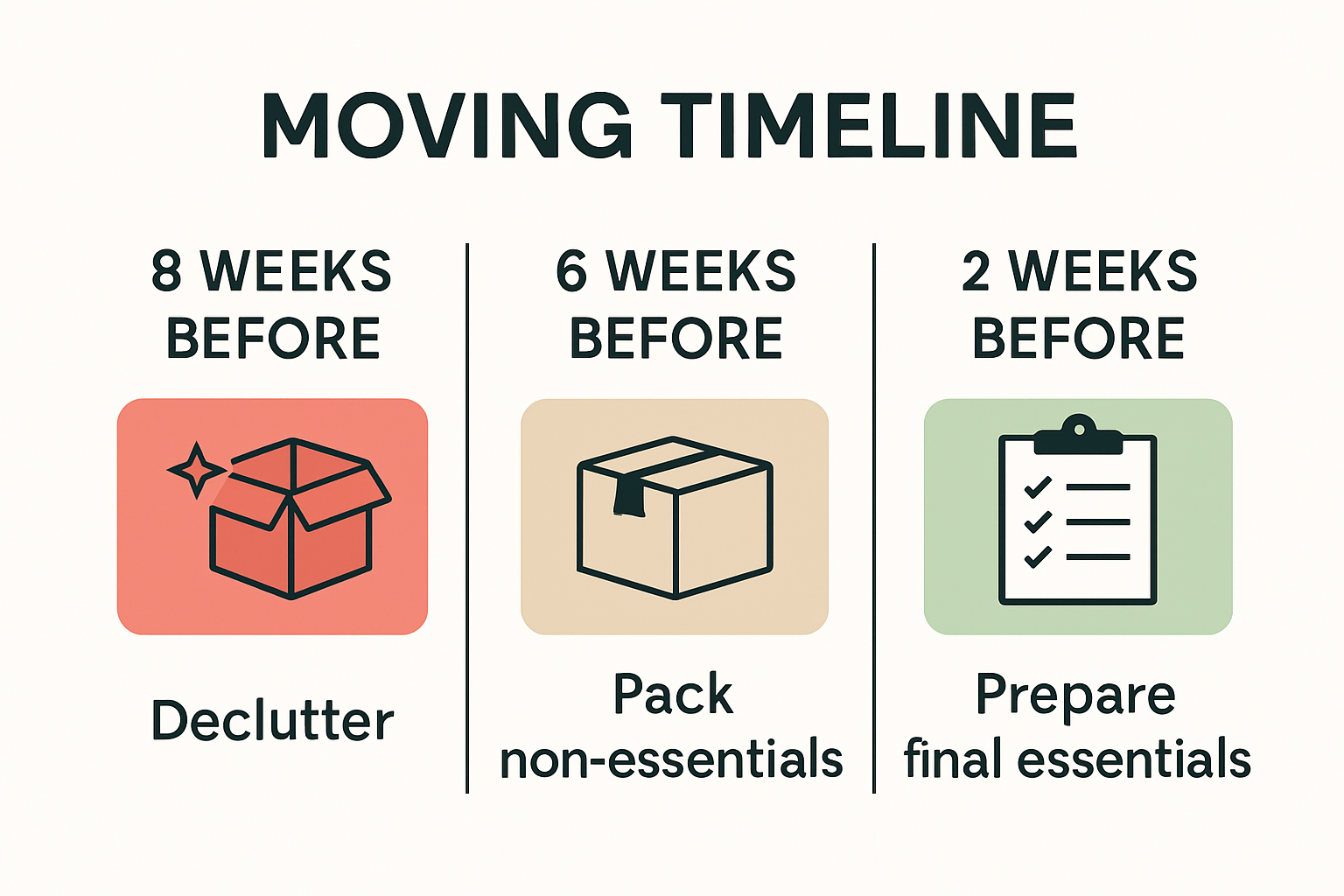
To provide a clear, visual overview of the packing schedule, here is a step-by-step table outlining key tasks to complete in each major stage leading up to your move.
| Stage | Key Activities |
|---|---|
| Eight Weeks Before Moving | – Conduct thorough inventory – Sort into keep/donate/sell/discard – Purchase packing supplies – Create moving budget |
| Six Weeks Before Moving | – Pack non-essentials – Start with storage areas – Label boxes by room – Create inventory |
| Two Weeks Before Moving | – Pack most items – Keep essentials accessible – Prepare ‘first night’ box – Confirm logistics |
Not all items are created equal when it comes to moving. Some possessions require special attention, careful handling, and unique packing strategies to ensure they arrive at your new home safely and intact. Our comprehensive moving guide provides insights into managing these delicate and challenging moving scenarios.
Artwork, antiques, and delicate electronics demand meticulous preparation. According to Yale University’s guidelines on special collections transport, different items require specific packing approaches. Artwork on paper should be shipped flat, while paintings are best transported upright on their edge. Key strategies for protecting fragile items include:
Moving oversized furniture presents unique challenges. The Wisconsin Movers Association warns against applying heavy wax to furniture before moving, as this can create slippery surfaces and potentially cause damage. Preparation tips for large furniture include:
Some items require extraordinary care during relocation. Musical instruments, scientific equipment, and temperature-sensitive items need tailored packing approaches. Professional movers recommend developing a specific strategy for each unique item type.
Special considerations include:
Successful moving of special items is an art form that combines careful planning, appropriate materials, and expert handling. By understanding the unique requirements of each item and preparing accordingly, you can ensure that even your most precious and delicate possessions arrive safely at their new destination. Remember that patience and attention to detail are your greatest allies when moving special items.
Here’s a summary table to help you quickly identify the recommended approaches for packing special or challenging items during your move.
| Item Type | Key Packing Strategies |
|---|---|
| Fragile/Valuable | Use bubble wrap, custom padding, sturdy boxes, label ‘fragile’ |
| Large Furniture | Disassemble, protect surfaces, use furniture blankets, clear pathways |
| Specialised/Sensitive | Climate-controlled transport, professional crating, separate insurance, detailed documentation |
Moving in Melbourne involves more than just transporting belongings from one location to another. It requires understanding local resources, support systems, and professional services that can streamline your relocation experience. Our comprehensive moving tips guide provides invaluable insights into navigating Melbourne’s unique moving landscape.
Relocating can be financially and emotionally challenging, especially for individuals and families experiencing significant life transitions. According to Monash University’s support resources, Melbourne offers various support mechanisms for residents in transition. Key support services include:
Melbourne boasts a robust ecosystem of professional moving services designed to address diverse relocation needs. These services range from comprehensive moving packages to specialised support for unique moving situations. Cleaning services are also integral to ensuring a smooth transition between properties, offering end-of-lease and pre-move cleaning solutions.
Professional services typically encompass:
Beyond physical moving services, Melbourne offers a network of community resources to support individuals during relocation. Local councils, community centers, and government agencies provide additional layers of assistance for those navigating complex moving scenarios.
Additional community resources include:
Successful moving in Melbourne is about more than logistics. It involves understanding and leveraging the city’s comprehensive support ecosystem. By combining professional moving services with local community resources, you can transform a potentially stressful experience into a smooth, well-supported transition. Remember that preparation, local knowledge, and accessing the right support services are key to a successful move in Melbourne.
The following table summarises the main professional and community support services available in Melbourne to assist with various aspects of your move.
| Support Type | Examples of Services |
|---|---|
| Financial & Local Support | Financial counselling, temporary housing, welfare programs, relocation support |
| Professional Moving Services | Packing/unpacking, furniture reassembly, storage, specialty transport, insurance |
| Community Resources | Utility connection, address change, area orientation, settlement support |
Start packing at least eight weeks before your moving date. This timeline allows you to declutter, strategize, and pack your items systematically, significantly reducing stress.
Begin by packing non-essential items that you won’t need in your daily life, such as seasonal clothing, books, and items in storage areas like attics or garages. This way, you can maintain your routine until closer to the move.
Essential packing materials include sturdy boxes, bubble wrap, packing tape, and markers for labeling. Ensure you have a variety of box sizes for different item types in your home.
To pack fragile items, use specialised bubble wrap and cushioned materials, create custom padding for irregularly shaped pieces, select sturdy boxes, and clearly label boxes as ‘fragile’ to ensure careful handling.
If the thought of managing boxes, checklists and tight moving deadlines is making your head spin, you are not alone. As mentioned in our Complete Packing Timeline for Moving: Step-by-Step Guide, most people find the process daunting, especially when every stage from decluttering to last-minute packing adds to the pressure. That feeling of not knowing where to start or how to finish on time can quickly steal the excitement of moving house or shifting your business.
It does not have to be this overwhelming. Onyx Removals transforms complicated moving plans into seamless, stress-free experiences all across Melbourne. Our team can handle every detail, from custom packing and secure storage to cleaning and disposal. Discover how we tailor our services to your unique move by exploring our business solutions or see why Melbourne trusts us by visiting our main website. Ready to tick packing off your list and breathe easy on moving day? Reach out today for a personalised moving solution and get your move on track.

No Related Post


