



Managing tenant departures can quickly turn into one of the most stressful periods for an australian property manager. Melbourne’s tight rental market means every detail matters during move-out, from compliance checks to final bond returns. Overlooking key responsibilities not only triggers disputes but can also impact your reputation and future leasing opportunities. This guide outlines practical steps and must-know legal requirements to help you deliver seamless tenant transitions every time.
| Point | Details |
|---|---|
| Comprehensive Responsibilities | Property managers in Australia manage a variety of tasks, including lease agreements, inspections, and compliance with tenancy regulations. They serve as vital links between property owners and tenants, ensuring smooth operations. |
| Specialised Roles | The property management sector includes various roles such as residential, commercial, and rural managers, each with unique skills and responsibilities. Understanding these specialisations can enhance a property manager’s effectiveness. |
| Legal Compliance and Licensing | Property managers must comply with legal requirements that vary by state, including obtaining the necessary real estate licence and staying informed about tenancy laws. Ongoing education is crucial to maintain compliance. |
| Risk Management Practices | Effective risk management is essential for property managers to avoid financial losses and legal issues. Implementing robust documentation and communication protocols can mitigate common risks associated with property management. |
Property managers in Australia play a critical role in managing residential and commercial real estate, serving as essential intermediaries between property owners and tenants. Their responsibilities extend far beyond simple rent collection, encompassing a complex network of legal, financial, and operational duties. Understanding core legal compliance requirements becomes paramount in effectively managing these professional obligations.
Specifically, property managers are responsible for multiple critical functions that ensure smooth property operations. These include executing comprehensive lease agreements, conducting regular property inspections, managing rental payments, coordinating maintenance and repairs, and ensuring compliance with Australian tenancy regulations. They must navigate intricate legal frameworks across state and federal levels, maintaining meticulous records while protecting both property owners’ investments and tenants’ rights.
The scope of a property manager’s duties involves proactive tenant management, which includes screening potential renters, managing lease negotiations, addressing maintenance requests, and resolving potential conflicts. They must also maintain precise financial records, process rental payments, track expenses, and provide regular financial reporting to property owners. Professional property managers essentially function as multifaceted professionals who combine elements of customer service, financial management, legal compliance, and real estate expertise.
Pro tip: Develop a comprehensive digital documentation system that tracks all communications, inspections, and financial transactions to ensure transparency and protect all parties’ interests.
The Australian property management landscape encompasses diverse professional roles, each specialising in unique aspects of real estate oversight. Different property management categories represent distinct operational approaches that cater to specific market segments and client requirements, ranging from residential to commercial property management.
Residential property managers typically handle day-to-day operations for rental properties, focusing on tenant screening, lease management, rent collection, and property maintenance. Commercial property managers, by contrast, work with more complex environments like office buildings, retail spaces, and industrial complexes, requiring advanced financial and strategic management skills. Their responsibilities often include managing multiple stakeholders, negotiating commercial leases, coordinating larger-scale maintenance projects, and ensuring compliance with more intricate regulatory frameworks.
Specialised property management roles further diversify the field, including strata managers who oversee shared living spaces like apartment complexes, body corporate managers who manage communal property assets, and rural or agricultural property managers who handle unique agricultural and land management requirements. Each specialisation demands specific expertise, with professionals needing deep understanding of sector-specific regulations, market dynamics, and operational challenges.
Pro tip: Develop specialised knowledge in a specific property management niche to differentiate yourself and increase your professional marketability in the competitive Australian real estate sector.
Here’s a comparative overview of the main types of property managers in Australia:
| Manager Type | Core Focus | Typical Property Types | Specialist Skillset Required |
|---|---|---|---|
| Residential Property Manager | Day-to-day tenant operations | Houses, units, apartments | Tenant screening, lease handling |
| Commercial Property Manager | Strategic asset and lease management | Offices, retail, industrial | Advanced finance, multi-stakeholder |
| Strata/Body Corporate Manager | Managing shared spaces and assets | Apartment complexes, shared lots | Strata law, consensus building |
| Rural Property Manager | Agricultural and land oversight | Farms, large rural holdings | Land management, rural compliance |
Property management in Australia requires a comprehensive understanding of intricate legal frameworks and professional licensing requirements that vary across different states and territories. Navigating the complex legal landscape of property management laws demands rigorous preparation, ongoing education, and strict adherence to regulatory standards.
In most Australian jurisdictions, property managers must obtain a real estate licence or certificate of registration to legally operate. These qualifications typically involve completing accredited training programs, demonstrating professional competence, and maintaining ongoing professional development. The licensing process generally includes comprehensive coursework covering tenancy legislation, contract law, financial management, ethical practice, and consumer protection regulations. Aspiring property managers must pass formal examinations and background checks, with specific requirements varying between states such as New South Wales, Victoria, Queensland, and Western Australia.
The legal frameworks governing property management extend beyond initial licensing, encompassing ongoing compliance obligations. These include maintaining accurate financial records, protecting client funds, managing trust accounts with precision, adhering to privacy legislation, and ensuring transparent communication with property owners and tenants. Property managers must stay continuously updated on changing tenancy laws, building regulations, and consumer protection standards, which can shift rapidly in response to market conditions and legislative reforms.
Pro tip: Invest in continuous professional development and subscribe to industry newsletters to stay ahead of regulatory changes and maintain your professional edge in the dynamic Australian property management landscape.
Property managers play a critical role in managing tenant move-out processes, ensuring smooth transitions that protect both property owners’ interests and tenants’ rights. Navigating the complex legal requirements of tenant transitions demands a systematic and carefully documented approach that adheres to strict regulatory standards.
The move-out process involves several key stages, beginning with formal notice periods and culminating in a comprehensive property inspection. Property managers must coordinate detailed exit assessments, documenting the property’s condition through thorough photographs and written reports. This documentation serves as crucial evidence for potential bond claims, repair negotiations, and legal protections. Critical responsibilities include verifying the tenant’s compliance with lease termination conditions, assessing any damages beyond normal wear and tear, and facilitating the return of rental bonds in accordance with state-specific tenancy regulations.

Successful tenant transitions require meticulous attention to financial and administrative details. Property managers must reconcile final rent payments, process utility disconnections, manage any necessary repairs or cleaning, and communicate transparently with both outgoing tenants and property owners. This involves coordinating professional cleaning services, conducting thorough property maintenance assessments, and ensuring all contractual obligations are met before finalising the move-out process. Advanced property managers leverage digital documentation systems to streamline these complex transitions and maintain clear, legally compliant records.
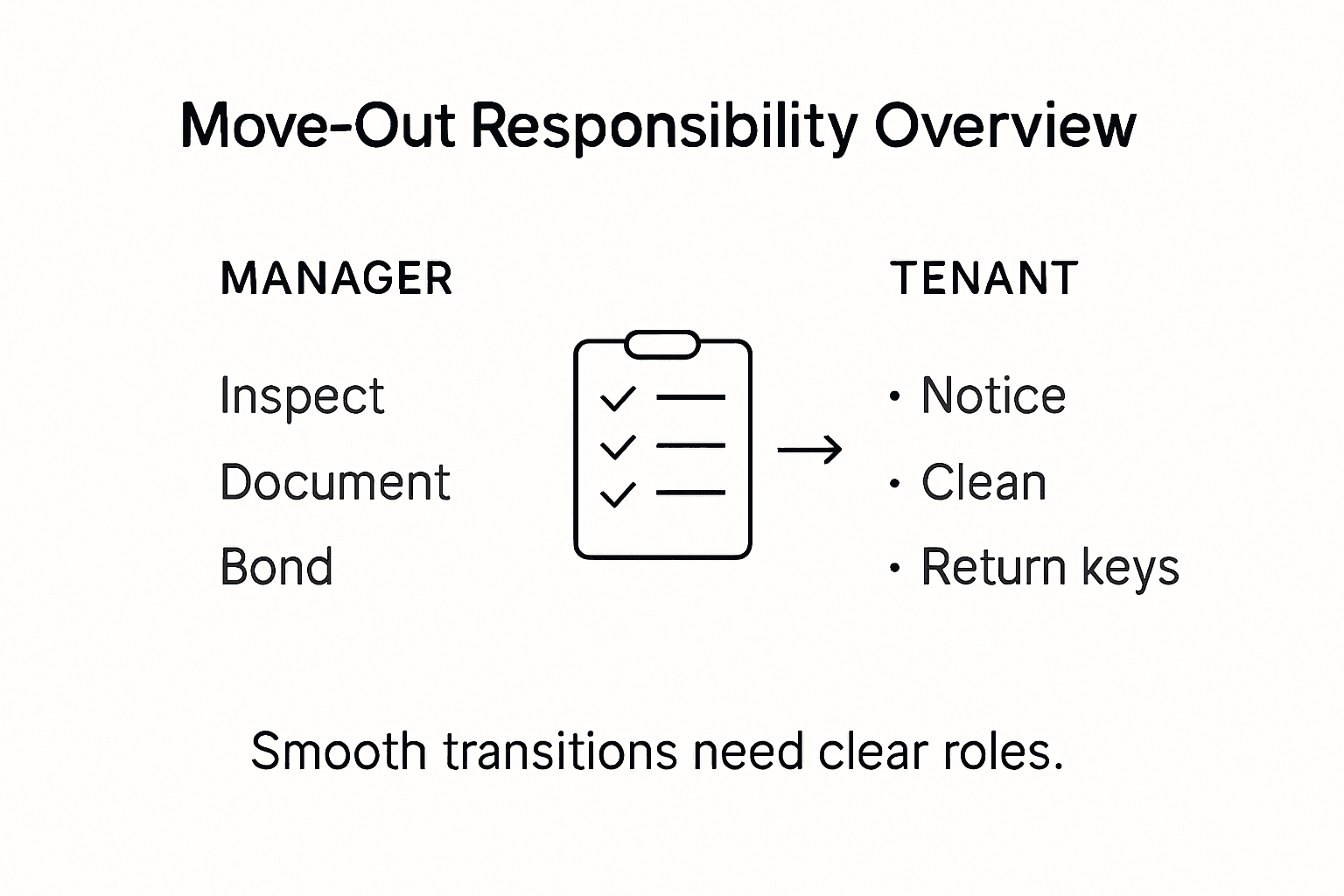
Pro tip: Develop a standardised digital checklist and documentation workflow to ensure consistent, transparent, and legally compliant tenant move-out processes.
Property managers must navigate a complex landscape of legal and operational risks that can significantly impact their professional reputation and financial stability. Understanding comprehensive risk management strategies requires a proactive approach to identifying, assessing, and mitigating potential compliance challenges across all aspects of property management.
Common mistakes in property management often stem from inadequate documentation, poor communication, and insufficient understanding of regulatory requirements. These errors can range from improper bond handling and delayed maintenance responses to incorrect lease interpretation and ineffective tenant screening processes. Property managers must develop robust systems that track critical deadlines, maintain detailed records, and ensure transparent communication with both property owners and tenants. Key risk areas include financial management, tenant privacy protection, safety compliance, and accurate record-keeping that meets state and federal regulatory standards.
Effective risk management involves implementing comprehensive digital documentation systems, conducting regular compliance audits, and staying continuously updated on changing tenancy laws and regulations. Property managers should invest in ongoing professional development, leverage technology for precise record-keeping, and develop standardised processes that minimize human error. This includes creating detailed checklists for move-in and move-out procedures, maintaining secure digital archives of all property-related documents, and establishing clear communication protocols that ensure all stakeholders are informed and protected throughout the tenancy lifecycle.
The following table summarises key risks in property management and approaches to mitigate them:
| Major Risk Area | Example Consequence | Recommended Mitigation Step |
|---|---|---|
| Inadequate Documentation | Bond disputes, legal liability | Use digital record-keeping systems |
| Poor Compliance Awareness | Fines, breach of legislation | Schedule regular regulatory training |
| Financial Mismanagement | Loss of client funds, audit failure | Implement strict trust account checks |
| Communication Failure | Tenant complaints, missed deadlines | Set clear protocols and templates |
Pro tip: Implement a quarterly compliance review process that systematically checks all documentation, financial records, and regulatory adherence to prevent potential legal and financial risks.
Navigating the complex responsibilities of tenant move-outs, including detailed exit inspections, bond processing, and seamless property transitions, can place significant pressure on property managers. The article highlights how crucial clear documentation and coordinated services are to protect landlords and tenants alike. If you are looking to ease these challenges, partnering with a professional removalist ensures efficient moving processes and reduces stress during these critical stages.

Choose Onyx Removals for comprehensive moving and relocation services tailored for residential and commercial needs in Melbourne. Our experienced team supports smooth tenant transitions by handling careful packing, timely removals, and reliable cleaning, helping property managers meet legal compliance and move-out standards. Act now to ensure your next tenant handover is seamless and hassle free by visiting Onyx Removals to get a personalised moving plan today. Discover how our full range of services can support your property management workflow and protect your investment.
Property managers are responsible for coordinating formal notice periods, conducting detailed property inspections, managing any necessary repairs, and ensuring the proper documentation for bond returns as per tenancy regulations.
During move-out inspections, property managers assess the property’s condition and document any damages through photographs and written reports to protect both tenants’ and owners’ interests.
The move-out documentation process should include a comprehensive inspection report, final rent payment reconciliations, utility disconnection confirmations, and official communication with both the outgoing tenant and property owner.
Property managers can ensure compliance by staying updated on state-specific tenancy laws, maintaining accurate records, and following established procedures for tenant transitions and bond handling.

No Related Post


