



Moving homes or offices in 2025 can seem like a mountain of chaos waiting to happen, especially with tight deadlines and competing priorities piling up. Yet, research shows that more than 70 percent of poorly managed relocations end up costing substantially more due to last-minute errors and overlooked risks. Oddly enough, the real make-or-break factor is not about having more people or money to throw at the problem. It all comes down to having a rock-solid plan and knowing which hidden pitfalls trip up most moves.
| Takeaway | Explanation |
|---|---|
| Establish a clear project framework | Define objectives, timelines, and responsibilities to guide your relocation effectively. |
| Conduct thorough risk assessments | Identify potential obstacles and develop contingency plans to facilitate a smooth transition. |
| Prioritise transparent communication | Maintain regular updates and clear documentation to support stakeholders during the relocation process. |
| Tailor strategies for residential and commercial moves | Recognise distinct needs of each type of move to ensure tailored, effective management. |
| Implement psychological and financial stress management techniques | Address emotional aspects and prepare financially to reduce anxiety during the relocation. |
Relocation project management requires a strategic approach that transforms complex moving challenges into a seamless transition. Successful relocations demand meticulous planning, precise coordination, and comprehensive understanding of the entire process.
Creating a robust relocation project framework begins with defining clear objectives and scope. Our comprehensive moving guide provides insights into structuring your project effectively. According to ProjectPractical.com, establishing a multi-stakeholder steering group is crucial for managing complex relocation initiatives.
Key elements of an effective project framework include:
The project framework serves as a blueprint that guides decision making and ensures systematic progression through each relocation phase.
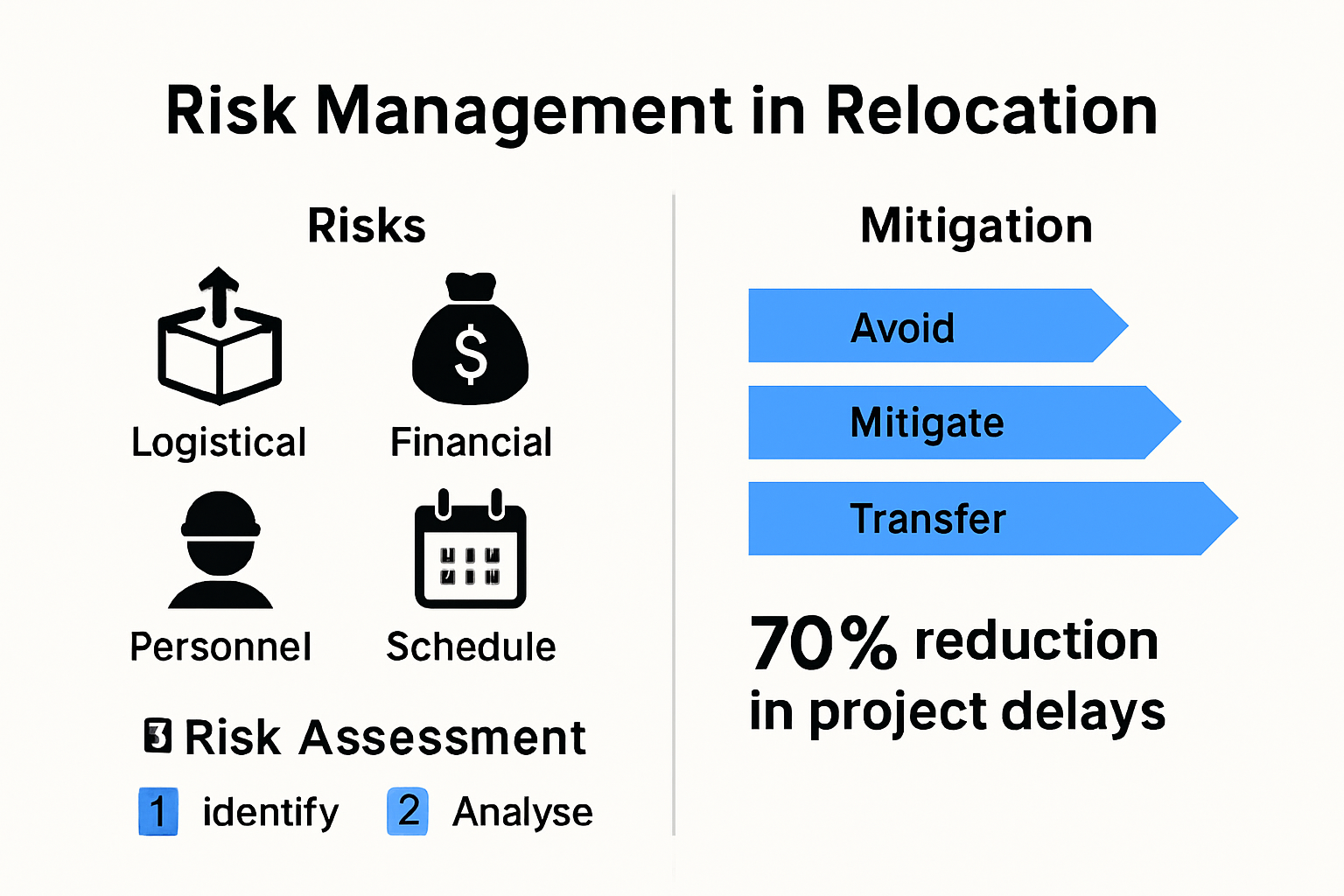
Risk management is a critical component of successful relocation project management. The Caribbean Disaster Emergency Management Agency recommends conducting thorough risk assessments to identify potential challenges before they become significant obstacles.
Effective risk mitigation involves:
Proactive risk management transforms potential disruptions into manageable adjustments, ensuring a smoother relocation experience.
Comprehensive communication stands at the heart of successful relocation project management. According to the Society for Human Resource Management, transparent and consistent communication supports stakeholders through complex transitions.
Critical communication strategies include:
By prioritizing open communication, project managers can reduce uncertainty and build confidence among all involved parties, transforming a potentially stressful experience into a well-coordinated transition.
Managing residential and commercial moves requires precision, strategic planning, and a comprehensive understanding of unique logistical challenges. Each relocation type presents distinct requirements that demand tailored approaches to ensure smooth transitions.
Residential relocations involve intricate personal dynamics and emotional considerations. Our moving services quote guide helps streamline the initial planning stages. According to the Society for Human Resource Management, successful residential moves depend on understanding individual family needs and creating flexible support mechanisms.
Key residential move management strategies include:
Effective residential move management transforms a potentially stressful experience into a structured, supportive transition that minimizes disruption and emotional strain.
Commercial moves demand a more complex, systematic approach that directly impacts business continuity. The U.S. General Services Administration emphasizes the importance of strategic planning to minimize operational disruptions during corporate relocations.
Critical components of commercial move management include:
Successful commercial relocations require meticulous coordination between multiple departments, ensuring seamless operational continuity throughout the transition process.
Effective relocation project management transcends sector-specific challenges by implementing universal best practices. Oregon State University’s Office of Space Management provides insights into developing comprehensive move strategies applicable across residential and commercial contexts.
Universal move coordination principles include:
By adopting a holistic approach that recognizes the unique challenges of different move types, project managers can design comprehensive relocation strategies that ensure smooth, efficient transitions for both residential and commercial clients.
To help you compare the unique considerations for residential and commercial moves, here is a table summarising their key differences and priorities:
| Aspect | Residential Move | Commercial Move |
|---|---|---|
| Primary Focus | Family needs, personal belongings | Business continuity, assets/equipment |
| Planning Complexity | Moderate | High (multi-department coordination) |
| Emotional Considerations | High (family transition support) | Lower, but morale factors |
| Inventory Type | Personal, sentimental items | Business equipment, tech infrastructure |
| Compliance Requirements | Minimal | Extensive (legal/regulatory) |
| Disruption Impact | Personal stress/disruption | Revenue, operations, client impact |
Specialised moving services require a nuanced approach that goes beyond standard relocation procedures. These services address unique challenges across various sectors, demanding exceptional expertise, precision, and tailored strategies.
Our comprehensive moving tips highlight the importance of strategic vendor selection. According to the Society for Human Resource Management, successful specialised moves depend on thorough vendor assessment and clear contractual expectations.
Key criteria for selecting specialised moving service providers include:
Comprehensive vendor evaluation ensures that organisations partner with providers capable of managing intricate relocation challenges effectively.
Below is a table summarising the key criteria for evaluating specialised moving vendors and the importance of each criterion:
| Vendor Evaluation Criteria | Description | Importance |
|---|---|---|
| Technical Expertise | Experience with complex moves | Essential |
| Equipment Capabilities | Access to advanced logistics/technology | High |
| Compliance Credentials | Certifications, regulatory adherence | Mandatory |
| Customisation Potential | Ability to tailor moving solutions | Highly Beneficial |
Different industries demand unique moving approaches that address their specific operational complexities. Research from ResearchGate emphasises the significance of tailored relocation strategies across various sectors.
Specialised moving considerations for different industries include:
Successful sector-specific moves require deep understanding of industry-specific requirements and potential logistical challenges.
Risk mitigation stands as a critical component of specialised moving services. Effective contingency planning involves anticipating potential disruptions and developing comprehensive backup strategies.
Essential risk management approaches include:
By implementing robust risk management strategies, specialised moving services can minimise potential disruptions and ensure seamless transitions across complex relocation scenarios.
Relocation can be an emotionally and logistically challenging experience that tests even the most organised individuals. Understanding common pitfalls and implementing strategic stress reduction techniques can transform a potentially overwhelming process into a manageable transition.
Our comprehensive moving tips provide essential guidance for navigating potential obstacles. According to ProjectPractical.com, successful relocations depend on defining clear SMART objectives and establishing detailed project plans.
Common relocation mistakes to avoid include:
Proactive identification of potential challenges allows individuals and organisations to develop robust mitigation strategies that minimise disruptions and reduce overall stress levels.
The Society for Human Resource Management emphasises the critical importance of comprehensive communication and emotional support during relocation processes. Effective stress management involves addressing both logistical and psychological dimensions of moving.
Strategies for managing relocation stress include:
Recognising that relocation is not just a physical transition but an emotional journey helps individuals develop more resilient approaches to change.

CapRelo provides insights into comprehensive stress reduction strategies that extend beyond traditional moving approaches. Financial and logistical preparation can significantly alleviate relocation anxiety.
Key stress reduction techniques include:
By approaching relocation as a holistic process that considers financial, emotional, and logistical dimensions, individuals can transform a potentially stressful experience into a structured and manageable transition.
To start planning a relocation project for 2025, establish a clear project framework by defining objectives, timelines, and responsibilities. Conduct thorough risk assessments to identify potential challenges and develop a communication strategy for stakeholders.
Effective risk management during a relocation involves identifying potential logistical challenges, developing contingency plans, and creating communication protocols for rapid problem resolution. This proactive approach can help minimise disruptions.
Residential moves focus on family needs and personal belongings, while commercial moves prioritise business continuity and minimising operational downtime. Each type requires tailored strategies for successful execution.
To reduce stress during a move, establish clear communication channels, create realistic expectations, and develop support networks. Implementing budgeting plans and securing appropriate insurance coverage can also alleviate financial and logistical anxieties.
Moving your business in 2025 can feel like an uphill battle. The risk of cost overruns, stressful decisions and logistical confusion is real when you do not have the right project management plan in place. As highlighted in our article, challenges like last-minute errors, lack of clear frameworks and communication obstacles can turn any move into a headache. You want a seamless transition that protects your team and your bottom line. That is where expertise and planning truly make a difference. Discover how our dedicated business relocation services at Onyx Removals transform stressful projects into smooth success stories.
Let our experienced professionals handle the details so you can stay focused on what matters. We provide detailed project frameworks, risk mitigation and tailored communication for every move. Get started with a reliable partner that knows exactly how to deliver a seamless relocation for businesses across Melbourne. Visit Onyx Removals now to request your personalised move plan and secure your spot for 2025.

No Related Post


