


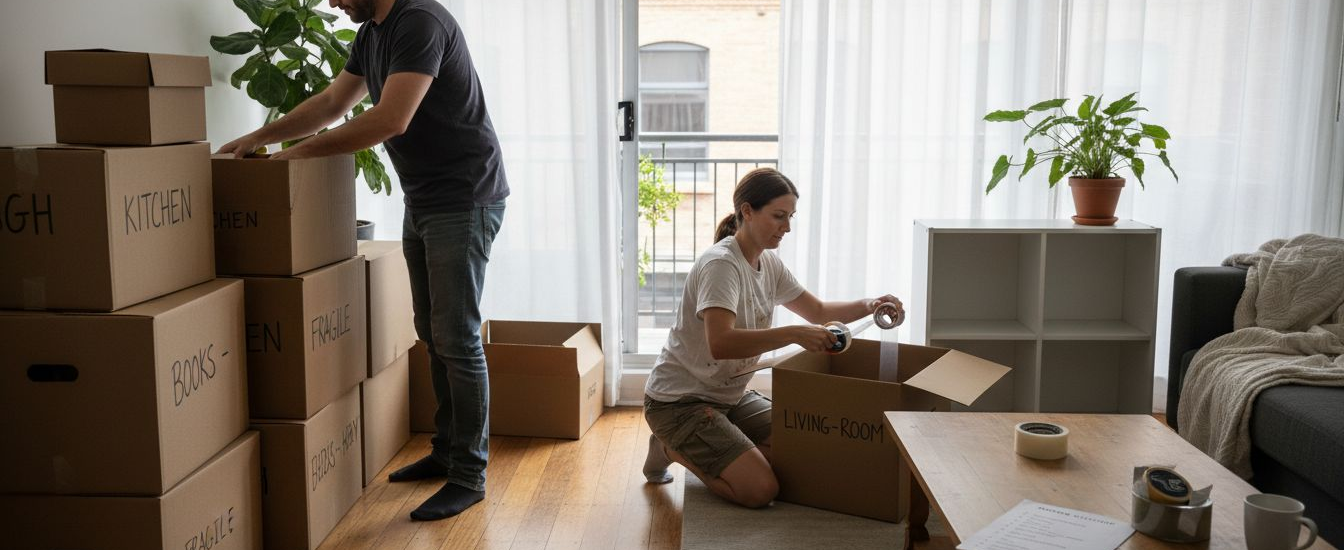
Moving house ranks among life’s most stressful events, and nothing compounds that anxiety faster than discovering your belongings damaged because you chose flimsy packing boxes. Melbourne movers face unique challenges with varying property types, from compact city apartments to sprawling suburban homes, each demanding different packing strategies. The right removal packing boxes transform chaotic relocations into organised transitions, protecting everything from delicate glassware to bulky furniture. This guide walks you through selecting and using removal packing boxes that suit your specific moving needs, ensuring your possessions arrive safely at your new Melbourne home.
| Point | Details |
|---|---|
| Correct box sizes matter | Selecting appropriate dimensions protects items and prevents damage during transport |
| Quality equals security | High-grade materials withstand handling and stacking throughout the moving process |
| Clear labelling saves time | Marking boxes with contents and rooms streamlines unpacking at your destination |
| Specialised boxes for fragiles | Purpose-built containers with padding reduce breakage risk for delicate belongings |
| Sustainable options exist | Recyclable cardboard and reusable crates minimise environmental impact |
Melbourne removalists rely on specific box categories designed for different household items. Removal packing boxes come in various sizes from small suitable for books to large for bulky items, each engineered to handle particular weight loads and contents. Small boxes typically measure 30x30x30cm and work brilliantly for heavy items like books, tools, or kitchen appliances where compact size prevents overloading. Medium boxes around 40x30x30cm suit kitchenware, toys, and bathroom supplies, striking the perfect balance between capacity and manageable weight.
Large boxes measuring 50x40x40cm accommodate lightweight bulky items such as bedding, pillows, cushions, and lampshades. Wardrobe boxes feature built-in hanging rails, letting you transfer clothes directly from your closet without folding, which saves enormous time and keeps garments wrinkle-free. Specialty boxes include dish packs with cell dividers for glassware, mirror cartons with reinforced corners, and picture boxes adjustable to various frame sizes.
Pro Tip: Calculate one small box per bookshelf, two medium boxes per kitchen cupboard, and three large boxes per bedroom as a starting estimate for your packing needs.
Choosing correct box sizes reduces damage risk significantly because properly sized containers prevent items shifting during transit. Professional packing services in Melbourne typically use double-walled cardboard boxes for added strength, particularly for items travelling longer distances or requiring storage. Single-walled boxes suffice for lightweight items or short local moves, but double-walled construction provides superior stacking strength when movers load trucks efficiently.
Common box types by room:
Box strength ratings matter more than many movers realise. The edge crush test (ECT) rating indicates how much weight boxes withstand when stacked, with 32 ECT handling around 30kg and 44 ECT supporting 50kg. Understanding these specifications helps you match box strength to contents weight, preventing catastrophic collapses mid-move.
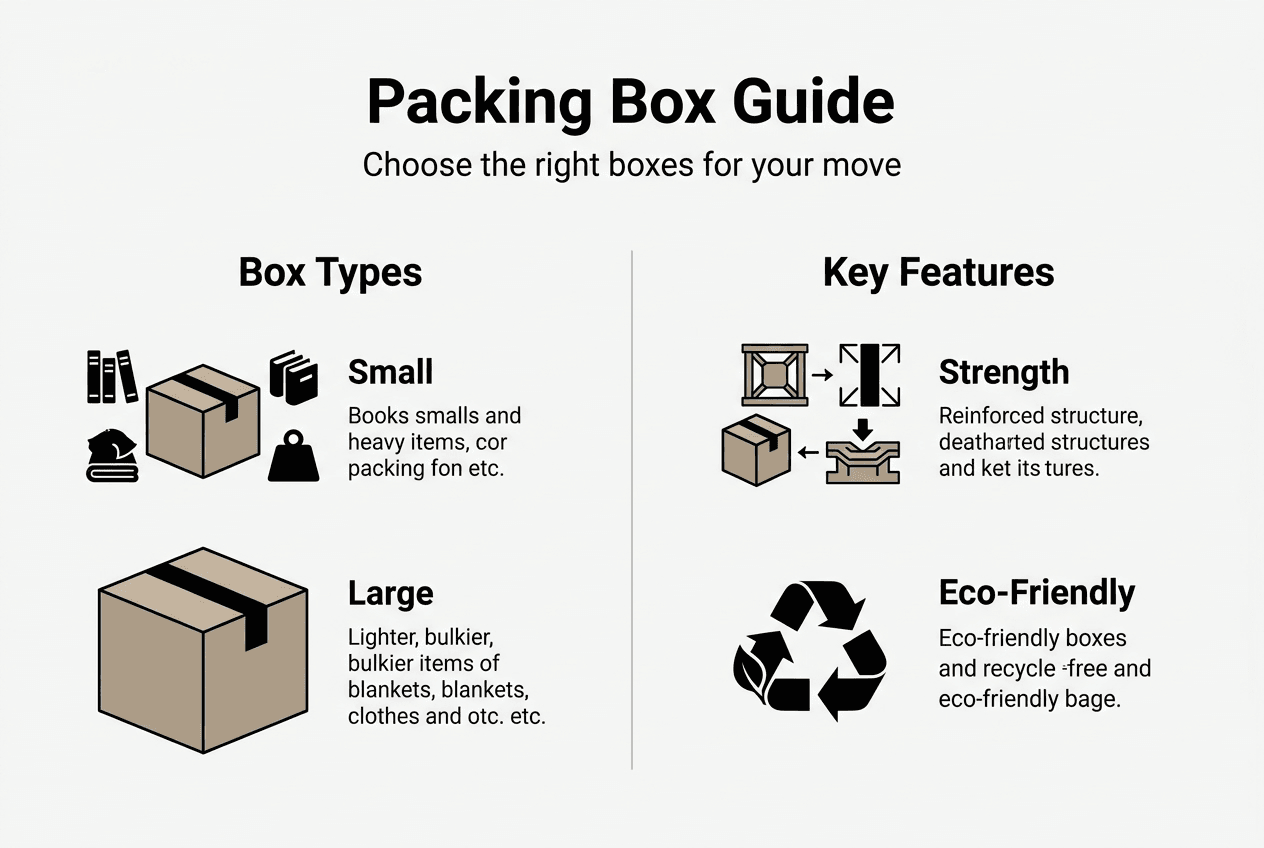
| Box Type | Dimensions (cm) | Best For | Weight Limit |
|---|---|---|---|
| Small | 30x30x30 | Books, tools, canned goods | 20kg |
| Medium | 40x30x30 | Kitchen items, toys, files | 25kg |
| Large | 50x40x40 | Bedding, pillows, soft items | 15kg |
| Wardrobe | 50x60x100 | Hanging clothes | 20kg |
| Dish pack | 45x45x30 | Glassware, china | 30kg |
Assessing your inventory room by room provides accurate estimates for box quantities and types needed. Walk through your Melbourne home with a notepad, cataloguing items by category rather than simply counting possessions. This method reveals patterns, like discovering you own 47 coffee mugs requiring multiple dish packs, or realising your book collection demands 15 small boxes.
Follow this selection process:
Prioritising durable, double-walled boxes for heavy items prevents mid-move disasters. High-quality packing boxes made from durable materials improve security and reduce damage during moves, particularly for Melbourne’s varying weather conditions where moisture can weaken inferior cardboard. Inspect boxes before purchasing, checking corners for reinforcement and ensuring flaps close flush without gaps.
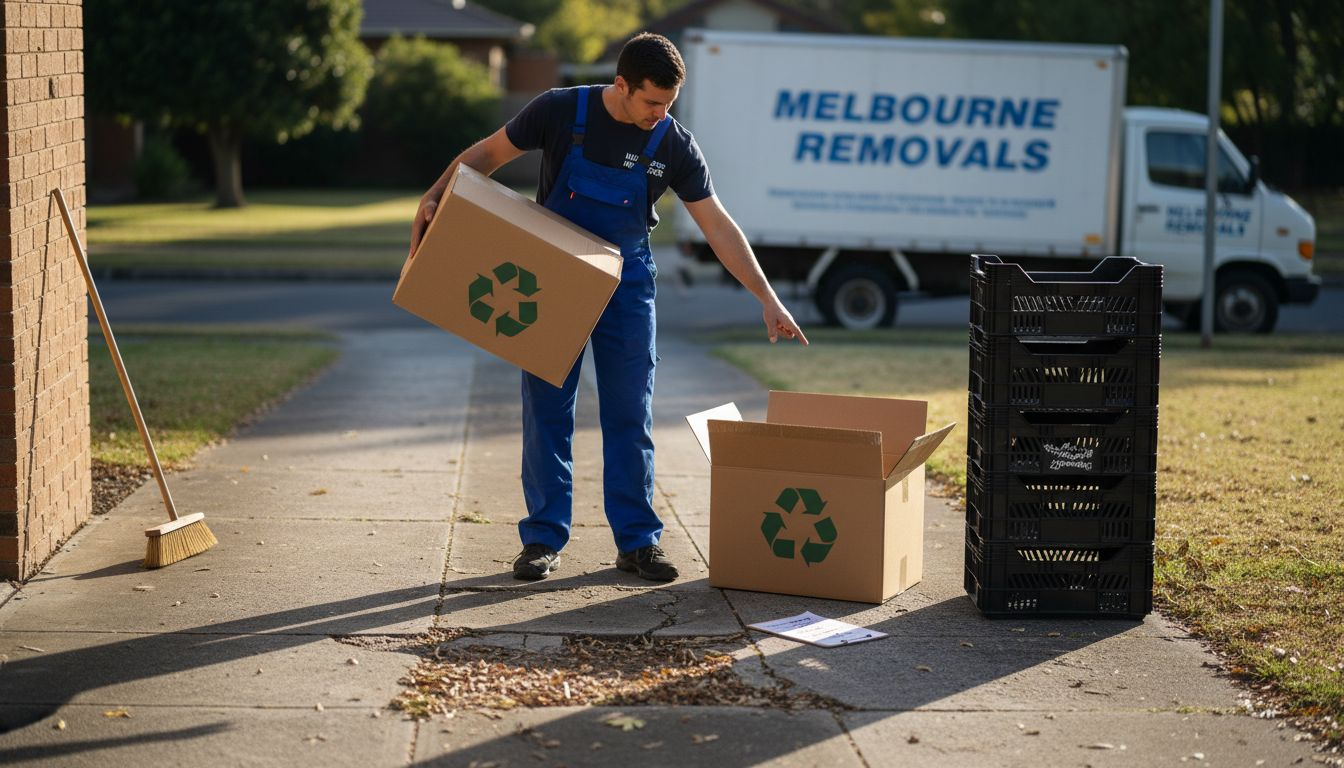
Eco-friendly options increasingly appeal to environmentally conscious Melbourne movers. Recyclable cardboard boxes break down naturally, whilst reusable plastic crates offer durability for multiple moves or storage needs. Some removal companies provide rental crate programmes, delivering sturdy containers you return after unpacking, eliminating waste entirely.
Pro Tip: Buy boxes from removalist suppliers rather than retail stores because professional-grade boxes feature stronger construction and standardised sizes that stack efficiently in moving trucks.
Buying slightly more boxes than calculated prevents last-minute shortages that derail packing schedules. Running out of boxes mid-pack forces emergency store runs, disrupts your systematic approach, and often results in purchasing mismatched sizes that pack inefficiently. Professional movers typically supply quality boxes as part of comprehensive service packages, ensuring consistency and eliminating guesswork.
Box quality indicators:
Starting with lighter and less-used items builds momentum whilst teaching you efficient packing techniques before tackling challenging belongings. Begin with spare bedrooms, storage areas, or seasonal items you won’t need before moving day. This approach lets you refine your system, discovering optimal cushioning methods and labelling strategies on non-essential items.
Follow this packing sequence:
Using padding materials such as packing paper and bubble wrap prevents items colliding inside boxes during transit. Wrap each fragile item individually, creating protective cocoons that absorb shocks. For dishes, place them vertically like records rather than stacked flat, as this orientation distributes weight more effectively and reduces pressure points.
Do not overload boxes beyond recommended weight limits, even if items fit physically. Heavy boxes become impossible to lift safely, increasing injury risk and making professional movers refuse to transport them. The 20kg rule applies universally: if you struggle lifting a box comfortably, it’s too heavy regardless of size.
“Proper packing techniques like layering and cushioning prevent damage in transit, with strategic placement reducing breakage rates by up to 80% compared to haphazard packing methods.”
Sealing boxes securely with quality tape ensures they survive handling throughout the moving process. Use tape specifically designed for packing, avoiding cheap alternatives that peel under stress. The H-pattern method reinforces both seams and centre, creating three secure tape lines that prevent boxes bursting open.
Labelling best practices:
Label boxes clearly with contents and room destination immediately after packing, not later when details blur together. Detailed labels transform unpacking from archaeological excavation into systematic organisation. Include specific contents like “kitchen, everyday dishes” rather than vague descriptions like “kitchen stuff” that provide zero useful information.
Avoiding weak or reused boxes without structural integrity prevents catastrophic failures mid-move. Boxes deteriorate with each use as cardboard fibres compress and weaken. That free box from behind the supermarket might seem economical, but its previous contents, handling, and storage conditions remain unknown. Investing in new boxes eliminates uncertainty and provides peace of mind.
Don’t mix heavy and fragile items in the same box because weight distribution becomes impossible to manage safely. Heavy items crush delicate ones, whilst the combined weight makes boxes difficult to handle carefully. Separate categories maintain predictable weights and let movers adjust their handling approach accordingly.
Mistakes that damage belongings:
Pro Tip: Label moving boxes on arrival at your new home with tick marks as you unpack them, making it easy to identify which boxes still need attention.
Refrain from leaving empty spaces inside boxes unfilled because items shift during transport, colliding and potentially breaking. Crumpled packing paper costs pennies but prevents hundreds of dollars in damage. Fill every gap, ensuring contents fit snugly without excessive pressure that might crush delicate items.
Do not seal boxes that might need accessing during the move, particularly those containing essential items for your first night. Pack a separate “open first” box with toiletries, phone chargers, medications, and basic kitchen supplies. Keep this box with you rather than loading it on the truck, ensuring immediate access to necessities.
Overpacking boxes or using damaged boxes increases risk of item breakage and delays unpacking, creating frustration precisely when you need efficiency most. Damaged boxes collapse unexpectedly, spilling contents and potentially causing injuries. The minor savings from reusing questionable boxes pale against replacement costs for broken belongings or medical bills from lifting injuries.
Navigating packing decisions becomes simpler when you partner with experienced professionals who handle Melbourne relocations daily. Onyx Removals provides comprehensive residential removal services including expert packing with quality materials suited to your specific belongings. Our team understands Melbourne’s diverse housing stock, from heritage terraces to modern apartments, adapting packing strategies to each property’s unique challenges.
Access to professional-grade packing and unpacking services eliminates guesswork about box quantities, sizes, and packing techniques. We supply all necessary materials and handle the entire process efficiently, letting you focus on other moving tasks. Our specialists pack systematically, room by room, with detailed labelling that makes unpacking straightforward.
Simplify your move and reduce stress with professional assistance that includes specialised moving equipment and techniques developed through thousands of successful relocations. Whether you need full-service packing or just want quality boxes delivered to your door, Onyx Removals tailors solutions to your budget and timeline.
Small boxes work best for books, tools, and heavy kitchen items like canned goods, preventing overloading. Medium boxes suit kitchen utensils, small appliances, and bathroom supplies. Large boxes accommodate lightweight bulky items including bedding, pillows, and cushions. Wardrobe boxes with hanging rails keep clothes wrinkle-free during transit.
Use specialised fragile item boxes with cell dividers for glassware and reinforced corners for mirrors. Wrap each item individually with bubble wrap or packing paper, creating protective layers. Fill empty spaces inside boxes with crumpled paper to prevent movement during transport. Double-boxing particularly valuable or delicate items provides extra protection.
Yes, recyclable cardboard boxes remain the most common sustainable option, breaking down naturally after use. Reusable plastic crates offer durability for multiple moves whilst eliminating waste. Many Melbourne removalists provide rental programmes for plastic crates. Choosing eco-friendly moving options reduces environmental impact significantly whilst maintaining protection standards.
A typical two-bedroom Melbourne apartment requires 30 to 40 boxes, whilst a three-bedroom house needs 50 to 70 boxes. Add 20% to your estimate for unexpected items and packing inefficiencies. Professional movers provide accurate estimates after assessing your inventory. Starting with fewer boxes and ordering more as needed prevents waste whilst ensuring adequate supply.
Begin packing six weeks before moving day, starting with storage areas and items you rarely use. Pack one room every few days to maintain steady progress without overwhelming yourself. Leave essential items until the final week, packing them last for easy access. Professional packing services complete entire homes in one to two days, ideal for time-constrained moves.

No Related Post


