


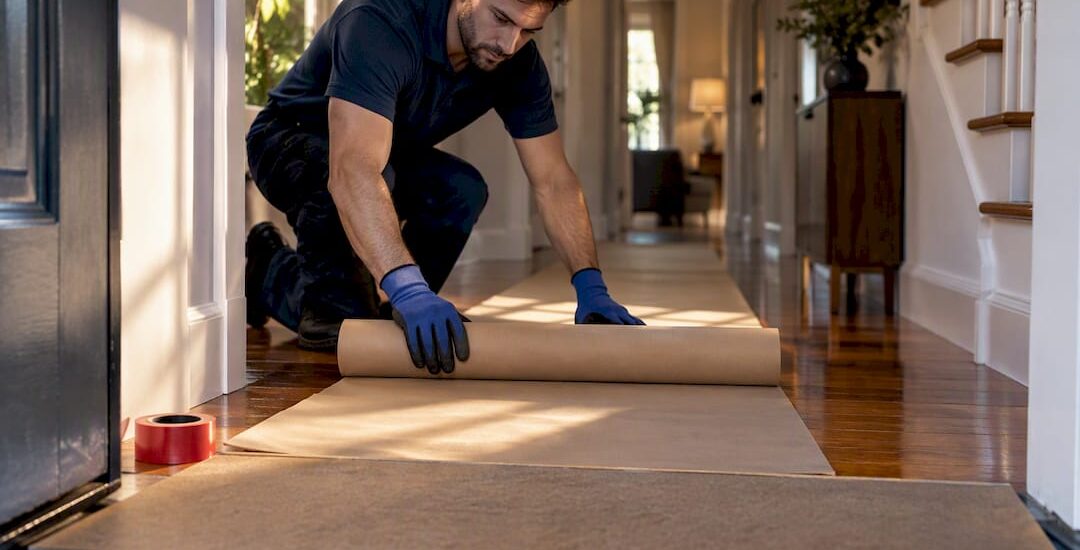
Floor protection prevents physical damage to surfaces and reduces slip and trip risk during moves and renovations. Runners, hardboard, cardboard and adhesive strips shield timber, tile and carpet from scuffs, gouges and moisture while keeping walkways safe underfoot. Done properly, it saves on repair bills and keeps a move or renovation running without accidents or delays.
TL;DR:
- Rigid boards like ram board are essential for protecting floors from repeated wheeled loads and heavy furniture during long or high-traffic moves.
- Runners and textile covers are suitable for delicate finishes such as hardwood or engineered timber, especially under continuous foot traffic.
- Moisture barriers paired with non-slip underlays are critical in wet trades like plumbing or painting to prevent moisture damage and slips.
- Proper sequencing, edge securing, and timely removal of protection are crucial to prevent trip hazards and underlying moisture entrapment.
- Professionals should pre-plan and confirm responsible protection handling, especially for valuable or heavily trafficked surfaces, to minimize damage risk.
A scratched hardwood floor can mean a full sand and refinish. A cracked tile often means sourcing a matching replacement and paying for reinstallation. Set against that, a roll of temporary floor paper or a sheet of hardboard costs a fraction of either repair, which is why most experienced movers treat protection as standard practice rather than an optional extra.
Safe Work Australia frames floor protection as more than a cosmetic measure: it is a recognised interim risk control for slip, trip and fall hazards when higher order controls, such as redesigning a walkway or removing an obstruction entirely, are not practical during a short term job like a move.
Floor protection is classed as an interim risk control by Safe Work Australia, meaning it works alongside housekeeping and route planning rather than replacing them.
Protection becomes essential rather than optional in a few situations: high traffic corridors during a multi-room move, wet trades such as painting or plumbing that introduce moisture, and any job involving heavy wheeled equipment like trolleys or pallet jacks that concentrate load on a small area.
Done well, protection delivers a few clear outcomes:
Every surface fails in its own way under pressure, and knowing the failure mode helps you choose the right cover.
The common thread is that point loads, moisture and repeated friction do most of the damage, which is why the right material choice depends on which of those three risks dominates on a given job.
No single material handles every job, so most professional moves combine two or three depending on the surface and the traffic expected.
Pro Tip: Where wheeled traffic is expected, lay rigid boards over a continuous run rather than short strips of cardboard, which crease and shift under rollers.
Match the material to the job by running through four questions before you lay anything down: how sensitive is the finish, is there a moisture risk, what load and wheeled traffic is expected, and how long will the area stay exposed.
A few decision rules simplify most jobs:
Three quick scenarios show how this plays out. A small apartment move with a narrow hallway usually only needs runners on the main path and corner guards on doorframes. An office fit out with wheeled trolleys moving desks and filing cabinets calls for rigid board across the whole route, since repeated castor traffic will crease anything lighter. A renovation with painters and plumbers on site needs a moisture barrier under any board, because spills and dripping tools are a near certainty over a multi day job.
Getting protection right is as much about sequencing as material choice. WorkSafe Queensland notes that a height change of just 1 centimetre at a join or transition can be enough to trip someone, so the installation process matters as much as what you lay down.
Pro Tip: A covering that creates a ridge or lip is often more hazardous than the bare floor, so check every transition point before crews start carrying.
This staged approach lines up with guidance from SafeWork NSW, which places coverings as one control among several and stresses that housekeeping and lighting still do most of the work in preventing falls. For more detail on managing routes during a household move, see our guide to moving large furniture.
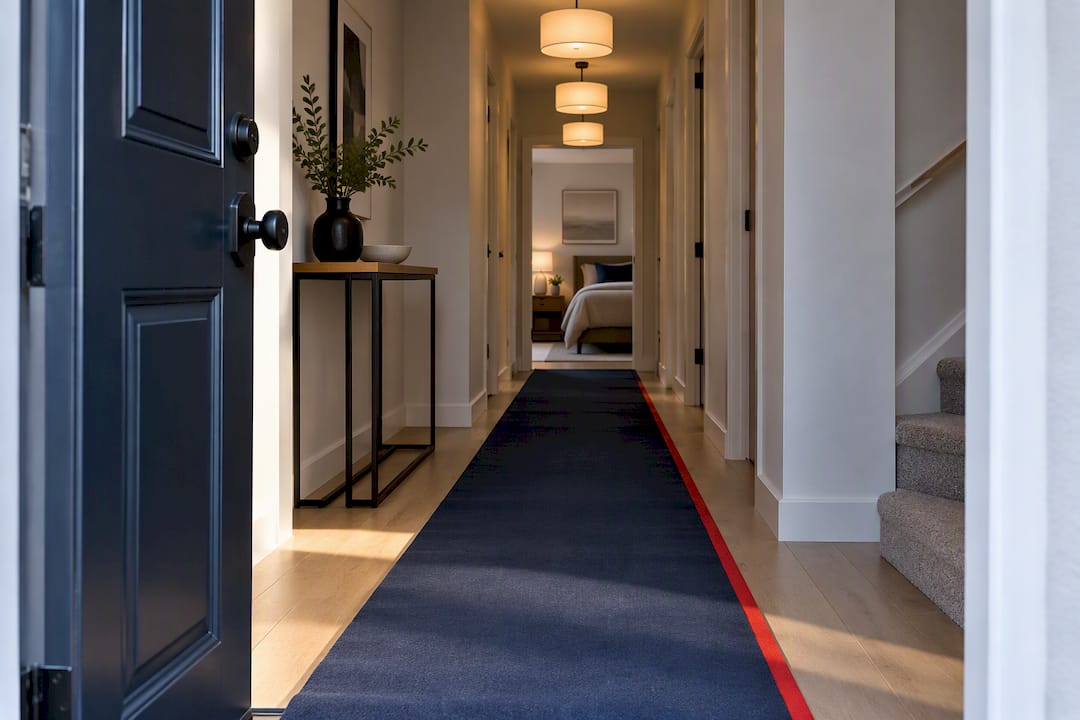
Experienced crews favour carrying heavy items over sliding them, even across protected floors, because sliding concentrates pressure on a single point and that is exactly where dents and finish failure start. Protective covers are a backup, not a substitute for careful handling.
Cost benefit thinking applies here too: robust board protection earns its keep on high value floors or jobs with heavy repeated traffic, while lighter temporary covers are fine for a quick, low risk task.
A sheet of hardboard costs far less than refinishing a floor, and that arithmetic rarely changes. Simple jobs with light traffic suit DIY protection using runners and cardboard, but heavy furniture, wheeled equipment or valuable finishes are worth handing to professionals who plan the layout before the first item moves.
— Dinshaw
Protecting floors properly takes planning, the right materials on hand, and crews who know when to carry instead of slide. Onyx Removals builds this into residential and commercial moves across Melbourne, alongside Office and House Packing & Unpacking, furniture assembly and dismantling, and end of lease cleaning once the move is done.
| Service | What it covers |
|---|---|
| Office and House Packing & Unpacking | $109 per hour, booked via the pricing page |
| Residential and Commercial Moves | Protective handling as part of the move, detailed on the services page |
| Cleaning Services | Post move cleaning, detailed on the cleaning services page |
If you are planning a move and want floor protection handled as part of the job rather than as an extra step, get a quote from Onyx Removals and ask about protection options when you book.
Movers typically lay rigid boards such as ram board or hardboard along heavy traffic routes and use runners or textile covers on delicate finishes like hardwood. Edges are taped down and joins are staggered to avoid creating trip hazards, in line with guidance from WorkSafe Queensland on transition heights.
Floor protection prevents scratches, dents and moisture damage that would otherwise require costly repairs or refinishing. It also reduces slip and trip risk during a disrupted work site, which Safe Work Australia recognises as a legitimate interim control alongside good housekeeping.
Clear the route first, then lay protection matched to the surface: runners for hardwood, rigid board wherever trolleys or heavy furniture will pass repeatedly, and a moisture barrier if any wet trades are involved. Secure every edge and remove the covering promptly once the move is finished to avoid it becoming its own hazard.
Non adhesive carpet runners or textile covers laid flat along the main path work best, since they resist soiling and matting without leaving residue. Secure the edges firmly, because a loose runner edge is itself a trip hazard, a risk highlighted in slip and trip guidance from SafeWork NSW.

No Related Post


