



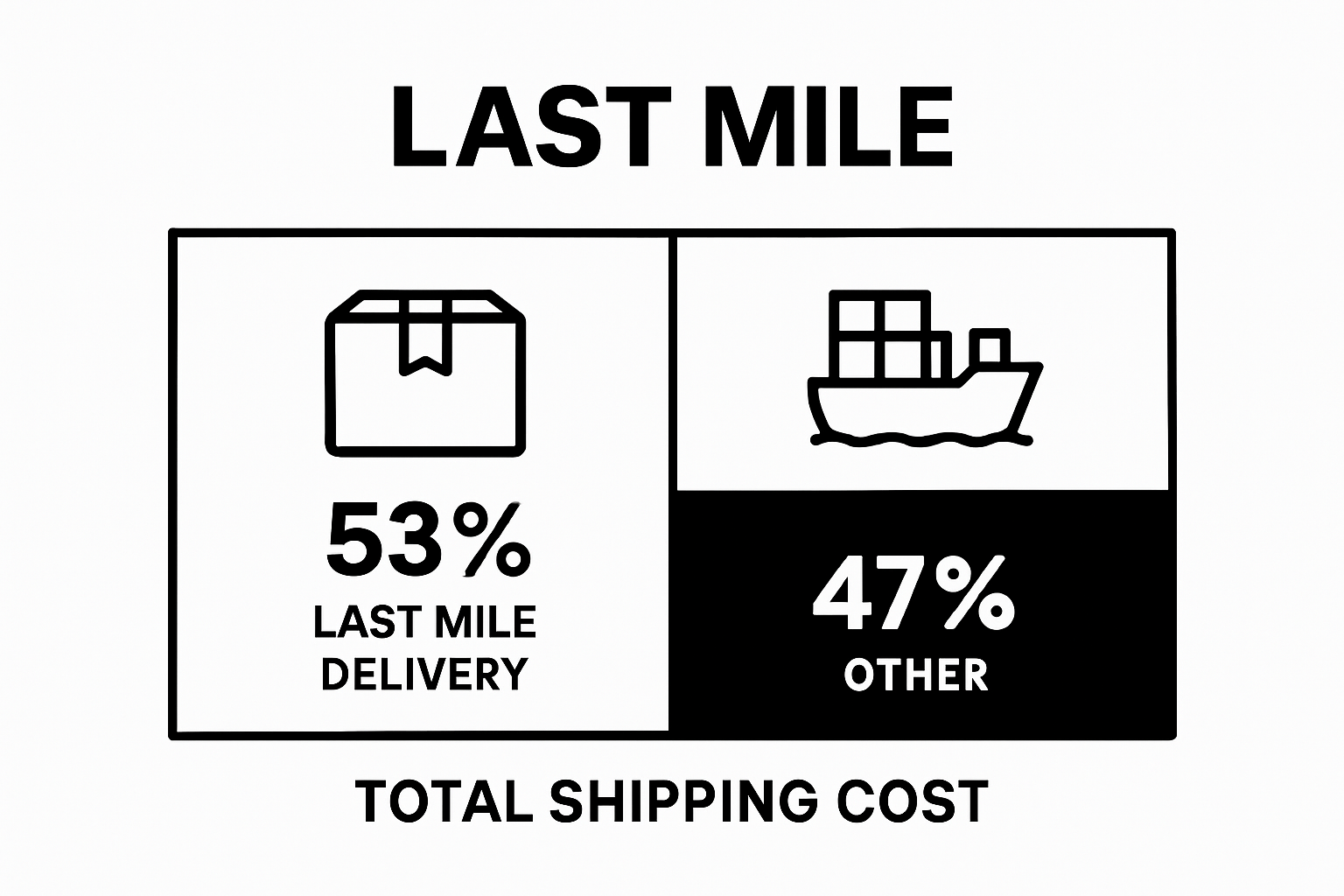
Getting a parcel to your door seems simple, right? Most of us don’t realise that last mile delivery accounts for around 53% of total shipping expenses and that’s just to get your stuff from depot to doorstep. Sounds wild when you think the long haul is the easy bit. The real story is that this short stretch of the journey is actually the most complex part of modern logistics and it decides whether your online order arrives on time or not.
| Takeaway | Explanation |
|---|---|
| Last mile delivery is crucial for logistics. | It is the final step in shipping, directly impacting customer satisfaction and costs. |
| Substantial costs are involved in last mile delivery. | Last mile delivery accounts for about 30% of total shipping expenses, influencing business financials significantly. |
| Technological advancements drive delivery efficiency. | Innovations like AI, drones, and route optimization are essential for improving last mile delivery performance. |
| Sustainability is becoming a priority. | Urban delivery solutions are shifting towards environmentally friendly practices to reduce carbon footprints and congestion. |
| Balancing customer expectations and operational costs is essential. | Businesses must manage the trade-off between delivering fast service and maintaining profit margins. |
Last mile delivery represents the critical final stage of the shipping process where goods complete their journey from a transportation hub to the end customer’s doorstep. In our increasingly digital world, this seemingly simple step has become a complex and pivotal element of modern logistics.
Last mile delivery is essentially the final leg of a product’s transportation journey. Imagine a package travelling hundreds or thousands of kilometres across different transportation networks, only to face its most challenging segment in the last few kilometres to your home or business. This concluding phase is where most logistical complexities and expenses occur.
The process involves multiple intricate steps:
According to Transport for NSW, urban freight systems like last mile delivery are crucial for supporting daily economic activities. They represent approximately 30% of total shipping costs, making them a significant financial consideration for businesses and consumers alike.
In Australia, research from the University of the Sunshine Coast highlights the massive scale of this challenge. With 5.6 million households making monthly online purchases and 161 billion parcels delivered worldwide in 2022, the last mile delivery segment has become increasingly complex and resource intensive.
Key challenges in last mile delivery include:
Understanding last mile delivery helps consumers and businesses appreciate the intricate logistics behind seemingly simple package arrivals, revealing the remarkable coordination required to get products from warehouses directly to our doorsteps.
In the evolving landscape of global commerce, last mile delivery has emerged as a critical component that can make or break customer satisfaction, business profitability, and environmental sustainability. What was once a straightforward transportation challenge has transformed into a sophisticated strategic priority for businesses worldwide.
Last mile delivery represents more than just moving packages. It is a complex economic ecosystem with significant financial implications. Businesses invest substantial resources into optimising this final delivery stage because it directly influences customer experience, brand reputation, and operational costs.
The economic significance becomes clear when examining key metrics:
According to Austroads’ research on supply chain visibility, emerging technologies are revolutionising last mile delivery. Advanced tracking systems, route optimization algorithms, and real-time data analytics are enabling businesses to create more efficient, responsive delivery networks.
Innovative approaches are reshaping traditional logistics models:
Beyond economic considerations, last mile delivery plays a crucial role in urban sustainability. As cities become more congested and environmental concerns intensify, the logistics industry must develop strategies that reduce carbon emissions and minimize traffic impact.
The push towards greener delivery solutions includes:
By understanding and investing in sophisticated last mile delivery strategies, businesses can simultaneously improve customer satisfaction, reduce operational costs, and contribute to more sustainable urban transportation ecosystems.
Last mile delivery represents a complex orchestration of logistics, technology, and human coordination. From the moment an online order is placed to its final arrival at a customer’s doorstep, multiple interconnected systems work seamlessly to ensure efficient product transportation.
The last mile delivery process involves several critical stakeholders working in synchronised collaboration. These participants range from global logistics corporations to local courier services, each playing a unique role in the transportation network.
Key players in the delivery ecosystem include:
According to Transport for NSW’s Last Mile Toolkit, urban freight management requires sophisticated technological infrastructure. Advanced routing algorithms, GPS tracking, and real-time data analytics enable precise package movement and optimize delivery efficiency.
The technological framework supporting last mile delivery encompasses:
Modern last mile delivery is increasingly focused on environmental sustainability and operational efficiency. Companies are rapidly adopting innovative approaches to reduce carbon emissions and minimize urban congestion.
Sustainable delivery strategies include:
These interconnected processes transform last mile delivery from a simple transportation task into a sophisticated, technology-driven service that meets the complex demands of modern consumers and businesses.
Last mile delivery faces numerous complex challenges that test the limits of logistical innovation, technological capability, and operational efficiency. These obstacles range from economic constraints to environmental considerations, creating a multifaceted landscape that demands continuous strategic adaptation.
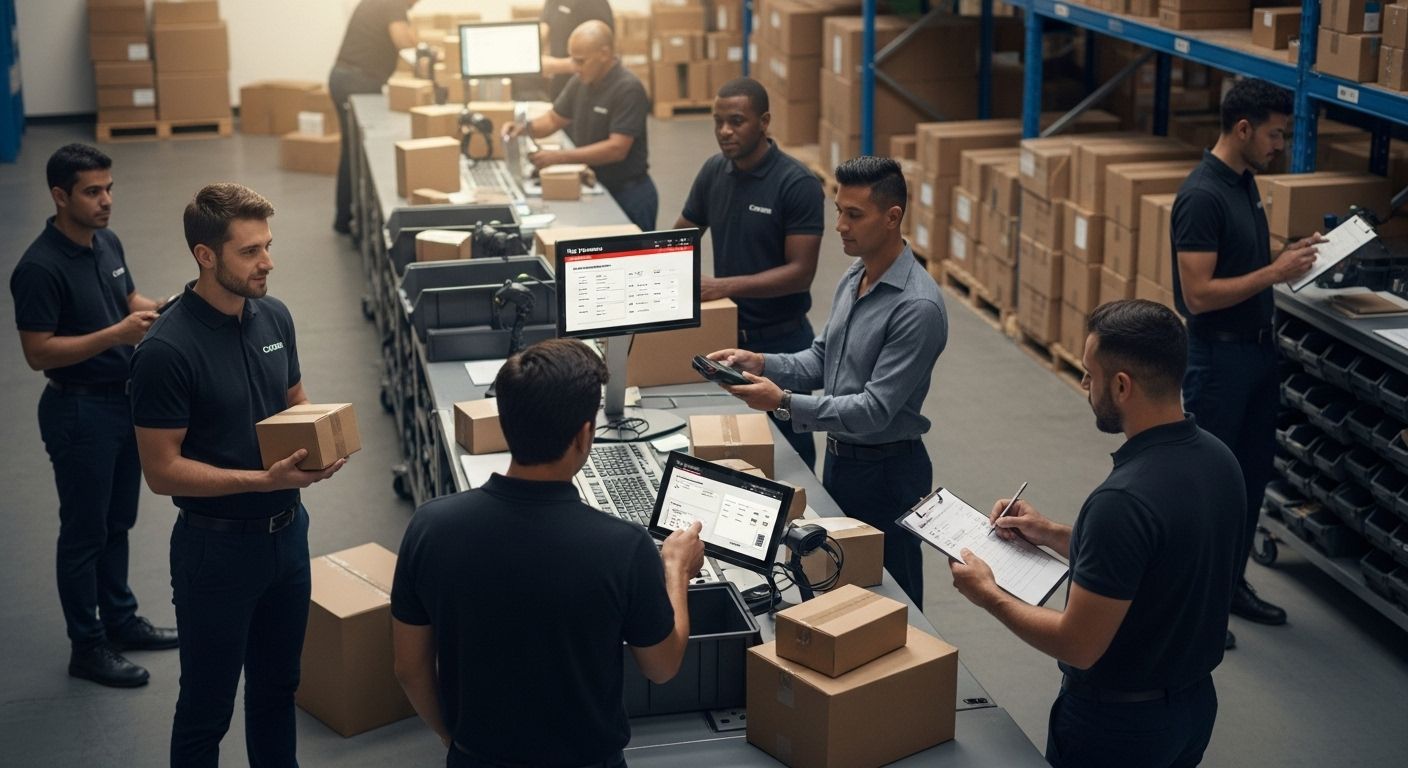
The economic challenges of last mile delivery are profound and increasingly complex. Businesses must navigate a delicate balance between customer expectations and operational expenses, with the final delivery segment representing the most financially challenging portion of the shipping process.
Key economic challenges include:
Technological integration presents another significant challenge in last mile delivery. Companies must continuously invest in advanced systems that enable real-time tracking, route optimization, and customer communication while managing increasingly sophisticated delivery networks.
Operational complexities encompass:
Urban environments pose unique challenges for last mile delivery. Congested streets, limited parking, strict environmental regulations, and complex zoning requirements create significant operational barriers for logistics providers.
Environmental and urban challenges involve:
For businesses looking to maintain professional logistics standards, understanding and addressing these challenges is crucial. Successful last mile delivery requires a holistic approach that combines technological innovation, strategic planning, and adaptive operational models.
To clarify the most significant hurdles facing last mile delivery, the table below categorises the types of challenges with concise examples for each.
| Challenge Category | Description | Example Issues |
|---|---|---|
| Economic and Cost Management | Financial pressures from high costs and customer demands | High per-package costs, free shipping demands |
| Technological and Operational Complexities | Managing advanced, integrated systems and diverse network operations | Platform integration, fleet management |
| Urban Infrastructure and Environmental | Navigating city-specific barriers and meeting sustainability expectations | Urban congestion, carbon emissions |
The landscape of last mile delivery is rapidly transforming, driven by technological innovation, changing consumer expectations, and urgent environmental imperatives. What was once a straightforward transportation challenge is now evolving into a sophisticated, intelligent ecosystem of logistics and customer service.
Emergent technologies are fundamentally reshaping how goods are transported and delivered. Artificial intelligence, robotics, and advanced data analytics are creating unprecedented opportunities for more efficient, responsive, and personalized delivery experiences.
Key technological innovations include:
According to Transport for NSW’s microhubs research, urban delivery systems are increasingly focusing on reducing environmental impact. By 2030, projected delivery traffic emissions could increase by 32%, making sustainable strategies crucial for long term logistics planning.
Environmentally conscious delivery approaches feature:
Future last mile delivery models are transitioning from transactional services to holistic, personalized customer experiences. Advanced technologies enable unprecedented levels of flexibility, transparency, and customization in product delivery.
Emerging customer experience trends include:
These transformative trends demonstrate that last mile delivery is no longer just about moving packages from point A to point B, but creating intelligent, sustainable, and customer centric transportation ecosystems.
If organising the last mile of your move feels overwhelming, you are not alone. The article above highlights how last mile delivery is actually the most complex and costly stage in modern logistics, creating uncertainty and stress for many. This is particularly true when trying to balance reliable timing, safe handling of your belongings, and affordable service. Onyx Removals addresses these pain points every day through tailored moving solutions and transparent communication.
Let our local Melbourne team turn your stressful last mile challenges into a seamless experience. With Onyx Removals, you get expert handling, specialised transport options, and proven reliability for your home, office, or retail move. See how easy moving can be by visiting our main site or discover real customer stories in our testimonials. Ready to take control of your next move? Get your free quote today at Onyx Removals.
Last mile delivery refers to the final stage of the shipping process, where goods are transported from a distribution hub to the end customer’s location. This step can be complex and involves several logistical challenges.
Last mile delivery is crucial because it significantly impacts customer satisfaction, operational costs, and business profitability. It represents about 53% of total shipping expenses, making it a critical focus for businesses to optimise.
Challenges include high delivery costs, increasing customer expectations for speed and transparency, navigating urban congestion, and ensuring environmental sustainability in delivery practices.
Technological advancements such as AI, autonomous vehicles, and real-time tracking systems are revolutionising last mile delivery by making it more efficient, responsive, and environmentally friendly.

No Related Post


