



Melbourne’s moving industry is far bigger than most people realise. With over 186,000 jobs supported across moving and storage nationwide, this is a serious professional sector, not a casual side trade. Many homeowners and businesses still think relocation means hiring a mate with a ute, but the reality involves trained specialists, purpose-built equipment, and end-to-end logistics. Whether you’re shifting a family home in the suburbs or relocating an entire office in the CBD, understanding how the industry works helps you make smarter decisions, avoid costly mistakes, and get the right support from day one.
| Point | Details |
|---|---|
| Industry scale | Melbourne’s moving industry is a major economy and job provider, valued at $2.6 billion. |
| Comprehensive services | Removalists offer everything from packing to end-of-lease cleaning, not just transport. |
| Specialist expertise | Specialist moves safeguard valuable items and ensure business continuity, reducing risks. |
| Accreditation matters | Choosing AFRA-accredited movers means higher safety, insurance cover, and quality control. |
The scale of Australia’s removalist sector often surprises people. The industry generates $2.6 billion in revenue in 2026, with 8,310 businesses operating across the country. Melbourne sits at the heart of this activity, driven by population growth, interstate migration, and a booming commercial property market. This isn’t a cottage industry. It’s a structured, economically significant sector with real workforce depth.
Here’s a snapshot of what the industry looks like in 2026:
| Metric | Figure |
|---|---|
| National industry revenue | $2.6 billion |
| Number of businesses | 8,310 |
| Jobs supported (moving and storage) | 186,000+ |
| Industry growth outlook | Positive for 2026 |
The workforce includes removalists, logistics coordinators, packing specialists, storage managers, and customer service teams. Each role plays a specific part in making a move run smoothly. A well-run removal company isn’t just people carrying boxes. It’s a coordinated operation with pre-move planning, vehicle scheduling, and quality checks at every stage.
Key services offered across Melbourne’s moving sector include:
Understanding industry trends for movers helps you see why the sector continues to grow. Urbanisation, remote work reshuffles, and rising property turnover all push demand upward. For Melbourne residents and businesses, that means more competition among providers and more options to find a service that fits your exact needs.
Statistic to note: The Australian removalist industry employs more people than many assume. At 186,000 jobs in moving and storage, it rivals mid-sized manufacturing sectors in workforce size.
Most people think removalists show up, load a truck, and drive away. The actual scope of professional moving services is much broader, and understanding it helps you get far more value from the process.
A quality removalist engagement typically covers:
The pre-move consultations, packing and unpacking, disassembly, storage, and cleaning that professional teams provide are designed to reduce your workload and protect your belongings at every step. These aren’t optional extras. For many clients, they’re the difference between a smooth move and a stressful one.
One of the biggest misconceptions is that you save money by skipping professional packing. In practice, improper packing causes most move-related damage. Glassware, electronics, and artwork are particularly vulnerable. A good packing and unpacking service uses the right materials for each item type, labels boxes systematically, and ensures nothing shifts in transit.
“The best movers don’t just transport your belongings. They take responsibility for them from the moment they arrive at your door.”
Pro Tip: Ask your removalist for an itemised service list before booking. This helps you compare quotes accurately and ensures you’re not paying for services you don’t need or missing ones you do.
For larger furniture pieces, technique matters enormously. Knowing how to approach moving large furniture safely means protecting both your items and the walls, floors, and doorframes of your property. Professionals use furniture dollies, shoulder straps, and protective padding as standard practice.
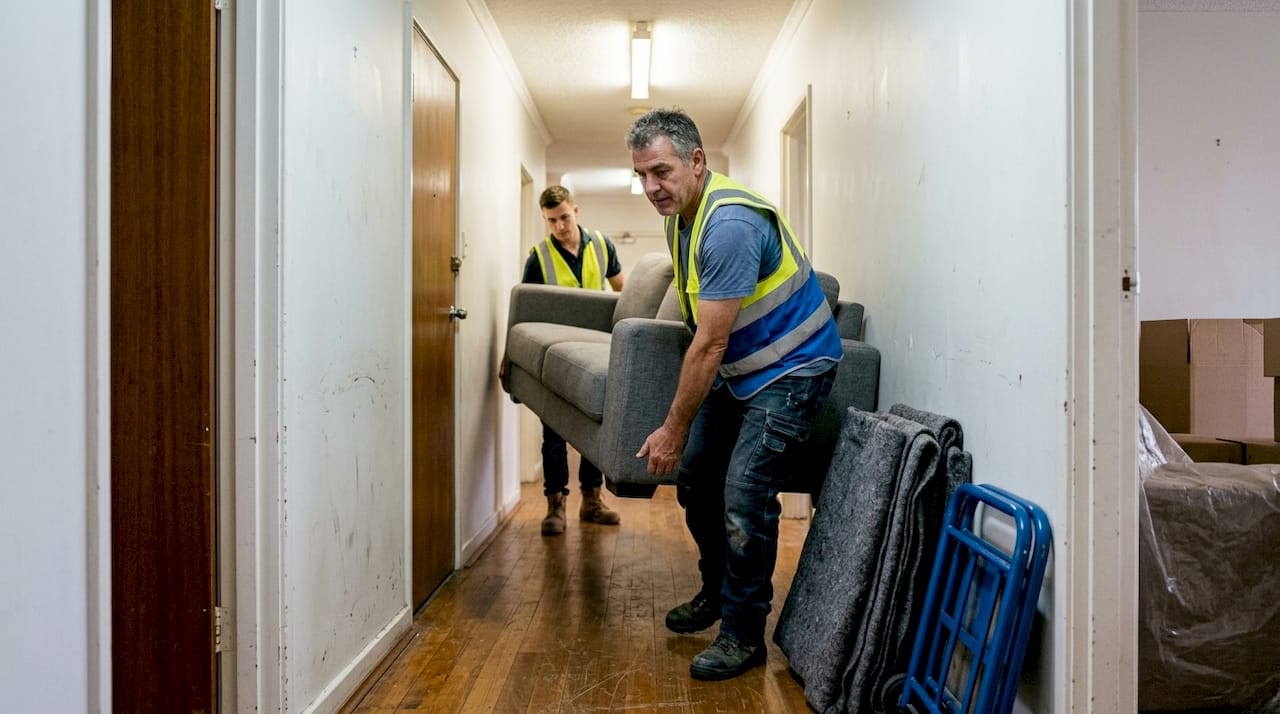
Not every move is the same. A standard two-bedroom apartment relocation is very different from moving a grand piano, a collection of antiques, or an entire corporate office. Knowing when to opt for specialist support is one of the most important decisions you’ll make.
Standard vs specialist relocations at a glance:
| Feature | Standard removal | Specialist removal |
|---|---|---|
| Item types | Household goods | Antiques, pianos, plants, IT equipment |
| Materials used | Standard boxes, blankets | Acid-free wrapping, custom crates |
| Vehicle type | Standard truck | Climate-controlled, air-ride suspension |
| Planning required | Basic | Detailed, item-specific |
| Risk level | Low to moderate | Managed with precision |
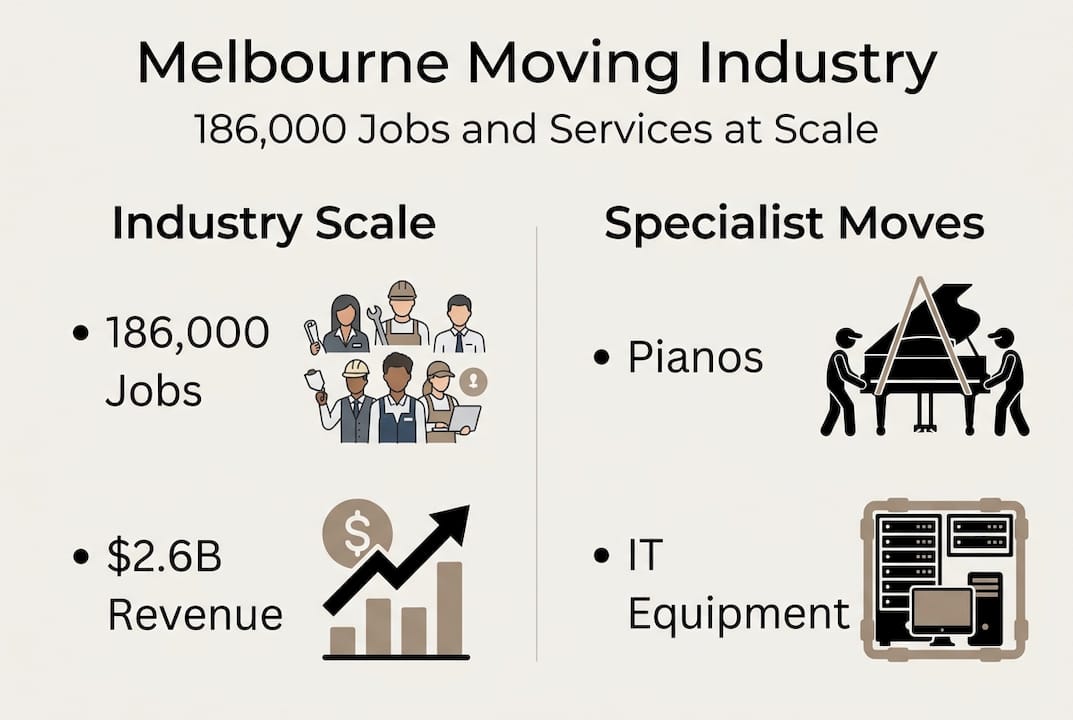
Specialised transport uses acid-free materials, climate control, and air-ride trucks for antiques, plants, and pianos. These aren’t luxury add-ons. They’re protective measures that prevent irreversible damage to items that can’t be replaced.
For business relocations, the stakes are even higher. Here’s how a professional commercial move typically unfolds:
Business relocations minimise downtime through after-hours moves, dedicated IT handling, and continuity planning. For a Melbourne business, even one lost trading day can cost thousands. Professional movers treat that risk seriously.
Pro Tip: If your business relies on servers or specialised equipment, confirm your removalist has experience with IT relocations before signing anything. Not all commercial movers are equipped for this.
For detailed guidance on when specialist support is essential, the specialist item removal tips are worth reviewing before you book. And if you’re weighing up whether to go it alone, comparing DIY vs professional moves gives you a clear picture of the real trade-offs.
With over 8,000 removalist businesses in Australia, quality varies enormously. Knowing how to identify a trustworthy provider protects your belongings, your budget, and your peace of mind.
The Australian Furniture Removers Association, known as AFRA, is the industry’s primary accreditation body. AFRA members provide insurance, training, and dispute resolution that non-accredited operators simply cannot match. Choosing an AFRA-accredited removalist means you have a formal complaints process if something goes wrong, and that your mover has met minimum training and equipment standards.
Here’s what to check before hiring any removalist in Melbourne:
The risk of skipping this checklist is real. Non-accredited movers often lack proper insurance, which means any damage during transit becomes your problem to resolve alone. For specialty items, the stakes are even higher. Professionals reduce damage by 85% using custom crates and correct item orientation, compared to DIY attempts with standard packaging.
Pro Tip: Always ask for proof of insurance before your move date, not on the day. A reputable company will provide this without hesitation. If they stall or deflect, that’s a clear warning sign.
For anyone comparing approaches, understanding the difference between packing professionally vs DIY is especially useful for fragile or high-value items. The upfront cost of professional packing almost always outweighs the replacement cost of damaged goods.
Here’s something we’ve observed repeatedly: clients are often surprised by how much thought goes into a professional move before the truck even arrives. Most people budget for the physical labour and forget about everything else. The planning, the materials, the insurance, the scheduling, the contingency work when a lift is out of service or a parking permit falls through. These are the invisible layers that separate a smooth move from a chaotic one.
The economic contribution of the removalist sector is also rarely acknowledged. At $2.6 billion in annual revenue, this industry funds thousands of small businesses and skilled jobs across Melbourne. When you choose a professional mover, you’re supporting that ecosystem.
Cost-cutting often backfires in ways clients don’t anticipate. A cheaper, uninsured mover might save you $200 upfront but leave you with a damaged dining table and no recourse. Understanding the insights on professional packing shows that the real cost of DIY is often higher than the quote you were trying to avoid. The industry’s value is in the expertise, not just the effort.
Understanding the moving industry is the first step. Taking action with the right team behind you is what makes the difference on moving day.
At Onyx Removals, we offer tailored solutions for every type of Melbourne relocation. Whether you need residential moving support for your home or business relocation management for your office, our experienced team handles every detail with care. From packing and storage through to specialist transport, we build a plan around your timeline, your budget, and your specific requirements. Get in touch today for an obligation-free quote and find out why Melbourne clients trust Onyx Removals to get it right.
Costs vary based on service level, distance, volume, and timing. With the industry generating $2.6 billion across 8,310 businesses, there’s genuine competition in Melbourne, which helps keep pricing reasonable for consumers who compare quotes carefully.
Prioritise AFRA accreditation, insurance, and dispute resolution as your baseline requirements. Transparent pricing, verified reviews, and clear communication are equally important indicators of a trustworthy provider.
Absolutely. Professionals reduce damage risk by 85% for fragile and valuable goods using custom crates and proper orientation techniques, making them far safer than DIY alternatives for pianos, antiques, and artwork.
Reputable commercial movers use after-hours moves, IT handling, and continuity planning to ensure businesses can resume operations quickly, often without any disruption to trading hours at all.

No Related Post


