


TL;DR:
- Professional interstate pet transport simplifies complex regulations and ensures a smooth moving experience.
- Choosing an established, licensed provider with good reviews and proper communication is crucial.
- Proper pre-travel preparation and emotional support greatly improve a pet’s comfort during relocation.
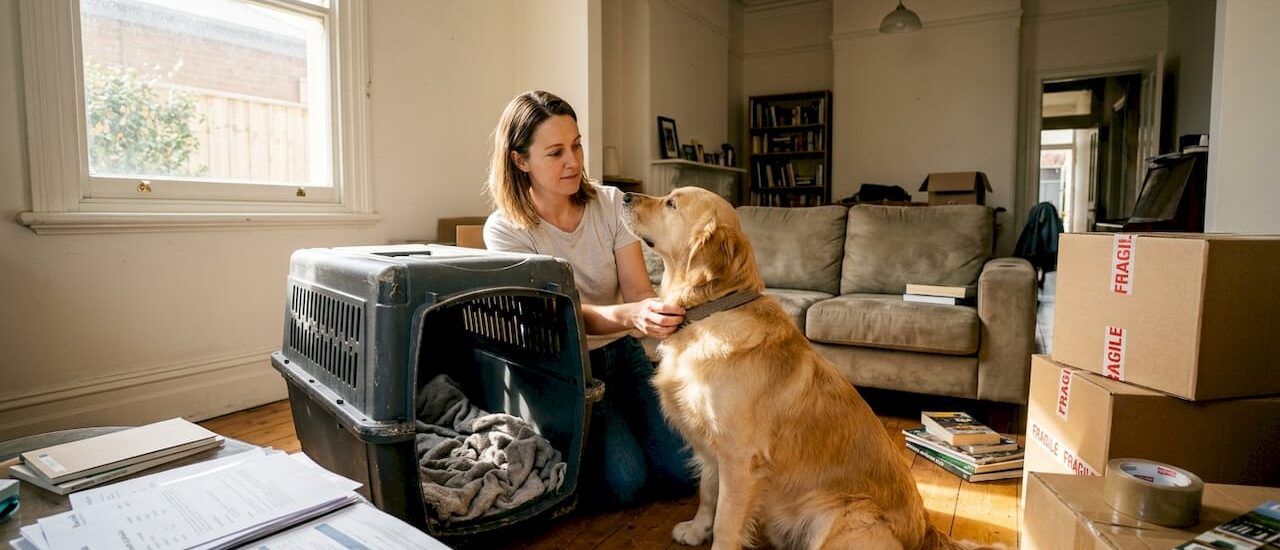
Moving your pet interstate from Melbourne feels overwhelming at first. The paperwork, the regulations, the worry about your animal’s comfort during a long journey. But here’s the thing: professional interstate pet transport has quietly become one of the most reliable and well-organised services in Australia’s moving industry. Most pet owners are surprised to discover how straightforward the process actually is once you have the right support. This article walks you through the regulations, how to choose a trusted provider, how to prepare your pet, and what to expect on moving day so you can relocate with confidence.
| Point | Details |
|---|---|
| State regulations differ | Some states have stricter rules for interstate pet transport, so always check your destination’s requirements. |
| Choose reliable providers | Established transport firms have high satisfaction ratings and offer better communication and support. |
| Preparation is essential | Getting your pet ready with health checks and acclimation lowers stress and ensures safety. |
| Arrival matters | A calm and well-planned arrival is critical for helping your pet quickly settle in after moving. |
The legal side of moving pets between states is one of the first things that causes anxiety for Melbourne pet owners. The good news is that for most dogs and cats, there is no full quarantine involved. What you do need is the right paperwork, and the requirements vary depending on your destination.
States like Western Australia and Tasmania have stricter biosecurity rules than others. WA, for example, requires a health certificate issued by a registered veterinarian within a specific timeframe before travel. Tasmania has its own entry conditions for certain animals, particularly those that may carry diseases or pests. Most other mainland states have relatively straightforward requirements, but you should never assume.
As outlined in pet travel regulations for Australia, dogs and cats do not face full quarantine when moving interstate, but destination states like WA and Tasmania have stricter entry conditions that professionals are trained to manage.
Expert note: Western Australia and Tasmania are the two states most likely to require additional documentation for pet entry. A professional transport provider will know exactly what is needed and handle it on your behalf, saving you hours of research and potential mistakes.
Here is a summary of key requirements by destination:
Professional providers are familiar with all of these requirements. When you read our moving house with pets guide, you will see how much smoother the process becomes when compliance is handled by someone who does this every day. Our pet relocation services guide also breaks down what to expect at each stage.
Once you understand the regulations, picking the right transport partner is your next critical decision. Not all providers are equal, and the difference between a great experience and a stressful one often comes down to communication, credentials, and track record.
Jetpets reviews on Trustpilot show that established firms score 4.8/5 with over 90% positive feedback, while complaints about smaller operators frequently centre on poor communication and unexpected delays. That gap in customer experience is significant.
| Feature | Established firms | Smaller operators |
|---|---|---|
| Customer satisfaction | 90%+ positive | Variable, often lower |
| Paperwork handling | Included as standard | Sometimes extra cost |
| Real-time tracking | Usually available | Rarely offered |
| Vet coordination | Built into service | Often your responsibility |
| Insurance coverage | Comprehensive | May be limited |
Here is how to properly vet any provider before you commit:
Pro Tip: Before signing anything, ask the provider directly: “Who handles the paperwork if a state changes its entry requirements after I book?” The answer tells you everything about how professional they really are.
For broader context on coordinating your move, our guides on [interstate moving companies Melbourne](https://onyxremovals.com.au/interstate moving companies melbourne) and interstate removalists Australia can help you see how pet transport fits into the bigger picture. If you want a shortlist, our best interstate removalists Melbourne resource is a practical starting point.
Booking a great provider is only half the job. How you prepare your pet in the weeks before the move has a direct impact on how well they cope with the journey.
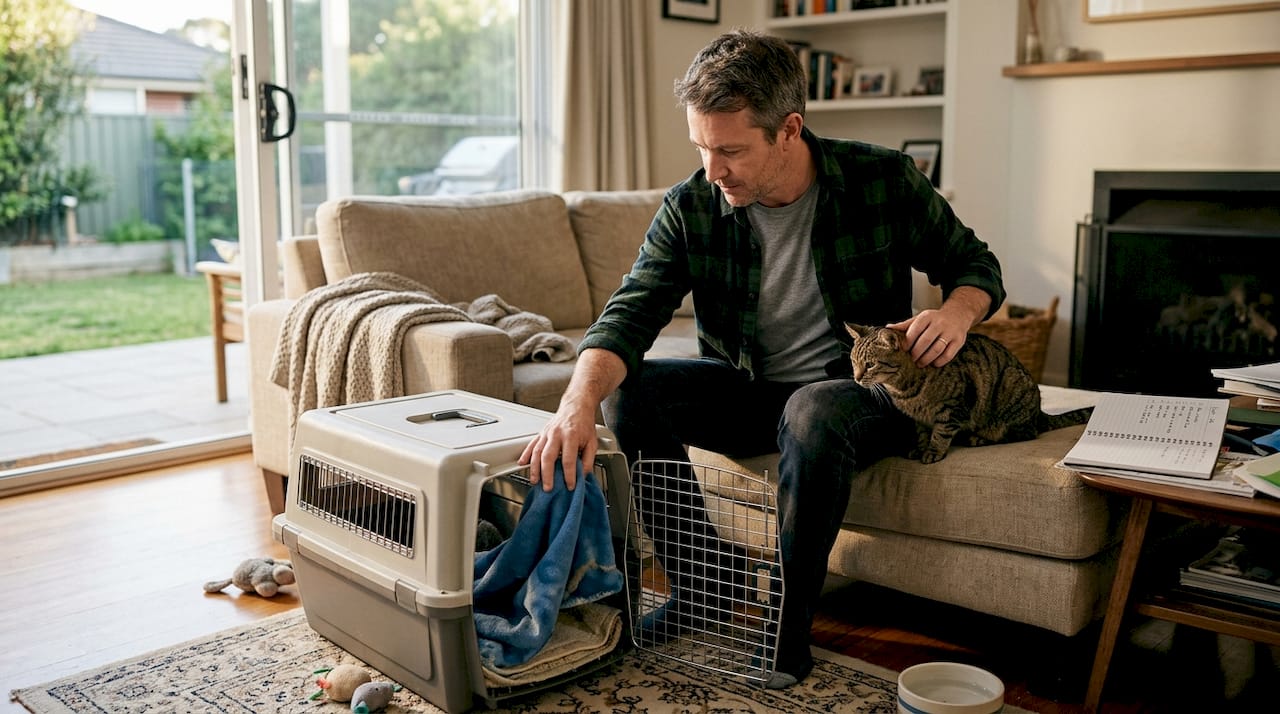
Professionals guide pet owners through the full preparation process, but there is plenty you can do at home to set your animal up for a calm and comfortable trip.
Here is your pre-move checklist:
For cat transport accessories and crate options, there are purpose-built solutions designed to reduce stress during long journeys.
Pro Tip: Pheromone sprays like Adaptil for dogs or Feliway for cats can be applied to bedding inside the travel crate. These products mimic natural calming signals and are particularly effective for anxious animals. Start using them a few days before the move, not just on the day itself.
Our moving house with pets guide covers the emotional side of preparation in more detail, and our what not to pack article is worth reading to avoid common packing mistakes that affect your pet’s comfort.
Moving day has its own rhythm, and knowing what to expect helps you stay calm. Your calm energy directly affects your pet’s stress levels, so having a clear plan matters.
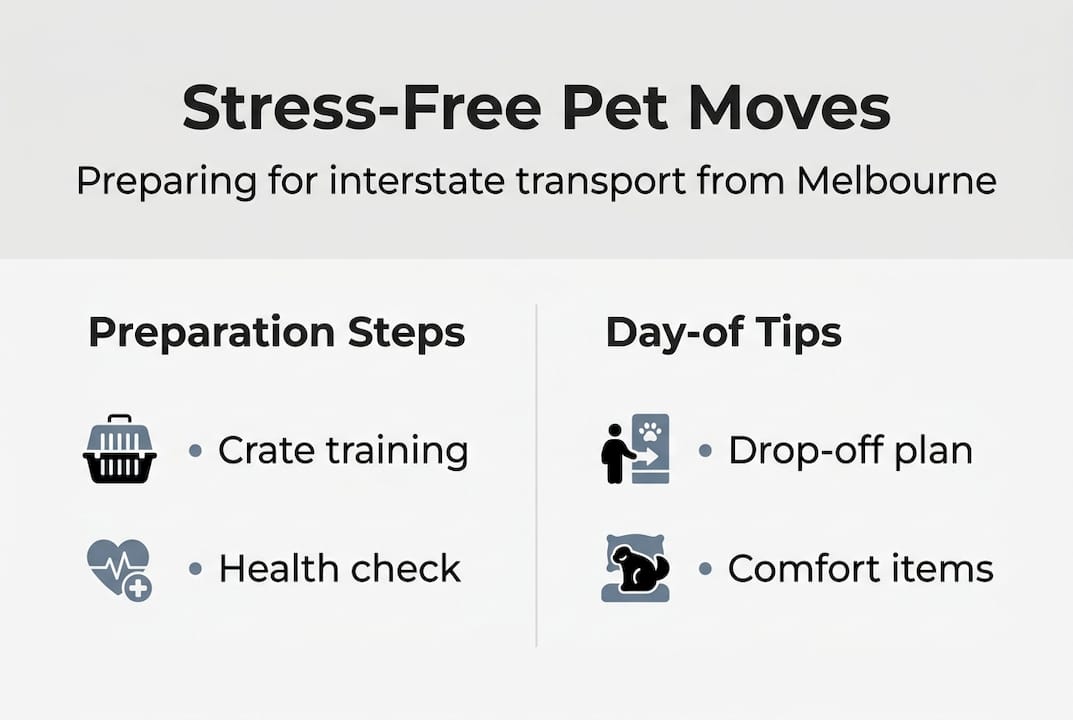
Most professional providers will give you a drop-off window and a tracking reference. From that point, the logistics are in their hands. Here is what the typical timeline looks like:
| Route from Melbourne | Estimated transit time | Average customer satisfaction |
|---|---|---|
| Melbourne to Sydney | 1 day | 92% positive |
| Melbourne to Brisbane | 1 to 2 days | 89% positive |
| Melbourne to Perth | 2 to 3 days | 87% positive |
| Melbourne to Hobart | 1 to 2 days | 88% positive |
As established firms demonstrate, professional providers actively manage communication and address concerns about delays, which is reflected in consistently high satisfaction scores.
Customer insight: The most common feedback from pet owners who used professional services is that regular updates during transit made the biggest difference to their peace of mind. Knowing where your pet is reduces anxiety dramatically.
Follow these steps for a smooth arrival:
Our pet relocation services guide and moving house with pets guide both have detailed arrival checklists worth bookmarking. For the regulatory side of arrival, pet travel regulations covers what inspectors may check at state borders.
Here is something most articles will not tell you: the logistics of interstate pet transport are actually the easy part. Experienced providers have the paperwork, the routes, and the timing down to a science. What genuinely makes or breaks the experience is how well you and your provider address your pet’s emotional state.
Animals do not understand what is happening during a move. They experience the change as a loss of their known world. The scent of their home disappears, their routine vanishes, and they are placed in an unfamiliar environment. That is a significant psychological event for any animal.
Over 90% of customers report positive experiences with established firms, and when you read the detailed reviews, the consistent theme is not just that the pet arrived safely. It is that the provider communicated well, showed genuine care, and helped the owner feel supported throughout.
The best providers understand animal behaviour as well as transport logistics. When choosing between options, ask specifically how they handle anxious animals and what their staff training covers. That question separates the truly professional from the merely adequate.
Pro Tip: Arrive early for drop-off, stay calm and matter-of-fact when saying goodbye to your pet, and plan a small reward or favourite activity for when you are reunited. Pets pick up on your emotional state, so your composure is genuinely part of their care.
Our best interstate removalists Melbourne guide touches on how to align your full move with your pet’s wellbeing, not just the furniture.
Moving interstate is a big undertaking, and your pet’s safe arrival is just one piece of the puzzle. At Onyx Removals, we understand that a seamless move means every detail is handled with care, including the four-legged members of your household.
Our residential removal services are designed to coordinate every aspect of your Melbourne interstate move, and our pet relocation services guide gives you a clear roadmap for what to expect. Whether you need help planning the full move or just want to understand your options, explore our full range of Onyx Removals services and get in touch for a personalised quote. We are here to make your move as smooth as possible, for you and your pets.
Most pets, including dogs and cats, do not require full quarantine when moving interstate, but states like WA and Tasmania have stricter entry rules that require additional health certificates and documentation.
Acclimate your pet to their travel crate well before the move, include familiar bedding and a worn item of your clothing, and consider calming products like pheromone sprays. Professional providers guide owners through the full comfort preparation process.
Prioritise providers with verified licences, comprehensive insurance, and clear communication policies. Established firms score 4.8/5 on Trustpilot with over 90% positive feedback, compared to smaller operators where complaints about delays are more common.
Most interstate moves from Melbourne are completed within one to three days depending on the destination. Perth routes typically take two to three days, while Sydney and Brisbane are generally completed within one to two days.
Pets typically travel separately with a professional transport provider rather than with the family vehicle, but reputable providers coordinate closely with your overall moving timeline to ensure your pet arrives safely and at a time that suits your schedule.

No Related Post


