



Business continuity planning sounds like just another item on the corporate checklist. But get this. Companies with solid continuity plans can cut their financial losses by up to 60 percent when disaster strikes. Most people assume it is just about ticking boxes for compliance, but the real story is about keeping your doors open when everyone else is scrambling.
| Takeaway | Explanation |
|---|---|
| Identify and Assess Risks | Conduct systematic risk assessments to uncover potential vulnerabilities and their impact on operations. |
| Develop Tailored Recovery Strategies | Create recovery strategies suited to your organisation’s specific needs and contexts to ensure effective response during disruptions. |
| Continuously Update Plans | Regularly review and update continuity plans to address emerging risks and changes in the business environment. |
| Enhance Stakeholder Confidence | A well-designed continuity plan builds trust with stakeholders by demonstrating proactive risk management and preparedness. |
| Implement Modular Response Frameworks | Use flexible, modular approaches to enable targeted interventions based on the severity of incidents, ensuring operational integrity. |
Business continuity planning is a strategic approach organisations use to prepare for potential disruptions and maintain essential functions during unexpected events. This comprehensive process involves identifying potential risks, developing strategies to mitigate their impact, and creating a roadmap for rapid recovery and operational resilience.
At its essence, business continuity planning focuses on protecting an organisation’s ability to function during and after critical incidents. This might involve natural disasters, technological failures, cybersecurity breaches, pandemic outbreaks, or significant economic shifts. By anticipating potential challenges, businesses can develop robust frameworks that minimise operational downtime and financial losses.
Key objectives of business continuity planning include:
Effective business continuity planning goes beyond simple emergency response. It requires a comprehensive risk assessment that examines potential vulnerabilities across the entire organisational ecosystem. According to Deloitte’s Business Continuity Management research, organisations must create adaptive strategies that can respond dynamically to evolving threats.
Successful continuity planning integrates multiple disciplines, including risk management, crisis communication, technological infrastructure protection, and strategic recovery planning. By developing a holistic approach, businesses can create flexible and responsive systems that can withstand unexpected challenges and maintain operational integrity.
Ultimately, business continuity planning is not about predicting every possible scenario but about building organisational resilience. It transforms potential vulnerabilities into strategic opportunities for growth, learning, and adaptation.
Business continuity is more than a strategic necessity it represents an organisation’s fundamental capacity to survive and thrive amid unexpected challenges. By developing comprehensive plans that anticipate potential disruptions, businesses can transform potential vulnerabilities into opportunities for resilience and strategic adaptation.
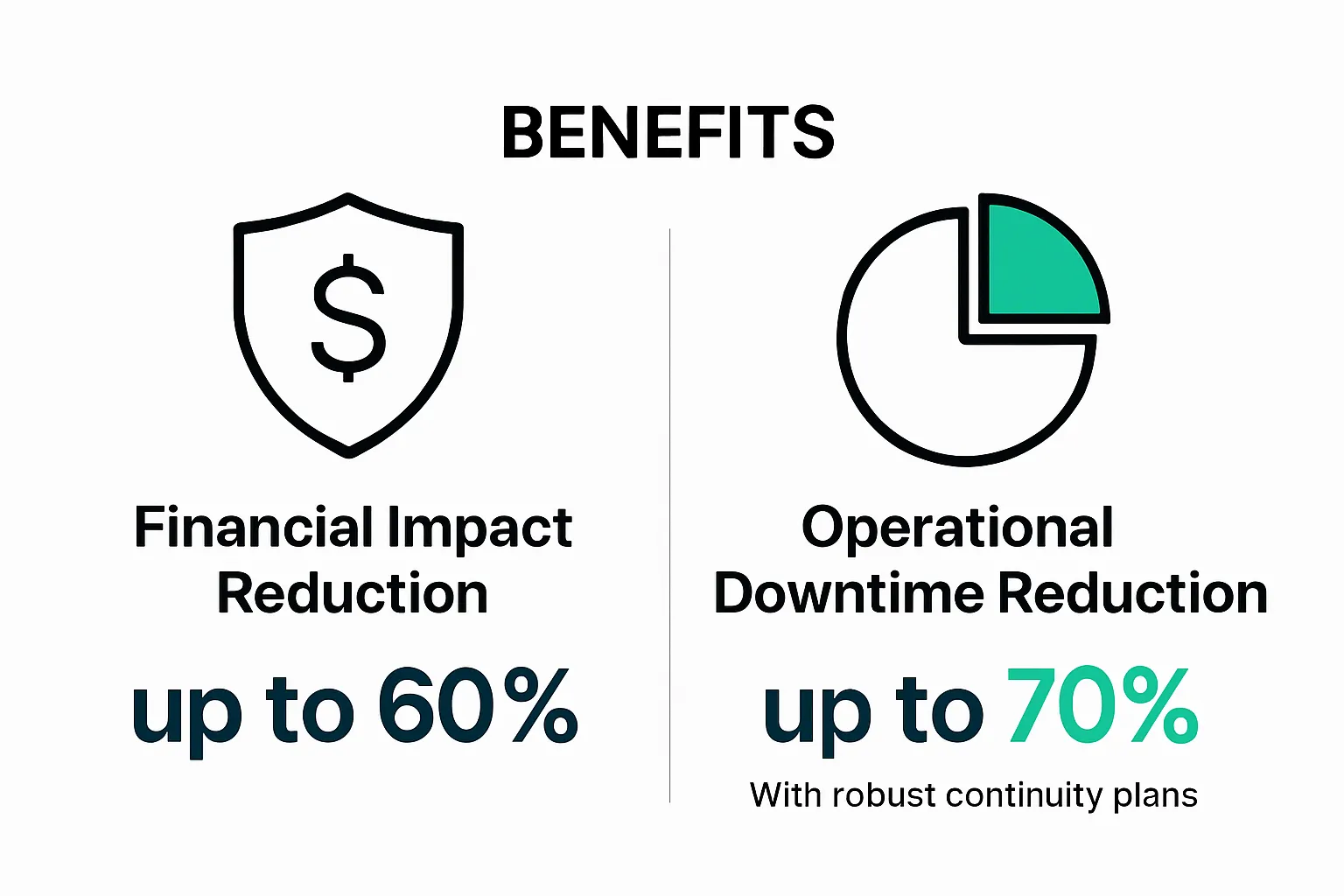
The financial implications of inadequate business continuity planning can be catastrophic. When critical systems fail or unexpected events occur, organisations without robust recovery strategies risk significant economic losses. According to PwC’s Global Crisis Survey, companies that invest in comprehensive continuity planning can reduce potential financial damage by up to 60 percent.
Key financial risks that business continuity planning helps mitigate include:
Business continuity planning extends far beyond internal operational concerns. It directly impacts how external stakeholders perceive an organisation’s reliability and professionalism. Investors, clients, partners, and regulatory bodies increasingly evaluate organisations based on their capacity to manage and respond to potential disruptions.
A well-designed continuity plan demonstrates proactive risk management and communicates an organisation’s commitment to stability. This approach not only protects existing relationships but can also attract new opportunities by showcasing strategic preparedness.
Below is a table summarising the primary components of a business continuity plan, providing clarity on each element’s role in building organisational resilience.
| Component | Description |
|---|---|
| Risk Assessment | Systematic identification and evaluation of internal and external organisational risks |
| Resilience Strategies | Approaches designed to maintain or quickly restore critical business functions |
| Recovery Planning | Roadmap and processes guiding restoration of normal operations after disruption |
| Continuous Improvement | Ongoing refinement and adaptation of plans based on emerging risks and lessons learnt |
| Regulatory Compliance | Ensuring adherence to industry standards and governmental requirements |
| Stakeholder Communication | Maintaining regular, clear updates for internal and external parties during incidents |
Moreover, organisations with comprehensive continuity strategies are better positioned to navigate complex business environments. They can quickly adapt to changing circumstances, maintain service levels during challenging periods, and emerge stronger from potential crises.
This table outlines the common risks mitigated by business continuity planning and the key protective focus for each, offering a quick reference for understanding organisational vulnerabilities.
| Risk Type | Mitigation Focus |
|---|---|
| Operational Downtime | Strategies to minimise interruptions and maintain essential services |
| Loss of Customer Contracts | Relationship protection and service-level commitments |
| Reputational Damage | Crisis communication and proactive risk management |
| Regulatory Non-compliance | Adherence to laws and standards to avoid penalties |
| Recovery Cost Overruns | Pre-planned recovery strategies and resource allocation |
 The ability to respond swiftly and effectively becomes a significant competitive advantage in an increasingly unpredictable global business landscape.
Business continuity planning encompasses several foundational concepts that organisations must understand to develop comprehensive and effective strategies. These interconnected principles form the backbone of robust resilience frameworks, enabling businesses to anticipate, respond, and recover from potential disruptions.
At the core of business continuity planning lies risk assessment, a systematic process of identifying potential threats and evaluating their potential impact on organisational operations. This involves a detailed examination of internal and external vulnerabilities that could compromise business functionality.
Critical components of comprehensive risk assessment include:
Resilient organisations go beyond merely identifying risks they develop strategic approaches to maintain or rapidly restore critical functions. According to The Business Continuity Institute’s Global Resilience Report, organisations with well-developed recovery strategies can reduce operational downtime by up to 70 percent.
Recovery strategies are not one-size-fits-all solutions. They must be tailored to specific organisational contexts, considering unique operational requirements, technological infrastructure, human resources, and regulatory environments. This might involve developing alternate work locations, implementing redundant communication systems, creating data backup protocols, and establishing clear decision-making hierarchies during crisis scenarios.
Business continuity planning is not a static process but a dynamic, evolving approach that requires ongoing refinement. Organisations must regularly review and update their continuity plans to address emerging risks, technological changes, and shifting business landscapes.
This requires a commitment to:
By embracing these key concepts, organisations can develop proactive and responsive business continuity strategies that transform potential vulnerabilities into opportunities for growth and resilience.
Business continuity plans operate as sophisticated frameworks that transform potential organisational vulnerabilities into structured, actionable strategies. These comprehensive systems enable businesses to anticipate, respond, and recover from disruptions with precision and strategic intent.
When unexpected events occur, business continuity plans initiate a carefully designed sequence of predetermined actions. Trigger protocols determine the specific circumstances that activate different levels of response, ensuring organisations can react swiftly and systematically.
Key activation mechanisms typically include:
Effective business continuity plans function through modular response frameworks that allow flexible and targeted interventions. According to ISO 22301 Business Continuity Standards, organisations must develop adaptable strategies that can be implemented across different scenarios while maintaining core operational integrity.
These modular approaches enable organisations to:
Business continuity plans are not static documents but dynamic systems that continuously evolve. They incorporate real-time monitoring mechanisms that track organisational performance, assess ongoing risks, and enable rapid strategic adjustments.
This adaptive approach involves:
By integrating sophisticated technological tools, comprehensive risk analysis, and flexible response mechanisms, business continuity plans transform potential vulnerabilities into strategic opportunities for organisational resilience and growth.
Business continuity planning extends far beyond theoretical frameworks, demonstrating profound practical significance across diverse industries and organisational contexts. By translating strategic principles into tangible actions, businesses can effectively navigate complex operational challenges and maintain resilience.
Digital ecosystems represent critical domains where business continuity planning becomes especially crucial. Modern organisations rely extensively on technological infrastructure, making comprehensive continuity strategies essential for maintaining operational integrity during potential disruptions.
Key technological continuity considerations include:
In sectors where uninterrupted service delivery can represent life-or-death scenarios, business continuity planning becomes paramount. According to Australian Healthcare Continuity Management Research, healthcare organisations must develop intricate plans that address multiple potential disruption scenarios.
Healthcare continuity strategies frequently involve:
Financial institutions operate in highly complex regulatory environments where operational disruptions can trigger significant economic consequences. Business continuity planning in this sector focuses on maintaining transactional integrity, protecting customer assets, and ensuring regulatory compliance during challenging circumstances.
Financial service continuity approaches typically encompass:
By integrating sophisticated technological tools, comprehensive risk analysis, and flexible response strategies, organisations across various sectors can transform potential vulnerabilities into opportunities for sustained operational excellence.
Are you worried about how an unexpected office move or commercial relocation might disrupt your business? This article highlighted the importance of continuity planning to protect your operations from risk, downtime and financial loss. If you want a partner who truly understands these challenges, Onyx Removals business services can help you keep your business running no matter what.

Take the stress out of your next move. Let our experienced team create a tailored relocation plan that safeguards your business, your team and your reputation. Visit Onyx Removals today to request a quote or learn how our solutions support your goals for operational resilience. Secure seamless continuity and take the next step for your business now.
Business continuity planning is a strategic approach organisations use to prepare for potential disruptions and maintain essential functions during unexpected events. It involves identifying risks, developing mitigation strategies, and creating recovery roadmaps to ensure operational resilience.
Business continuity planning is vital as it protects an organisation’s ability to survive and thrive during unexpected challenges. It helps minimise financial losses, protects reputational integrity, and increases stakeholder confidence by demonstrating proactive risk management.
Key components of a business continuity plan include risk assessment, resilience and recovery strategies, as well as continuous improvement methodologies. These elements work together to create a comprehensive framework for anticipating, responding to, and recovering from potential disruptions.
Technology supports business continuity planning by providing critical infrastructure that maintains operational integrity during disruptions. This may include robust cybersecurity protocols, data backup solutions, communication systems, and tools for remote work capabilities.

No Related Post


