


Inventory management sounds like a dry office task but it runs the engine behind almost every business that sells goods. Think about this. Australian retailers lose up to $2.5 billion a year to poor stock control alone. Most reckon inventory is just counting boxes. Actually, the real power comes from using smart tracking and clever planning to turn piles of stock into real profit.
| Takeaway | Explanation |
|---|---|
| Effective inventory management boosts financial performance | Proper inventory control can significantly enhance a company’s profitability by ensuring optimal stock levels and cash flow. |
| Advanced technology improves inventory tracking | Implementing systems like RFID and automated reordering enhances visibility and allows for data-driven decision-making. |
| Different sectors require tailored inventory strategies | Retail, manufacturing, logistics, and healthcare all use unique inventory management approaches to meet specific operational needs. |
| Key metrics inform better stock decisions | Metrics such as inventory turnover ratio and safety stock levels help businesses avoid overstock and stockouts, improving efficiency. |
| Inventory management is critical for all organisation types | No matter the size or sector, effective inventory management drives operational efficiency and resource allocation across public and private entities. |
Inventory management represents a strategic process of ordering, storing, using, and selling a company’s inventory. At its core, it tracks and controls the movement of products and materials through a business’s supply chain. Understanding what is inventory management goes beyond simple record keeping it involves optimising stock levels, reducing waste, and ensuring efficient operations.
Effective inventory management serves multiple critical functions for businesses. Research from Deloitte indicates that proper inventory control can significantly impact a company’s financial performance. The primary objectives include:
Beyond basic tracking, inventory management provides strategic advantages that directly influence business success. McKinsey & Company highlights that businesses with robust inventory management systems can achieve significant competitive advantages. These advantages include enhanced operational efficiency, improved customer satisfaction, and more accurate financial forecasting.
Companies that master inventory management can respond quickly to market changes, adjust procurement strategies, and maintain lean, responsive supply chains. By understanding precisely what is inventory management, businesses transform a traditionally administrative task into a strategic tool for growth and profitability.
The process involves sophisticated techniques like demand forecasting, real-time tracking, and automated reordering systems. Modern inventory management leverages technology to provide unprecedented visibility and control over stock levels, enabling businesses to make data-driven decisions that directly impact their bottom line.
Inventory management plays a pivotal role across various sectors and user groups, providing unique benefits and addressing specific challenges. Understanding its significance helps organisations and individuals make informed decisions about resource allocation, financial planning, and operational efficiency.
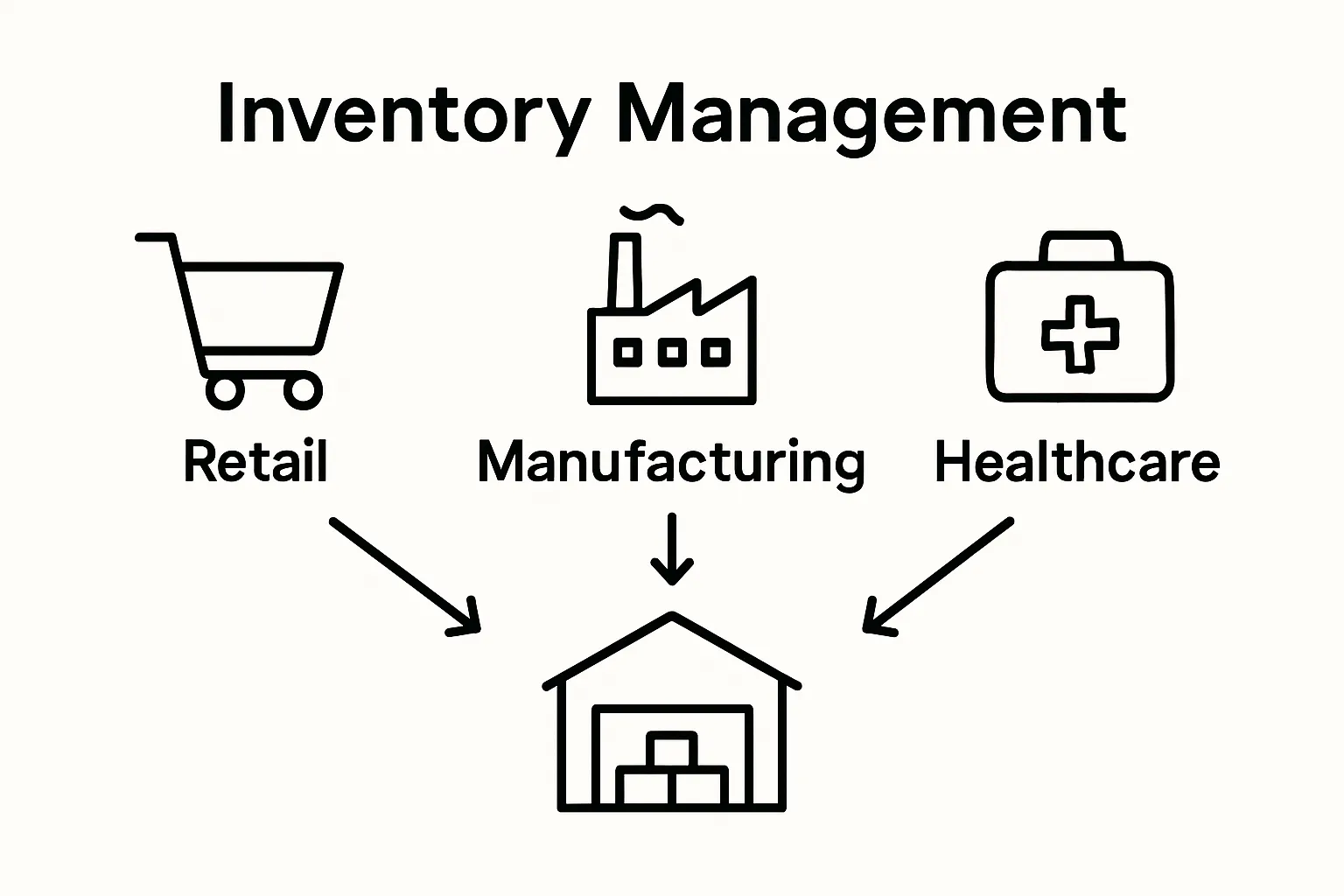
Research from the Australian Productivity Commission reveals that effective inventory management can significantly impact organisational performance across different industries. Different business sectors leverage inventory management strategies to achieve distinct objectives:
Whether a small startup or a multinational corporation, inventory management provides critical insights into operational performance. Precise tracking mechanisms enable businesses to understand consumption patterns, predict future needs, and make data-driven procurement decisions. Small businesses can prevent financial strain by avoiding overstocking, while large organisations can coordinate complex global supply chains with greater accuracy.
Beyond traditional commercial applications, inventory management extends to public sector organisations, educational institutions, and non-profit entities. Government departments use sophisticated inventory systems to track assets, manage resources efficiently, and maintain transparent accounting practices. These systems help prevent waste, reduce unnecessary expenditure, and ensure accountability in resource utilisation.
To clarify the unique inventory management approaches within major business sectors, the table below summarises each sector’s focus and objectives.
| Sector | Focus Area | Primary Objectives |
|---|---|---|
| Retail | Balancing customer demand and stock | Ensure product availability, minimise loss due to overstock |
| Manufacturing | Production scheduling, raw material flow | Optimise procurement, support efficient production cycles |
| Logistics | Supply chain tracking and movement | Track goods flow, ensure timely deliveries |
| Healthcare | Managing critical medical supplies | Avoid shortages, ensure immediate accessibility |
| Public Sector | Asset/resource tracking | Control costs, maintain accountability |
The versatility of inventory management demonstrates its universal importance. By providing detailed visibility into stock levels, movement patterns, and resource allocation, it transforms from a mere administrative task into a strategic tool that drives organisational efficiency and financial sustainability.
Inventory management operates through complex systems and strategies that adapt to specific organisational requirements. The fundamental mechanisms involve tracking, monitoring, and controlling stock levels across different operational environments, ensuring efficient resource utilisation and strategic decision making.
Research from the Australian Retail Technology Association demonstrates that modern inventory management relies on sophisticated technological platforms. These systems integrate multiple tracking methods, including:
Different sectors implement inventory management uniquely, tailoring approaches to their specific operational requirements. Retail environments focus on sales velocity and stock turnover, while manufacturing sectors prioritise raw material tracking and production scheduling. Healthcare institutions emphasise precise stock control of critical medical supplies, ensuring immediate availability during urgent scenarios.
The complexity of inventory management extends beyond simple tracking. Advanced systems now incorporate predictive capabilities, analysing historical data to forecast future demand, identify potential supply chain disruptions, and recommend optimal stock levels. These intelligent systems enable organisations to proactively manage resources, reduce waste, and maintain financial efficiency.
By integrating technological solutions with strategic planning, inventory management transforms from a traditional administrative function into a dynamic, data-driven process that supports organisational agility and economic resilience.
Inventory management encompasses a range of sophisticated concepts that enable organisations to optimise their stock control and resource allocation strategies. Understanding these fundamental principles helps businesses develop more effective and efficient operational approaches.
Research from CPA Australia highlights the critical importance of accurate inventory valuation techniques. Businesses typically employ different methods to assess the financial value of their inventory:
Effective inventory control requires understanding key strategic concepts that drive operational efficiency. Economic Order Quantity (EOQ) represents a critical calculation that helps organisations determine the optimal order quantity that minimises total inventory holding and ordering costs. This mathematical approach balances purchasing expenses with storage and stockout risks.
Inventory turnover ratio emerges as another crucial metric, measuring how quickly a business sells and replaces its inventory during a specific period. A high turnover ratio indicates efficient stock management, while a low ratio suggests potential issues with overstocking or slow-moving products. Businesses use this metric to assess their inventory performance, identify potential improvements, and make data-driven procurement decisions.

The concept of safety stock represents a strategic buffer that protects organisations against unexpected demand fluctuations or supply chain disruptions. By maintaining a calculated surplus of inventory, businesses can mitigate risks associated with potential stockouts, ensuring continuous operational capacity and customer satisfaction.
This table compares the core inventory valuation methods used by businesses to assign financial value to stock, highlighting their key features and typical applications.
| Valuation Method | Key Feature | Typical Application |
|---|---|---|
| First In, First Out | Oldest items sold first | Perishable goods, retail |
| Last In, First Out | Most recent items sold first | Non-perishable, inflation protection |
| Weighted Average Cost | Averages cost of all items in inventory | Bulk inventories, fluctuating prices |
| Specific Identification | Tracks actual cost of each item individually | Unique, high-value items |
Proper inventory management is crucial when planning a seamless relocation. Whether you are moving a home, office, or an entire retail space, staying in control of your inventory helps prevent costly mistakes like lost items, excess holding costs, and supply chain headaches. The article explored how technology and precision drive smart inventory strategies — yet managing this during a big move can feel overwhelming, especially if you have complex needs or simply want peace of mind.

With Onyx Removals, you get more than a removalist. Our experienced team integrates storage solutions, careful inventory tracking, and efficient packing into every moving plan. Let us handle your stock control while you focus on your business or family. Discover how our Melbourne-based services ensure every item is accounted for and your move is handled with care. Visit our main page to explore solutions or request a quote today and experience the impact of tailored inventory management in your next move. Act now to secure your booking and move with confidence.
Inventory management is the strategic process of ordering, storing, using, and selling a company’s inventory. It involves tracking and controlling the movement of products and materials within a business’s supply chain.
Effective inventory management helps maintain optimal stock levels, minimise storage costs, prevent shortages and overstock, and improve cash flow by reducing unnecessary capital tied up in inventory.
Modern inventory management relies on advanced technology, including barcode scanning, RFID, cloud-based systems, automated reordering algorithms, and machine learning for predictive analytics, enhancing visibility and control over stock levels.
Key inventory valuation methods include First In, First Out (FIFO), Last In, First Out (LIFO), Weighted Average Cost, and Specific Identification methods. These techniques help businesses accurately assess the financial value of their inventory.

No Related Post


