



Retail delivery services have changed the way Aussies shop, making it simple for a bloke in Darwin to get fresh Melbourne coffee beans delivered to his door. Australians are now receiving more than 1 billion parcels every year, setting a new standard for convenience. Most reckon it’s just about speed, but the real kicker is how delivery has transformed into a powerful tool for trust and loyalty, rewriting what shoppers expect from every business.
| Takeaway | Explanation |
|---|---|
| Retail delivery services are essential | They provide the connection between businesses and consumers, facilitating product movement efficiently. |
| Diverse delivery models cater to needs | Options like same-day and scheduled delivery enhance customer convenience and satisfaction. |
| Technology drives operational efficiency | Innovations such as real-time tracking improve logistics and transparency in delivery services. |
| Sustainability is increasingly important | Companies are adopting eco-friendly practices to meet consumer demand for environmental responsibility. |
| Strong delivery impacts customer loyalty | Efficient delivery influences purchasing decisions, enhancing brand perception and customer retention. |
Retail delivery services represent a critical infrastructure connecting businesses with consumers through efficient transportation and distribution mechanisms. These services facilitate the movement of products from retailers to end customers using various transportation methods and logistical strategies.
Retail delivery services encompass multiple interconnected elements that ensure seamless product transportation. At their fundamental level, these services involve three primary components:
Australian Bureau of Statistics research indicates that retail delivery services have become increasingly sophisticated, adapting to consumer expectations for speed, transparency, and convenience.
Modern retail delivery services operate through diverse models tailored to specific business needs and consumer preferences. These models range from traditional door-to-door parcel delivery to advanced solutions like scheduled time slots, contactless delivery, and tracked shipments.
Key variations include:
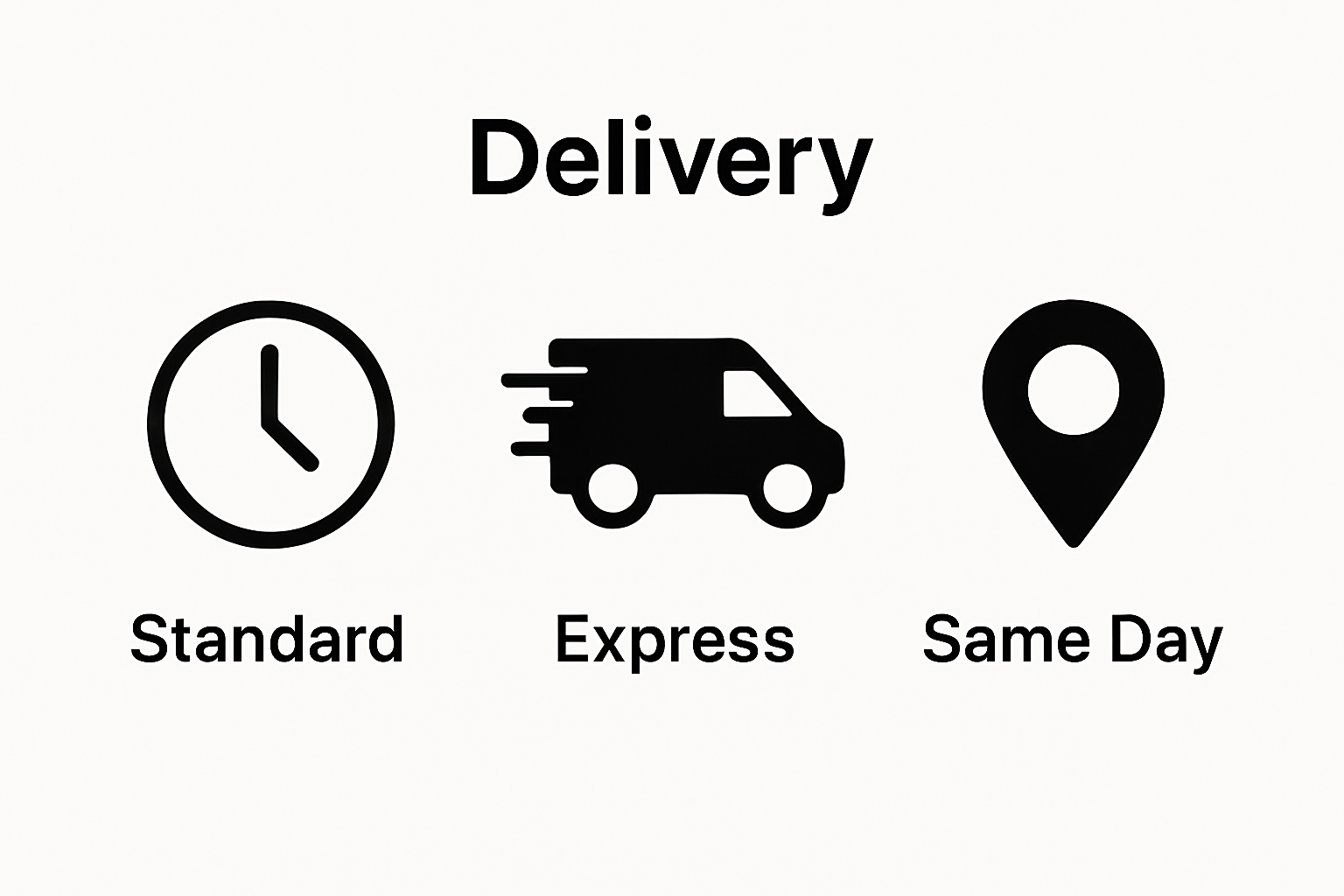
The complexity of retail delivery services continues to evolve, driven by technological advancements and changing consumer expectations.
Below is a comparison of the main retail delivery models to help readers understand their key attributes and how they cater to different consumer needs.
| Delivery Model | Transit Time | Customer Benefit | Cost to Consumer |
|---|---|---|---|
| Standard Delivery | Several days to a week | Economical, suited for non-urgent orders | Lowest |
| Express Delivery | 1-2 days | Faster delivery for time-sensitive needs | Higher |
| Same Day Delivery | Within 24 hours | Immediate purchase satisfaction | Premium |
| Scheduled Delivery | Chosen time slot by buyer | Flexibility, convenience, time certainty | Varies |
 Businesses must remain adaptable, leveraging innovative logistics strategies to meet growing demand for efficient, reliable product transportation.
Retail delivery services have transformed from a simple transactional process to a critical strategic component driving business success and customer satisfaction in the contemporary marketplace. These services now represent far more than just moving products from point A to point B.
In the digital age, retail delivery services play a pivotal role in shaping consumer experiences and business competitiveness. They directly influence purchasing decisions, brand perception, and overall customer loyalty.
Consumers increasingly evaluate retailers not just on product quality, but on their ability to deliver quickly, reliably, and transparently.
Key economic considerations include:
Australian Trade and Investment Commission research highlights the growing significance of efficient delivery networks in supporting Australia’s expanding digital commerce ecosystem.
Modern retail delivery services leverage advanced technologies to enhance operational efficiency and customer satisfaction. Innovations such as real-time tracking, predictive logistics, and automated routing systems have revolutionized traditional delivery models.
Technological advancements enable:
The integration of digital technologies transforms retail delivery from a backend operational function into a critical customer engagement platform, ultimately determining a business’s ability to thrive in an increasingly competitive marketplace.
Retail delivery services function as complex logistical ecosystems involving multiple interconnected stages that transform product movement from initial order placement to final customer delivery. These intricate systems require sophisticated coordination across technological, human, and infrastructural resources.
The initial stage of retail delivery services involves precise order management. When a customer submits an order, a sophisticated sequence of digital and physical processes begins. Advanced software systems immediately verify product availability, allocate inventory, and generate shipping instructions.
Critical order processing steps include:
Once orders are processed, transportation becomes the primary focus. Retail delivery services leverage diverse transportation modes ranging from local courier networks to national freight systems. These networks are designed to optimize route efficiency, minimise transit times, and reduce overall transportation costs.
Supply Chain Channel highlights the importance of integrated digital tracking systems that provide real-time visibility throughout the transportation process.
Transportation strategies typically involve:
Modern retail delivery services represent a complex blend of technological innovation, strategic planning, and operational excellence.
The following table summarises the core components involved in the operation of retail delivery services, offering a clear view of how goods move from order to arrival.
| Component | Primary Function | Example Activities |
|---|---|---|
| Order Processing & Fulfilment | Prepares goods for delivery | Inventory checks, order validation, packing |
| Logistics & Transportation | Physically moves orders to destination | Route planning, vehicle management |
| Final Mile Delivery | Ensures item reaches the end customer | Courier drop-off, delivery confirmation |
| Tracking & Monitoring | Provides real-time visibility to all stakeholders | Customer tracking updates |
Retail delivery services have become integral to modern consumer experiences, addressing diverse needs across personal and professional contexts. These services offer flexible solutions that extend far beyond traditional transportation models, catering to an increasingly dynamic marketplace.
Individual consumers rely on retail delivery services for numerous everyday scenarios. Online shopping has dramatically transformed purchasing patterns, enabling convenient access to products without physical store visits. From clothing and electronics to groceries and specialized items, delivery services bridge the gap between consumer desire and product acquisition.
Typical personal delivery scenarios include:
Beyond individual consumer needs, businesses leverage retail delivery services for complex logistical challenges. These services support operational efficiency by enabling seamless product movement, inventory management, and supply chain integration.
Australia Post Business highlights the critical role of adaptable delivery solutions in supporting modern business ecosystems.
Key business delivery scenarios encompass:
Retail delivery services have evolved from simple transportation mechanisms into sophisticated logistics platforms.
This table outlines typical scenarios for using retail delivery services in both personal and business settings, highlighting their practical applications across Australia’s commercial landscape.
| User Type | Common Use Case | Example Products/Items |
|---|---|---|
| Personal | Online shopping deliveries | Clothing, electronics, specialty goods |
| Personal | Grocery and meal kit delivery | Fresh produce, pantry items, meal kits |
| Personal | Speciality fragile item transport | Artwork, fragile items, custom goods |
| Business | Inventory restocking for retail | Bulk goods, fast-moving stock |
| Business | B2B product shipments | Equipment, resale products |
| Business | Shipping of machinery or equipment | Industrial gear, business equipment |
The retail delivery services landscape is undergoing rapid transformation, driven by technological innovation, changing consumer expectations, and evolving market dynamics. These emerging trends are reshaping how businesses approach product distribution and customer engagement.
Advanced technologies are revolutionizing retail delivery services, introducing unprecedented levels of efficiency, transparency, and customization. Artificial intelligence, machine learning, and sophisticated data analytics are enabling more predictive and responsive delivery ecosystems.
Key technological advancements include:
Environmental consciousness is becoming a critical driver in retail delivery service evolution. Companies are increasingly focusing on reducing carbon footprints, implementing eco-friendly transportation methods, and developing sustainable packaging solutions.
CSIRO Research highlights the growing importance of sustainable logistics in Australian commercial strategies.
Sustainability initiatives encompass:
Retail delivery services are evolving from purely transactional mechanisms to sophisticated, intelligent platforms that prioritize customer experience, technological efficiency, and environmental responsibility. As these trends continue to develop, businesses must remain adaptive and innovative to meet emerging market demands.
Struggling to keep up with rising customer demand for fast and reliable deliveries? As the article explains, today’s businesses cannot afford slow, uncertain, or disorganised logistics. Missed deadlines, damaged goods, and unclear tracking can damage your brand and drive customers away. At Onyx Removals, we understand the frustration and the pressure to exceed expectations in every delivery. Our team brings expert coordination, real-time tracking, and tailored service for every retail delivery, no matter the scale.
You deserve a retail delivery partner who takes away your stress and keeps your customers smiling. Discover seamless, secure and fully managed retail delivery solutions designed for Melbourne businesses. Visit Onyx Removals for a free quote, or read how our team handles specialised retail deliveries by checking out our service information. Take the first step now to give your customers a delivery experience they will trust every time.
Retail delivery services are logistics solutions that facilitate the movement of products from retailers to consumers. They include elements like pickup, transportation, and final mile delivery.
Retail delivery services significantly influence consumer experiences by affecting purchasing decisions, brand perception, and customer loyalty. Fast and reliable delivery options can enhance overall satisfaction.
There are various retail delivery models including standard delivery, express delivery, same-day delivery, and scheduled delivery, catering to different consumer needs regarding timing and cost.
Technological innovations such as real-time tracking, predictive logistics, and automated routing systems improve operational efficiency, enhance transparency for customers, and tailor delivery experiences to individual preferences.

No Related Post


