


TL;DR:
- Wrapping furniture before moving protects it from scratches, impacts, vibration, and moisture during transit. Proper cleaning, careful layering, and securing with corner guards significantly reduce damage risks and ensure furniture arrives intact. Planning access routes and load order are essential steps that complement effective wrapping practices.
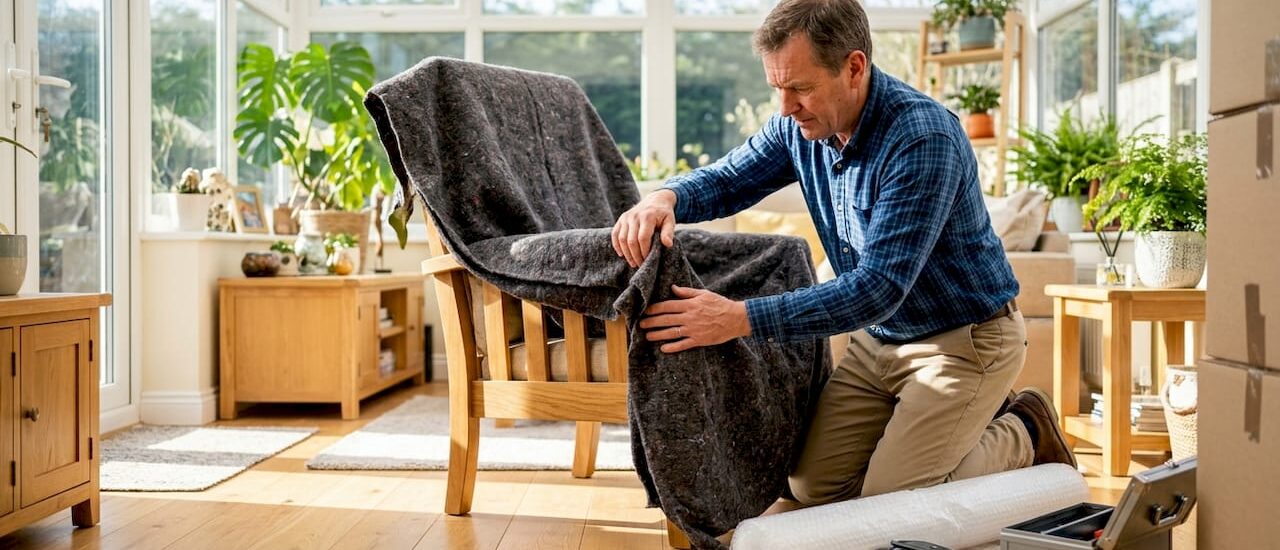
Wrapping furniture before moving is defined as applying protective materials to every surface of a piece before it is handled, loaded, or transported. Most people think it is about keeping things clean. The real purpose is structural protection against scratches, impacts, vibration, and moisture that occur during even short moves. Professional wrapping shields furniture from lifting forces, stacking pressure, and the constant micro-movement that happens inside a moving vehicle. Skip it, and you risk arriving at your new home with gouged timber, cracked glass, and loose joints that were perfectly fine when you left.
Furniture faces several distinct physical threats the moment it leaves your home. Scratches come from surfaces rubbing against each other during handling. Dents appear when corners strike door frames, stair edges, or other pieces of furniture. Moisture and dirt cause surface staining, especially on raw timber and upholstery.
The threat most people overlook is vibration. Vibration loosens screws, weakens joints, and rubs finishes thin over the course of a long drive. A two-hour trip on a Melbourne freeway generates enough road vibration to work a cabinet joint loose if the piece is not padded and secured properly.
Dust and grit are equally dangerous. Trapped dust beneath wrap acts like abrasive sandpaper against a surface during vibration and handling. This means wrapping a dirty piece of furniture can cause more damage than leaving it unwrapped entirely. Cleaning before wrapping is not optional.
Corners and edges are the most vulnerable points on any piece. Foam and cardboard corner guards vastly reduce denting and chipping at these contact points during transit. A dining table with unprotected legs will almost certainly arrive with at least one chipped foot.
Pro Tip: Wipe down every surface with a lightly damp cloth and allow it to dry completely before applying any protective material. This single step prevents the most common cause of surface damage during moves.
Each protective material serves a specific function. Using the wrong one, or layering them in the wrong order, creates new problems rather than solving existing ones.
Moving blankets are the workhorse of furniture protection. They absorb surface abrasions and cushion against vibration across large flat areas like tabletops, cabinet sides, and bed frames. A single moving blanket covers a significant surface area and provides genuine impact absorption, not just a barrier. They are reusable, which makes them cost-effective for families moving multiple times or storing furniture between moves.
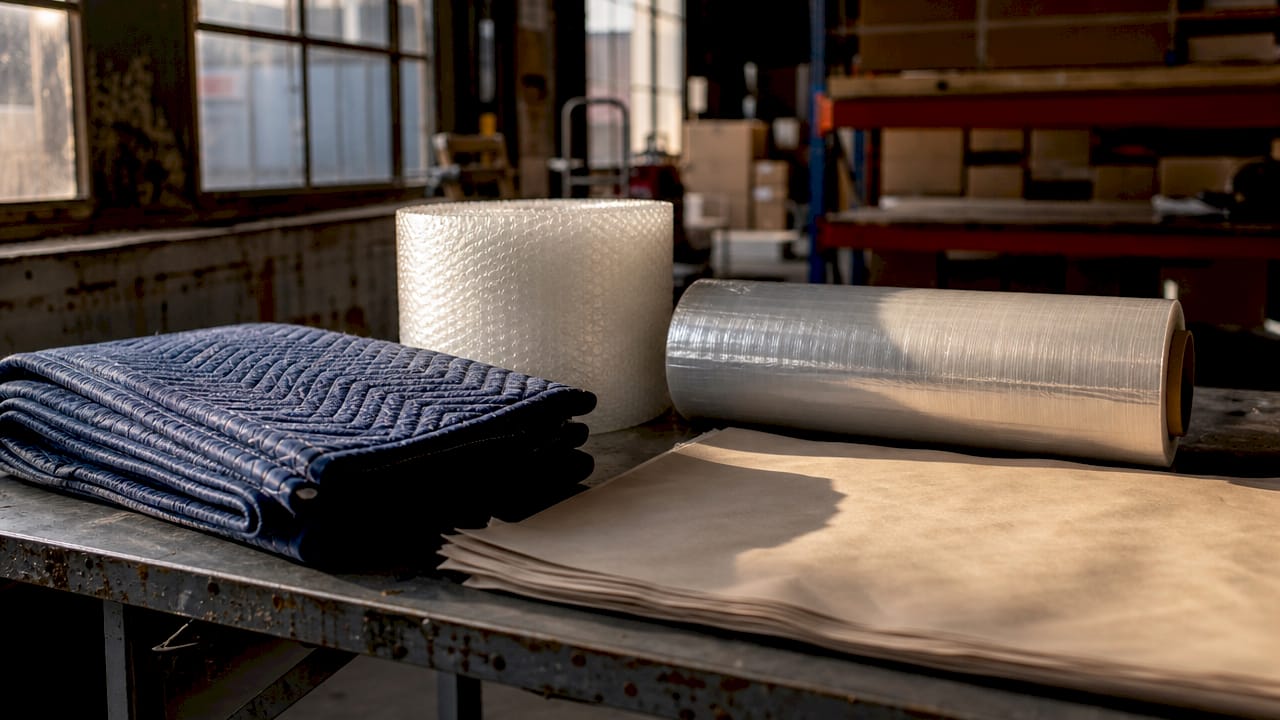
Bubble wrap comes in two standard sizes: 10mm small bubbles for lighter fragile items and 25–30mm large bubbles for heavier fragile pieces. Small bubble wrap suits glass panels, mirror edges, and decorative ceramics. Large bubble wrap suits protruding hardware, carved timber details, and heavy ornamental pieces. Using small bubbles on a heavy item provides inadequate cushioning. Using large bubbles on a delicate glass surface can leave pressure marks.
Stretch wrap does not protect surfaces on its own. Its job is to hold layers together, keep drawers closed, and stop blankets from slipping during transit. Acid-free packing paper and felt pads go directly against delicate timber finishes as the first layer. They prevent chemical reactions and moisture transfer that plastic can cause. You can find a full breakdown of packing supplies for moving to help you choose the right combination for each piece.
Pro Tip: Never apply plastic stretch wrap directly to bare timber or lacquered surfaces. In humid conditions, plastic traps moisture against the wood and causes warping, staining, and finish lift. Always use acid-free paper or felt as the first layer.
| Material | Primary function | Best used on |
|---|---|---|
| Moving blankets | Abrasion and impact absorption | Large flat surfaces, frames, panels |
| Small bubble wrap (10mm) | Shock absorption for light fragile items | Glass, ceramics, mirror edges |
| Large bubble wrap (25–30mm) | Shock absorption for heavy fragile items | Carved timber, heavy hardware |
| Stretch wrap | Holds layers, secures drawers | Over blankets, not on bare surfaces |
| Acid-free paper or felt pads | Protects delicate finishes | Timber, lacquer, veneer |
| Foam or cardboard corner guards | Edge and corner impact protection | Table legs, cabinet corners, frames |
Most furniture damage during moves is not caused by accidents. It is caused by predictable errors made during the wrapping process itself.
Pro Tip: Walk your access route before you start wrapping. Measure doorways, stairwells, and hallway widths. Knowing the tightest point tells you how much clearance your wrapped piece actually has.
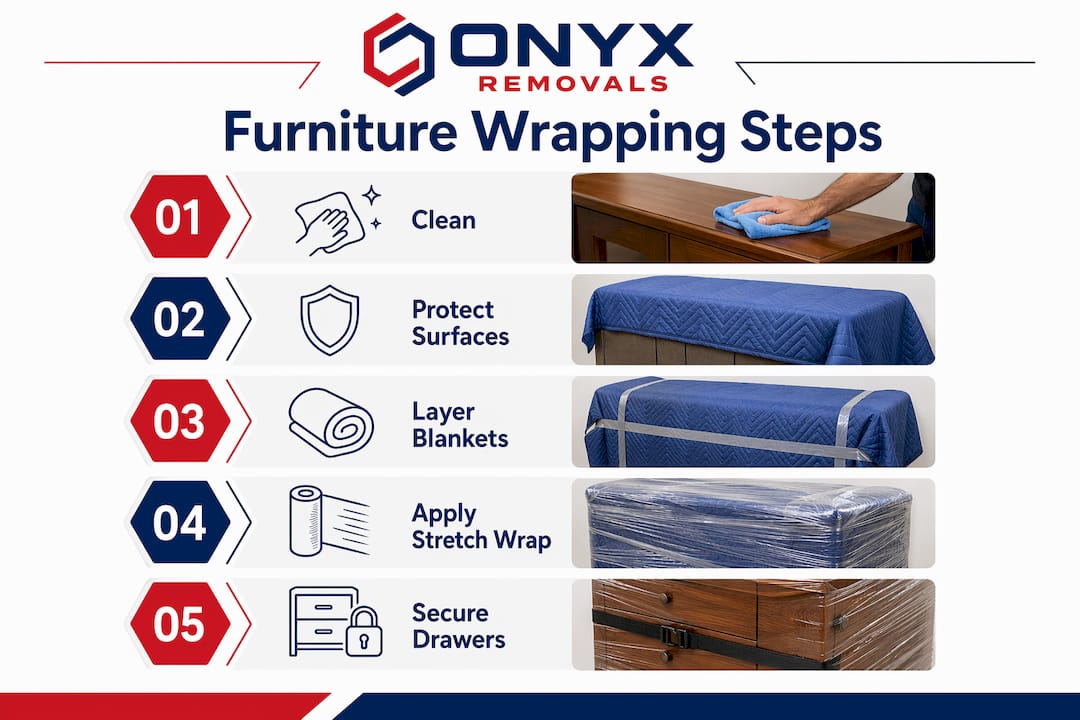
Follow this sequence for every significant piece of furniture. The order matters as much as the materials.
For moves in coastal or high-humidity areas like Melbourne’s bayside suburbs, add a layer of breathable cotton sheeting over upholstered pieces before the outer stretch wrap. This allows moisture to escape rather than accumulate.
Wrapping furniture correctly before a move prevents the majority of transit damage, because cleaning, layering, and securing each piece removes the three main causes: friction, vibration, and impact.
| Point | Details |
|---|---|
| Clean before wrapping | Trapped grit causes abrasion damage during transit; always clean and dry surfaces first. |
| Layer materials in the right order | Use acid-free paper first, then blankets, then stretch wrap; never plastic directly on timber. |
| Protect corners and edges | Foam or cardboard corner guards prevent the most common damage points on any move. |
| Secure furniture in the vehicle | Strapping pieces to the vehicle wall stops shifting, which causes more damage than poor padding. |
| Plan access routes before you wrap | Measuring doorways and stairwells prevents forced handling that damages wrapped furniture. |
Most articles on this topic treat wrapping as a packing task. After years of watching furniture arrive damaged despite being wrapped, I can tell you the real problem is almost never the wrap itself. It is the sequence of decisions made before the first blanket goes on.
The silent killer is vibration. People see a scratch and blame the loading crew. What actually happened is that a loose joint, already weakened by road vibration over two hours, gave way the moment someone lifted the piece off the truck. Wrapping addresses friction and impact. Load securing addresses vibration. You need both, and most DIY moves only do one.
The second thing I have seen consistently is that people wrap for appearance rather than function. A piece that looks neatly wrapped but has a gap over a protruding hinge or an unguarded corner will be damaged. The wrap is not decorative. Every centimetre of vulnerable surface needs coverage.
My honest advice: spend as much time planning your access route and load order as you spend on the wrapping itself. Planning access and handling is as crucial as wrapping. A well-wrapped piece forced sideways through a door it barely fits through will arrive damaged. A piece that fits the route cleanly, wrapped or not, has a much better chance.
— Dinshaw
Onyx Removals brings professional-grade wrapping materials and trained handling to every Melbourne residential move.

The team at Onyx Removals uses moving blankets, acid-free paper, corner guards, and stretch wrap as standard on every job. Every move is planned with access routes assessed before loading begins. For families with large or fragile pieces, Onyx also offers packing and unpacking services that cover full furniture preparation from cleaning through to load securing. If you are planning a residential move in Melbourne and want furniture that arrives in the same condition it left, contact Onyx Removals for a residential removal quote and a moving plan built around your specific items and access requirements.
Dust and grit trapped beneath wrap act like sandpaper against the surface during vibration and handling, causing more damage than leaving the piece unwrapped. Always clean and dry every surface before applying any protective material.
Plastic wrap applied directly to timber, especially in humid conditions, traps moisture and causes warping, staining, and finish lift. Use acid-free packing paper or felt pads as the first layer, then apply plastic stretch wrap over the blankets.
Yes. Scratches and corner damage occur during loading and unloading, not just during long drives. Even a 20-minute move involves multiple lifts, turns, and contact points where an unwrapped piece can be damaged.
Apply acid-free paper or felt pads directly against the surface, then moving blankets for full coverage, then stretch wrap to hold everything in place. Add corner guards before the final stretch wrap layer.
Interstate biosecurity laws require furniture to be free of soil, seeds, and plant matter before crossing state borders, with violations carrying fines over $10,000. Cleaning before wrapping satisfies both protection and legal compliance requirements for interstate relocations.

No Related Post


