



TL;DR:
- Student apartment moving involves careful planning of legal, financial, and logistical steps from lease signing to settling in.
- Most issues arise when students underestimate costs, skip paperwork, or fail to research their chosen housing and lease terms.
Student apartment moving is the process of preparing for, executing, and settling into a rented apartment suited to university life, involving specific legal, financial, and logistical steps. Get any one of those steps wrong and you risk losing your bond, missing move-in deadlines, or starting semester exhausted. This guide covers how student apartment moving works from the moment you sign a lease to the first week you are settled in. Whether you are moving into student housing for the first time or relocating between rentals, the same core principles apply: plan early, document everything, and know your rights.
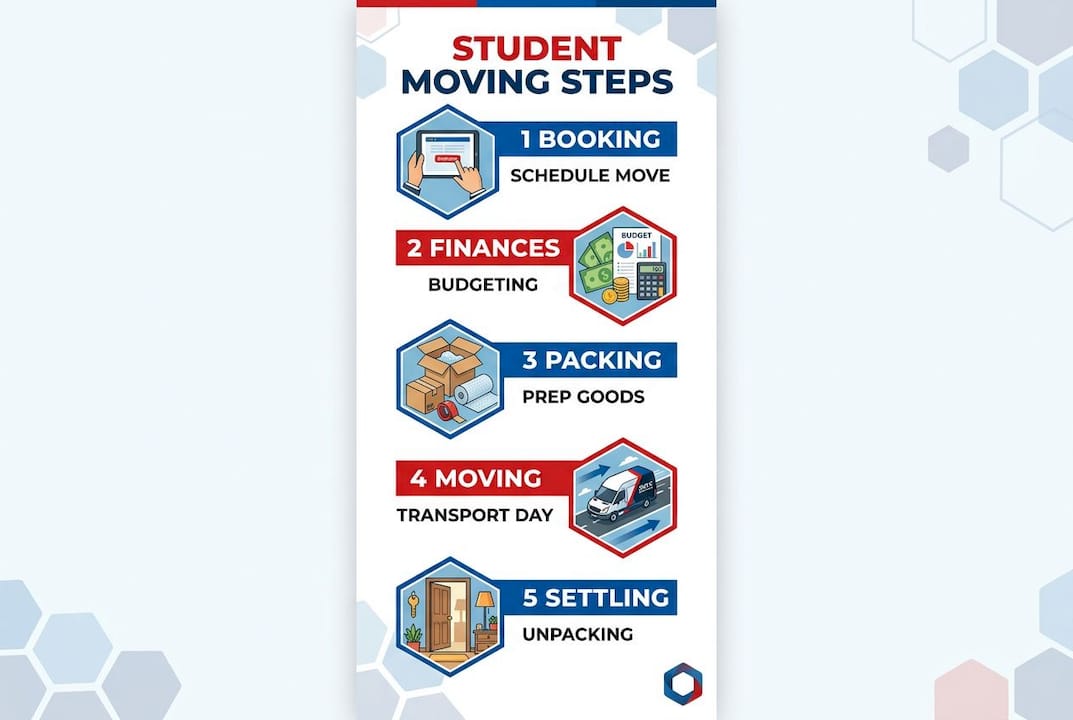
Student apartment moving follows a clear sequence: secure accommodation, sort finances and legal paperwork, pack and transport your belongings, then settle in and protect your tenancy. Skipping steps in that sequence is where most students get into trouble. The process is more structured than a typical house move because rental law, bond obligations, and shared living dynamics all come into play at once.

The first thing to understand is that student housing fills quickly after university offers go out. High demand means students who delay research and booking often miss their preferred options. Starting your search at least two to three months before semester is the standard advice from accommodation providers.
Students must also weigh up the type of accommodation that suits them. Purpose-built student accommodation offers convenience and included utilities, while private rentals cost less but require more self-management. That trade-off shapes every financial and logistical decision that follows.
The financial and legal groundwork is the most overlooked part of a college apartment moving guide. Students focus on packing and forget that the paperwork can cost them hundreds of dollars if handled incorrectly.
Rental bonds in NSW and Victoria are capped at four weeks’ rent and must be lodged with the relevant state authority. In NSW, bonds go to NSW Fair Trading. Failure to lodge can invalidate your refund claim at the end of the tenancy. Always ask your landlord or agent for a bond lodgment receipt within a few days of paying.
Utilities are often not included in student apartment rent. Utility costs in major Australian cities typically run $100–$200 per month on top of rent. That figure covers electricity, gas, and water, but not internet, which adds another $60–$80 per month in most cases. Build those numbers into your weekly budget before you sign anything.
Landlords must give seven days’ notice for routine inspections and cannot enter the property outside 8AM–6PM without your consent. Knowing this stops you from agreeing to unreasonable access requests. Read your lease carefully and flag anything that contradicts standard tenancy law in your state.
Pro Tip: Take screenshots of every online listing and save all email correspondence with your landlord before you move in. If a dispute arises later, that paper trail is your best evidence.
Packing for a student apartment move is different from a full household move. You are moving into a smaller space, often up several flights of stairs, frequently in the middle of an Australian summer. The physical toll of moving in summer heat is real, and packing light is the single most effective way to reduce it.
The best strategy is to pack only what you can carry comfortably and buy bulky items after arrival. Flat-pack furniture, large appliances, and bulk pantry items are all cheaper to buy locally than to transport. Packing in soft bags rather than rigid boxes also makes it easier to squeeze items into lifts and narrow corridors.
A practical apartment moving checklist helps you stay organised across the days before and after the move. Label every bag or box by room and purpose, not just by contents. “Bathroom” is more useful than “shampoo, towels, soap.”
Pro Tip: If you are moving in summer, start before 9AM. The difference between a 7AM start and a 10AM start in Melbourne or Brisbane in january can be 10 degrees of temperature.
The first 72 hours after moving in are the most important for protecting your tenancy. Most students skip the paperwork and go straight to unpacking. That is a mistake that can cost you your entire bond when you move out.
Pro Tip: Use your phone to record a short video walkthrough of the entire apartment on move-in day. A video is harder to dispute than photos and takes less than five minutes.
Homesickness is also common in the first few weeks. Maintaining regular contact with family and joining campus communities early are the two most effective ways to manage it. The social side of settling in matters as much as the practical side.
Most costly mistakes in student apartment relocation happen before move-in day, not during it. Awareness of the common pitfalls is the fastest way to avoid them.
“Rental readiness means more than having the money for a bond. It means reviewing every document, verifying every party, and never paying a cent without a signed, written agreement in your hand.”
For a thorough overview of the challenges specific to apartment moves, the types of issues students face are well documented and largely preventable with preparation.
Student apartment moving works best when legal, financial, and logistical steps are handled in sequence, starting well before move-in day.
| Point | Details |
|---|---|
| Book accommodation early | Student housing fills fast after offers; start searching at least two to three months before semester. |
| Know your bond rights | Bonds are capped at four weeks’ rent and must be lodged with the state authority to be refundable. |
| Pack light, buy local | Bring only what you can carry and purchase bulky items after arrival to reduce transport strain. |
| Complete the Condition Report | Photograph all pre-existing damage within three days to protect your bond at the end of the tenancy. |
| Budget beyond rent | Utilities typically add $100–$200 per month; factor in internet, groceries, and transport as well. |
The students who handle their first apartment move well share one habit: they treat it like a project, not an event. They book accommodation early, read the lease before signing, and arrive on move-in day with a checklist rather than a vague plan.
The students who struggle almost always made the same two errors. They underestimated costs and overestimated how much stuff they needed to bring. I have seen students arrive with a car full of kitchen appliances for a furnished apartment. I have also seen students sign leases without reading them, then discover mid-semester that they are responsible for water bills they assumed were included.
My honest advice: pack as if you are going away for a month, not moving your entire life. You can always buy more once you know what the apartment actually needs. And read every line of that lease. Not because it is exciting reading, but because the one clause you skip is usually the one that matters.
The social dimension of student housing also gets underestimated. Shared apartments work when people communicate early and set clear expectations. The flatmate relationships that go wrong almost always started with assumptions rather than conversations. Have the awkward chat about cleaning and noise in week one. It saves months of tension later.
— Dinshaw
Organising a student apartment move is manageable, but the physical side of it is harder than most students expect, especially when lifts are busy, parking is limited, and the mercury is climbing.
Com offers residential removal services designed for exactly this kind of move. The team handles apartment relocations across Melbourne with flexible scheduling to fit around lease start dates and university timetables. Whether you need a full-service move or just help transporting the heavy items, Com takes the physical burden off your hands so you can focus on settling in. Get a quote and book your move-in date through the Onyx Removals website.
A rental bond is a security deposit paid at the start of a tenancy, capped at four weeks’ rent in NSW and Victoria. It must be lodged with the relevant state authority, such as NSW Fair Trading, and is refunded at the end of the tenancy if no damage or rent arrears exist.
Students should start researching and booking at least two to three months before semester begins. Student housing fills quickly after university offers are released, and late applicants often miss their preferred options.
A Condition Report documents the state of the property at the start of your tenancy, including any pre-existing marks, damage, or faults. Complete it within three days of moving in and attach dated photographs to protect your bond when you move out.
Utilities typically add $100–$200 per month in major Australian cities, and internet adds a further $60–$80 per month. Students should also budget for groceries, public transport, and any household items not provided with the apartment.
No. Landlords must give seven days’ notice for routine inspections and cannot enter outside 8AM–6PM without the tenant’s consent under standard Australian tenancy law.

No Related Post


