



TL;DR:
- Checklists help Melbourne families manage complex legal, logistics, and emotional aspects of moving.
- Proper preparation, flexibility, and professional help reduce stress and improve family adjustment.
- Post-move tasks like updating IDs, connecting utilities, and exploring the neighbourhood are crucial.
Picture this: it’s two weeks before moving day, your kitchen is half-packed, the kids are anxious, and you’ve just realised you haven’t notified the school or updated your address with VicRoads. Sound familiar? Moving with a family in Melbourne is genuinely complex. There are rental obligations under Victorian law, school transfer timelines, utility handovers, and the emotional needs of children to manage all at once. This guide gives you a practical, family-first set of checklists covering every phase of your move, from the first planning steps right through to settling into your new neighbourhood.
| Point | Details |
|---|---|
| Family-focused planning | Checklists tailored for Melbourne ensure families meet legal and practical challenges together. |
| Rental requirements | Condition reports and renting standards must be addressed for stress-free moves. |
| Utility setup essentials | Organising electricity, gas, and internet ahead of time ensures a smooth transition. |
| Professional help advantage | Professional removalists offer peace of mind and reduce moving-day chaos for families. |
| Support children emotionally | Routine and early involvement help kids settle into their new home more comfortably. |
Moving house is consistently ranked among life’s most stressful events, and for families it’s even more layered. You’re not just shifting furniture. You’re managing school enrolments, rental paperwork, children’s routines, and a dozen government agencies that all need your new address. Without a structured approach, things fall through the cracks fast.
Melbourne’s rental market operates under Victoria’s Residential Tenancies Act, which sets specific obligations for both tenants and landlords. Families renting here must understand condition reports, minimum rental standards, and bond lodgement timelines. Miss one step and you risk losing part of your bond or being held liable for pre-existing damage. The importance of moving checklists goes well beyond keeping you organised. They protect your legal rights.
Beyond the paperwork, checklists serve a deeply human purpose. When children see a parent confidently working through a list, it signals that everything is under control. That reassurance matters enormously. Kids process change differently to adults, and visible organisation helps reduce their anxiety.
Here’s what a Melbourne-specific family moving checklist must cover:
“Melbourne families must notify schools early, comply with rental standards, and complete condition reports to protect their rights and ensure a smooth transition.”
The checklist approach works because it breaks an overwhelming process into manageable steps. Each tick is a small win, and small wins build momentum when everything else feels chaotic.
With the importance of preparation clear, here’s a detailed pre-move checklist to keep families organised. Starting eight weeks out gives you the best buffer. Rushing this phase is where most families lose time, money, and sanity.
Pro Tip: Take photos of every room in your current rental before you begin packing. These images are timestamped evidence that protects your bond if any disputes arise later.
Families renting in Melbourne should pay close attention to the condition report process. Condition reports must be submitted within five days of moving in, and checking rental minimum standards beforehand is a legal right you should always exercise. For more on navigating Victoria’s rental rules, our renting advice for families covers the key obligations in plain language.
| Task | Recommended timing | Priority |
|---|---|---|
| Book removalist | 6 weeks before | High |
| Notify school | 4 weeks before | High |
| Update VicRoads address | Before moving day | High |
| Arrange mail redirection | 2 weeks before | Medium |
| Declutter and donate | 3 weeks before | Medium |
| Pack non-essentials | 1-2 weeks before | Medium |
| Confirm utility transfers | 1 week before | High |
Once planning is complete, moving day requires an easy-to-follow action plan. The best-prepared families still find moving day chaotic without a clear structure. Here’s how to keep it manageable.
Pro Tip: Label boxes with a coloured dot system by room. Give each room a colour and stick matching dots on the door frame at the new property. Removalists can unload without asking questions, saving everyone time.
One of the most common mistakes families make is trying to do everything themselves. Professional movers reduce stress significantly for families, particularly when there are young children involved. The cost is almost always worth it when you factor in the physical effort, the risk of damage, and the mental load of coordinating everything alone. Our guide to professional removalists for families explains exactly what to look for when choosing a team.
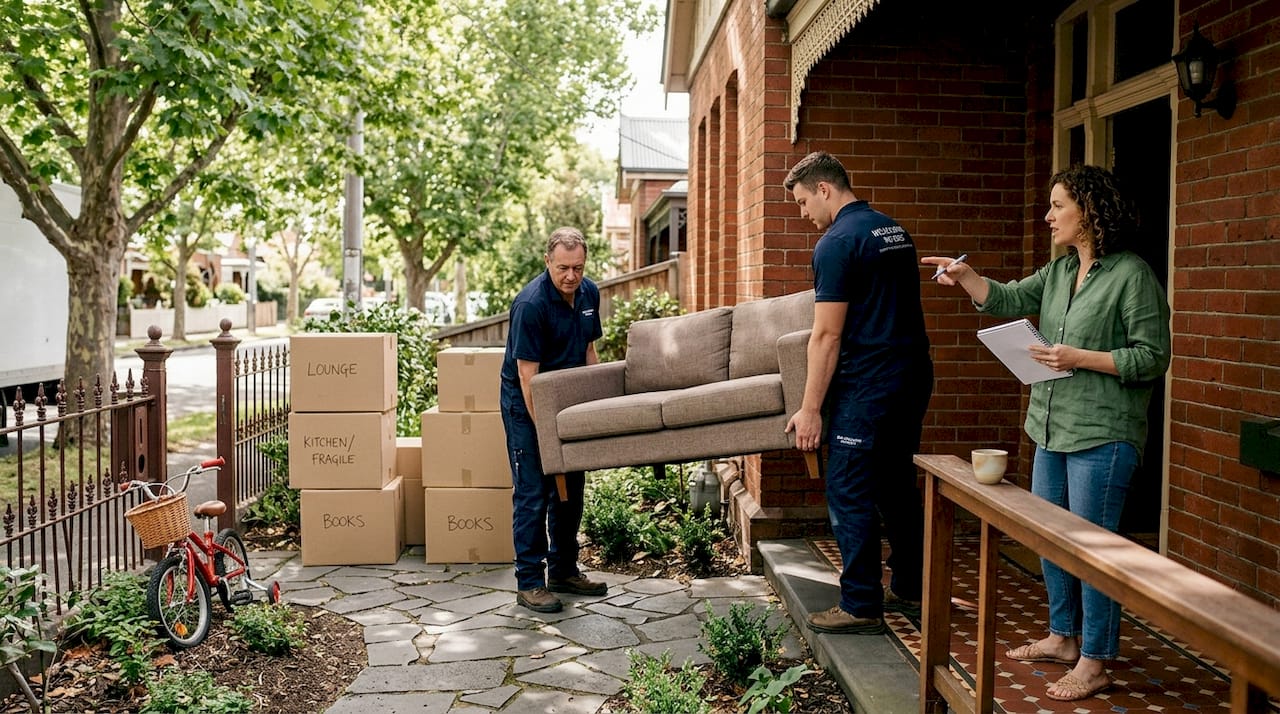
After successfully moving in, it’s crucial to complete these follow-up steps promptly. The first week in a new home is busy, but skipping these tasks creates problems down the track.
Utility connections and VicRoads updates are among the most commonly overlooked post-move steps, yet both carry legal timeframes. Our utility connection checklist walks you through each provider category, and our move-in checklist for Melbourne rentals covers the condition report process in detail.
| Post-move task | Timeframe | Notes |
|---|---|---|
| Condition report submission | Within 5 days | Photograph all issues |
| VicRoads licence update | Within 14 days | Legal requirement |
| Utility connections | Before move-in if possible | Confirm account details |
| School start date | As agreed | Confirm with new school |
| GP and dentist registration | Within first month | Especially for young children |
Beyond logistics, a smooth move is about supporting your family’s emotional journey. The physical tasks are finite. The emotional adjustment takes longer, and it deserves just as much attention.
Pro Tip: Schedule a “first night” celebration in the new home. Order pizza, set up a movie, and make the first evening feel like an adventure rather than an ending. It reframes the experience positively for kids of all ages.
“People-first checklists that address emotional needs alongside logistics result in smoother transitions and faster family adjustment after a move.”
For families moving into apartments, our apartment move-in checklist includes building-specific considerations like lift bookings, parking permits for removalists, and body corporate rules that often catch families off guard.
After years of helping Melbourne families relocate, we’ve noticed something consistent. The families who struggle most aren’t the ones without checklists. They’re the ones who treat the checklist as a rigid script rather than a flexible guide.
Real moves don’t follow plans perfectly. Lifts break down. Children have meltdowns at the worst moment. Neighbours park in the loading zone. The families who navigate these moments well are the ones who’ve built flexibility into their day and assigned a calm decision-maker to handle surprises.
What checklists almost never mention: arrange childcare for moving day if your children are under ten. Trying to manage a toddler while directing removalists is genuinely unsafe and exhausting. Similarly, emotional burnout hits parents hardest in the 48 hours after moving in, not during the move itself. Plan for rest, not productivity, in those first two days.
The benefits of hiring professionals extend beyond the physical work. A good removalist team reads the room, adapts to delays, and takes pressure off the family in ways no checklist can replicate. Trust the process, but trust experienced people even more.
A well-structured checklist is your strongest tool, but it works best when paired with the right people behind it.

At Onyx Removals, we work with Melbourne families every day to handle the complexity that no checklist can fully capture. From residential removal in Melbourne to packing, storage, and cleaning, our team builds a tailored plan around your family’s specific needs and timeline. We know Melbourne’s suburbs, its rental requirements, and the real pressure families face on moving day. If you’re ready to move with confidence, secure removal quotes from our team and let us take the heavy lifting off your plate, literally and figuratively.
Start by notifying your child’s school, then check rental minimum standards at your new property, and build your moving checklist from there with clear deadlines for each task.
Filling out a condition report within five days of moving in protects your bond and ensures any pre-existing damage is formally documented before you can be held responsible.
Professional movers are recommended for families with young children, as they reduce physical risk, save time, and significantly lower the stress load on moving day.
Families must organise electricity, gas, water, and NBN connections, and update their driver’s licence with VicRoads within 14 days of moving into a new Melbourne home.
Maintain familiar routines, unpack children’s rooms first, and explore the new neighbourhood together as a family to build positive associations with the new home quickly.

No Related Post


