



Relocating in Melbourne can quickly become overwhelming without a structured plan. Many people underestimate the complexity of moving, only to find themselves scrambling at the last minute, forgetting critical tasks, or facing unexpected costs. Research shows that 54% of DIY movers regret not hiring professionals, often because they lacked proper organisation. A well-crafted moving checklist transforms this chaos into a manageable process, providing clarity, reducing stress, and ensuring nothing falls through the cracks. This article explores the practical essentials of moving checklists and how they deliver real value for Melbourne residents and businesses planning their next relocation.
| Point | Details |
|---|---|
| Early planning window | Starting 8 to 12 weeks out gives you enough runway to organise tasks and reduce stress. |
| Decluttering saves costs | Decluttering before moving can cut costs by 20 to 30 percent by reducing the volume moved. |
| Labelling by room | Labelling boxes by room makes unpacking smoother and faster so you can settle in quickly. |
| Buffer time included | Build realistic buffers for delays and unexpected issues to avoid last minute scrambles and premium rates. |
Moving involves dozens of interconnected tasks, from booking removalists and organising utilities to packing fragile items and coordinating access to your new property. Without a systematic approach, it’s easy to overlook critical steps or misjudge how long each task will take. A moving checklist provides the structure you need while remaining flexible enough to accommodate adjustments as circumstances change.
The difference between a smooth relocation and a stressful one often comes down to planning. Checklists enable decision-based planning rather than rigid task completion, incorporating realistic buffers for delays and unexpected issues. This approach contrasts sharply with the DIY experience, where 54% of movers wish they’d sought more help, often because they underestimated the complexity involved.
Melbourne presents unique moving challenges that make checklists even more valuable. Seasonal weather patterns can affect moving day conditions, particularly during summer heat or winter rain. Booking removalists early is crucial, as demand peaks during school holidays and at month-end when most leases expire. Local council regulations around parking permits for moving trucks and building access restrictions in apartments add another layer of complexity that requires advance planning.
A comprehensive checklist helps you balance time, budget, and resources effectively, ensuring you allocate effort where it matters most.
Using a moving checklist timeline reduces common regrets by encouraging realistic planning from the start. You can identify potential bottlenecks early, secure competitive quotes from multiple removalists, and avoid the premium rates charged for last-minute bookings. The psychological benefit is equally important: ticking off completed tasks provides tangible progress and reduces the anxiety that often accompanies major life transitions.
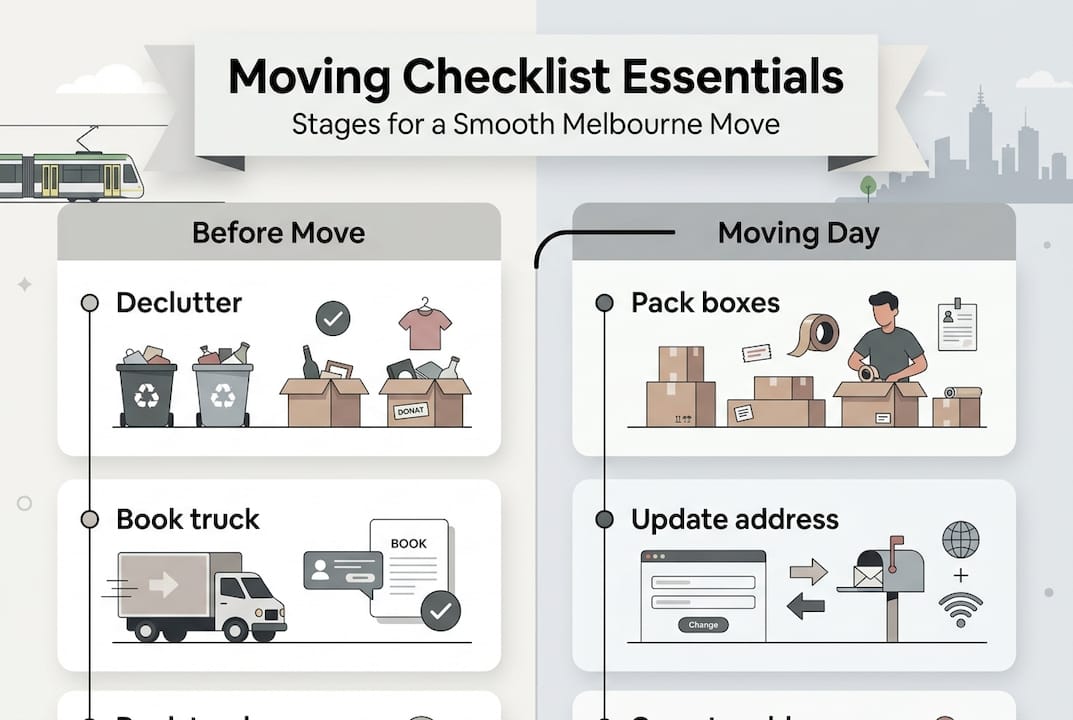
A thorough moving checklist breaks down your relocation into manageable stages, each with specific tasks and realistic deadlines. Starting 8-12 weeks before moving gives you enough runway to handle each phase without rushing, reducing both stress and the likelihood of costly mistakes.
The first priority is decluttering your possessions. Sorting through what you actually need to move can cut costs by 20-30%, as removal companies typically charge based on volume or weight. This process also simplifies packing and unpacking, helping you start fresh in your new space. Decluttering for a move requires honest assessment of each item’s value and utility.
Your checklist should include these critical components:
Labelling deserves special attention in your checklist. How to label moving boxes effectively means marking each box with its destination room and a brief contents description. This simple step dramatically speeds up unpacking and helps removalists place boxes in the right locations, saving you hours of sorting later.

Pro Tip: Include buffer days in your moving timeline checklist for unexpected delays. Melbourne traffic, weather disruptions, or last-minute complications can derail even the best-laid plans if you’ve scheduled everything too tightly.
The choice between DIY and professional moving significantly impacts your checklist complexity and stress levels. Each approach has distinct advantages, and understanding how checklists support both helps you make an informed decision for your Melbourne relocation.
DIY moves appeal primarily through cost savings. You control the timeline, handle your belongings personally, and avoid professional service fees. However, the 54% regret rate among DIY movers reveals a common pattern: people underestimate the physical demands, time requirements, and logistical complexity involved. A detailed checklist becomes absolutely critical for DIY moves, as you’re responsible for every task that a professional service would normally handle.
Professional removalists bring expertise, equipment, and efficiency that can transform your moving experience. They handle heavy lifting, navigate tricky staircases, and pack fragile items with proper materials and techniques. The trade-off is higher upfront cost and the need to book well in advance, particularly during peak moving seasons. Your checklist for a professional move focuses more on coordination and communication rather than physical tasks.
| Aspect | DIY move | Professional move |
|---|---|---|
| Cost | Lower upfront expense | Higher service fees but potential savings on time and damage |
| Physical effort | Significant manual labour required | Minimal physical involvement needed |
| Time commitment | Multiple days of packing and moving | Typically completed in one day |
| Risk of damage | Higher without proper equipment and training | Lower with experienced handlers and insurance |
| Checklist complexity | Extensive, covering every task detail | Streamlined, focusing on coordination |
Regardless of which approach you choose, checklists improve decision-making and timing. For DIY moving vs professional comparisons, consider your physical capability, available help, time constraints, and budget. A hybrid approach sometimes works best: hiring professionals for heavy furniture and fragile items while handling smaller boxes yourself.
Professional services often include packing, which substantially reduces your checklist workload. Professional packing vs DIY involves weighing the time savings and reduced breakage risk against the additional cost. If you opt for professional packing, your checklist shifts to decluttering beforehand, preparing access to all areas, and coordinating timing.
Pro Tip: Even with professional movers, maintain a personal checklist for tasks only you can complete, such as transferring utilities, updating your address with government agencies, and notifying banks and subscriptions.
Creating a comprehensive checklist is just the first step. Using it effectively throughout your relocation requires consistent engagement, regular updates, and strategic task allocation. The goal is transforming your checklist from a static document into a dynamic tool that guides daily decisions and keeps your move on track.
Start by regularly reviewing and updating your checklist as you complete tasks. Ticking off finished items provides psychological momentum and helps you visualise progress. Set aside a few minutes each day to assess what’s done, what’s pending, and whether any adjustments are needed based on changing circumstances. This habit prevents tasks from slipping through the cracks during busy periods.
Allocate specific tasks to family members or team members if you’re managing a business relocation. Clear assignment prevents duplication of effort and ensures accountability. For example, one person might handle all utility transfers while another focuses on packing the kitchen. Children can pack their own rooms under supervision, giving them ownership in the process and reducing your workload.
Key strategies for checklist success:
Final tasks often get overlooked in the rush of moving day. Your pre-move cleaning checklist should cover both your old and new properties. Most rental agreements require thorough cleaning before you vacate, and arriving at a clean new home makes settling in far more pleasant. Schedule these tasks explicitly rather than assuming you’ll fit them in around other activities.
Communication is crucial when working with removalists. Confirm the moving date, arrival time, and any special requirements at least a week in advance. Walk through both properties mentally or physically to identify potential access issues like narrow doorways, steep stairs, or parking restrictions. Addressing these concerns before moving day prevents delays and additional charges.
Pro Tip: Take photos of your old property after cleaning and before final handover. This documentation protects you if disputes arise about the property’s condition and your bond refund.
Secure home removal quotes from multiple companies early in your planning process. Comparing quotes helps you budget accurately and identify the best value for your specific needs. Provide detailed information about your move, including the number of rooms, any specialty items like pianos or artwork, and access considerations at both locations.
While a comprehensive moving checklist provides the foundation for a successful relocation, partnering with experienced professionals can elevate your moving experience from manageable to genuinely stress-free. Onyx Removals specialises in residential removal services throughout Melbourne, offering tailored support that complements your careful planning.

Our team understands that every move is unique, which is why we work with you to develop personalised moving plans that address your specific requirements and timeline. Whether you’re relocating a small apartment or a large family home, professional expertise ensures your belongings arrive safely and efficiently. Secure accurate home removal quotes easily through our streamlined process, allowing you to budget confidently for your move.
For those who want to minimise their moving workload even further, our packing and unpacking services save you valuable time and reduce the physical demands of relocation. Professional packers bring the right materials and techniques to protect your possessions, while unpacking services help you settle into your new space quickly and efficiently.
Moving checklists organise tasks, timelines, and priorities clearly, preventing the last-minute chaos that often accompanies relocations. They help you anticipate common moving challenges and build in time to address delays or unexpected issues. By breaking down a complex process into manageable steps, checklists transform overwhelming projects into achievable daily actions.
Ideally, begin your moving checklist 8-12 weeks before your scheduled move date to allow ample planning time. This early start lets you declutter systematically, research and book removalists when availability is best, and complete tasks without the stress of rushing. Earlier planning also gives you flexibility to adjust timelines if circumstances change.
Essential checklist items include decluttering, booking removalists, organising packing supplies, labelling boxes by room, scheduling utility connections, and arranging cleaning for both properties. Including buffer days for unexpected delays is critical, as is creating an essentials box for immediate needs. Each task should have a realistic deadline based on your moving date.
Professional removalists reduce stress and the risk of damage but typically cost more than handling the move yourself. DIY moving saves money but requires thorough checklist use and significant physical effort to avoid the regrets reported by over half of DIY movers. Consider your budget, physical capability, available help, and time constraints when deciding.
Build buffer days into your moving schedule specifically to absorb delays without derailing your entire plan. Stay flexible and update your checklist to accommodate changes as they arise, adjusting subsequent tasks and deadlines accordingly. Maintain open communication with removalists and service providers so everyone understands revised timelines and can adapt their schedules.

No Related Post


