


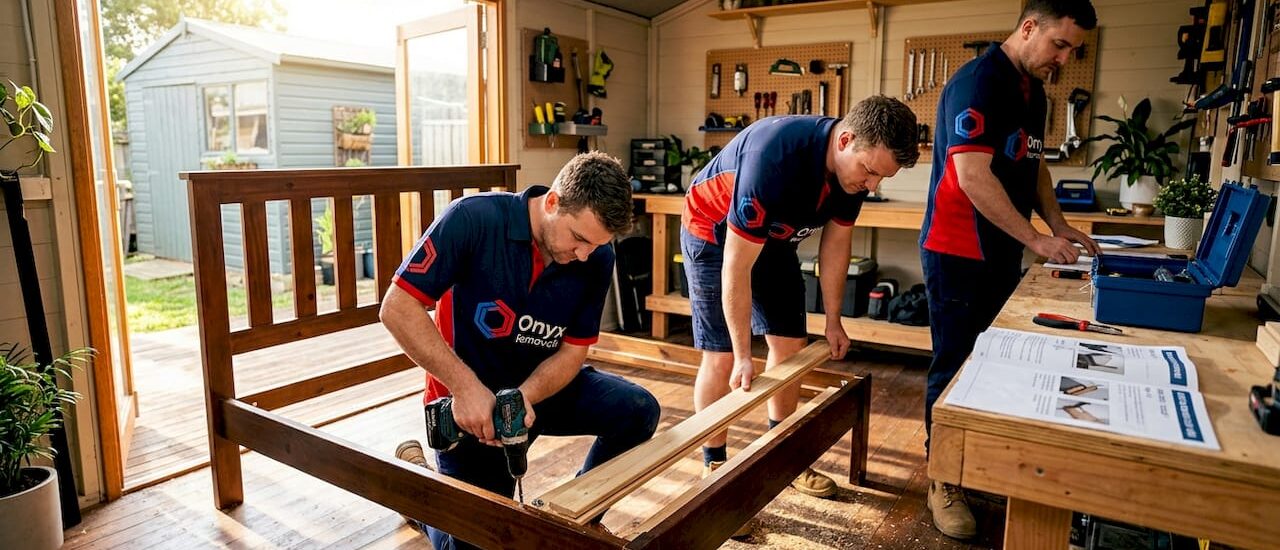
TL;DR:
- Movers who disassemble and reassemble furniture provide specialized services to safely transport large, complex items like beds and wardrobes. They follow a structured process, using proper tools, labelling hardware, and measuring routes to prevent damage and delays during moves. Hiring professionals for disassembly ensures proper reassembly, reduces injury risk, and offers peace of mind for valuable or oversized furniture.
Movers that disassemble and reassemble furniture are removalists who take apart complex furniture items before transport and rebuild them at your new home. This specialised service covers beds, wardrobes, dining tables, sectional sofas, and flat-pack pieces like IKEA PAX wardrobes or BILLY bookcases. Professional disassembly services typically cost between $69 and $150 per project, depending on complexity and location. The team arrives with Allen keys, power drills, dollies, lifting straps, and protective padding. For anyone planning a residential move in Melbourne, knowing exactly what these professionals do and when to hire them saves time, money, and damaged furniture.
Not every piece of furniture needs to come apart before a move, but several categories almost always do. Recognising them early lets you plan your budget and timeline accurately.
Beds and bed frames are the most common items requiring professional disassembly. Queen and king frames with slatted bases, storage drawers, or upholstered headboards cannot fit through standard doorways in one piece. The same applies to bunk beds and loft frames, which are often bolted together with multiple connection points.
Wardrobes and large storage units present a similar challenge. A standard double-door wardrobe from Freedom or Fantastic Furniture can weigh over 80 kilograms assembled. Removing legs, drawers, and shelves can reduce overall weight by 25% or more, making transport significantly safer and less likely to cause injury.
Sectional and modular sofas are designed to separate at connection points, but the process still requires care. Forcing a sectional around a tight stairwell corner without disconnecting the modules is a reliable way to tear upholstery or crack a timber frame.
Other items that regularly require attention include:
Pro Tip: Photograph every piece of furniture from multiple angles before disassembly. These photos serve as your reassembly reference and as evidence if any damage occurs during the move.
Professional furniture assembly movers follow a structured process that eliminates guesswork and protects both the furniture and the property. The sequence matters as much as the technique.
Pre-move measurement. Before move day, experienced removalists measure the furniture against doorways, hallways, and staircases. Measuring move routes thoroughly is the single most overlooked step, yet it prevents the costly last-minute scramble of unplanned onsite disassembly.
Logical disassembly order. Professionals remove loose components first: cushions, glass panels, drawers, and shelves. Structural disassembly follows, working from top to bottom on most pieces. This order prevents components from falling and reduces the risk of stripped bolts or snapped cam locks.
Hardware bagging and labelling. Every screw, bolt, and cam lock goes into a labelled zip-lock bag. Labelling hardware with detailed notes such as “Bed frame left rail screws” eliminates guesswork at reassembly and prevents the frustrating scenario of leftover hardware with no obvious home.
Protective wrapping and loading. Disassembled panels are wrapped in moving blankets or stretch wrap before loading. Using dollies and shoulder-strapped lifting systems reduces the effort of moving heavy furniture by 60 to 70%, which means less fatigue and fewer dropped items.
Reassembly and quality check. At the destination, professionals rebuild each piece in the correct room before unpacking begins. A quality check confirms all joints are tight, drawers slide freely, and no hardware remains unused.
Pro Tip: Ask your removalist to coordinate disassembly and reassembly scheduling as part of the move plan. Booking these tasks in sequence rather than separately reduces total move time and avoids gaps where furniture sits unprotected.
The tools professionals carry matter enormously. A quality removalist arrives with power drills, torque-controlled screwdrivers, rubber mallets, furniture dollies rated for 300 kilograms, and corner guards for protecting walls. You can read more about the equipment for heavy furniture moves that Melbourne removalists rely on.
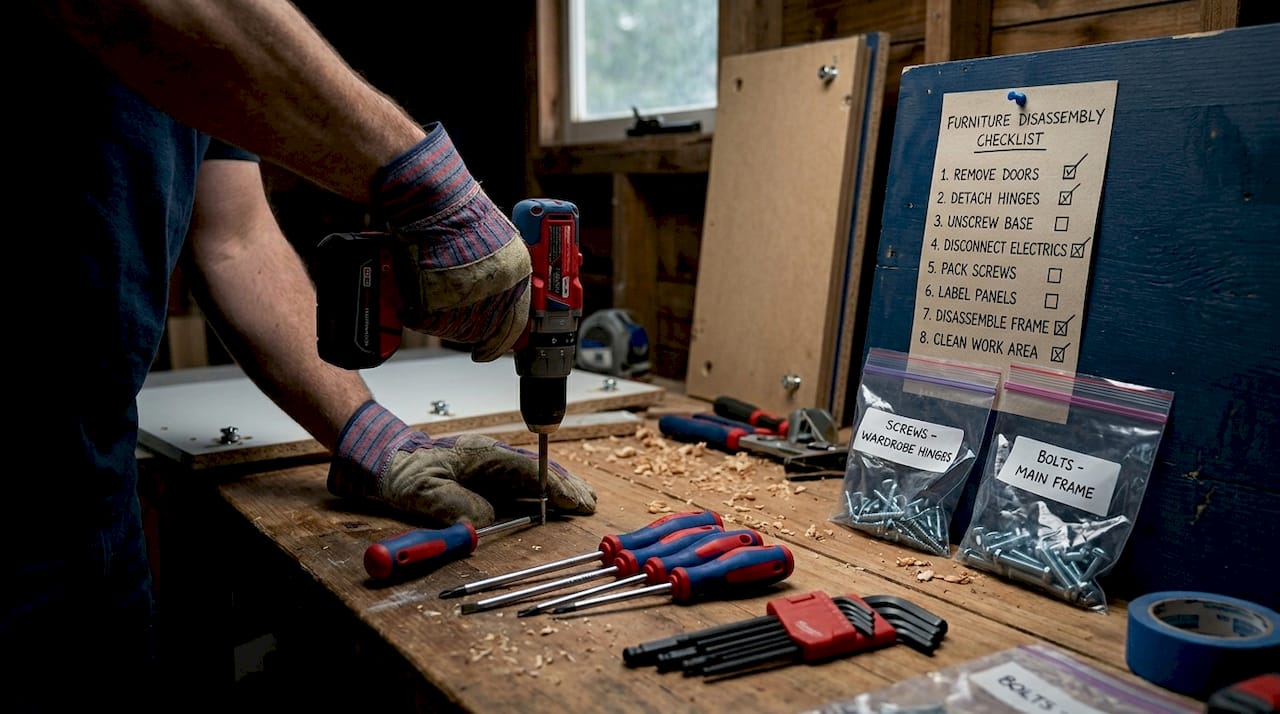
The decision to handle furniture disassembly yourself or hire professionals comes down to three factors: the complexity of the pieces, your physical capacity, and the true cost of getting it wrong.
Self-disassembly of basic furniture is achievable with a standard toolkit: Allen keys, a Phillips head screwdriver, an adjustable spanner, and a rubber mallet. Flat-pack items with cam-lock fittings are generally straightforward. The problem is that most people underestimate how long the process takes and how easy it is to lose hardware. Without correct bagging and labelling, parts are easily misplaced during transport, and a missing bolt can leave a bed frame unusable on your first night in a new home.
| Factor | DIY disassembly | Professional service |
|---|---|---|
| Upfront cost | Low (tools you own) | $69 to $150+ per item |
| Time required | 1 to 3 hours per complex piece | 20 to 45 minutes per piece |
| Risk of damage | High without experience | Low with trained technicians |
| Risk of injury | Moderate to high for heavy items | Low with correct equipment |
| Hardware management | Relies on your organisation | Systematic bagging and labelling |
| Reassembly confidence | Variable | Guaranteed by the removalist |
Professional movers offer safer handling for fragile, oversized, or high-value items, using proper tools and techniques that DIY methods simply cannot replicate. The situations where hiring professionals is clearly worth it include:
For a detailed breakdown of the step-by-step disassembly process, Onyx Removals has published a practical guide covering the most common furniture types.

Not every removalist company offers furniture disassembly and reassembly as a standard service. Some treat it as an add-on with separate pricing; others include it within their hourly rate. Knowing what to ask before you book prevents surprises on move day.
Questions to ask every removalist before booking:
Beyond the questions, verify the company’s credentials. Check Google Reviews and ProductReview.com.au for mentions of furniture handling specifically. A removalist with 200 five-star reviews for general moving but no mention of furniture assembly may not have the specialised experience you need. Look for local movers with assembly experience listed explicitly in their service descriptions.
Transparent pricing is a reliable indicator of professionalism. A company that cannot give you a clear answer on disassembly costs before the job starts is likely to add charges after the truck is loaded. Get everything in writing, including the scope of reassembly at the destination.
Preparation on your end directly affects how efficiently the removalists can work. These steps take less than two hours but can save hours of delay on move day.
Measure every pathway in advance. Walk the route from each piece of furniture to the front door and measure doorways, hallway widths, and staircase clearances. Write the measurements down and share them with your removalist before the move date.
Clear pathways completely. Remove rugs, pot plants, shoe racks, and any other obstacles from hallways and doorways. Removalists carrying a 90-kilogram wardrobe panel cannot step over a doormat.
Remove loose components yourself. Take off cushions, pull out drawers, remove glass panels, and detach any items that are not structurally part of the furniture. This speeds up the professional disassembly process and reduces the risk of breakage.
Photograph everything before disassembly begins. Take photos of each piece from the front, back, and sides. For complex items like modular shelving, photograph the configuration from a distance so the reassembly layout is clear.
Protect floors and walls. Lay down cardboard or moving blankets in high-traffic areas before the team arrives. Corner guards on doorframes prevent scuffs when panels are carried through.
Communicate your priority list. Tell your removalists which rooms need furniture set up first. Beds and essential storage should be reassembled before the team leaves.
Pro Tip: If you are doing partial DIY disassembly before the removalists arrive, use the furniture assembly and disassembly guide from Onyx Removals to avoid common mistakes with cam-lock fittings and bolt sequences.
Hiring movers that disassemble and reassemble furniture reduces damage risk, saves time, and protects both your furniture and your property during a residential move.
| Point | Details |
|---|---|
| Professional pricing | Furniture disassembly and reassembly services cost between $69 and $150 per item depending on complexity. |
| Disassembly reduces risk | Removing legs, drawers, and shelves cuts furniture weight by up to 25%, making transport safer. |
| Hardware management is critical | Labelling screws and bolts by component prevents missing parts and speeds up reassembly. |
| Measure before move day | Measuring doorways and hallways in advance prevents last-minute onsite disassembly and delays. |
| Verify credentials and scope | Confirm disassembly is included in the quote, check reviews for furniture-specific experience, and get everything in writing. |
After years of observing residential moves across Melbourne, the pattern is consistent. Homeowners who attempt to disassemble large wardrobes or modular sofas themselves almost always encounter one of three problems: a stripped bolt that makes reassembly impossible, a missing bag of hardware that turns up three weeks later in a box labelled “miscellaneous,” or a panel dropped in a stairwell that damages both the furniture and the wall.
The furniture itself is rarely the issue. The issue is that disassembly looks straightforward until you are holding a 40-kilogram wardrobe door with no one to help and a doorframe that is 2 centimetres narrower than you expected. Professional removalists who specialise in furniture disassembly and reassembly have seen every configuration and every awkward access point. They carry the right tools and they work in pairs. That combination makes an enormous practical difference.
What I find most underappreciated is the reassembly side. Getting furniture apart is the easier half. Getting it back together correctly, in a new space, with the right hardware, after a long move day, is where things go wrong. Professionals who handle heavy furniture safely treat reassembly as a quality check, not an afterthought. That is the standard worth paying for.
My advice: reserve DIY disassembly for simple flat-pack items you have taken apart before. For anything with a timber frame, integrated storage, or a value above a few hundred dollars, the professional service cost is modest compared to a repair bill or a sleepless first night on a mattress on the floor.
— Dinshaw
Onyx Removals provides residential moving services across Melbourne with furniture disassembly and reassembly included as part of a complete relocation plan. The team arrives with professional equipment including dollies, lifting straps, and protective padding, and handles everything from IKEA flat-pack wardrobes to solid timber dining suites.
Pricing is transparent and itemised before the job begins, so there are no surprises when the truck arrives. Whether you are moving a two-bedroom apartment or a large family home, Onyx Removals tailors the service to your furniture and your floor plan. Contact the team today for a personalised quote and find out how straightforward your next move can be.
Movers most commonly disassemble beds, wardrobes, dining tables, sectional sofas, and large flat-pack units. Any piece too wide or tall to pass through a standard doorway assembled will generally require professional disassembly.
Some removalists include basic disassembly in their hourly rate, while others charge separately. Professional furniture disassembly and reassembly services typically cost between $69 and $150 per item. Always confirm the scope and pricing in writing before booking.
Professional removalists bag and label all hardware by component, using zip-lock bags marked with notes like “Bed frame left rail screws.” Labelled hardware bags are kept with the corresponding furniture piece throughout the move to prevent loss.
Yes, particularly for large items like PAX wardrobes or KALLAX shelving units. Trained technicians assemble complex IKEA pieces efficiently and correctly, avoiding the stripped cam locks and misaligned panels that commonly result from repeated DIY assembly.
Book at least two to three weeks ahead for Melbourne moves, particularly during peak periods like end-of-lease season in January and late March. Early booking gives the removalist time to assess your furniture list and confirm the right equipment and crew size for the job.

No Related Post


