



TL;DR:
- Verifying credentials and insurance is the most important step when choosing a long distance moving company.
- Opt for a binding or binding not-to-exceed estimate to avoid unexpected costs at delivery.
Choosing a long distance moving company means verifying operating authority, understanding estimate types, and comparing multiple quotes before you commit. In the removalist industry, “long distance” or “interstate” moves are those crossing state lines, and the stakes are higher than a local job. A wrong choice can mean surprise bills, missing items, or a truck that never arrives. The Federal Motor Carrier Safety Administration (FMCSA) and its USDOT numbering system are the primary tools for checking mover legitimacy in the US context, while Australian families moving interstate should apply the same layered vetting logic to local carriers. This guide gives you a clear, step-by-step process for picking a mover you can trust.
The single most important step when choosing a long distance moving company is verifying that the carrier holds valid operating authority and active insurance. Without these two things confirmed, every other comparison is meaningless.
For interstate moves in the US, check FMCSA SAFER and confirm the mover’s USDOT number shows “Authorised for Hire” with active insurance. In Australia, interstate removalists must hold the appropriate transport licences and public liability insurance. Ask for both documents directly and verify them before signing anything.
The carrier versus broker distinction matters here. A carrier physically moves your goods. A broker arranges the move and assigns it to a carrier, which means the company you speak to may not be the one that turns up at your door. Booking through brokers introduces accountability gaps: the assigned carrier may differ from what you expected, and the original estimate may not transfer cleanly. Booking directly with a carrier removes that layer of uncertainty.
Pro Tip: Ask any company you contact: “Are you the carrier, or are you a broker?” If they are a broker, request the assigned carrier’s name and licence number in writing before you pay a deposit.
A layered vetting approach is the most reliable method. Check the carrier’s authority status, read their Better Business Bureau (BBB) or Google reviews, confirm insurance coverage, and review the contract before signing. No single check is sufficient. Overlapping verifications catch the failure modes that a single check misses, such as hostage-load billing, where a mover holds your goods until you pay an inflated fee.
The estimate type you accept determines your financial exposure on delivery day. There are three main types: binding, non-binding, and binding not-to-exceed.

A binding estimate locks the price. You pay exactly what was quoted, regardless of whether the actual weight or volume differs. A non-binding estimate is a projection. The final bill can be higher if your shipment weighs more than expected. A binding not-to-exceed estimate is the most consumer-friendly option: the price can go down if the shipment is lighter, but it cannot go above the quoted figure.
For long distance moves, ask specifically for a binding or binding not-to-exceed estimate to reduce financial risk. Non-binding estimates leave you exposed to charges you did not budget for.
There is a practical protection built into non-binding estimates worth knowing. Non-binding estimates cap delivery-day billing at 110% of the original quoted figure. The remainder is then invoiced with a 30-day payment window. That means if your quote was $5,000 and the final bill is $6,000, you only pay $5,500 at the door. The remaining $500 is collected by invoice. Knowing this rule means you are never caught short on delivery day.
Pro Tip: If a quote comes in dramatically lower than all others, treat it as a red flag. Lowball quotes often exclude packing, insurance, or specialty item handling, and the gap shows up on delivery day.
Comparing quotes accurately requires that every quote covers the same scope of work. Request at least three written estimates and confirm each one includes the same services. A quote that excludes packing or specialty item handling will always look cheaper, but it is not a fair comparison.
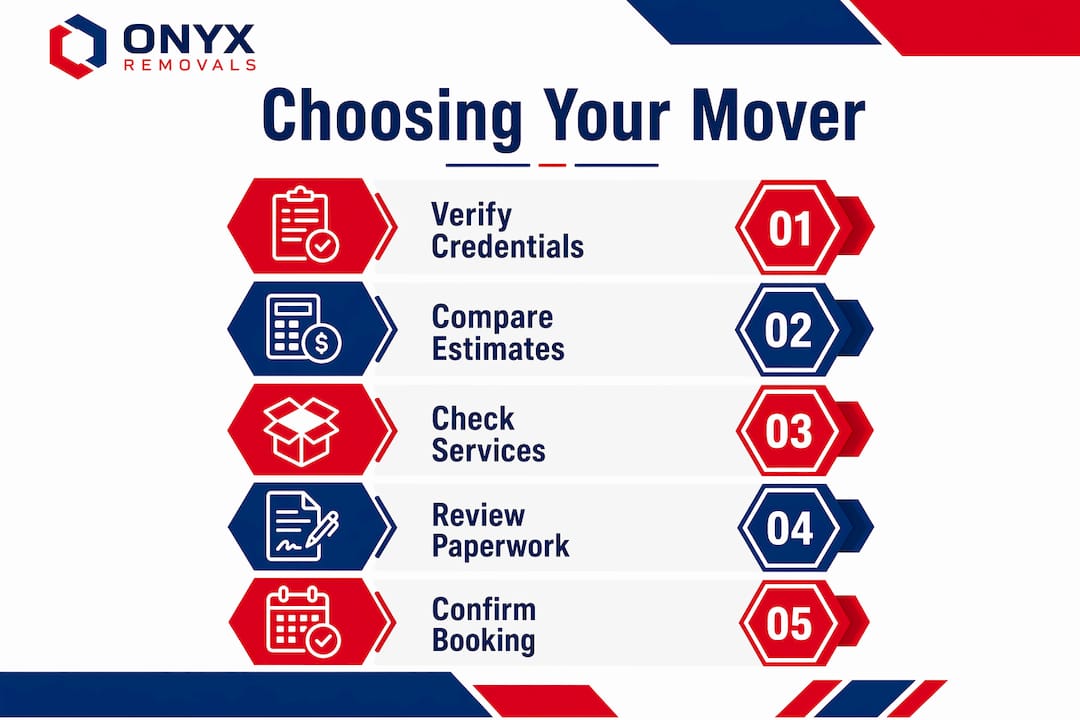
The table below shows the core services to confirm in each quote:
| Service | What to confirm |
|---|---|
| Packing | Is full or partial packing included, or is it an add-on? |
| Loading and unloading | Covered by the quoted crew, or extra labour charge? |
| Transport | Door-to-door or depot-to-depot? |
| Specialty items | Pianos, artwork, antiques: flat fee or percentage surcharge? |
| Valuation cover | Released value (basic) or full replacement value? |
| Storage | Is interim storage included if delivery is delayed? |
Valuation cover is the item most families overlook. Basic released value protection covers your goods at a very low rate per kilogram, which means a smashed television earns you almost nothing. Full replacement value cover costs more but pays out the actual repair or replacement cost. Ask each mover to quote both options so you can compare the real cost of protection.
Pro Tip: When comparing quotes, build a simple spreadsheet with each service as a row and each mover as a column. Fill in what is included and what costs extra. The cheapest quote rarely wins once you add the extras.
For specialist item transport, confirm the mover has specific experience and equipment. A general removalist who “can handle” a grand piano is not the same as one who does it regularly.
The bill of lading is the controlling legal contract between you and the mover. Every detail agreed upon must appear in that document. If the bill of lading differs from your written estimate, do not sign it until the discrepancy is resolved in writing.
Match the bill of lading line-by-line with your written estimate and inventory list before signing at delivery. Check the following:
The bill of lading is your primary dispute document. A mismatch between your estimate and the bill of lading is not a clerical error to overlook. It is a contractual problem that can cost you money or leave you without recourse if goods are damaged.
If you booked through a broker, verify the assigned carrier’s details appear on the bill of lading. The broker’s name alone is not sufficient. You need the actual carrier’s name, USDOT number, and insurance status confirmed before the truck is loaded.
The claims process also starts with the bill of lading. Note any visible damage to boxes or furniture on the document at delivery, before the crew leaves. A signed bill of lading with no noted damage makes a later claim very difficult to pursue. For a full moving company checklist, covering every step from first contact to final delivery, work through each item methodically.
Choosing a reliable long distance moving company requires verifying credentials, securing a binding estimate, comparing identical service scopes, and checking every detail on the bill of lading before you sign.
| Point | Details |
|---|---|
| Verify credentials first | Confirm operating authority, licence, and active insurance before any other step. |
| Book carriers directly | Avoid brokers where possible to eliminate accountability gaps and estimate transfer risks. |
| Choose a binding estimate | A binding or binding not-to-exceed estimate protects you from delivery-day cost surprises. |
| Compare equal quotes | Request at least three written estimates covering identical services, including valuation cover. |
| Check the bill of lading | Match every detail to your written estimate before signing at pickup and at delivery. |
After years working in the removalist industry, the pattern I see most often is families who did everything right except one step, and that one step cost them dearly. They got three quotes, chose a reputable carrier, and then signed the bill of lading at delivery without reading it. The estimate type had been changed from binding to non-binding somewhere between booking and pickup. They paid 40% more than they budgeted.
The vetting process is not a checklist you do once at the start. It is a running verification that continues through to the moment the last box is off the truck. Credentials check at booking, estimate type confirmed in the contract, bill of lading reviewed at pickup, inventory checked at delivery. Each step catches a different failure mode.
The advice to book carriers directly is the single most underrated tip in this space. Brokers are not inherently dishonest, but the structure creates distance between you and the people responsible for your goods. When something goes wrong, that distance becomes a problem. Direct booking means one company, one contract, one point of accountability.
For interstate moves from Melbourne, the same principles apply regardless of destination. Licence, insurance, binding estimate, and a clean bill of lading. That stack of checks is not bureaucratic overhead. It is the difference between a move that goes smoothly and one that becomes a dispute.
— Dinshaw
Onyx Removals is a Melbourne-based removalist with full licensing, active insurance, and a clear process for residential and interstate relocations. Every move starts with a written, itemised quote so you know exactly what is covered before anything is loaded.
Onyx Removals provides residential moving services that cover packing, loading, transport, and unpacking, with specialty item handling available for pianos, artwork, and fragile goods. Quotes are provided in writing with all services itemised, so you can compare them accurately against other providers. If you want to understand long distance moving costs before requesting a quote, the 2026 guide breaks down what drives pricing and what to watch for. Contact Onyx Removals to get a written estimate and start your vetting process with a carrier that holds its credentials openly.
A legitimate long distance mover holds valid operating authority, a current transport licence, and active public liability insurance. In the US, verify the USDOT number on the FMCSA SAFER database; in Australia, ask for the carrier’s licence and insurance certificate directly.
A binding or binding not-to-exceed estimate is the safest option. It prevents the mover from charging more than the quoted price at delivery, protecting you from unexpected costs.
Under a non-binding estimate, you are only required to pay up to 110% of the original quote at delivery. Any amount above that figure is collected by invoice within 30 days, giving you time to dispute it if needed.
The bill of lading is the legally binding contract between you and the mover. It must match your written estimate exactly, including the carrier name, USDOT number, estimate type, valuation cover, and inventory list, before you sign it.
Booking directly with a carrier is safer. Brokers can introduce accountability gaps, and the assigned carrier may differ from the company you originally vetted. If you use a broker, get the assigned carrier’s name and licence number in writing before paying any deposit.

No Related Post


