


TL;DR:
- Moving indoor plants requires careful planning, climate-controlled vehicles, and proper post-move care.
- A specialist mover like Onyx Removals ensures plants are transported safely, avoiding damage from temperature and positioning.
For a Melbourne relocation, the right call is a specialist mover using enclosed, climate-controlled vehicles. Live indoor plants are not furniture. They need steady temperatures, upright positioning, and a handler who knows the difference between a fiddle-leaf fig and a flat-pack box.
Three things to get right before moving day:
- Vehicle choice: Use an enclosed truck, not an open ute. Enclosed vehicles prevent wind burn and thermal shock that can kill a plant within hours.
- Secure plants upright: Pots that tip sideways lose soil, snap stems, and stress roots. Strap or wedge every pot before the truck moves.
- Water timing: Water 24–48 hours before the move, not the morning of. Waterlogged soil is heavy, prone to runoff, and harder to stabilise.
Contact Onyx Removals for a plant-moving quote tailored to your collection and move date.
Table of Contents
- Key takeaways
- What a Melbourne removalist actually sees on plant-moving day
- Onyx Removals handles your plants from door to door
- Useful sources for moving plants in Australia
- What people underestimate about moving plants
Key takeaways
Moving live plants successfully comes down to preparation, the right vehicle, and immediate post-move care.
| Point | Details |
|---|---|
| Decide what travels | Assess each plant by size, fragility, and quarantine status before booking transport. |
| Pack and stabilise pots | Prune, stake, and wrap pot bases to prevent soil spill; box small pots for stacking. |
| Use an enclosed vehicle | Climate-controlled trucks help maintain stable moderate temperatures during transit and protect tropical specimens from wind exposure. |
| Time your watering | Water your plants ahead of the move to avoid transporting overly heavy or soggy pots on moving day. |
| Post-move placement | Post-move, place plants in indirect light and observe them carefully for signs of stress before resuming normal watering. |
| Book Onyx Removals | Onyx Removals provides specialist plant-moving in Melbourne with enclosed vehicles and a tailored handling plan. |
What a Melbourne removalist actually sees on plant-moving day
Plants carry sentimental weight that most household items do not. A client’s monstera that has grown for eight years is not replaceable at Bunnings. That reality shapes how a specialist approaches the job differently from a general removalist.
The most common failure point is treating plants like furniture. Experienced movers report that stacking, cramped positioning, and no climate consideration account for most plant losses during a move. A specialist avoids this by assessing the collection before moving day, allocating dedicated truck space, and never stacking pots.
For fragile tropical houseplants, aim for 18–28°C during transit and use damp packing materials to maintain humidity without waterlogging. Large or cracked ceramic pots can be temporarily re-potted into plastic containers for the move, then returned to their original pots on arrival. Tall specimens get staked; spiky plants get cardboard collars; every pot base gets a taped bag to catch any soil spill.
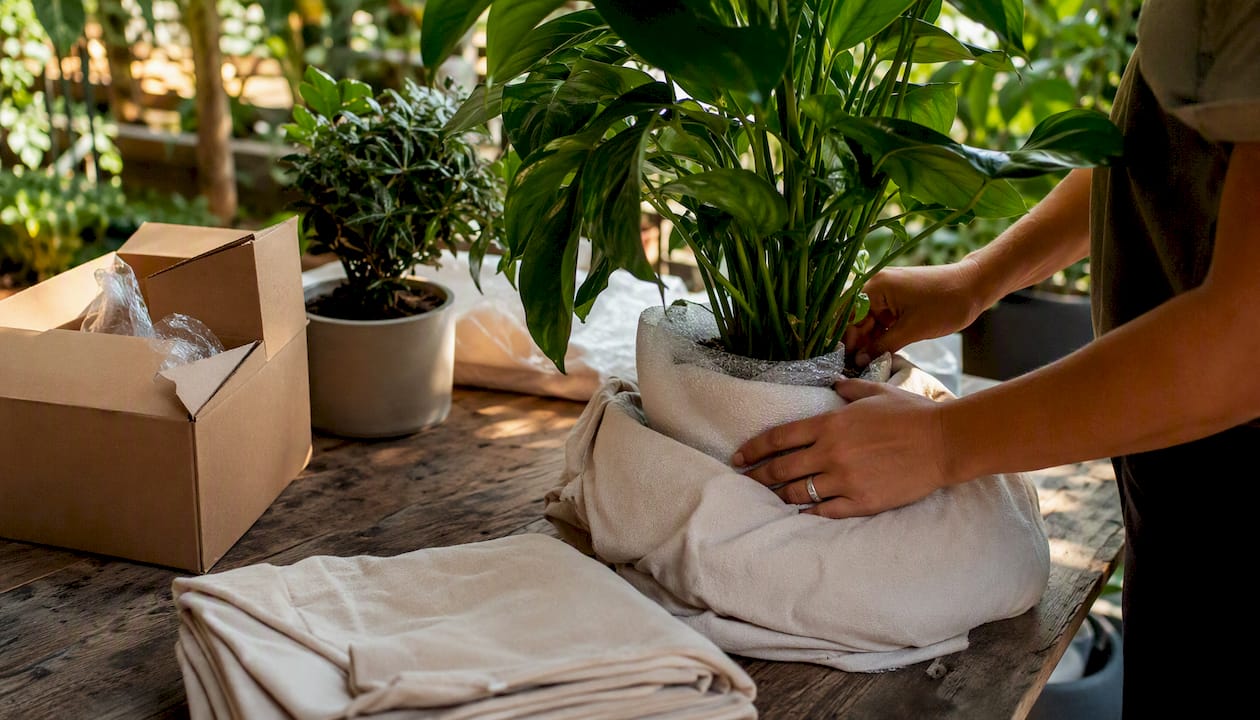
Post-move, plants need indirect light and a 48-hour settling period before resuming a normal watering schedule. Wilting or yellowing in that window is usually shock, not permanent damage, provided conditions stabilise quickly.
Onyx Removals offers a pre-move site visit to plan exactly this. Get in touch to discuss your plant collection and what the move requires.
Onyx Removals handles your plants from door to door
Onyx Removals is Melbourne’s specialist for moving live indoor plants as part of a full residential or commercial relocation. The service covers packing and pot stabilisation, dedicated space in an enclosed truck, and placement guidance on arrival. For businesses relocating office greenery, the office plant relocation guide covers larger specimens and site surveys. For homes, the residential removal service includes plant-moving as a specialised add-on with insurance cover for living items.
Pricing depends on the number of plants, pot sizes, distance, and whether re-potting or specialist packing materials are needed. The clearest way to get an accurate figure is a direct quote. Request one at onyxremovals.com.au and specify your plant collection in the enquiry.
Useful sources for moving plants in Australia
Before your move, check these authoritative references, particularly if you are crossing state borders or moving unusual species.
| Source | What it covers |
|---|---|
| Agriculture Victoria — Householders | Victoria-specific quarantine rules; some plants require a Plant Health Certificate (PHC) or inspection on arrival |
| Australian Interstate Quarantine | All-states guide to interstate plant movement; certification requirements vary by state |
| ABC News — moving indoor plants | Practical packing, watering timing, and vehicle guidance |
| Rareplants.net.au — interstate shipping | Temperature and humidity guidance for tropical specimens; timing shipments Monday–Wednesday to avoid weekend delays |
| DPI NSW — indoor potted plants | NSW-specific rules for moving potted plants from fire ant risk areas |
Key actions before you move:
- Check Agriculture Victoria for any restricted species or soil conditions that apply to your plants.
- For interstate moves, verify certification requirements with Australian Interstate Quarantine before booking transport.
- Tell your mover about any unusual, large, or potentially restricted species at the quote stage, not on moving day.
This article provides general information only. Confirm current quarantine rules with Agriculture Victoria or a qualified biosecurity adviser before moving regulated plant material.
What people underestimate about moving plants
Most people spend weeks planning how to pack their kitchen and about ten minutes thinking about their plants. Then they hand a $400 monstera to a removalist who wraps it in a moving blanket and lays it sideways in the truck.
The gap is not laziness. It is that plants look resilient. They sit in a corner, they grow slowly, they do not complain. So people assume they will survive anything. They often do not, at least not without visible damage that takes months to recover from.
What actually determines survival is not the plant’s toughness. It is the 90 minutes inside a hot, airless truck, or the 20 minutes of wind blast through an open ute tailgate. Those short exposures do the damage. A specialist mover eliminates them by design, not by luck.
The other thing people underestimate is the quarantine side. Moving a plant with soil across a state border without checking Agriculture Victoria’s conditions can result in the plant being destroyed on arrival. That is a real outcome, not a theoretical one. Check before you pack.
For anyone moving a collection they have spent years building, the cost of a specialist is not the question. The question is whether the mover has done this before and has the right vehicle. Onyx Removals does and has.
Recommended
About the Author


