

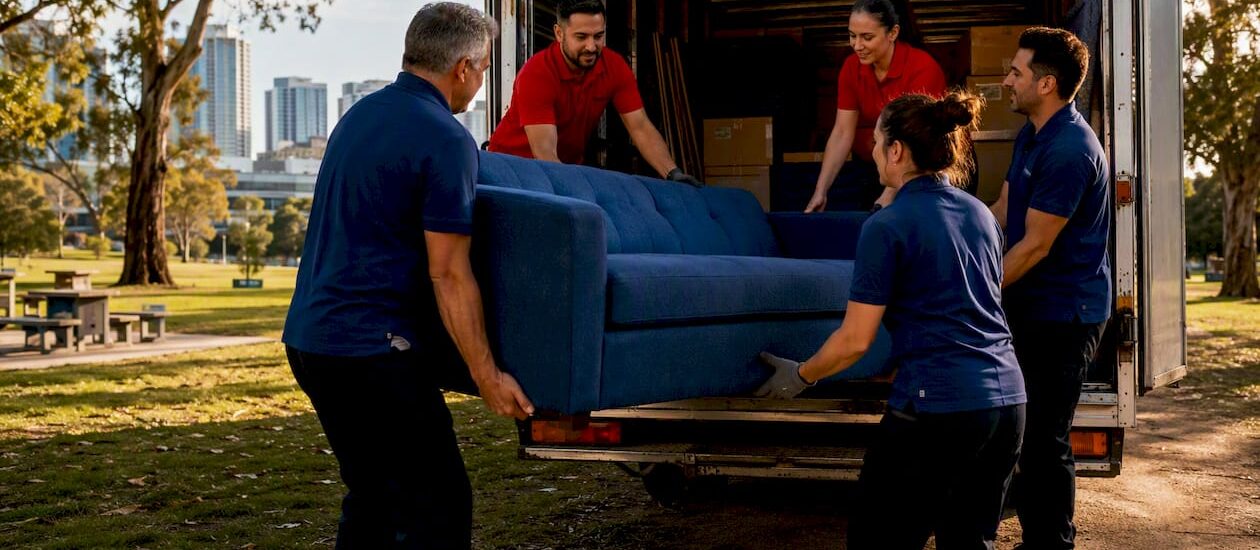
A removalist is the project manager of your move: they pack, load, transport, unload, and optionally unpack your belongings, coordinating crew, vehicles, and logistics so you don’t have to. Whether you’re shifting a studio apartment across Melbourne or relocating an entire office interstate, a professional removalist handles the physical and logistical heavy lifting from start to finish.
Here’s what that covers at a glance:
“Removalists often see themselves as project managers rather than simply labour: good moves depend on accurate pre-move information so the right crew, vehicle and equipment are allocated.” — NSW Government, Choosing a removalist
Onyx Removals, based in Melbourne, is a practical local example of this full-service model, covering residential, commercial, packing, storage, and cleaning under one roof.
Australian removalists do considerably more than carry boxes to a truck. The full scope of services spans three phases: before, during, and after the move.
Pre-move planning
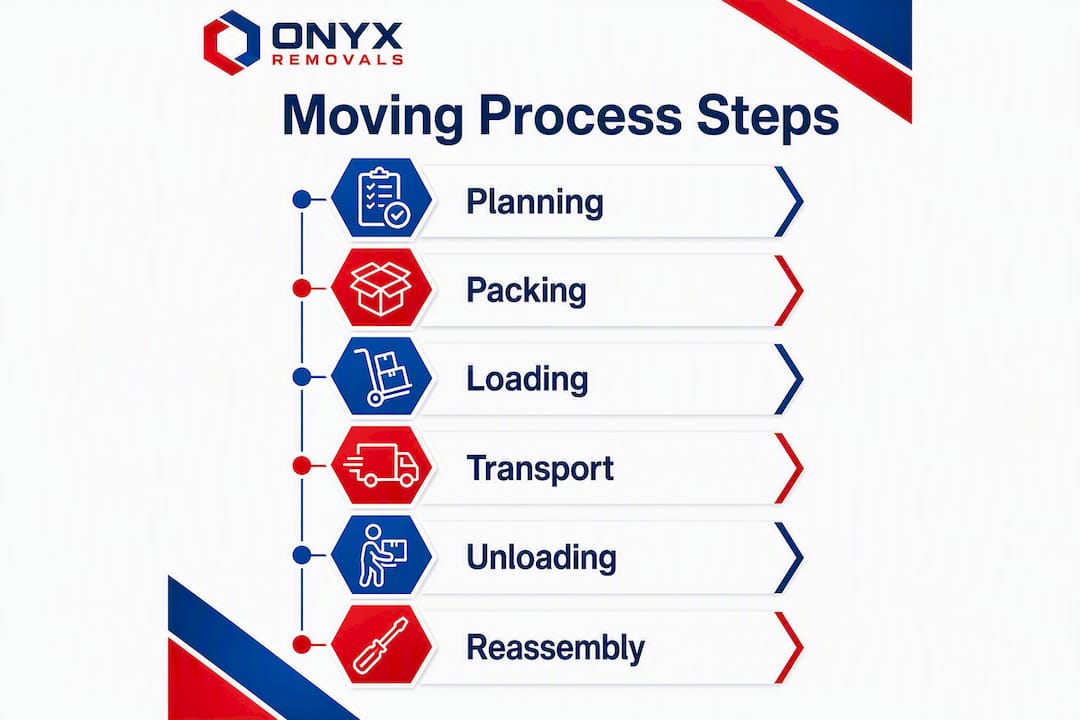
A reputable removalist conducts a pre-move survey — in person or virtually — to estimate the right truck size, crew numbers, and packing materials needed. They’ll flag access issues like narrow staircases, strata lift bookings, or permit requirements for street parking. Getting this right upfront is what prevents surprise costs on the day.
Packing services
Professional packing services save significant time and reduce breakage risk compared with DIY packing.
Loading, transport, and unloading
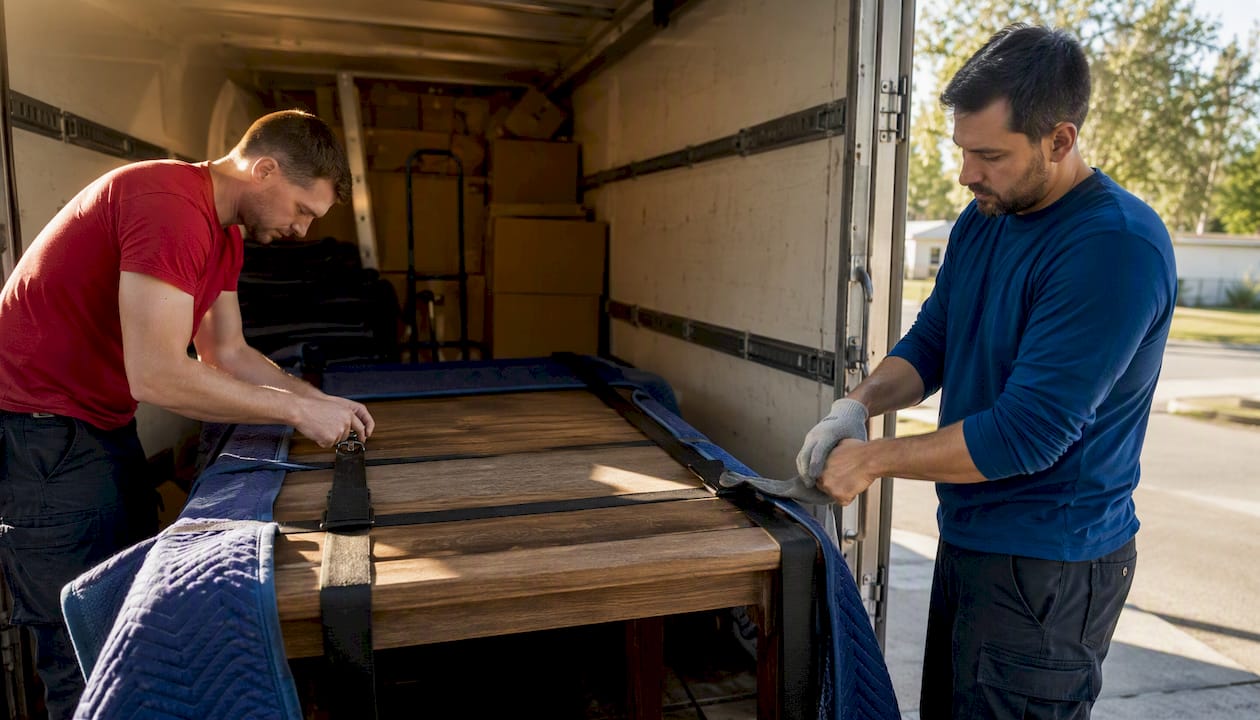
Crews use furniture pads, floor runners, strapping, and specialised trolleys to protect belongings during loading. Vehicles are fitted with tie-down points and ramps. On arrival, items are placed in the rooms you specify, not just dropped at the front door.
Furniture work
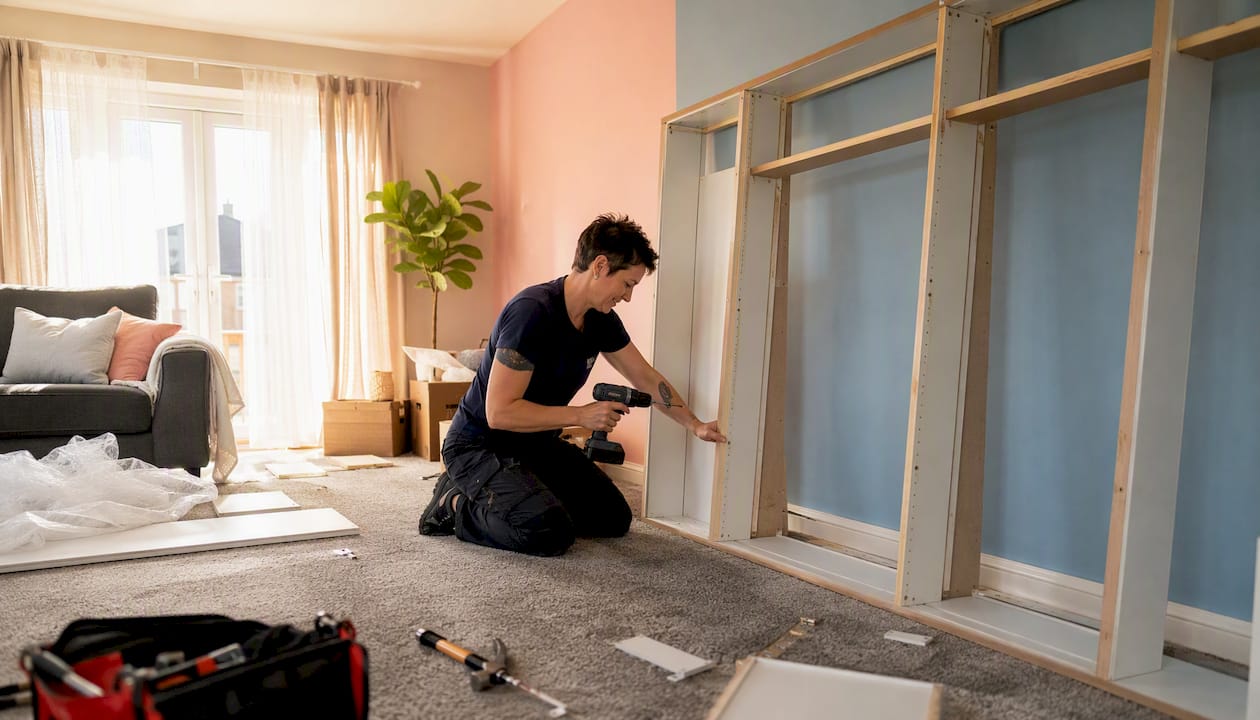
Dismantling and reassembly of beds, wardrobes, dining tables, and flat-pack furniture is standard for most providers. For a detailed breakdown of what this involves, the furniture disassembly guide from Onyx Removals covers the process step by step.
Storage
Removalists frequently offer storage to bridge the gap between vacating one property and moving into another. Options range from short-term containerised storage to longer arrangements, and costs should be itemised in your quote.
Value-added extras
Specialist items
Pianos, pool tables, antiques, and large artworks require specialist equipment and often a dedicated crew. These items typically carry additional charges and may need insurance declared separately. Always confirm upfront whether your provider has the right gear and experience.
Pro Tip: Ask your removalist during the quote whether specialist items are handled in-house or subcontracted. Subcontracting isn’t necessarily a problem, but you want to know who is responsible for those items and whether they’re covered under the same insurance policy.
Prohibited items aren’t a grey area. Removalists refuse certain goods for safety, legal, and biosecurity reasons, and attempting to sneak them onto a truck can void your insurance or expose you to fines.
Commonly refused items:
Restrictions follow the Australian Dangerous Goods (ADG) Code and individual company policies. Even sealed containers can rupture under heat or pressure during transit, creating fire or chemical hazards.
Biosecurity rules add another layer. Moving plants interstate can trigger quarantine requirements or fines, particularly when crossing into Western Australia or Queensland, which have strict biosecurity controls on soil, plant material, and some fresh produce.
What to do instead:
Pro Tip: Walk through every drawer, cupboard, and garage shelf before moving day. Lighters, aerosol cans, BBQ fuel, and cleaning products are the items most commonly found in boxes after the truck has been loaded. Finding them then causes delays and potential insurance issues.
Pricing models vary depending on the type and scale of the move. Understanding the structure helps you compare quotes on equal terms.
Common pricing models:
| Move type | Typical pricing model | Key variables |
|---|---|---|
| Local residential | Hourly rate (2-hour minimum common) | Crew size, truck size, access difficulty |
| Whole-house or large move | Fixed quote | Volume, distance, packing services included |
| Interstate | Fixed or per-cubic-metre | Distance, weight, storage required |
| Specialist items | Per-item pricing | Piano, pool table, artwork |
| Commercial | Fixed or day rate | Floor count, IT equipment, after-hours access |
What drives the cost up:
What an itemised quote must include:
Under Australian Consumer Law, removalists must provide services with due care and skill, but they are not legally required to provide transit insurance. Always confirm insurance details in writing before you book. AFRA-accredited members are expected to offer transit insurance options and carry public liability cover.
A word on deposits and payments: reputable companies accept traceable payment methods (card, bank transfer). A provider who insists on cash only, or asks for a large upfront deposit with no written terms, is a red flag worth taking seriously. For help securing an accurate quote, Onyx Removals offers an online quote tool with itemised breakdowns.
Knowing the typical workflow helps you prepare and avoids the delays that cost money on hourly-rate jobs.
What you should have ready before the crew arrives:
Removalist crews use protective materials and specialised equipment including furniture pads, trolleys, and vehicle restraints to reduce damage risk throughout the process.
Pro Tip: If you notice damage at the destination, photograph it immediately and note it on the delivery receipt before the crew leaves. Raising a damage claim days later, without documentation from the day, is significantly harder to resolve.
A few targeted questions during the quote process will separate professional operators from unreliable ones quickly.
Questions to ask every provider:
Trust signals to look for:
Red flags:
“Common consumer red flags when hiring removalists include lack of a clear written quote, refusal to disclose insurance limits, and requests for cash-only payment. Reputable companies provide written T&Cs, clear insurance information and traceable payment options.” — NSW Government, Choosing a removalist
You can verify an ABN at abr.business.gov.au. For commercial moves, a commercial relocation brief helps define scope clearly before quotes are sought.
Splitting tasks well saves time and protects what matters most.
Always carry these yourself:
What professional packers handle best:
Practical tips to speed the move:
Dangerous goods to handle personally:
Lithium batteries, gas cylinders, and aerosol cans must generally travel with the owner or be disposed of before moving day. These items are restricted under the ADG Code and most removalist policies.
Pro Tip: Photograph the contents of high-value boxes and any existing scratches or damage on furniture before the crew arrives. A quick phone photo takes 30 seconds and gives you clear evidence if a claim becomes necessary. A job relocation checklist can help you track documents and valuables throughout the process.
Onyx Removals covers the full spectrum of residential and commercial moves from its Melbourne base, with services that include packing and unpacking, storage, end-of-lease cleaning, waste disposal, and specialised transport for plants and retail deliveries.
A typical residential engagement runs like this:
For commercial clients, minimising downtime is the priority. Onyx Removals handles office furniture, IT equipment coordination, and after-hours moves to keep business disruption to a minimum.
Trust signals Onyx Removals provides:
Specialist item removals, including pianos and antiques, are handled with dedicated equipment and, where needed, specialist crews.
Professional removalists do far more than carry boxes: they plan, pack, protect, transport, and reassemble your belongings, and the quality of that service comes down to pre-move preparation and a clear written agreement.
| Point | Details |
|---|---|
| Full service scope | Removalists cover packing, loading, transport, unloading, reassembly, storage, and cleaning — not just lifting. |
| Prohibited items | Flammable liquids, gas bottles, live animals, and perishables are refused; biosecurity rules add state-level restrictions. |
| Insurance is not automatic | Removalists are not legally required to provide transit insurance; confirm cover in writing before booking. |
| Itemised quote is non-negotiable | A written quote with labour, materials, insurance, and cancellation terms protects you from unexpected costs. |
| Onyx Removals | Onyx Removals offers the full service range in Melbourne, from pre-move survey through to storage and end-of-lease cleaning. |
The biggest mistake clients make isn’t choosing the wrong company. It’s treating the removalist as a last-minute booking rather than a planning partner.
A move that goes badly almost always traces back to incomplete information at the quote stage. The crew arrives expecting a two-bedroom apartment and finds a three-storey townhouse with a piano in the study. The truck is too small. The crew is one person short. The strata lift hasn’t been booked. Every one of those problems is preventable with a thorough pre-move survey and an honest conversation about what’s actually in the property.
The second mistake is underestimating the prohibited items issue. People genuinely forget about the half-full petrol can in the garage, the gas bottle for the camping stove, or the aerosols under the bathroom sink. These aren’t edge cases. They come up constantly, and finding them after loading has started creates delays, insurance complications, and sometimes a complete reload.
The practical change that makes the biggest difference: do a full walkthrough of your property specifically looking for hazardous goods at least a week before moving day. Dispose of what you can’t take, arrange alternatives for the rest, and tell your removalist about anything unusual. That single conversation, done early, removes the most common source of moving-day friction.
The other thing worth saying: a cheap hourly rate means nothing if the crew is undersized for the job. A four-bedroom house moved by two people takes twice as long as the same move with four. The labour cost looks lower on paper; the total bill often isn’t.
Onyx Removals takes the guesswork out of planning a move in Melbourne. From the initial survey through to residential moving services, packing, storage, and end-of-lease cleaning, the whole process is handled by one team with one point of contact.
Every booking starts with an itemised written quote that covers labour, materials, insurance options, and any extras you need. There are no vague verbal estimates and no cash-only requests. ABN, written T&Cs, and customer reviews are all publicly available. Whether you’re moving a family home, an office, or a single large item, Onyx Removals sizes the crew and truck to the actual job, not a generic package.
Get a quote today at onyxremovals.com.au or use the online enquiry form to describe your move and receive a detailed, itemised response.
The following sources were used to support the claims in this article and are worth bookmarking for your own move planning.
| Source | Why it’s useful |
|---|---|
| NSW Government — Choosing a removalist | Official consumer guidance on insurance, red flags, and Australian Consumer Law obligations for removalists. |
| IBISWorld — Removal services (Australia) | Industry-level data on the breadth of services Australian removalists provide, including optional extras. |
| Sprintlaw — Removalist terms and conditions | Plain-language explanation of what written T&Cs should cover: scope, liability, cancellations, and payment terms. |
| Gentle Giant Removals — What is a removalist? | Practical overview of pre-move surveys and how accurate information reduces unexpected costs. |
| BestRatedTransport — Prohibited items list | Detailed list of items refused by Australian removalists, including state biosecurity rules for WA and Queensland. |
| Upmove — What is a removalist | Covers storage options and how they’re typically structured and charged within a removalist quote. |
| Onyx Removals — Services | Full overview of Onyx Removals’ service range in Melbourne, including packing, storage, and cleaning. |

No Related Post


