


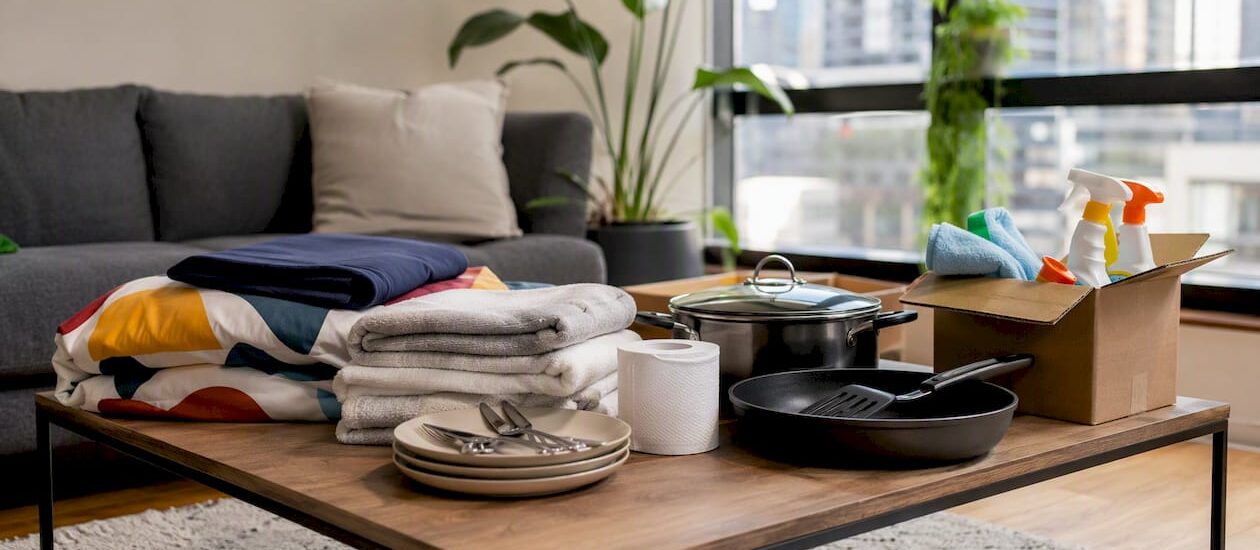
Before you touch a single box, buy these: a bedding set, two towels, a saucepan, a frying pan, a set of crockery and cutlery, toilet paper, and a basic cleaning starter pack. That short list covers sleep, hygiene and food, which is all you need to be functional on night one. Everything else on your apartment move-in shopping list can follow in the days and weeks after.
Three admin tasks sit alongside the shopping: set up mail redirection through Australia Post before move-in day, book your NBN connection at least two weeks out (activation can take longer than expected), and photograph every mark in the property for your condition report, which you’ll return to your agent within the timeframe your state requires. The Residential Tenancies Authority in Queensland, Consumer Affairs Victoria, and equivalent bodies in other states publish the exact deadlines.
Day-one essentials at a glance:
Pro Tip: Pack all of the above into a single labelled box and load it last onto the truck so it comes off first. You’ll find it without unpacking anything else.
Your first apartment move-in shopping list works best when you buy for sleep, hygiene and basic food first, then stagger everything else over the following weeks.
| Point | Details |
|---|---|
| Day-one priorities | Buy bedding, towels, basic cookware, toilet paper and a cleaning kit before move-in day. |
| Condition report | Photograph every mark on day one and return your signed report within your state’s deadline to protect your bond. |
| Utility activation | Schedule electricity, gas and NBN at least 48 hours before move-in to avoid arriving without power or internet. |
| Stagger purchases | Buy furniture and non-essentials over 2–3 months once you know how you use the space; second-hand markets cut costs significantly. |
| Onyx Removals | For Melbourne apartment moves with complex building access or tight windows, Onyx Removals offers residential removal, packing and storage services. |
First-apartment advice is consistent on one point: start with the rooms you use daily and resist buying everything at once. The kitchen is where most people overspend on day one.
The minimal functional kit:
Small appliances: Buy a kettle and a toaster or microwave in week one. A blender, slow cooker, air fryer or stand mixer can wait until you know how you actually cook in the space.
Pro Tip: One high-quality, oven-safe frying pan replaces a frying pan, a baking dish and a sauté pan. Buy one good one rather than three cheap ones that warp within a month.
A bad first night sets a bad tone for the whole move. Prioritise the bedroom above every other room.
What to buy before move-in:
Furniture minimum: A bed frame or platform is ideal, but a mattress on a clean floor with a mattress protector is a perfectly workable first week. One small bedside surface, even a cardboard box, is enough to hold a lamp, phone and glass of water.
For furniture, second-hand options from Facebook Marketplace, Gumtree or op shops can cut costs significantly. A mattress protector is non-negotiable if you go second-hand, and it protects your bond regardless of where the mattress came from.
Check the property before you buy: some apartments include a shower screen, towel rails and toilet roll holders; others come completely bare. Confirm what’s there before you duplicate it.
Immediate purchases:
Cleaning starter pack for the bathroom: all-purpose spray, toilet cleaner, disinfectant wipes and a sponge. Keep a small first-aid kit here too: bandages, antiseptic, paracetamol and antihistamines cover most first-week mishaps.
The living area is the easiest place to overspend on furniture you’ll want to replace once you’ve lived in the space for a month. Resist the urge to fill it immediately.
Functional minimum:
Internet and communications: Contact your NBN provider as soon as you sign the lease. Activation can take several business days, and some apartments need a technician visit. Buy a modem/router that suits your plan; most providers will tell you which models are compatible. Until NBN is live, a mobile hotspot keeps you connected.
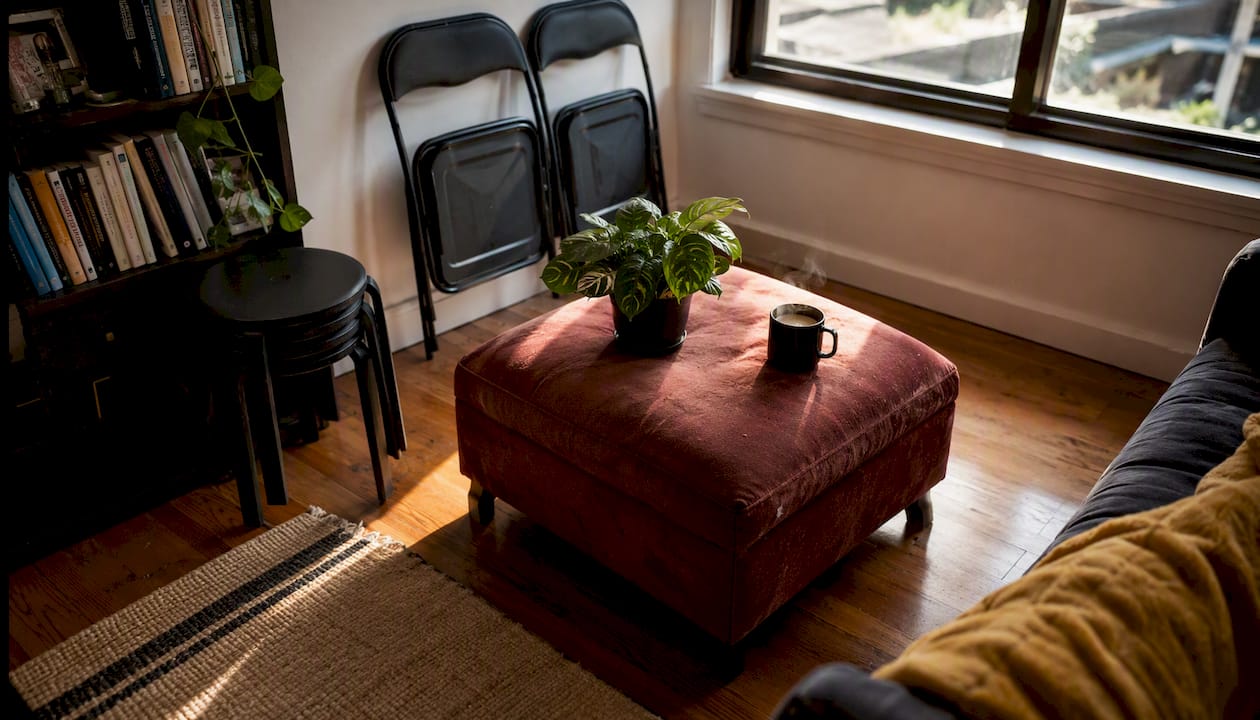
Space-saving picks: An ottoman with internal storage doubles as a coffee table and a linen chest. Foldable chairs and stackable stools handle guests without eating floor space permanently.
Arrive with cleaning gear, not just shopping bags. A dirty apartment on move-in day is common, and bond protection starts the moment you walk in.
Cleaning list:
Rubbish and recycling: Council bin colours vary by local government area. In Melbourne, the standard split is yellow lid for recycling, red lid for general waste and green lid for food and garden organics, but check your council’s website. Hard rubbish collections require a booking in most councils.
Basic toolkit:
Pro Tip: Use removable adhesive hooks (Command strips or equivalent) instead of nails for hanging things in a rental. Nail holes can attract bond deductions; adhesive strips peel off cleanly.
What to buy:
Apartments with no dryer and limited balcony space need a collapsible rack that folds flat against a wall. Wall-mounted fold-down racks are a good investment if you’re allowed to install one; check your lease first. A heated towel rail or a portable drying bar near a window works well in winter.
Stock these before you unpack the kitchen boxes:
With those staples and your minimal cookware, you can make fried rice, pasta with tinned tomato sauce, scrambled eggs on toast, and a basic stir-fry without a second trip to the supermarket. Buy in small quantities if your fridge is compact; a 2 kg bag of rice takes up more space than it looks.
Photographing and returning a marked entry condition report within your state’s deadline is the single most effective way to protect your bond. Do it on day one, before you unpack anything.
Safety items to buy:
Pre-move property checks — do these before you sign off on the condition report:
Scheduling utilities at least 48 hours before move-in reduces the chance of arriving without power, gas or internet. Activation problems are common when connections are left to the last day.
Pro Tip: Use your phone’s video function to do a slow walk-through of every room before you bring in a single box. A video timestamp is harder to dispute than still photos alone.
A staggered approach saves money and stops you buying furniture that won’t fit. Follow this packing timeline as a guide:
Buy early: Bed, mattress protector, basic cookware, towels, cleaning kit.
Buy later: Full lounge set, decorative items, specialty appliances, extra storage furniture.
The money and space rule: prioritise anything that affects sleep, hygiene and food first. Stagger non-essential purchases over the first 2–3 months once you know how you actually use the space.
Pro Tip: Facebook Marketplace and Gumtree are worth checking weekly in the 4–6 week window. Bulky items like sofas, bookshelves and dining tables come up constantly, often for a fraction of retail price.
Pack this box last and label it “OPEN FIRST.” It goes on the truck last and comes off first.
Essentials box contents:
Unpacking order:
The Guardian’s moving checklist reinforces this order: get the bedroom and bathroom functional before anything else, and leave decorating until the practical setup is done.
The Onyx Removals apartment moving guide covers the building-access details that catch first-time movers off guard.
Booking advice:
Packing tips:
Building access:
Pro Tip: Photograph large furniture and measure doorways before move day. A sofa that won’t fit through a door is one of the most common causes of delays and extra mover fees.
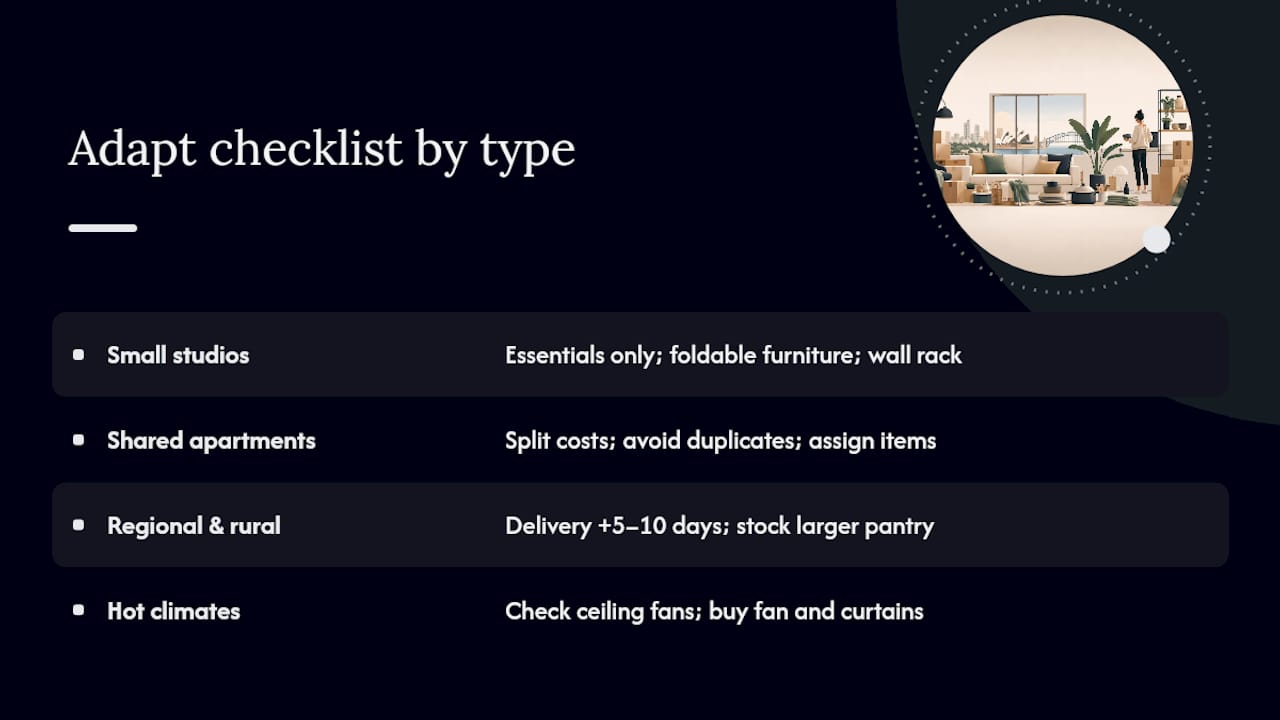
A studio in inner-city Melbourne has different constraints to a two-bedroom apartment in a regional town. A few adjustments make the list work for your situation.
Small apartments and studios: Cut the list to absolute minimums. One set of crockery, one pot, one pan. Foldable and stackable furniture only. A wall-mounted drying rack instead of a freestanding one. Storage ottomans and under-bed containers replace a second wardrobe.
Shared apartments: Split the shopping list with housemates before anyone buys anything. Duplicate saucepans and duplicate vacuum cleaners are a waste of money and storage space. Agree on who buys what for shared areas before move-in day.
Regional and rural locations: Delivery times for online orders can run 5–10 business days longer than metro areas. Buy cleaning supplies, bedding and pantry staples locally on arrival rather than relying on fast shipping. A larger pantry stock makes sense if the nearest supermarket is a drive away.
Hot climates (Queensland, Northern Territory, northern WA): A portable fan is a day-one purchase, not a luxury. Block-out curtains matter more than in temperate cities. Check whether the apartment has ceiling fans before buying a pedestal fan.
The common mistake is treating the apartment move-in shopping list as a single “get it all now” task. Buying everything new on day one is expensive and often wasteful; you’ll discover within a month that half of it doesn’t suit the space.
Budget strategies:
Sustainable choices:
The advice that holds up across every first-apartment guide is simple: prioritise sleep, hygiene and the ability to prepare basic meals. Defer decor, specialty gadgets and extra furniture until you’ve lived in the space long enough to know what you actually need. Most people who rush to furnish a new apartment spend the first year moving things around or selling what doesn’t work.
Second-hand markets and borrowing from people you know are not just budget strategies. They’re a way of testing what fits your life before committing money to it. A $40 second-hand sofa that you replace in six months costs less than a $900 sofa bought in a panic on move-in weekend.
Moving into your first apartment involves more than a shopping list. The building access rules, lift bookings, loading bay restrictions and fragile-item transport are where first-time movers lose time and money.
Onyx Removals handles residential apartment moves in Melbourne end to end: packing and unpacking, secure transport, storage solutions for items that don’t fit on day one, and the building-access coordination that catches people off guard. If your move involves a tight time window, a high-rise with a booked goods lift, or furniture that needs careful handling, a professional crew saves you the stress of figuring it out alone. Get an obligation-free quote through the Onyx Removals services page and know your costs before move day.

No Related Post


