


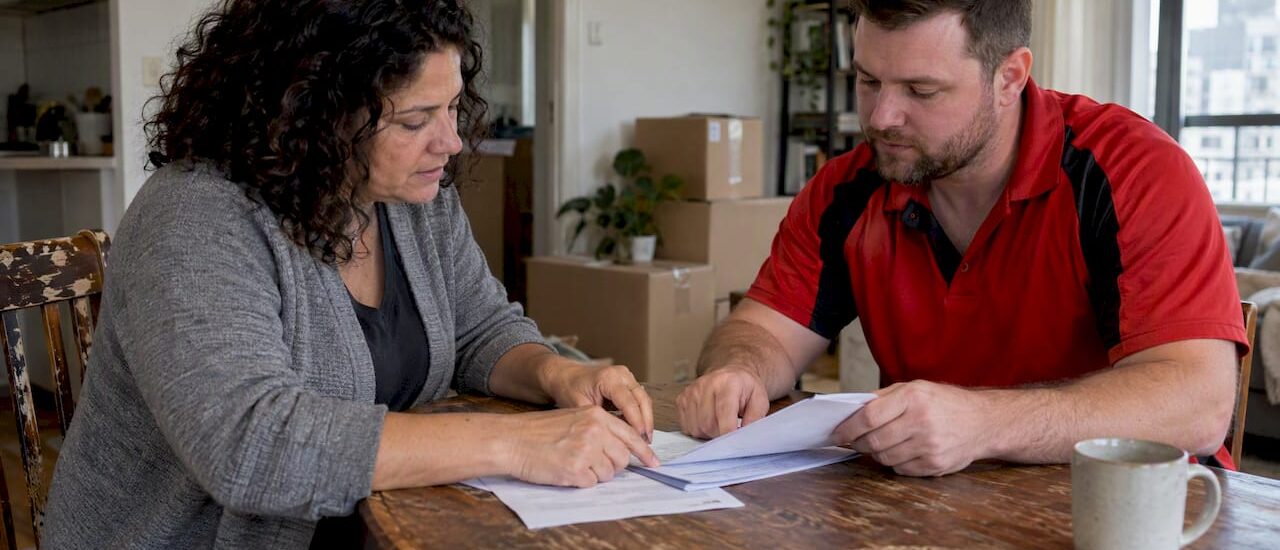
A removal job is a booked professional moving service that handles packing, loading, transport and, often, waste disposal and short term storage. The single most useful thing you can do before booking is get a written, itemised quote and confirm the company’s insurance. That one step, done properly, prevents most of the disputes that turn a move into a headache.
TL;DR:
- Most removal jobs include packing, loading, transport, and unloading, but specialty items like pianos or antiques require extra preparation and disclosure in advance.
- Securing a detailed, written quote with an inventory list, confirmed dates, and a clear scope prevents disputes and hidden costs on moving day.
- Confirm insurance coverage explicitly, specifically asking about transit or declared value cover, and obtain proof before the move to avoid unprotected goods.
- Scheduling removals at least three weeks ahead reduces booking conflicts, especially during peak times like month-ends and weekends.
- Proper preparation involves measuring access points, labeling boxes, and arranging waste disposal or donation drop-offs well before moving day.
Not every removal job looks the same, and the model you choose changes both price and timing. A full service removal covers packing, loading, transport, unpacking and often furniture assembly, while a standard removal leaves packing to you and covers loading, transport and unloading only. Backloading, where your goods share a truck with another customer’s load on the same route, suits smaller jobs on a flexible date, and container removals suit longer storage periods or interstate moves where timing is less fixed.
Most removalists build their quote around a core set of tasks, and knowing what falls inside that scope stops nasty surprises later.
Specialty items change the equation. Pianos, antiques, fish tanks and large indoor plants often need a dedicated crew, extra padding and sometimes a second vehicle, so flag them when you request your quote rather than on the day. That single disclosure can be the difference between a smooth load and a rescheduled job.
A removal job runs on a timeline, and most of the friction on moving day traces back to decisions that should have been made weeks earlier. Working backward from your move date keeps things manageable.
Professional packers are worth hiring when you are short on time, have a large fragile collection or are moving a full household in a single week, as seen in Professional Moving, Packing & Unpacking Services San Antonio, Texas. If you are only shifting a studio or a few rooms, DIY packing with quality boxes and tape is usually enough.
Special items need their own plan. Fridges and washing machines should be defrosted or drained the night before, plants travel best upright and lightly watered, and framed art or mirrors need corner protectors rather than loose blankets.
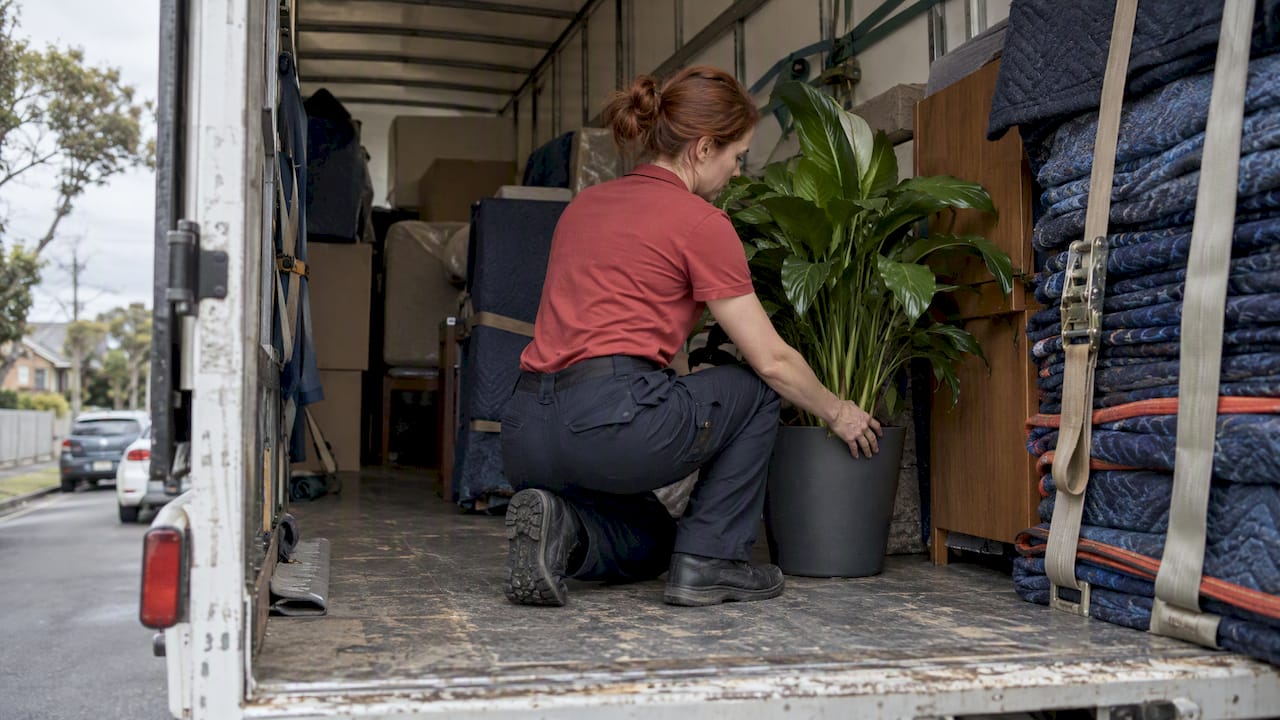
Pro Tip: Measure doorways, stairwells and lift dimensions against your largest furniture before booking, not after the truck arrives.
The quote and contract stage is where most removal disputes start, and where a few direct questions save you real money. A proper written quote lists an inventory of items, confirmed dates, what is included and excluded, and whether charges are hourly or fixed. Anything less than that is a verbal estimate, not a quote you can hold anyone to.
Your contract should spell out the scope of work, payment terms, a cancellation policy, a claims process for damage and any explicit exclusions such as wall mounting or appliance disconnection. Consumer guidance from the Consumers’ Federation of Australia points to underquoting, late arrivals and misleading insurance claims as the most common complaints, and a detailed contract is the main defence against all three.
Insurance is where vague language causes the most damage. Standard vehicle insurance covers the truck, not necessarily your goods in transit, so ask specifically about transit cover or declared value cover and request proof before the move, not after something breaks.
Public actions by Consumer Affairs Victoria show removalists have faced enforcement for failing to meet their obligations and misrepresenting insurance, which is exactly why written proof matters more than a verbal assurance.
Watch for these signs before you sign anything:
Moving day almost always produces things you no longer want, and how you get rid of them matters legally as well as practically. Councils generally run bulky goods collections that require a booking ahead of time, and most limit households to a set number of free collections each year, so leaving this to the last minute often means missing out entirely.
Before anything goes to landfill, reuse and donation routes are worth checking. Local charities, community reuse hubs and council transfer stations will often take furniture, whitegoods and household items that are still in reasonable condition, and some councils publish moving toolkits with specific drop off points for furniture, e-waste and hazardous materials.
A removalist that can arrange disposal or a skip bin alongside the move itself removes the temptation to leave items on the kerb outside the rules, which is how illegal dumping fines happen. If you are clearing an office, our guide to office furniture disposal in Melbourne covers volumes above typical council limits, and our piece on council limits and furniture waste removal explains why a 2 cubic metre cap catches larger households out.
Trained crews and proper lifting equipment exist for a reason: heavy furniture and awkward staircases are where most moving injuries happen, and mechanical aids like trolleys and ramps cut that risk while also speeding up the job. A crew that shows up without any of that gear is a warning sign in itself.
Some jobs will be refused outright. Removalists commonly decline to touch items in areas affected by loose fill asbestos without a clearance certificate, and heavily soiled or contaminated items may attract extra charges or a flat refusal, so disclose anything unusual when you first request a quote.
Pro Tip: A removalist who hesitates to put pricing and insurance in writing is telling you something, so treat that hesitation as your answer.
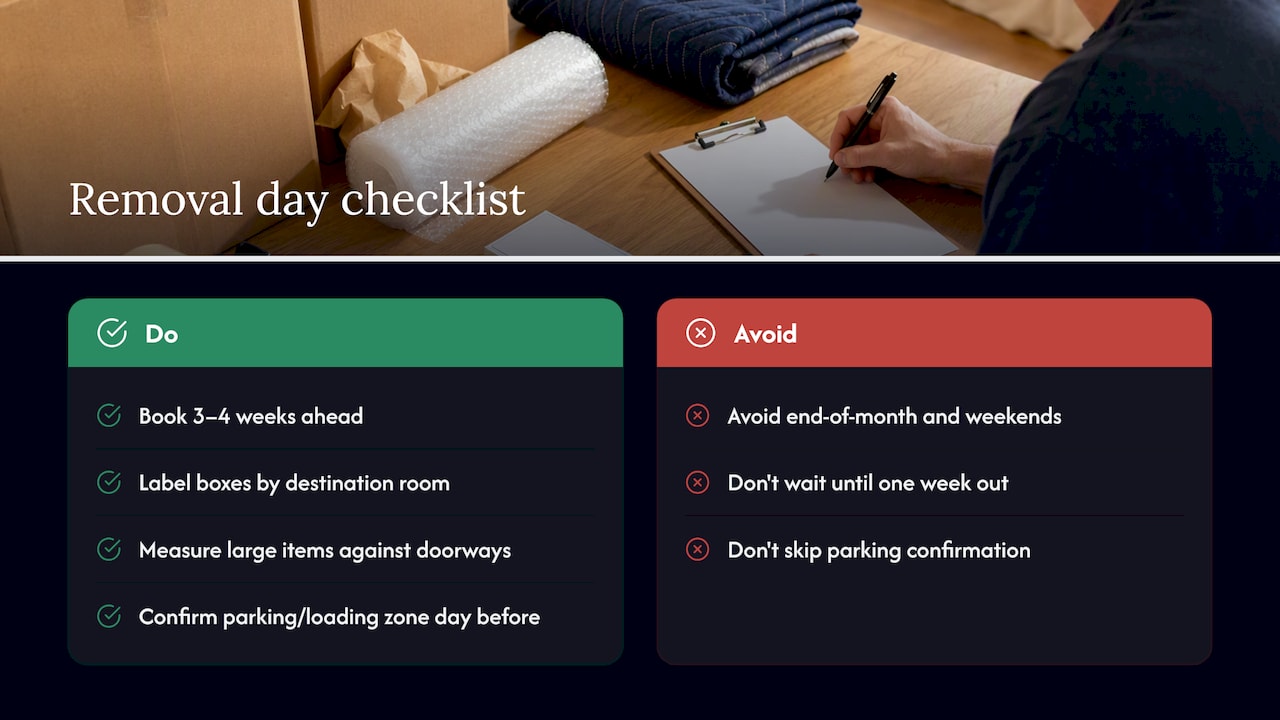
Booking windows matter more than people expect. End of month and weekends fill fastest, so a booking made three to four weeks ahead gives you far more flexibility on time slots than a rushed week out.
On the day itself, the small things save the most time: label boxes by destination room rather than contents alone, measure your largest pieces against doorways in advance, and confirm parking or loading zone access the day before so the crew is not circling the block when the clock is running.
— Dinshaw
If you would rather hand the logistics to someone else, professional removal companies often offer residential and commercial removals, packing and unpacking, storage, waste disposal and specialist transport as one connected service, so you are not coordinating three different providers for one move.

| Need | Onyx Removals service |
|---|---|
| Packing and unpacking | Office and House Packing & Unpacking, $109 per hour |
| Getting rid of unwanted items | Waste Disposal and Skip Bin Arrangement |
| Gap between lease and settlement | Storage Facilities |
| Fragile or bulky specialty items | Assembling & Dismantling, Plant Moving |
When you get in touch, expect a written quote, the option of an on-site assessment for larger jobs, and a straight answer on what the insurance covers before you book anything. Check current pricing and packages or browse the full range of services to see what fits your move.
For rules on licensing, bulky waste collection and consumer rights beyond this guide, the NSW Government’s removalist guidance and your local council’s bulky waste service are worth reading directly.
A removal job typically covers packing, loading, transport, unloading and unpacking, with many companies also offering storage and waste disposal as add-ons. The exact scope depends on whether you book a full service or standard removal, so check your written quote for what is included.
There is no mandatory government licensing for removalists in Australia, according to NSW Government consumer guidance. AFRA offers voluntary accreditation that signals compliance with equipment, training and insurance standards, so it is worth checking membership before you book.
Onyx Removals charges $109 per hour for its Office and House Packing & Unpacking service. Other services such as residential moves, storage and waste disposal are quoted individually, so contact Onyx Removals for a written quote specific to your job.
Local councils typically allow a limited number of free bulky goods collections per household each year, and apartments may use a separate communal system. Check your council’s bulky waste collection page and book ahead, since slots fill quickly around peak moving periods.
Confirm the contract includes an inventory, agreed dates, payment terms, a cancellation policy and a clear claims process for damage. Also ask for proof of insurance and check whether it covers transit damage specifically, since standard vehicle insurance often does not.

No Related Post


