



Moving a Melbourne office is rarely straightforward for operations managers handling mid-sized corporate teams. Every relocation brings unique pressures, from aligning competing department needs to safeguarding business continuity during the switch. Defining commercial relocation project management gives you a structured method that reduces missed steps and costly surprises while allowing focused control over every phase of the move. Here, you will find a clear model for planning, executing, and evaluating your corporate relocation to keep downtime and disruption to a minimum.
| Point | Details |
|---|---|
| Structured Project Management | Commercial relocation project management requires careful planning and coordination to ensure minimal disruption and maintain operational continuity during the move. |
| Stakeholder Engagement | Involve multiple stakeholders early to align on their needs, expectations, and success criteria, allowing for smoother transitions and reduced conflict during the relocation. |
| Risk Management | Proactively identify and mitigate risks to avoid costly surprises, ensuring that all logistics, compliance requirements, and safety standards are adhered to throughout the relocation process. |
| Cost Awareness | Understand the full scope of relocation costs, including hidden expenses, to create a realistic budget that allows for contingencies and prevents financial strain during the transition. |
Commercial relocation project management is the structured coordination of people, resources, timelines, and activities required to move a business from one location to another while maintaining operational continuity. For operations managers overseeing an office move in Melbourne, this isn’t simply about hiring a removalist and packing boxes. It’s a disciplined approach that treats your relocation as a formal project with clearly defined objectives, stakeholders, and success metrics. At its core, commercial relocation project management combines strategic planning with tactical execution to ensure your team transitions smoothly with minimal disruption to daily operations.
The discipline draws directly from established project management principles that emphasise the essential role of planning, execution, and delivery phases applicable to commercial moves. Your project manager (whether that’s you or a dedicated coordinator) must coordinate multiple moving parts simultaneously: securing the new premises, arranging utilities, managing vendor relationships, communicating timelines to staff, organising the physical relocation itself, and ensuring critical systems and data move without loss or downtime. This coordination spans planning phases where you define scope and timelines, execution phases where the actual move happens, and closeout phases where you verify everything arrived correctly and systems function properly. What makes commercial relocation distinct from residential moving is the complexity of business continuity requirements. Your Melbourne office cannot afford extended downtime. Customers still need to be serviced, calls still need to be answered, and files still need to be accessible during the transition.
Understanding relocation as a formal project means recognising it involves multiple stakeholders with competing priorities. Your IT team needs systems up and running immediately. Your finance department needs accounting records accessible. Your sales team needs client contact information on day one. Meanwhile, the relocation logistics provider needs clear access and removal timelines. A structured project management approach creates frameworks for managing these competing demands through documented relocation policies and processes that outline expectations and commitments from all parties involved, transforming what could become chaotic into something manageable and predictable. When you define commercial relocation project management properly, you’re essentially creating a roadmap that everyone follows, reducing the likelihood of forgotten tasks, miscommunicated deadlines, or costly surprises on moving day. This is particularly valuable for operations managers who need to report progress to executives and demonstrate that the move will happen on schedule and within budget. You can also leverage professional guidance by working with experienced providers who understand the commercial moving process and can partner with your internal project management efforts.
Pro tip: Define your move’s success criteria before you start any planning. Success might mean zero customer-facing downtime, all staff productive within four hours, or systems fully operational by day two. Clear success criteria help you prioritise tasks when conflicts arise and give you measurable ways to evaluate how well the relocation went.
Commercial relocations in Melbourne aren’t all the same. Your office move might look completely different from a retail shop relocating or a manufacturing facility shifting to a new industrial area. Understanding the type of relocation you’re managing is crucial because each comes with its own timeline pressures, complexity levels, and operational challenges. Getting this categorisation right from the start helps you allocate the right resources, set realistic expectations, and apply management strategies that actually fit your situation rather than forcing a generic approach onto your specific circumstances.
Melbourne’s relocation landscape includes several distinct types based on business size, sector, and circumstances. Strategic relocations occur when businesses deliberately choose to move to improve their position. Maybe your office is expanding and needs more space, or you’ve found a location with better access for customers and staff. Perhaps you’re relocating closer to suppliers or moving to a newer building with better facilities and technology infrastructure. These moves are planned months in advance, giving you breathing room to coordinate logistics, communicate with staff, and manage the transition methodically. Then there are crisis or emergency relocations where circumstances force a move quickly. A lease ends unexpectedly, your landlord doesn’t renew, or unforeseen building damage occurs. These relocations compress timelines dramatically and require flexibility and rapid decision-making. There are also consolidation moves where you’re bringing multiple Melbourne office locations together into one space to reduce overhead and improve efficiency. These are particularly complex because you’re managing relocations for entire teams simultaneously, coordinating across different departments, and ensuring no critical functions fall through gaps during the transition. Understanding distinct relocation patterns helps you prepare for the specific challenges your move presents.
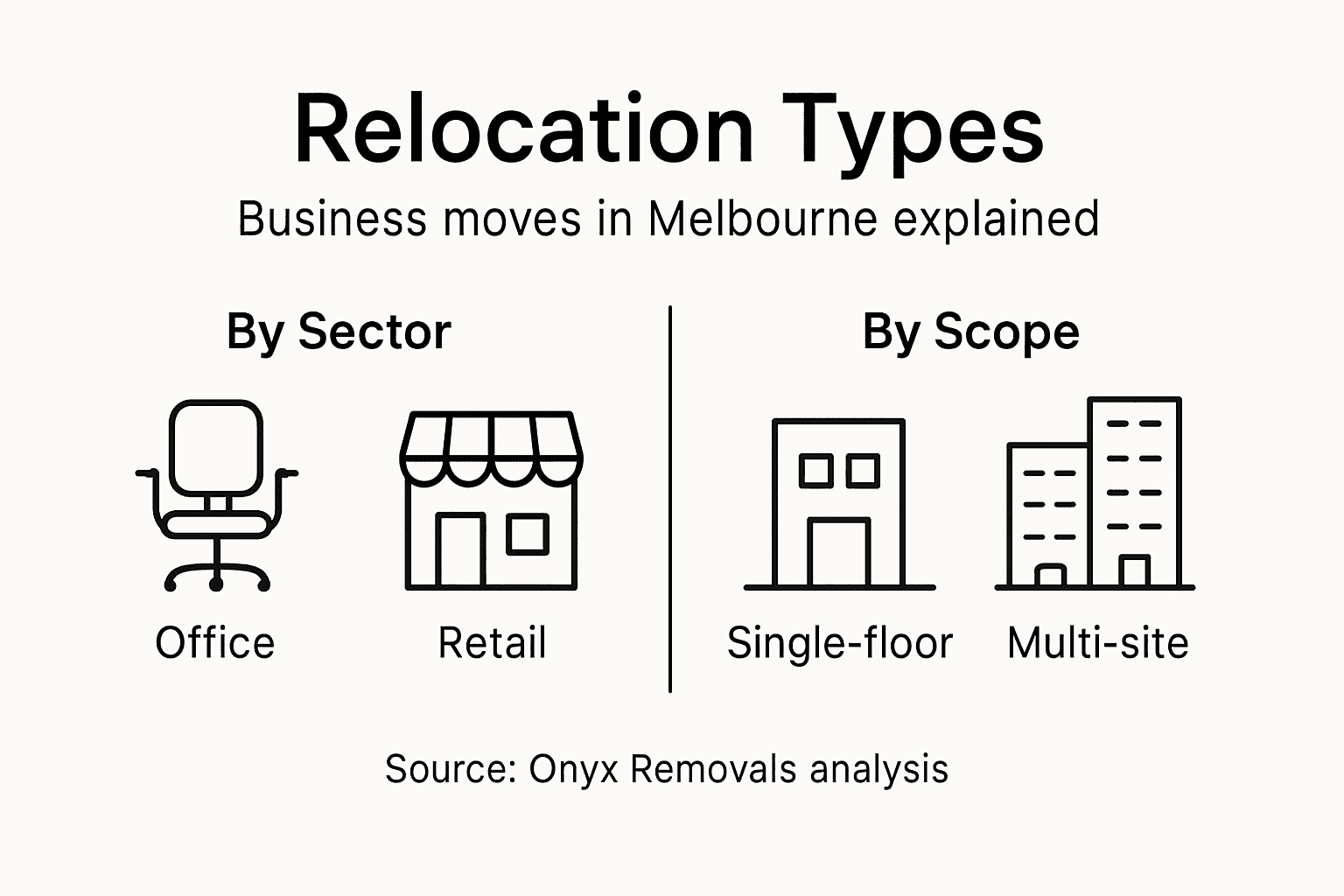
Another way to categorise relocations is by business type. Retail relocations involve managing stock movements, point-of-sale systems, and keeping the business revenue flowing during the move. You might need to stay partially operational during transition or coordinate a complete shutdown and reopening. Professional services offices (accounting, legal, consulting firms) prioritise data security, client confidentiality, and maintaining communication channels. Manufacturing or warehouse facilities deal with heavy equipment, specialised flooring requirements, and safety considerations. Medical practices or dental clinics have strict regulatory compliance, sterilisation protocols, and patient continuity requirements. Each sector brings distinct pressures. A law firm cannot afford to lose client files. A retail shop cannot afford to be closed during peak trading periods. A medical centre cannot afford interrupted patient care. Your relocation strategy must account for these sector-specific demands rather than treating all moves identically. The complexity of managing these different circumstances means working with experienced commercial removalists who understand your specific industry’s requirements becomes invaluable. They’ve managed similar moves before and know the particular hurdles your business type faces.
There’s also a distinction based on scope and scale. Single-floor office moves are relatively straightforward compared to multi-storey building relocations. Moving within the same suburb differs significantly from relocating across Melbourne to a distant suburb with longer travel distances and more complex logistics. Small team moves (under 20 people) require different coordination than relocating 200 staff members. Understanding where your move sits on these scales determines how much buffer time you need, how many people you need coordinating the project, and what contingencies you should build in. A move involving dozens of servers and complex IT infrastructure requires more technical planning than a move involving basic office furniture.
Pro tip: Classify your relocation type clearly before developing your project timeline and budget. Write down whether it’s strategic or urgent, what sector your business operates in, how many locations and people are involved, and what your revenue risks are during transition. This classification document becomes your reference point for every planning decision and helps justify resource allocation to leadership.
Below is a comparison of commercial relocation types commonly encountered in Melbourne:
| Relocation Type | Planning Timeframe | Typical Complexity | Critical Business Risks |
|---|---|---|---|
| Strategic (planned growth) | Months in advance | Moderate | Missed business opportunities |
| Crisis (urgent move) | Days/weeks | High | Revenue loss, operational delays |
| Consolidation (multiple sites) | Months in advance | Very high | Loss of critical functions |
| Sector-specific (e.g. healthcare) | Weeks to months | Depends on sector | Compliance, data protection issues |
Successful commercial relocations follow a structured sequence rather than happening in random order. Think of it like building a house—you need a solid foundation before you raise walls, and walls before you install the roof. Skipping steps or doing them out of sequence creates costly rework and delays. The phases of relocation project management provide a roadmap that keeps everyone aligned, ensures nothing gets forgotten, and allows you to track progress against a realistic timeline. For Melbourne operations managers, following these phases transforms what could become a chaotic scramble into a predictable, manageable process.
Every relocation starts with clear decisions about why you’re moving and what success looks like. During initiation, you define your project scope, budget, and timeline. You identify stakeholders (IT, finance, department heads, facility managers, your removalist partner) and their roles. You conduct a thorough assessment of your current space—what’s actually worth moving versus what should be discarded or sold. You identify risks specific to your situation. Will moving during peak business season hurt revenue? Do you have critical systems that cannot go down? Are there compliance requirements that complicate the move? You assess your new premises. Are utilities ready? Does the layout match your operational needs? Can your IT infrastructure fit? This phase also involves structured risk identification and assessment to understand what could go wrong and how to prevent it. Building a risks register early lets you develop mitigation strategies before problems occur rather than reacting to disasters during the move.
Once you understand what you’re dealing with, detailed planning begins. This is where you create timelines, floor plans for the new space, communication strategies, and contingency plans. You develop a detailed inventory of what moves where. You schedule utilities disconnection at the old location and connection at the new one. You arrange for IT to back up systems and prepare new infrastructure. You plan how to maintain operations during transition. You develop a moving day schedule coordinating staff, the removalist company, IT technicians, and any external service providers. You create communication plans ensuring staff know what to expect, when to expect it, and what their roles are. You establish scope definition, resource allocation, and contingency planning frameworks that guide decision-making. This phase involves multiple meetings with stakeholders to ensure everyone understands the plan and can commit to their part in it. Written documentation becomes your reference point—nothing stays in people’s heads because memories conflict and details get lost.
This is moving day and the immediate days after. Your detailed plan gets executed. The removalist team manages physical transport. IT sets up systems. Staff settle into new spaces. Utilities go live. Your role shifts to monitoring execution against the plan and making real-time decisions when unexpected issues arise. This phase requires visible leadership—you’re present, accessible, and responsive to problems. You’re tracking whether tasks stay on schedule, catching issues early, and communicating progress to leadership and staff.
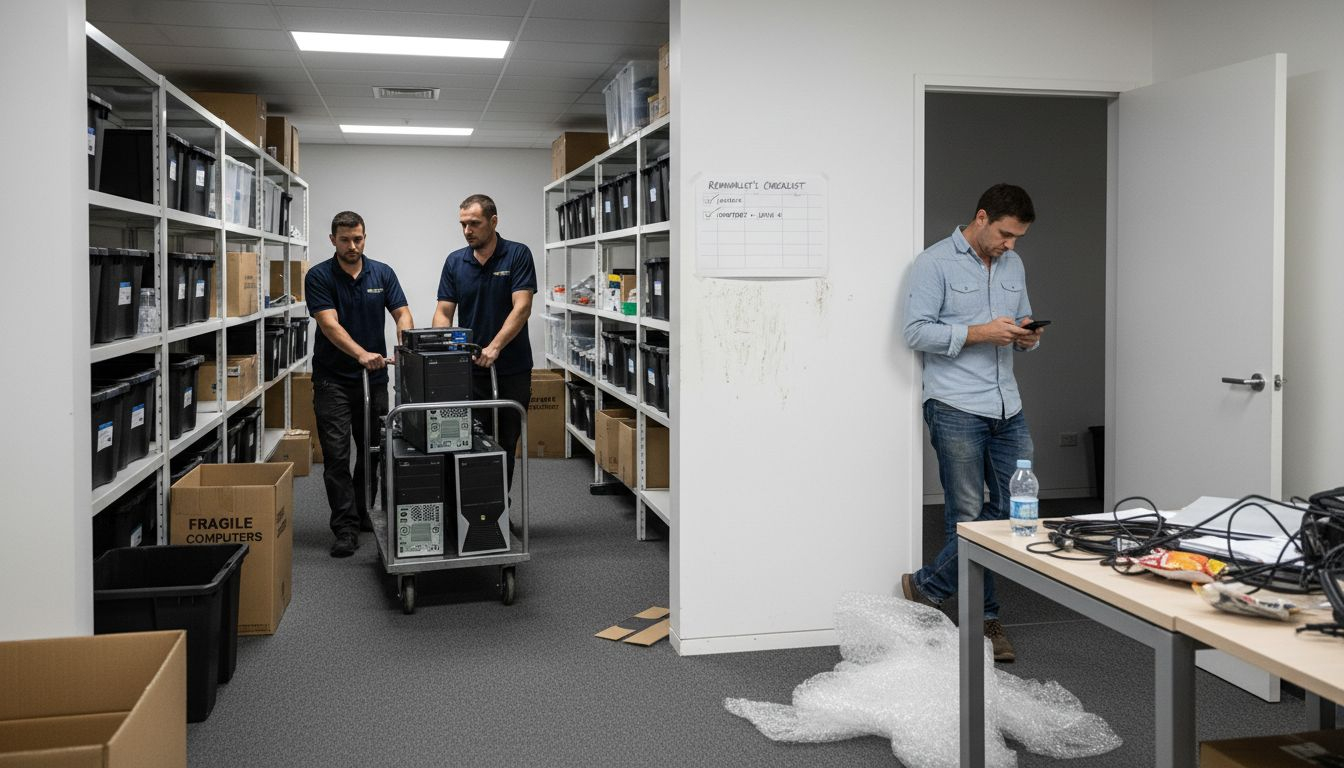
After moving day comes the critical period where everything must actually work. Systems need to be tested thoroughly before staff rely on them fully. New processes need to be verified. Departments need to confirm everything arrived intact and is functional. You’re addressing the inevitable small issues—something didn’t arrive, furniture doesn’t fit the layout as expected, someone’s files are in the wrong location. This phase typically spans a week or two depending on complexity. You’re not truly finished until all systems operate reliably, all staff are productive, and customers experience no service disruption.
Finally, you close out the project by documenting what happened, gathering feedback, and analysing what went well and what could improve next time. You confirm final invoices from your removalist and other service providers. You celebrate the successful transition with your team. You document lessons learned—not for blame, but for continuous improvement. Did you underestimate timeline for IT setup? Did communication happen at the right frequency? Were contingencies useful or unnecessary? This information becomes invaluable if the business moves again or when planning future projects.
Pro tip: Build buffer time into every phase, especially IT setup and system testing. Most relocations encounter unexpected issues—a server takes longer to configure than anticipated, furniture arrives damaged, or utilities connect late. Planning two extra days of stabilisation time prevents these common hiccups from becoming crises.
Commercial relocation isn’t just about moving furniture and boxes. You’re operating within a framework of legal obligations, compliance requirements, and safety standards that protect your business, your staff, and your legal standing. Ignoring these requirements creates liability exposure, potential fines, work stoppages, and reputational damage. For operations managers at Melbourne corporate offices, understanding what you’re legally required to do transforms relocation from a logistical exercise into a properly managed business activity with clear guardrails.
Work Health and Safety (WHS) legislation in Australia places specific obligations on employers during workplace relocations. You must ensure the relocation process itself doesn’t injure staff. This means assessing hazards before the move starts. Heavy furniture requires proper lifting equipment and trained operators to prevent back injuries. Stairwells and corridors must remain clear of obstacles during transition. IT equipment disconnection must follow safe procedures to avoid electrical hazards. Your removalist team must carry appropriate insurance and follow WHS standards during the physical move. When selecting a relocation partner, confirm they maintain current WHS certifications and have incident-free safety records. You’re responsible for ensuring your chosen provider meets legal safety standards. During moving day, you need to coordinate access to ensure staff don’t accidentally walk into areas where heavy lifting is occurring or trip over cables and boxes. After the move, your workplace must return to a safe condition before staff resume normal operations. Any injuries during relocation can trigger workers’ compensation claims, investigations from the regulator, and potential prosecution if you failed to take reasonable precautions.
Your agreements with removalist companies, IT service providers, utility companies, and other vendors create legal obligations on both sides. These contracts should clearly specify what services are included, timelines, liability limits, insurance requirements, and dispute resolution processes. The standards for general conditions of contract in Australia outline rights, responsibilities, and obligations that should inform your contractual arrangements. Understanding contract terms protects you from unexpected costs and clarifies what happens if things go wrong. For example, if your removalist damages office furniture, the contract should specify who bears the cost and how disputes are resolved. If utilities don’t connect on time and your business suffers losses, the contract should clarify your remedies. Most professional removalist companies carry liability insurance covering accidental damage, but you need to verify coverage limits and conditions. Read contracts carefully before signing. Don’t assume standard terms are acceptable. Negotiate terms that protect your business. If damage occurs or timelines slip, you’ll wish you’d spent time on the contract upfront.
If your business handles customer data, employee information, or confidential business records, relocation creates specific compliance obligations. Data must be protected during transit. Hard drives and servers must be securely transported, not left unattended. If your move involves cloud-based systems, migration must follow your company’s data governance policies. If you’re subject to privacy legislation or industry-specific compliance (healthcare, financial services, legal practices), relocation must maintain compliance. Some industries have audit trails and documentation requirements that relocation activities must not disrupt. You cannot simply move a medical practice’s patient records without maintaining the integrity of those records and their security. Your IT team must coordinate with your removalist to ensure sensitive equipment receives appropriate handling and security measures.
Your lease on the old premises typically contains obligations you must meet when vacating. You usually need to provide notice within specified timeframes. You often need to return the space in “good condition” which might require professional cleaning, repair of damage you caused, and removal of any items you installed. Failure to meet lease obligations can result in disputes over bond recovery or claims for damages. Similarly, your new lease will have requirements about when you can occupy the space, what modifications you can make, and how to report damage. Understanding both leases prevents costly surprises. If your old lease requires 30 days notice and you’re relocating in 20 days, you might face penalties. If your new lease specifies move-in can only occur on weekends and you plan a weekday move, you’ll need to reschedule.
During relocation, your standard business insurance might not cover all activities. You may need temporary coverage for items in transit, for contractors working at your premises, or for business interruption if the move causes unexpected downtime. Confirm your insurance broker understands your relocation timeline and activities. Ask specifically whether your current policy covers all relocation-related risks. Some policies exclude damage during removals unless additional premium is paid. Professional removalist companies carry their own liability insurance, but that covers their negligence, not your negligence or your exposure to losses.
Pro tip: Create a legal and compliance checklist three months before your planned move date. Include lease obligations, WHS requirements, data protection procedures, insurance verification, contract terms with vendors, and notification requirements to regulatory bodies in your industry. Work through the checklist systematically with your legal team, HR, IT, and facilities management to ensure nothing gets missed.
Every commercial relocation has three core concerns that keep operations managers awake at night: what it costs, what could go wrong, and how long operations will actually be disrupted. These aren’t separate problems. They’re interconnected. Underestimating costs forces you to cut corners on planning and contingencies, which increases risk, which extends downtime. Poor risk management leads to unexpected costs and extended disruptions. Extended downtime drives revenue loss that dwarfs the relocation costs themselves. For Melbourne operations managers, managing these three elements simultaneously is the heart of relocation project management. Get this right and your move is a success. Get it wrong and you’re explaining missed targets to leadership.
Most managers underestimate relocation costs because they focus on the obvious expenses and miss the hidden ones. The obvious costs include removalist fees, new furniture, IT equipment upgrades, and utility setup. But true costs also include staff time spent planning and coordinating the move. They include productivity loss during transition when staff spend time packing and settling rather than working on revenue-generating activities. They include IT downtime costs when systems aren’t operational. They include overtime costs if you need accelerated setup. They include temporary staffing if your team cannot manage normal workload during relocation. They include potential customer dissatisfaction if service levels dip during transition. To develop accurate cost estimates, break your relocation into components: facility costs (new lease deposits, fit-out), logistics costs (removalist company, transport), IT costs (system migration, equipment), staff costs (time spent on relocation activities), and contingency costs (buffer for unexpected expenses). Most experienced relocations budget 10 to 15 percent contingency on top of estimated costs because something always costs more than expected. Your removalist quote covers physical transport, but not everything else.
For quick reference, here are core cost categories and risk factors to consider in Melbourne commercial relocations:
| Cost Component | Common Hidden Risk | Prevention Strategy |
|---|---|---|
| Staff productivity loss | Extended downtime | Buffer time, staggered transition |
| IT system migration | Data loss or delays | Early backups, test procedures |
| Removalist and logistics | Damage, missed deadlines | Contract KPIs, insurance check |
| Lease or property | Penalties, disputes | Early notice, lease review |
| Temporary staffing | Unexpected expenses | Contingency budget allocation |
Effective relocation management requires identifying risks before they become problems. Proactive risk identification and mitigation strategies ensure that potential issues are planned for rather than reacted to after they occur. Create a risk register early listing everything that could disrupt your move: utilities not connecting on time, IT systems taking longer to migrate than planned, staff illness preventing critical people from participating, damage to equipment during transport, lease disputes on the old premises, new premises not being ready, key vendors cancelling or delaying, or unforeseen building issues at the new location. For each risk, estimate the likelihood (high, medium, low) and impact (critical, significant, minor). High likelihood and critical impact risks require aggressive mitigation strategies. Maybe you secure contingent office space elsewhere if utilities fail to connect. Maybe you arrange backup IT support if your primary technician gets sick. Maybe you schedule movers earlier than necessary to build buffer time. You develop contingency plans for the risks that could genuinely disrupt operations.
Developing effective contract management strategies and key performance indicators helps you monitor vendor performance and catch problems early. Your contract with the removalist should specify daily progress updates, photos of packed items, tracking information, and a process for reporting damage immediately rather than after delivery. Your contract with IT service providers should specify system testing timelines and acceptance criteria. Your contracts with utility companies should specify connection dates and penalties if they miss deadlines. Regular monitoring against these key performance indicators allows you to identify issues while you can still do something about them rather than discovering problems on moving day.
Downtime costs money directly through lost productivity and lost revenue. A retail shop closed for a day loses that day’s sales. An office unable to access customer data loses productivity across multiple staff. A medical practice unable to access patient records cannot see patients. To minimise downtime, sequence your move carefully. If possible, move non-critical functions first. Move storage areas and rarely-used files before moving active work areas. Coordinate moving day to occur outside peak business hours if your business operates extended hours. For a 24/7 operation, this is more complex but even more important. Consider moving in phases rather than one big move. Move one department at a time, allowing others to continue operations. This extends the total relocation timeline but minimises the peak downtime period. Your IT setup is critical to downtime minimisation. Systems should be tested and operational before staff move their workstations. Staff should have internet access and phone connectivity on day one, even if some systems take longer to fully migrate. Have backup processes ready for critical functions. If your main accounting system needs extra time to migrate, have manual processes ready so you can process invoices and payments.
Communication reduces perceived downtime even if actual downtime can’t be shortened. Staff who know what to expect and when to expect it experience less chaos and frustration than staff surprised by outages and changes. Regular updates during the relocation period keep everyone oriented and reduce anxiety. Setting expectations clearly about what will and won’t be available during transition prevents people wasting time trying to access systems that aren’t yet active.
Pro tip: Track actual costs and timelines against your budget and plan throughout the relocation project. By the time you reach moving day, you should already know whether you’re on track or facing overruns, allowing you to adjust before problems compound. Use a simple spreadsheet tracking committed costs versus actual invoices and tracking major timeline milestones against your plan. Review this weekly with your finance team and project coordinator.
Managing the complexities of a Melbourne commercial relocation demands precision and proactive planning to minimise downtime and avoid costly disruptions. Whether you face strategic growth moves or urgent office consolidations, the key pain points such as managing IT system migrations, coordinating multiple stakeholders, and meeting legal compliance require more than just a removalist service—they require a dedicated partner who understands the full scope of your project.
At Onyx Removals, we specialise in business relocations tailored to your unique needs, helping you maintain operational continuity with minimal interruption. Our experienced team collaborates closely with your project managers to handle logistics, secure timelines, and reduce risk so that your staff stay productive and your customers remain served. Explore our comprehensive business removal services designed specifically to support complex commercial moves across Melbourne.
Take control of your commercial relocation with Onyx Removals today. Visit Onyx Removals to discover how our personalised moving plans and professional expertise can deliver a stress-free, timely transition. Connect with us now to protect your productivity and ensure your move is completed on schedule and within budget.
Commercial relocation project management is the structured coordination of resources, timelines, and activities required to move a business while ensuring operational continuity. It involves planning, execution, and delivery phases, treating the move as a formal project.
To minimise downtime, carefully plan the sequence of your move, prioritise critical functions, and consider moving non-essential areas first. Ensure IT systems are operational before staff relocate, and communicate regularly with your team about what to expect.
The key phases include: Initiation and Assessment, Planning and Detailed Preparation, Execution and Moving, Transition and Stabilisation, and Closure and Evaluation. Following these phases helps ensure nothing is overlooked, and the process is manageable.
Consider risks such as utility disconnections, IT system migrations causing downtime, vendor delays, and lease obligations. Identifying these risks early allows you to create mitigation strategies to prevent disruptions during your move.

No Related Post


