



Many Melbourne businesses assume handling office relocations internally saves money. The reality is starkly different. DIY moves typically increase downtime costs by 20 to 35% due to poor planning, inadequate equipment handling, and coordination failures. Professional corporate movers eliminate these inefficiencies through specialized project management, expert packing protocols, and vendor coordination that protects your assets while minimizing operational disruption. This guide reveals proven strategies used by leading Melbourne relocators to streamline corporate moves, reduce equipment damage by half, and accelerate unpacking by 40%.
| Point | Details |
|---|---|
| Cost Efficiency | Expert planning reduces downtime expenses by 20 to 35% compared to DIY approaches. |
| Asset Protection | Specialized handling techniques cut equipment damage claims by 50%. |
| Unpacking Speed | Detailed inventories and clear labeling systems reduce unpacking time by 40%. |
| Coordination Benefits | Centralized vendor management prevents scheduling conflicts and duplicated efforts. |
| Sustainability Value | Eco-friendly practices lower waste disposal costs while supporting corporate responsibility goals. |
Melbourne’s evolving workplace landscape creates unique relocation complexities. Office utilization averages around 67%, complicating spatial planning when hybrid work models introduce 53% unassigned seating. These factors multiply coordination requirements far beyond simple furniture transfers. Corporate moves involve diverse assets spanning IT infrastructure, sensitive documentation, specialized equipment, and inventory systems across both office and warehouse environments.
Successful relocations align with strategic business priorities including location optimization, amenity access, and workforce distribution. Critical challenges include:
Businesses that underestimate these office relocation challenges in Melbourne face costly disruptions including extended downtime, damaged equipment, lost data, and workforce frustration. Professional movers address these complexities through proven frameworks that protect both physical assets and operational continuity.
Structured project management frameworks transform chaotic relocations into controlled transitions. Research shows 70% of poorly managed relocations cost more due to overlooked risks, while unified project approaches accelerate moves by 30%. Comprehensive risk assessment identifies potential disruptions before they materialize, enabling contingency planning that minimizes both downtime and damages.
Effective project frameworks establish clear accountability through defined roles and milestone tracking. A dedicated relocation manager coordinates all moving parts, ensuring vendors, internal teams, and stakeholders maintain alignment throughout the process. Regular communication updates prevent surprises and enable rapid responses when challenges emerge.
Key project management elements include:
Pro Tip: Schedule a final walkthrough three days before your move date to verify all preparations are complete and identify any last-minute adjustments needed for a smooth transition.
Businesses implementing these office move project management methods report significantly reduced stress levels and faster return to full productivity. The investment in structured planning pays dividends through avoided risks of poor relocation management that typically plague uncoordinated moves.
IT infrastructure and sensitive equipment demand expert handling protocols that DIY approaches cannot replicate. Complete IT system backups before moves prevent catastrophic data loss, while trained movers reduce equipment damage claims by 50% through specialized packing techniques. These outcomes stem from understanding how different assets respond to transport stresses.
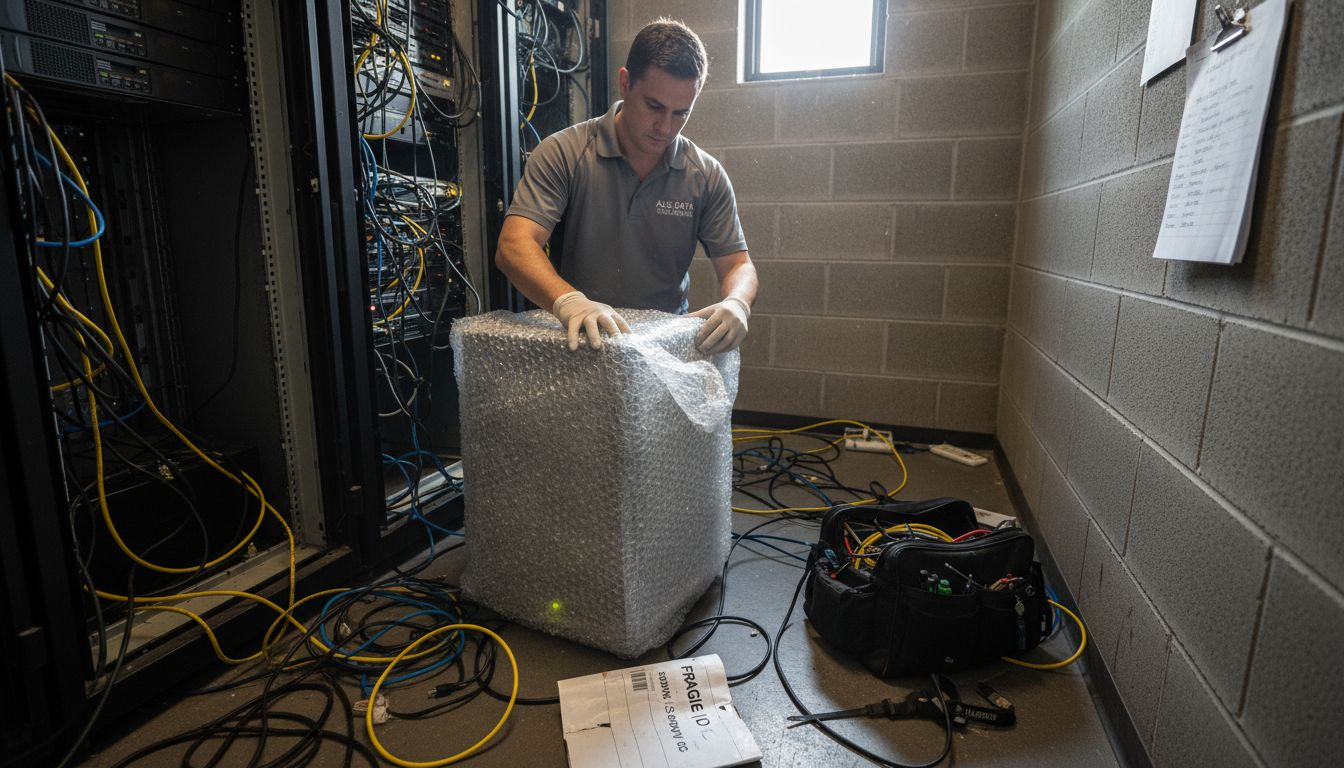
Servers, workstations, and networking equipment require custom crating with shock-absorbing materials that maintain stable positioning during transport. Professional movers use anti-static wrapping, foam padding, and climate-controlled vehicles to protect delicate electronics. Clear labeling systems identifying destination locations and setup priorities reduce unpacking time by up to 40%, accelerating your return to normal operations.
Critical equipment handling practices include:
Equipment Damage Reduction: Professional handling protocols decrease damage claims by 50% compared to standard moving approaches, protecting both asset value and operational capability.
The secure IT and equipment handling during moves provided by experienced corporate movers includes insurance coverage specifically designed for technology assets. This protection, combined with specialized packing for sensitive equipment, ensures your most valuable business tools arrive ready for immediate deployment.
Centralized vendor management prevents the scheduling conflicts and duplicated efforts that derail corporate relocations. A single project manager coordinating all external services eliminates communication gaps that cause delays. Consistent communication avoids duplicated work, while regular stakeholder meetings maintain alignment across moving companies, IT contractors, furniture installers, and facility managers.
Managing multiple stakeholders requires establishing clear communication channels and decision-making authority. Without central coordination, vendors work in silos, creating bottlenecks when their activities should integrate seamlessly. Professional movers acting as prime contractors streamline this process by taking responsibility for all subcontractor scheduling and performance.
Effective coordination strategies include:
The centralized vendor coordination approach reduces missed deadlines by maintaining visibility across all moving parts. When everyone understands how their work connects to the broader timeline, coordination becomes natural rather than forced. This integration explains why businesses report smoother transitions when using experienced movers who understand the importance of vendor communication in complex corporate environments.
Several myths persist about professional moving services despite evidence contradicting these beliefs. The most damaging misconception suggests DIY approaches save money. In reality, DIY moves increase downtime costs by 20 to 35% through inefficient execution and preventable errors. Cost savings come from expert planning rather than simply choosing the lowest fees.
Another common belief treats corporate moves as simple furniture transfers. Modern office relocations involve complex IT infrastructure, sensitive documentation requiring chain of custody, specialized equipment needing custom handling, and inventory systems that must maintain integrity throughout transport. Professional movers bring skills that reduce risks across all these dimensions.
| Misconception | Reality |
|---|---|
| DIY moves save money | Professional planning reduces total costs by 20 to 35% through efficiency gains |
| Movers only handle furniture | Corporate relocations require IT expertise, security protocols, and specialized equipment handling |
| Any moving company works | Corporate movers possess specific project management and coordination capabilities |
| Speed matters most | Proper planning and execution prevent costly damage and downtime |
| Green practices cost more | Sustainable approaches often reduce disposal fees and support corporate responsibility |
Pro Tip: Request case studies from potential movers showing similar projects they have completed, focusing on downtime metrics and damage rates rather than just pricing comparisons.
Understanding these myths about corporate moving helps businesses make informed decisions. The skills professional movers provide extend far beyond physical labor, encompassing project management, risk mitigation, and specialized knowledge that protects both assets and operations during transitions.
Environmental responsibility increasingly influences corporate decision-making, including relocation strategies. Recycling furniture and eco-friendly packing materials reduce waste while supporting sustainability commitments. These practices generate cost savings through reduced disposal fees and create positive brand value by demonstrating environmental stewardship.
Green moving approaches include reusable crating systems replacing cardboard boxes, donation programs for functional furniture no longer needed, and recycling protocols for materials that cannot be repurposed. Professional movers with sustainability experience help businesses close waste loopholes while maintaining compliance with environmental regulations.
Sustainable relocation practices include:
The sustainable office relocation practices adopted by forward-thinking businesses align with broader corporate social responsibility initiatives. Small changes in packing materials and disposal methods accumulate into significant environmental impacts when multiplied across entire office moves. Engaging movers experienced in green moving practices ensures your relocation supports rather than contradicts your sustainability commitments.
Actionable strategies transform theoretical best practices into operational success. Detailed inventories speed unpacking by up to 40% by ensuring every item reaches its designated location without confusion. These lists also provide accountability, confirming nothing gets lost during transport. Starting inventory documentation weeks before your move date allows thorough cataloging without last-minute pressure.
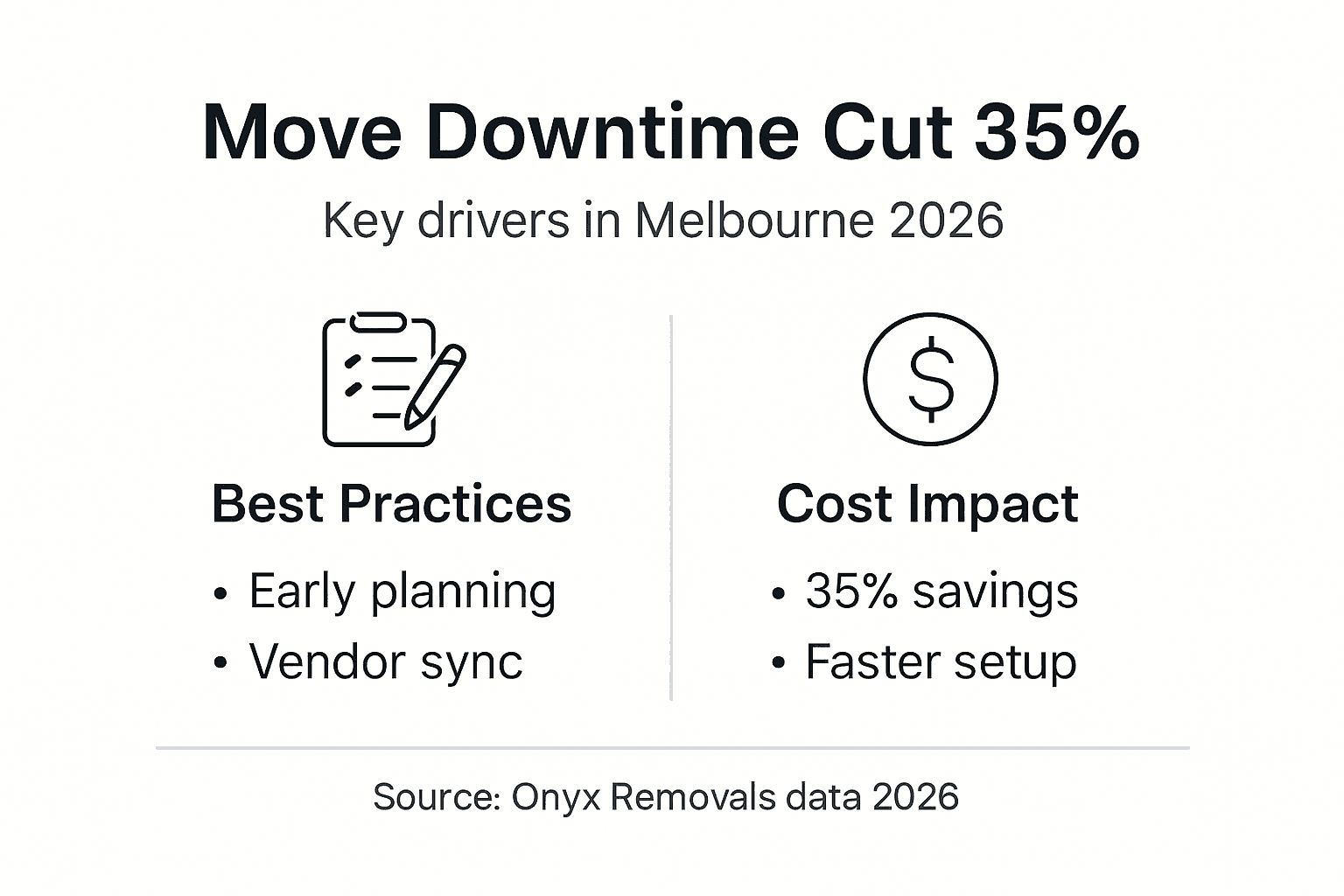
Scheduling moves during off-hours minimizes business disruptions by allowing setup completion before employees arrive. Weekend or evening relocations enable testing and troubleshooting without impacting daily operations. Clear labeling systems using color codes, numbered sequences, and destination markers accelerate unpacking while reducing setup errors.
| Implementation Element | Timeline | Responsibility | Success Metric |
|---|---|---|---|
| Complete inventory | 4 weeks before | Internal team with mover input | 100% asset documentation |
| IT backup verification | 2 weeks before | IT department | Zero data loss incidents |
| Label system creation | 2 weeks before | Project manager | 40% faster unpacking |
| Vendor coordination meeting | 1 week before | Moving company | All parties aligned on schedule |
| Final walkthrough | 3 days before | All stakeholders | Issues identified and resolved |
Critical implementation steps include:
Pro Tip: Pack a first-day essentials box for each department containing items needed immediately upon arrival, avoiding delays searching through labeled boxes for basic supplies.
The office relocation scheduling tips and furniture removal planning strategies used by experienced movers reflect years of refined practice. Implementing these efficient packing strategies positions your business for minimal disruption and rapid productivity restoration.
Successful corporate relocations result from comprehensive planning, specialized expertise, and coordinated execution. The evidence demonstrates that professional movers reduce downtime costs by 20 to 35%, cut equipment damage claims by half, and accelerate unpacking by 40% through proven methodologies. These outcomes stem from treating moves as complex projects requiring dedicated management rather than simple logistics exercises.
Key insights for Melbourne businesses include:
Businesses ready to relocate should request detailed proposals from experienced corporate movers, focusing on project management capabilities, equipment handling expertise, and sustainability practices. The investment in professional services pays dividends through protected assets, maintained productivity, and reduced stress throughout the transition process.
Transform your next corporate relocation from a potential disruption into a smooth transition. Onyx Removals specializes in comprehensive moving solutions designed specifically for Melbourne businesses relocating offices and warehouses. Our team brings proven project management expertise, specialized equipment handling capabilities, and sustainable practices that minimize both downtime and environmental impact.
We coordinate every aspect of your move from initial planning through final setup, ensuring your sensitive IT infrastructure, specialized equipment, and inventory systems receive appropriate protection throughout transport. Our commercial removalists in Melbourne understand the unique challenges facing businesses during relocations, offering tailored solutions that align with your operational requirements and timeline constraints. Explore our specialized moving equipment designed to protect your most valuable business assets while accelerating your return to full productivity.
Most office relocations require one to three days for physical moving, depending on office size and complexity. However, comprehensive projects including planning, packing, transport, and setup typically span six to eight weeks from initial assessment to full operational status.
Professional movers deploy custom server crates with shock-absorbing foam, anti-static wrapping materials, climate-controlled vehicles, and specialized dollies rated for heavy equipment. These tools protect delicate electronics from vibration, static discharge, and temperature fluctuations during transport.
Schedule moves during off-hours or weekends, maintain detailed inventories with clear labeling, coordinate all vendors through a single project manager, and test critical systems immediately upon arrival. These strategies enable faster setup and earlier return to normal operations.
Sustainable approaches often reduce total costs through lower disposal fees, reusable packing materials, and furniture donation tax benefits. While initial investments in eco-friendly options may seem higher, the long-term savings and corporate responsibility benefits typically outweigh any premium.
Seek movers with proven corporate project experience, appropriate insurance coverage for technology assets, specialized equipment handling certifications, and client references from similar relocations. Project management capabilities and vendor coordination experience are equally important as physical moving skills.

No Related Post


